This article contains affiliate links. If you purchase through them, INUMAMI may earn a small commission at no extra cost to you. We only recommend what we genuinely use and trust and your support means the world to us.
The beauty of Italian cooking often lies in its ability to follow the seasons without ever losing its identity. Green risotto, or risotto verde, is a perfect example. There is no single vegetable that defines it, no fixed shade of green, only the simple idea of turning whatever nature has to offer into something wonderfully comforting.
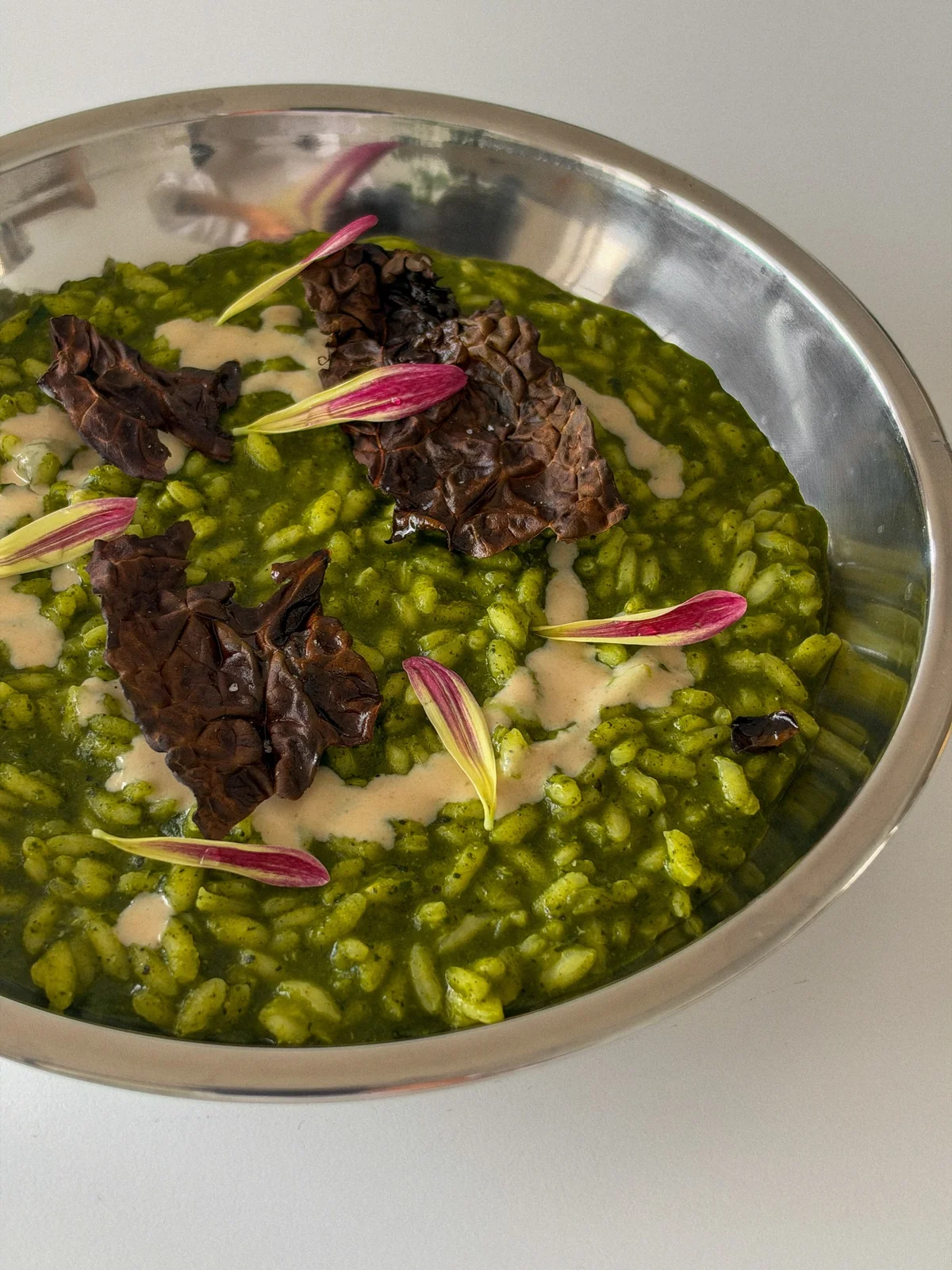
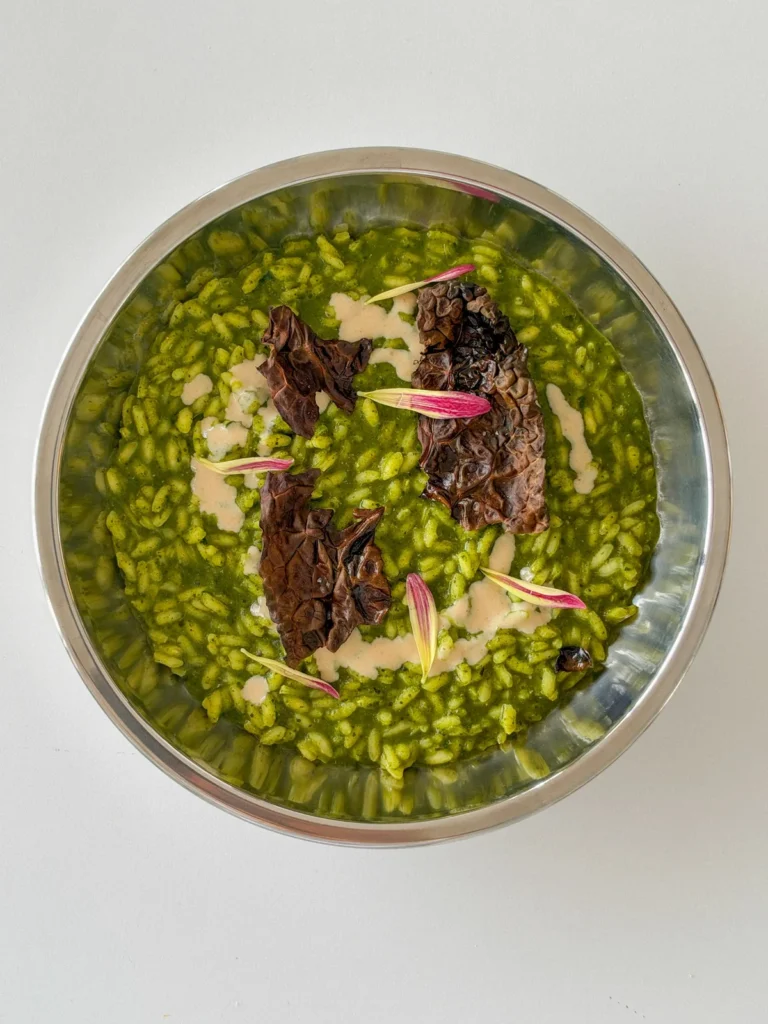
For this colder-season version, I chose Tuscan kale, transforming its deep green leaves into a vibrant, silky cream that gives this kale risotto its beautiful colour and rich, earthy flavour. The result is nourishing, incredibly creamy, and full of character.
And yes, it’s entirely plant-based. If you’re curious about the secrets behind a perfectly creamy risotto without butter, cheese, or other animal-derived ingredients, you can explore my guide on How to Make the Perfect Vegan Risotto. But you’ll also find everything you need right here to master this green risotto, from preparing the kale to achieving that beautiful Italian all’onda consistency.
What Is Risotto Verde?
Risotto verde is, quite literally, green risotto. As simple as that. It’s an Italian dish that changes with the seasons, taking its colour and character from whichever green vegetables happen to be available. In spring, for example, peas and asparagus create a beautiful, delicate shade of green. Spinach is another wonderful option, while Tuscan kale makes a particularly delicious choice for fall and winter, bringing a deeper colour and a more earthy, robust flavour.
This way of cooking has its roots in the rural traditions of northern Italy, where rice was often paired with wild greens and herbs gathered from the surrounding countryside. Ingredients such as wild rocket and wild hop shoots, known in Italy as bruscandoli, found their way into simple, seasonal dishes. Over time, cultivated vegetables became part of the tradition too, giving rise to countless variations of green risotto.
But regardless of which greens you choose, there’s one little secret to making a truly beautiful risotto verde: knowing how to transform those vegetables into a smooth, vibrant cream without losing their brilliant natural colour. And that’s exactly what I’ll show you in this recipe.
Why You’ll Love This Kale Risotto
I know, I know. This is probably the most predictable heading you’ll find in any recipe online. And I’m sure we all have our own very good reasons for loving the recipes we create. But this one, I promise, really does deserve your affection.
Not just because it’s absolutely beautiful (and you’ll be bringing a little masterpiece to the table), but because it’s intensely flavourful, wonderfully creamy, and rich without a single animal-derived ingredient.
The crispy kale chips on top add that irresistible crunch that makes every bite more interesting, while the silky tahini and lime sauce brings just the right touch of acidity to balance the kale’s earthy, slightly bitter notes.
It’s a dish that proves, once again, that plant-based cooking doesn’t need to imitate anything to be extraordinary.
Ingredients You’ll Need
Rice
Obviously, there would be no risotto without rice. And when it comes to choosing the right variety, my favourites will always be Vialone Nano and Carnaroli. Other types of rice can work, of course, but these two are particularly good at what they do: releasing just the right amount of starch to create that wonderfully creamy texture while keeping the grains beautifully firm.
And if you’re not quite in the mood for risotto but still want to turn your Tuscan kale into a silky green cream, you could always use it to dress a lovely bowl of pasta instead. But that’s another story.
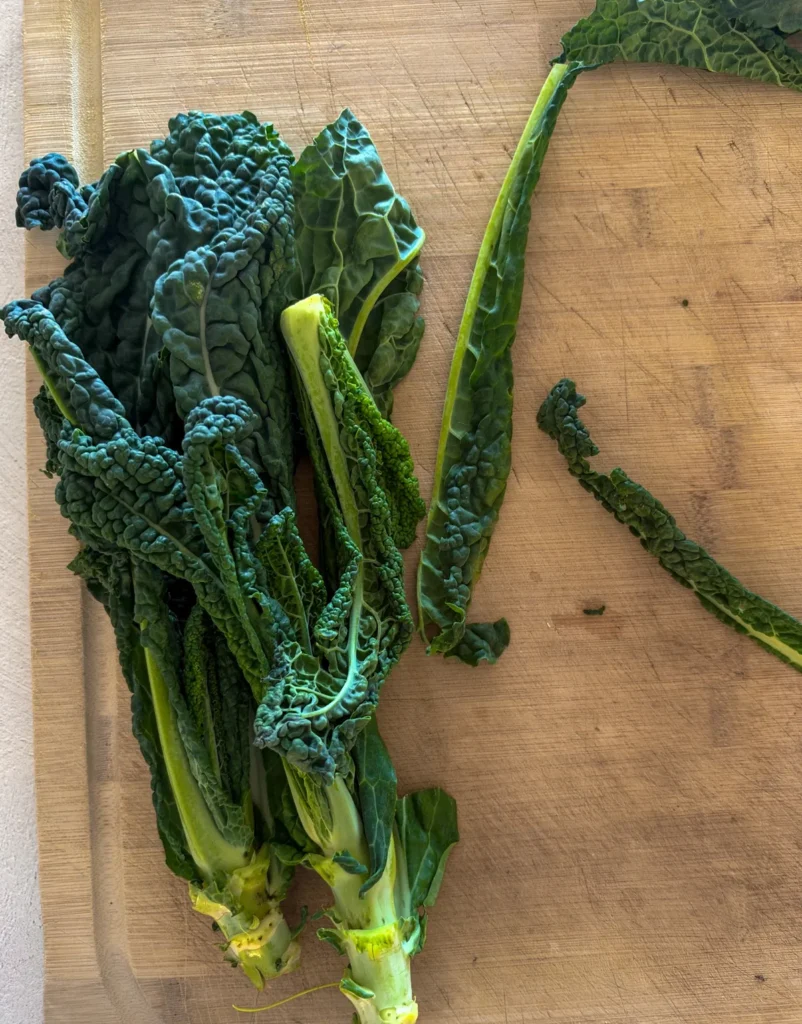
Tuscan Kale
There’s not much to explain here. I chose Tuscan kale, also known as cavolo nero, for its deep, earthy flavour and beautifully intense green colour. It gives this green risotto its distinctive character, bringing a slightly bitter, robust note that balances the creaminess of the rice perfectly.
Vegetable Broth
As always, a simple homemade vegetable broth made with onions, carrots, and celery is more than enough. You can also use store-bought vegetable stock or even a light miso broth if you want to add an extra layer of umami.
And, believe it or not, you can even make risotto using nothing but hot water. Yes, we Italians actually do that! The secret is knowing how to balance the flavours and season the other ingredients properly. A good risotto doesn’t necessarily need a complicated broth to be delicious.
Tahini and Lime Sauce
Just three ingredients: tahini, fresh lime juice, and water. That’s all you need to create a beautifully smooth, silky sauce that brings a little extra magic to this green risotto. The tahini adds a rich, nutty flavour, while the lime provides that lovely touch of acidity that balances the earthy, slightly bitter notes of the Tuscan kale.
White Wine
White wine is traditionally used to sfumare the rice, meaning to deglaze the pan after toasting it. It’s not essential, but it certainly has its purpose. The wine adds acidity, balances the richness of the risotto, and brings an extra layer of flavour and aroma. As it simmers, some of the alcohol evaporates, leaving behind its characteristic notes.
I usually prefer a dry white wine, but you can experiment with other varieties, including a light, dry rosé. You can also skip the wine altogether and simply start adding your vegetable broth. Your risotto will still be delicious, especially if you balance the acidity with a little citrus juice towards the end.
Nutritional Yeast and Olive Oil
For the mantecatura, the final step that gives risotto its signature creamy, silky texture, I use nutritional yeast and extra virgin olive oil. Nutritional yeast is optional, but I love the subtle cheesy, savoury flavour it brings to the rice without using any dairy.
As for the olive oil, you can easily replace it with vegan butter or even a smooth nut butter, such as cashew butter. The important thing is to introduce a little fat during the final mantecatura, helping the starch released by the rice form a beautiful, creamy emulsion. That’s one of the secrets to achieving a rich, velvety risotto without a single animal-derived ingredient.
How to Make Green Risotto
As with any risotto, the steps themselves aren’t particularly complicated, but they do require a little time, care, and attention. The secret lies in getting the timing right: preserving the kale’s beautiful, vibrant green colour while bringing the rice to that perfectly creamy, silky all’onda consistency that makes a truly great risotto.
Step 1. Prepare the Crispy Kale Chips
Preheat your oven to 150°C (300°F) fan-assisted, or 160°C (320°F) conventional.
Set aside a few Tuscan kale leaves, remove their tough central stems, and tear them into medium-sized pieces. Wash and dry them thoroughly, as any remaining moisture will prevent them from becoming crispy.
Massage the leaves with a little olive oil, making sure they’re lightly and evenly coated. Arrange them on a baking tray lined with parchment paper, without overlapping.
Bake for approximately 8–12 minutes, checking frequently towards the end. The chips should be completely dry and crispy, but still green rather than brown. Remove from the oven, season with a little salt, and set aside to cool.
Step 2. Blanch the Tuscan Kale
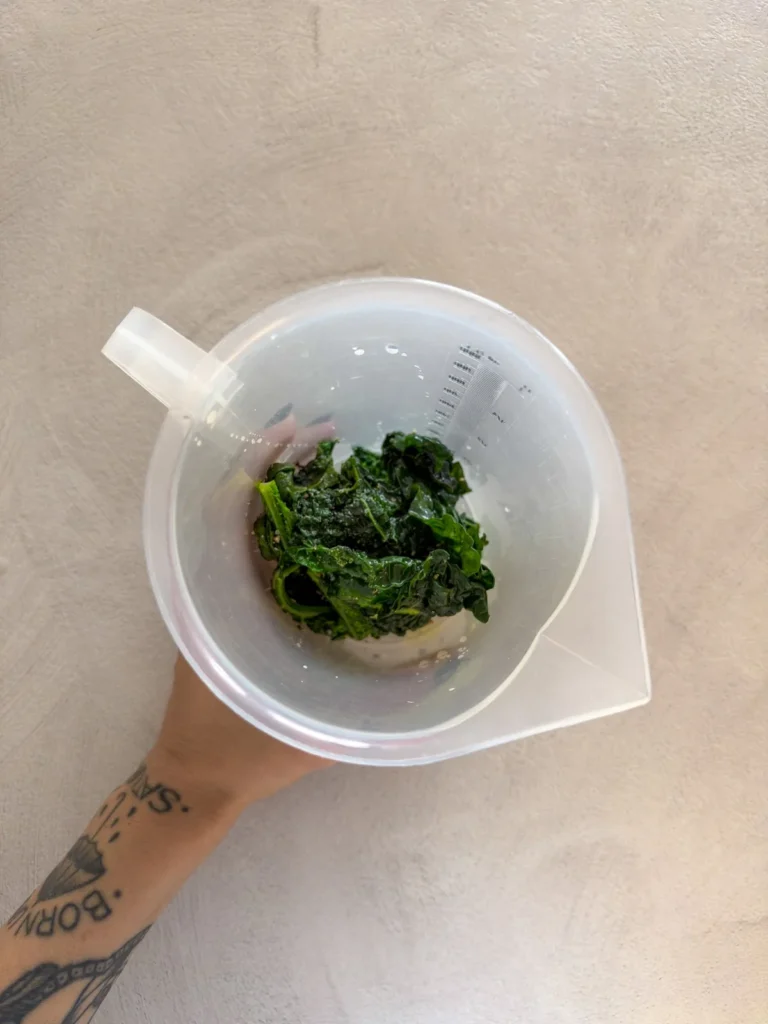
Bring a pot of lightly salted water to a boil. Meanwhile, prepare a large bowl of ice-cold water. Remove the tough central stems from the remaining kale leaves and blanch them in the boiling water for approximately 2 minutes.
Immediately transfer the kale to the ice bath to stop the cooking process. This step is essential for preserving that gorgeous, vibrant green colour. Drain the leaves and gently squeeze out the excess water.
Step 3. Make the Vibrant Green Kale Purée
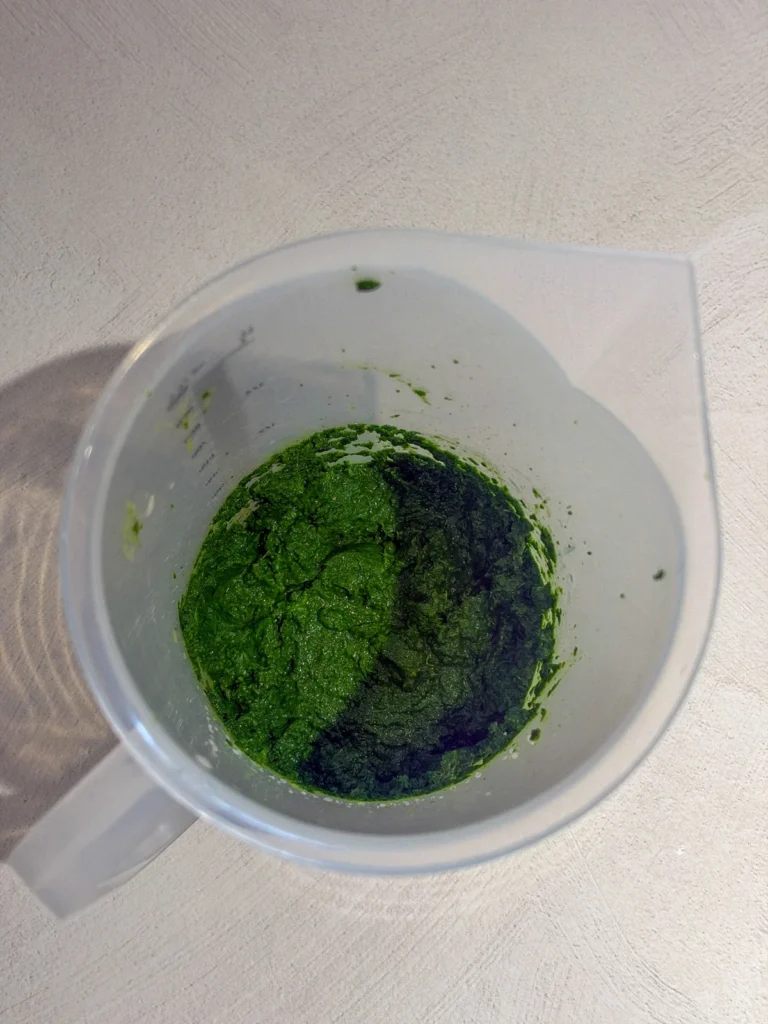
Transfer the blanched kale to a high-speed blender. Add a tablespoon of extra virgin olive oil, a pinch of salt, and 2–3 tablespoons of cold water. Blend until completely smooth, adding a little more water only if necessary. You want a silky, concentrated green purée, not a watery sauce.
If your blender leaves any visible fibres, pass the mixture through a fine-mesh sieve. Set the purée aside. We’ll add it to the risotto towards the end of cooking, when its colour can really shine.
Step 4. Prepare the Tahini and Lime Sauce
In a small bowl, combine the tahini and freshly squeezed lime juice. Gradually add cold water, whisking continuously. Don’t worry if the mixture becomes thick at first. As you add more water, it will transform into a smooth, pale, beautifully creamy sauce.mSeason with a little salt and adjust the consistency until it’s fluid enough to drizzle over the finished risotto. Set aside until serving.
Step 5. Toast the Rice
Keep your vegetable broth hot in a saucepan over low heat. In a separate, wide-bottomed pan, add the Carnaroli or Vialone Nano rice without any oil or fat. Toast the rice over medium heat for approximately 2–3 minutes, stirring frequently, until the grains are hot to the touch and release a delicate, nutty aroma.
This technique, known in Italian as tostatura a secco (dry toasting), helps the grains maintain their structure during cooking, without the need for a traditional soffritto. If using white wine, pour it in now and allow it to simmer until almost completely evaporated.
Step 6. Cook the Risotto
Begin adding the hot vegetable broth, a ladle at a time, stirring regularly to encourage the rice to release its starch. Allow most of the liquid to be absorbed before adding more, but never let the pan become completely dry.
Continue cooking for approximately 15–18 minutes, depending on the rice variety, keeping the mixture gently simmering. When the rice is almost ready, with approximately 2 minutes of cooking remaining, add the kale purée.
Stir gently until the colour is evenly distributed throughout the risotto. You’ll see the rice transform into a beautiful, intense shade of green. Taste and adjust the seasoning.
Step 7. The Mantecatura: Make It Perfectly Creamy
Once the rice is cooked but still pleasantly al dente, remove the pan from the heat. Add the extra virgin olive oil and nutritional yeast, if using. Stir or gently shake the pan to incorporate everything, allowing the starch and fat to create a beautifully creamy emulsion.
If the risotto seems too thick, add another small splash of hot vegetable broth. The goal is the classic Italian all’onda consistency: when you move the pan back and forth, the risotto should flow gently like a wave. Let it rest for about 30 seconds, then give it one final stir.
Step 8. Plate and Serve
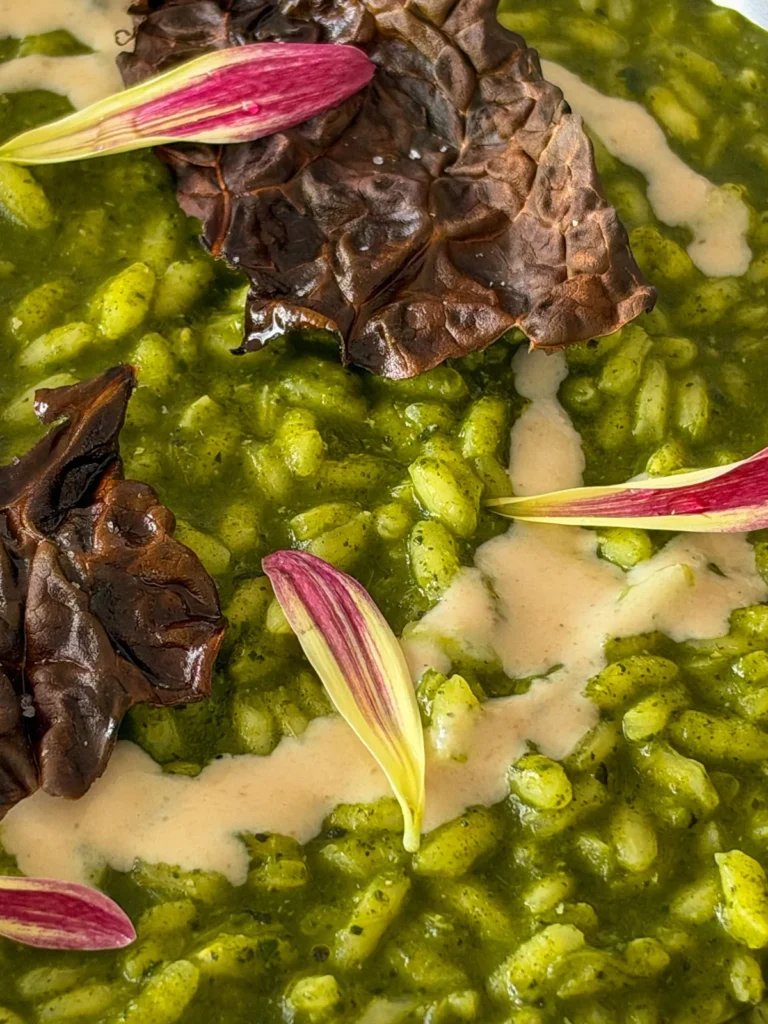
Spoon the green risotto onto warm, shallow plates and gently tap the bottom of each plate to allow it to spread naturally. Drizzle a little tahini and lime sauce over the surface, creating a beautiful contrast against the vibrant green rice.
Finish with the crispy kale chips, placing them on top just before serving so they retain their crunch. Serve immediately, while the risotto is still creamy and flowing. A perfect risotto all’onda waits for no one!
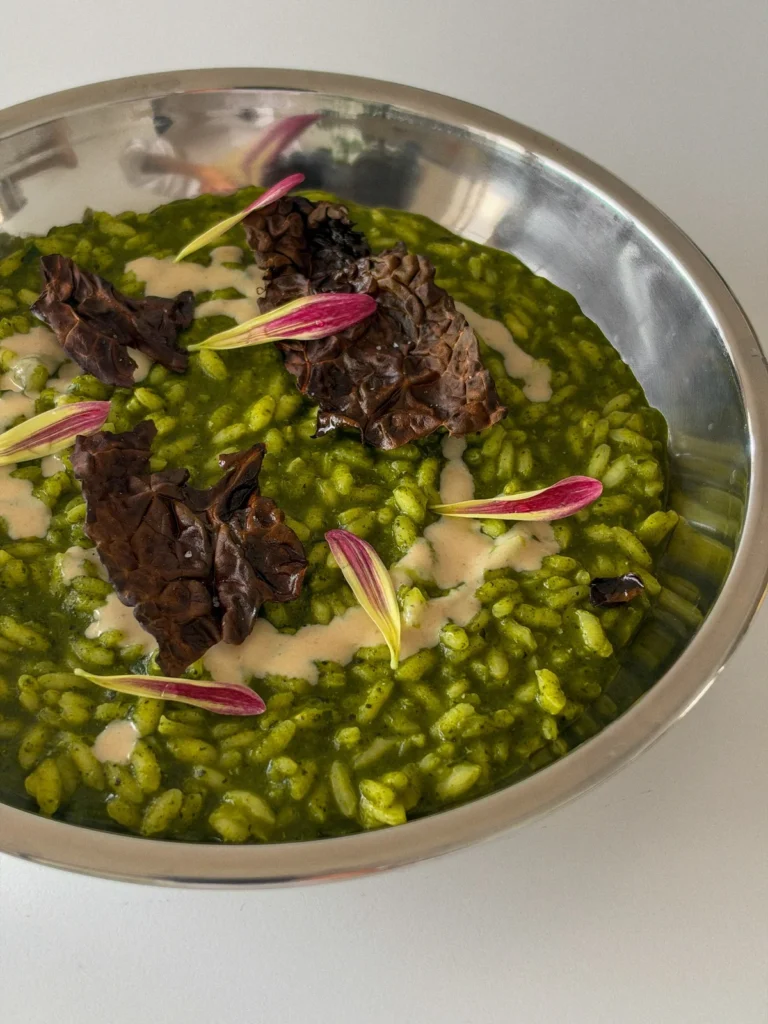
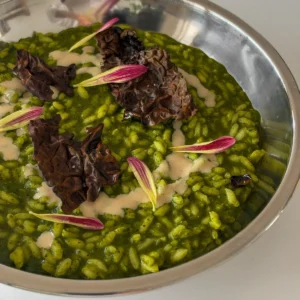
Green Risotto (The Italian Risotto Verde) with Crispy Kale & Tahini
Equipment
Ingredients
For the Green Risotto
- 160 gr Carnaroli Rice Or other Rice
- 90 gr Tuscan kale (cavolo nero) Stems Removed
- 500 ml Vegetable Broth
- 40 ml Dry Wine Optional
- 2 tbsp extra virgin olive oil
- 2 tbsp Nutritional Yeast
- To Taste Sea Salt
For The Crispy Kale Chips ( Optional)
- 30 gr Tuscan kale (cavolo nero)
- 1 tsp extra virgin olive oil
- To Taste Sea Salt
For the Tahini and Lime Sauce
- 25 gr Tahini
- 10 ml Fresh Lime Juice
- 20 ml Cold Water
- To Taste Sea Salt
Instructions
- Preheat the oven to 150°C (300°F) fan-assisted, or 160°C (320°F) conventional.
- Remove the tough stems from the kale and tear the leaves into medium-sized pieces. Wash and dry thoroughly.Massage with olive oil and arrange in a single layer on a baking tray lined with parchment paper. Bake for 8–12 minutes, checking frequently, until crispy but not browned. Season with salt and set aside.
- Bring a pot of lightly salted water to a boil. Prepare a bowl of ice-cold water. Blanch the kale for 2 minutes, then immediately transfer it to the ice bath to stop the cooking and preserve its vibrant green colour. Drain and gently squeeze out excess water.
- Transfer the blanched kale to a blender with 1 tablespoon of olive oil, a pinch of salt, and 2–3 tablespoons of cold water. Blend until completely smooth, adding a little more water if necessary. The consistency should be silky and concentrated rather than watery. Set aside.
- Combine the tahini, lime juice, and salt in a small bowl. Gradually whisk in the cold water until the sauce becomes pale, smooth, and pourable. Set aside.
- Keep the vegetable broth hot in a saucepan over low heat. Place the rice in a wide-bottomed pan without any oil or fat. Toast over medium heat for 2–3 minutes, stirring frequently, until the grains are hot and release a delicate, nutty aroma. If using white wine, add it now and let it evaporate almost completely.
- Begin adding the hot vegetable broth, one ladle at a time, stirring regularly. Allow most of the liquid to be absorbed before adding more, without letting the rice dry out.Continue cooking for approximately 15–18 minutes, depending on the rice variety. About 2 minutes before the rice is ready, add the kale purée and stir until evenly incorporated. Season to taste.
- Remove the risotto from the heat while the rice is still slightly al dente. Add 1 tablespoon of extra virgin olive oil and the nutritional yeast, if using.Stir vigorously or gently shake the pan to create a creamy emulsion. Add a little more hot broth if needed to achieve the traditional Italian all'onda consistency: soft, flowing, and beautifully creamy.
- Spoon the risotto onto warm plates, allowing it to spread naturally. Drizzle with the tahini and lime sauce and finish with the crispy kale chips. Serve immediately.
Notes
A Note on This Recipe
This is an original recipe developed and tested for INUMAMI. If you make it, share it on social media, or feature it on your website, I’d love for you to credit inumami.com and tag @theinumami. Sharing is always appreciated, and giving credit helps support the creativity and work behind every recipe. Thank you! 💚Nutrition