This article contains affiliate links. If you purchase through them, INUMAMI may earn a small commission at no extra cost to you. We only recommend what we genuinely use and trust and your support means the world to us.
Butter is a foundational ingredient in traditional cooking, and in many ways, in vegan cooking too and understanding it is the first step to replacing it well. It is not just a condiment or a flavouring. It is a fat that does not only add taste, it transforms the texture of everything it touches. It makes pastry flaky, cakes tender, sauces silky and cookies crisp at the edges and soft in the centre.
It is also one of the most widely used ingredients in baking, which means that finding the right vegan butter substitute is not just a matter of preference, it is a matter of getting your recipes to actually work.
In this guide we cover everything: the functions butter performs in cooking and baking, and all the practical ways to replace it, with the right substitute for each specific use, exact quantities, and the results you can expect. Whether you are looking for a vegan butter substitute for baking, for cooking, or for spreading, the answer is here.
What Does Butter Actually Do? Understanding Its Role Before You Substitute
Butter is a foundational ingredient in cooking, not simply because it is a fat, but because it is made of three components that work together to create something almost magical in the transformation of ingredients: fat, water, and proteins. Each one plays a different role depending on how the butter is used, which is precisely why replacing it requires understanding what it is actually doing in a given recipe.
The problem is that this magic is achieved by exploiting animals: perpetuating a system that is no longer sustainable, humane, or necessary. That is the bad news. There is also the fact that butter is not particularly good for you: it is high in saturated fat, calorie-dense, and heavy on the digestive system.
The good news is that plant-based alternatives exist that work in exactly the same way, often healthier, always more ethical, and once you understand the logic behind them, surprisingly straightforward to use. That is what this guide is here to show you.
If you are also looking to replace eggs in your plant-based baking, we have a complete guide to vegan egg substitutes that follows exactly the same approach.
And if you are also looking for dairy-free alternatives beyond butter, our guide to whether vegan food is dairy-free explains the difference between vegan and dairy-free, plus the most useful substitutes.
Butter for Shortcrust and Crumble: How to Replicate That Melt-in-the-Mouth Texture
In traditional wheat-based baking, butter acts as a fat barrier. Flour contains two proteins that, when they meet water, bind together to form gluten, elastic and strong, perfect for bread, disastrous for shortcrust. Butter coats the flour particles before water can reach them, blocking gluten development and producing a dough that crumbles and melts rather than stretches. This is also why butter must be cold in pastry, warm butter loses this protective effect entirely.
In gluten free baking the mechanism changes, but butter remains just as essential. Since gluten never forms in the first place, the fat barrier function is irrelevant, but butter still binds the dough, controls friability, retains moisture and adds flavour depth, compensating for the neutral or slightly grassy notes that some gluten free flours carry.
Coconut oil
Use cold, straight from the fridge, in a 1:1 ratio replacing butter. Coconut oil is extracted from the dried flesh of the coconut — copra — through a cold-press or expeller-press process. What makes it unique among plant-based oils is its physical behaviour: unlike most vegetable oils, which are liquid at room temperature, coconut oil is solid below approximately 24°C and melts quickly when it warms up. This is what makes it the closest plant-based match to butter in pastry and cookie making.
I use it regularly in my own baking, it is the fat I reach for in my oat cookies recipe, where it produces exactly that crumbly, tender texture you want. If you want to see it in action before committing to a full batch of shortcrust, that recipe is an easy good place to start.
When you work cold coconut oil into flour, it coats the flour particles in the same way butter does, creating that protective fat barrier that limits moisture absorption and produces a crumbly, tender texture in the final bake.
Refined coconut oil is almost completely neutral and will not affect the taste of your recipe. Unrefined (virgin) coconut oil carries a subtle coconut note, barely detectable in most baked goods, but worth keeping in mind for very delicate flavours
Vegetable Oils: Olive, Corn, Grapeseed
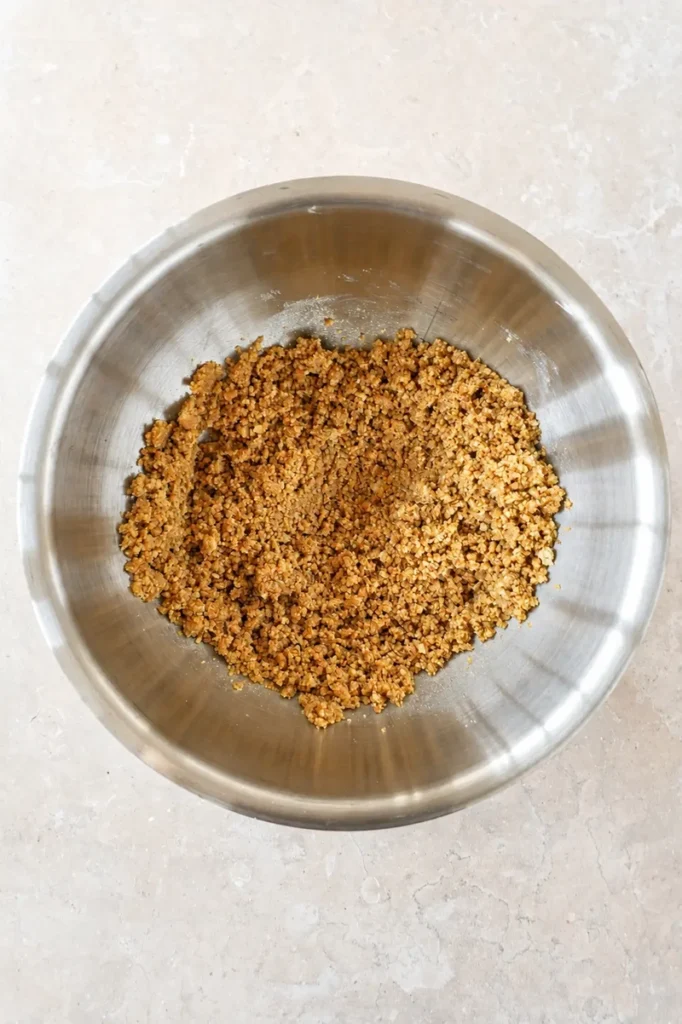
Use 80g of oil to replace every 100g of butter, approximately a 1:0.8 ratio. Liquid vegetable oils are a lighter, less calorie-dense alternative to solid fats for pastry and cookies, and they work better than most people expect, particularly in gluten free baking where the absence of gluten already limits the risk of a tough, chewy texture. The principle is straightforward: oil replaces the fat component of butter, contributing moisture and tenderness to the dough. What it cannot replicate is the solid structure of butter, because oil is liquid at room temperature, it does not coat flour particles in the same protective way that cold solid fat does. The result is a slightly different texture: less flaky and layered, more compact and tender.
Olive oil works well in rustic pastry and savoury tarts, but its flavour is strong and distinctive. Corn oil is lighter in flavour than olive oil and works well in sweet baked goods. It has a slightly higher smoke point which makes it useful for pastry that needs a longer bake time. Grapeseed oil is my personal favourite for this purpose, and the one I reach for most often. It is exceptionally neutral in flavour, lighter in texture than coconut oil, and produces a clean, delicate result that does not interfere with any other ingredient in the recipe. It is also one of the less calorie-dense options on this list, which aligns well with a conscious, plant-based approach to cooking.
In my banana bread recipe, I use grapeseed oil as the butter substitute: neutral, light, and completely undetectable in the final result. Give it a try and let me know!
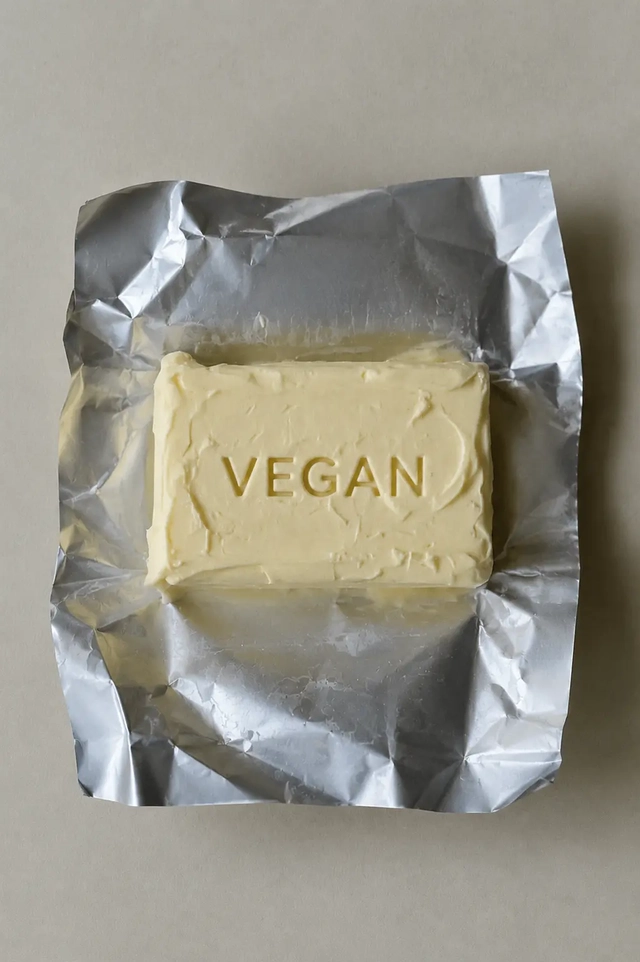
Vegan Block Margarine
Use in a 1:1 ratio replacing butter. Margarine is the most straightforward butter substitute on this list, same weight, same technique, same result. If you are new to vegan baking and want a reliable, predictable option that requires no adjustment to your existing recipes, this is where to start.
One important note before you buy: not all margarine is vegan. Many conventional margarines contain skimmed milk powder or other dairy derivatives, always check the ingredient list carefully. The main caveat with vegan block margarine is its fat content. It is one of the richest substitutes on this list, comparable in calories to dairy butter and in some cases even higher in total fat, depending on the brand and the oil blend used. If you are looking for a lighter option, grapeseed oil or coconut oil are the better choices.
Cacao Butter
Use in a 1:1 ratio replacing butter. Cacao butter is the pure fat extracted from the cacao bean during the chocolate-making process. It is the same ingredient that gives chocolate its characteristic snap, its smooth melt and its rich mouthfeel, and it is one of the most technically precise butter substitutes available for pastry work. What makes it exceptional is its melting point: 34-38°C, almost identical to dairy butter’s 32-35°C. The main limitation is price, cacao butter is significantly more expensive than coconut oil or margarine.
Butter Substitutes in Puff Pastry and Croissants: Creating Layers Without Dairy
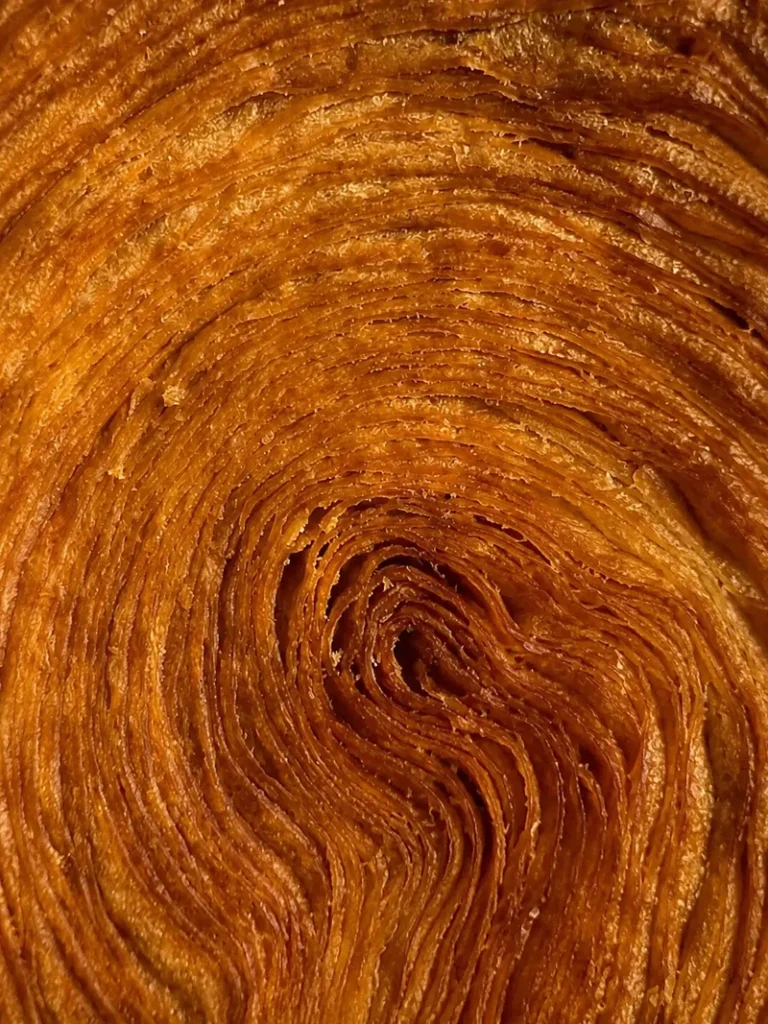
Laminated doughs like puff pastry and croissants are built on a single principle: alternating layers of cold fat and dough, folded and rolled repeatedly, that expand into hundreds of flaky layers in the oven. The science is straightforward: the water in the butter converts to steam and pushes the layers apart, while the fat melts into the dough creating richness and crispness. Everything depends on the fat staying cold and solid until the moment it hits the heat.
In gluten free baking, the absence of gluten removes one complication: no risk of overworking the dough, but adds another: gluten free doughs are more fragile and prone to cracking during rolling. The fat must stay even colder to compensate.
Vegan Block Margarine and Solid Coconut Oil: The Two Substitutes That Work for Laminated Doughs
Vegan Margarine Is the most reliable option. It behave more predictably during lamination and produce genuinely flaky layers. Keep in mind that vegan margarine softens faster than dairy butter, so work quickly and chill the dough between every two folds without exception.
Solid coconut oil works for rough puff, the simplified version where chunks of fat are worked directly into the dough rather than folded in as a solid block. Its lower melting point means you need to work faster and keep everything very cold. Not recommended for traditional croissant lamination where precision is critical.
Vegan Butter Substitute for Cakes: Achieving That Rich, Moist Crumb Without Dairy
One of the most common roles butter plays in cake recipes is simply to add moisture and fat, giving the final bake that soft, tender, melt-in-the-mouth quality that makes the difference between a cake that feels rich and one that feels dry. This is also, conveniently, one of the easiest functions to replace, and one where the vegan substitutes are not just equivalent to butter but genuinely healthier.
Soy yoghurt
My favourite option. Use 125 gr every 100 gr of butter needed. The Soy Yoghurt’s natural acidity also interacts with baking soda to give a subtle lift, making it a double-function substitute: moisture and a gentle leavening effect at the same time.
Soy or oat cream
Just like with soy yoghurt, Use 125 gr every 100 gr of butter needed. Soy cream produces a richer, denser result closer to butter in fat content. Oat cream is lighter and slightly sweeter, making it particularly well suited to delicate cakes where you want a clean, neutral flavour.
Vegan Buttercream Without Butter: How to Get That Light, Stable Frosting
Buttercream is one of the most technically specific applications of butter in baking, and understanding why helps enormously when it comes to replacing it. When you beat butter with icing sugar, two things happen simultaneously. The fat molecules in the butter trap air as the mixer works, creating a light, aerated structure. At the same time, the fat coats the sugar crystals, softening their texture and producing that characteristic smooth, creamy consistency that spreads and pipes without breaking. The result is stable at room temperature, holds its shape, and melts cleanly on the tongue, because butter’s melting point of 32-35°C is almost exactly body temperature.
This last point is the most important one for substitution. A vegan fat that melts too quickly will produce a frosting that is soft, greasy and unstable: one that slides off a cake in a warm kitchen. A fat that does not melt enough will feel waxy and heavy on the palate. The ideal substitute needs a melting point close to butter’s, a neutral flavour, and enough fat content to trap air during beating.
A note on sugar: traditional buttercream is made with refined icing suga, but at INUMAMI I don’t use refined sugar. The good news is that buttercream works beautifully with alternatives like coconut sugar powder, date sugar, or raw cane sugar blended until fine. The colour will be slightly darker and the flavour more complex, but in many cases, more interesting.
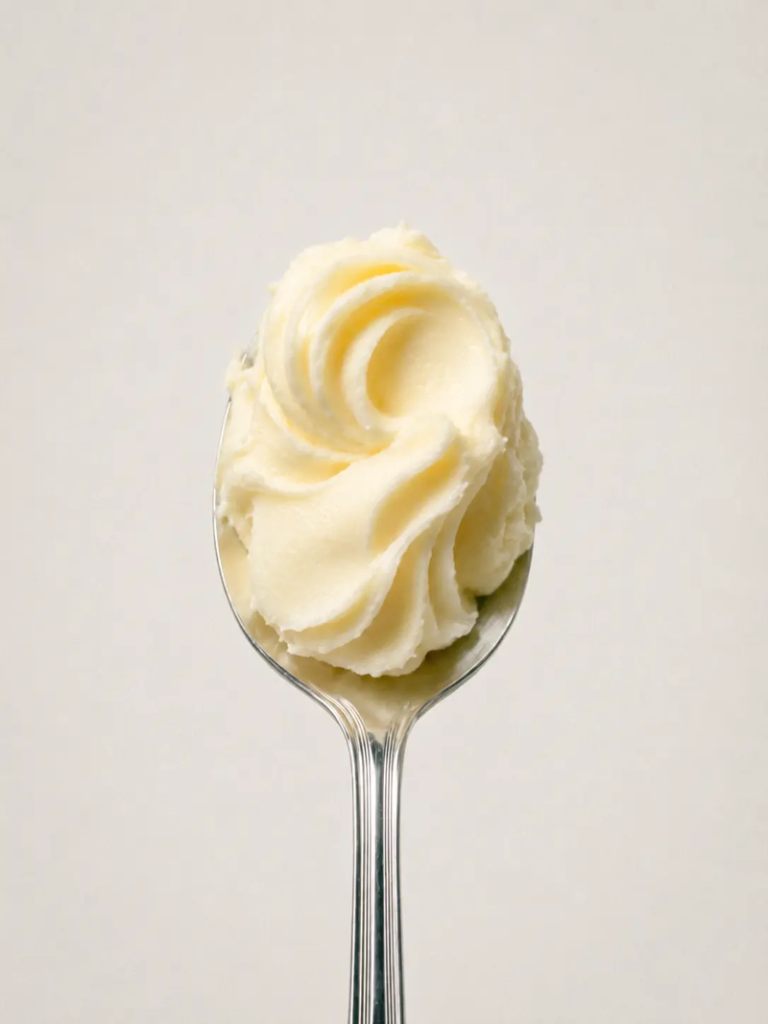
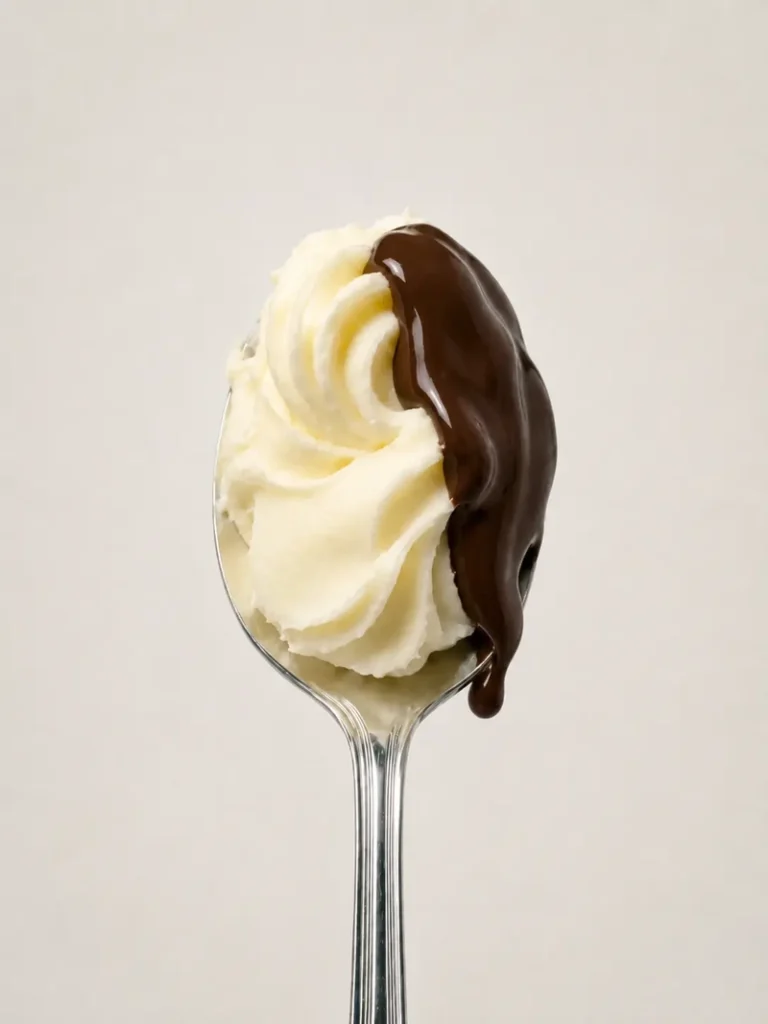
Vegan Block Margarine and Refined Coconut Oil
Both of these substitutes have been covered in detail in the previous sections, the same properties that make them work for pastry and cookies make them reliable for buttercream too.
Vegan block margarine is the most straightforward choice: same weight, same technique, same result. It mounts well, holds its shape at room temperature and produces a clean, neutral frosting that pipes beautifully. Refined coconut oil works but requires one important caveat: its melting point of 24°C means your buttercream can soften quickly in a warm kitchen. If you are making a celebration cake that needs to sit at room temperature for any length of time, margarine is the safer choice.
Cashew Cream
To make it: blend ½ cup (70g) of raw cashews soaked overnight with 2-3 tablespoons of water until completely smooth. Add your sweetener of choice and any flavouring ( date syrup, vanilla, cacao, lemon zest) and use immediately or refrigerate for up to three days.
Cashew cream is my personal favourite for frosting, even though, technically speaking, it is the weakest option on this list. It does not whip into the same light, aerated structure as margarine or coconut oil, and it will not hold sharp piping edges the way a traditional buttercream does. If you need a frosting that pipes perfect roses and holds its shape for hours, this is not your substitute.
But if what you want is a filling, a layer frosting, or a simple top coating that is genuinely wholesome, minimally processed and made from a single real ingredient, cashew cream delivers something none of the others can.
Avocado Frosting: The Most Unexpected Butter Substitute on This List
Blend 1 ripe avocado until completely smooth. Add your sweetener of choice, a pinch of salt, and any flavouring. Blend again until silky. Use immediately or refrigerate for up to 24 hours. Yes, avocado works beautifully as a butter substitute for frosting, and this is one of the few applications where its fat profile is not just adequate but genuinely ideal. Unlike in baking, where you need a solid fat that behaves in specific ways during cooking, frosting simply requires a creamy, rich, spreadable fat that holds together and tastes good. Avocado delivers all three.
Its high content of monounsaturated fats gives it a naturally smooth, buttery texture when mashed or blended, no processing, no additives, nothing but fruit. The flavour is surprisingly neutral once combined with sweetener and flavouring, and it pairs particularly well with chocolate, cacao, and citrus-based frostings where its slight earthiness becomes completely invisible.
Butter for Emulsions and Mantecatura: The Secret Behind Silky Sauces and Risotto
This is one of the most distinctly Italian applications of butter in cooking, and one of the most misunderstood. Mantecatura, from the Spanish manteca meaning fat, is the technique of finishing a risotto or pasta by vigorously stirring in cold butter off the heat.
Butter is an emulsion, water suspended in fat, held together by milk proteins. When cold butter meets a hot, starchy liquid and is stirred vigorously, those proteins disperse and create a new emulsion: a smooth, glossy sauce that coats every grain of rice or strand of pasta evenly. The key is cold, warm or melted butter has already broken its emulsion and cannot reform it. The same principle is behind beurre blanc, hollandaise, and any recipe that asks you to “mount with butter” off the heat.
The good news is that there are excellent plant-based alternatives that replicate this process perfectly, and produce a result that is genuinely indistinguishable from the original. And trust me on this one, as an Italian who has spent years experimenting to achieve the perfect plant-based mantecatura, I can tell you that getting it right is one of the most satisfying moments in vegan cooking. It took more attempts than I care to admit, but the result is worth every trial.
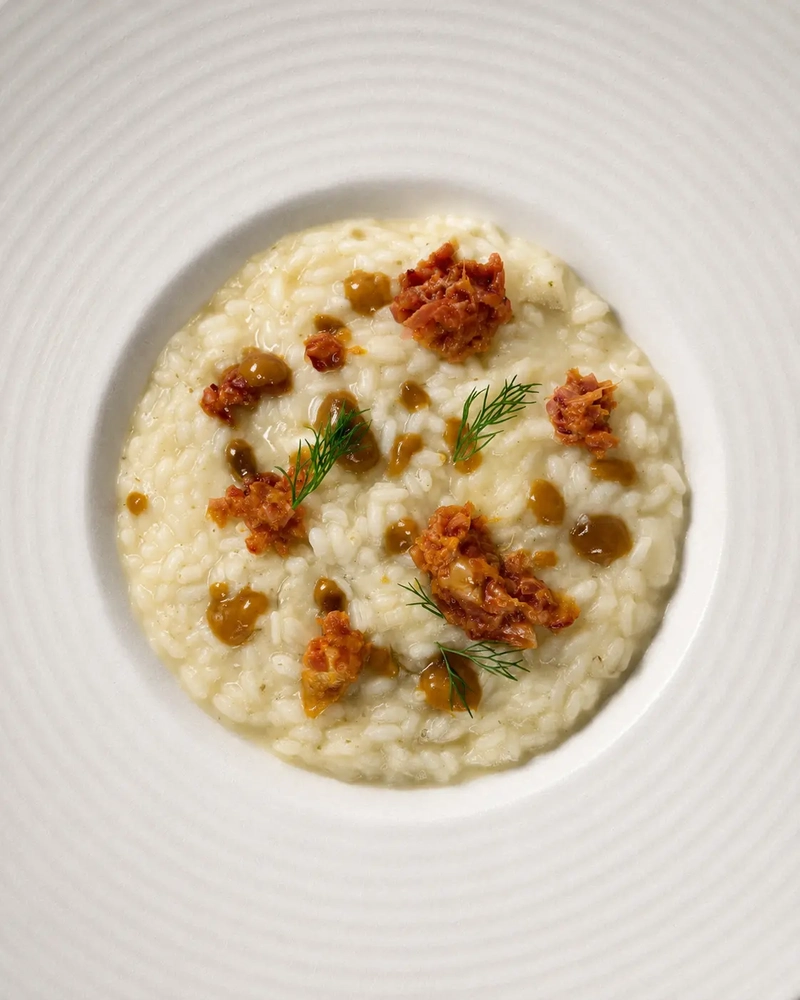
You can see this technique in practice in my vegan mushroom risotto, where I finish the rice off the heat with vegan butter and nutritional yeast to create that characteristic creamy mantecatura and the typical cheesy flavour.
Nut Butters: The Most Natural Substitute for Mantecatura and Emulsified Sauces
Use 1 tablespoon of nut butter per 10g of butter called for in the recipe: approximately a 1:1 ratio by weight. Add it cold or at room temperature, off the heat, and stir vigorously until fully incorporated.
Of all the butter substitutes for mantecatura, nut butters are my personal favourite, and the one I reach for most often. Not just because they work, but because they are the least processed option on this list: one ingredient, no additives, nothing but ground nuts.
They work particularly well for risotto, where the starchy cooking liquid provides the perfect base for emulsification, and in some sauces where a subtle nuttiness adds depth.
All nut butters work for this purpose, but the choice matters depending on the dish. Cashew butter is my go-to: it is the most neutral in flavour, almost completely undetectable in a finished dish, and produces a clean, silky result that is genuinely close to the original. Almond butter (white, without the skin) is the second most neutral option. Walnut butter brings a more present, slightly bitter note that works beautifully with fall recipes like risottos and mushroom or truffle-based pastas. And peanut butter, while the strongest in flavour, has the highest fat content of all, which means the richest, most coating emulsion. Use it intentionally, in dishes where that warmth is welcome.
Tahini
Tahini deserves a special mention here, not just as a flavour addition, but as a genuinely effective emulsifier for mantecatura and sauces. Made from ground sesame seeds, it is naturally high in fat and contains proteins that behave similarly to those in butter, making it capable of creating a smooth, glossy emulsion in a hot starchy liquid.
It is completely nut-free and soy-free, which makes it the go-to option for anyone who cannot use nut butters or soy-based margarines. In a world where vegan cooking often relies heavily on both, having a neutral, accessible alternative matters.
Use 1 tablespoon per 10g of butter, added cold off the heat and stirred vigorously until fully emulsified.
Vegan Block Margarine and Vegan Butter Products
Ready-made vegan butters and block margarines work well for mantecatura too, and the technique is identical to the traditional one. Add cold, straight from the fridge, off the heat, and stir vigorously until fully emulsified. Use in a 1:1 ratio replacing butter. As we have covered in detail in the previous sections, look for block format rather than spreadable, and check the label for dairy derivatives. The result is reliable and predictable, less interesting and less healthy than nut butters, but the safest choice when you want a neutral, consistent result.
For example, I used a salted vegan butter block in my eggless chocolate chip cookies, where it helps create a richer flavor and a soft, buttery texture.
Butter for Cooking, Sautéing and Everyday Use: The Simple Substitutes
This is the most straightforward function on this list, and the one where substitution requires the least thought. When butter is used as a cooking fat for sautéing vegetables, frying onions, toasting bread in a pan, or simply spreading on toast, its role is primarily one of fat and flavour. There is no complex chemistry to replicate, no emulsion to build, no layers to create. You need a fat that conducts heat evenly, adds richness, and tastes good.
One technical note worth considering: butter has a low smoke point of approximately 150°C and burns easily in a hot pan. Most plant-based alternatives have a higher smoke point, making them more forgiving for high-heat cooking. For spreading, you simply need a fat that is soft at room temperature, which rules out coconut oil and most solid fats.
For sautéing and pan cooking
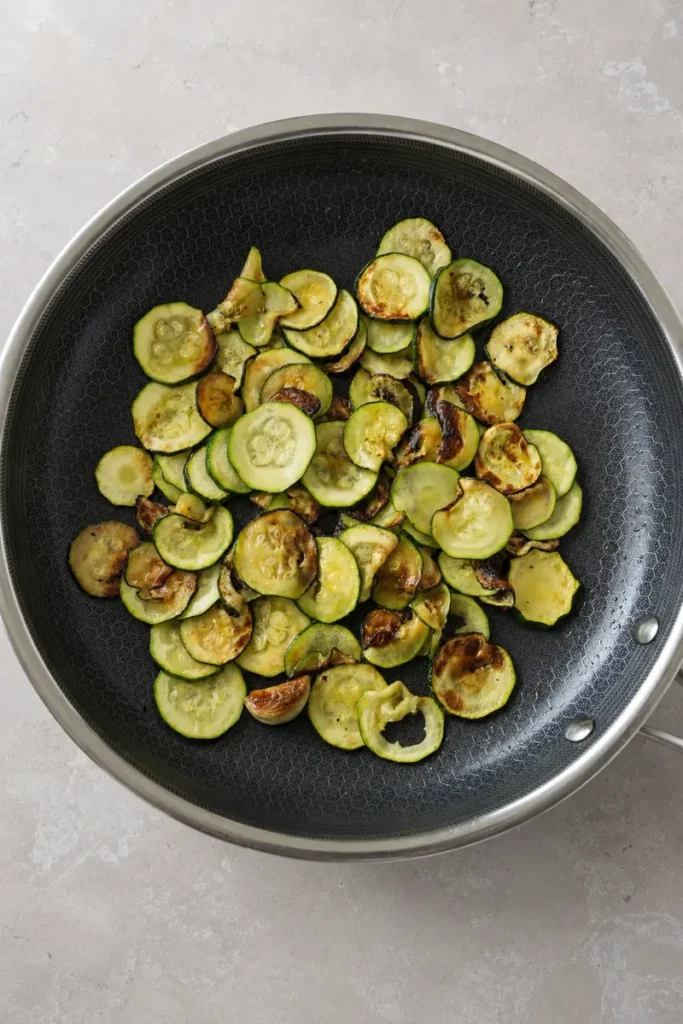
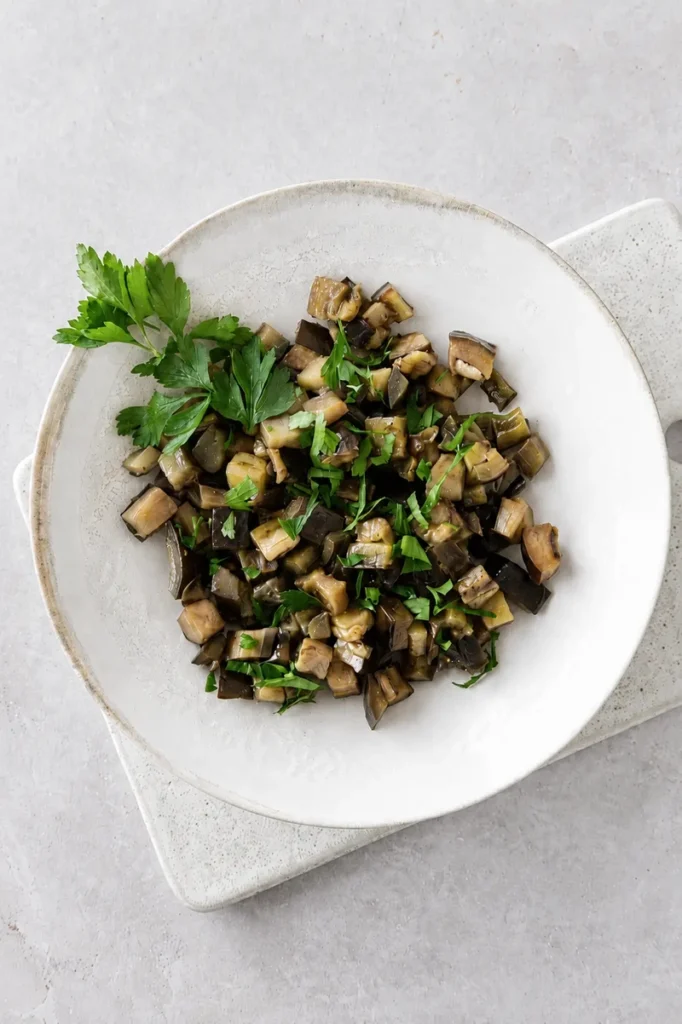
Any neutral vegetable oil works perfectly. Grapeseed oil is the most neutral and has a high smoke point. Extra virgin olive oil adds flavour and is ideal for Mediterranean-style cooking on dishes like sauteed zucchini or sauteed aubergines. Coconut oil adds a subtle sweetness that works well with vegetables and curries.
For spreading on toast or bread
Vegan block margarine or any of the commercial vegan butter products covered in this guide. Nut butters, cashew, almond, hazelnut, are a more nutritious and less processed alternative that work beautifully on warm bread.
For finishing dishes
Easy peasy. A drizzle of good extra virgin olive oil added off the heat replicates the richness and flavour that a knob of butter would add at the end of a dish, without any dairy.
Vegan Brown Butter: The Most Challenging Substitution — and the Most Rewarding
Brown butter — beurre noisette in French — is butter heated in a pan until the water evaporates completely and the milk proteins and lactose begin to caramelise, producing an intensely aromatic, amber-coloured fat with deep notes of toasted hazelnut, caramel and dried fruit. It is one of the most complex and distinctive flavours in traditional cooking, and one of the hardest to replicate without dairy.
The chemistry is simple: brown butter gets its flavour from the Maillard reaction and the caramelisation of lactose, both requiring the proteins and sugars found in dairy.
And yet, certain whole food ingredients contain enough natural proteins and sugars to trigger similar reactions, producing results that are genuinely aromatic, deeply complex, and in some cases surprisingly close to the original.
Toasted Vegan Margarine and Peanut Butter
The secret to a convincing plant-based brown butter is combining two ingredients: vegan block margarine as the base fat, and a spoonful of peanut butter for depth and aroma. The margarine provides the neutral, buttery foundation and behaves predictably in the pan. The peanut butter — naturally rich in proteins and sugars — is what triggers the Maillard reaction, developing those intense toasted, caramel and nutty notes that margarine alone cannot produce. Together, they come closer to classical beurre noisette than either one would on its own.
How to make it: melt 2 tablespoons of vegan block margarine in a small, light-coloured pan over medium heat — a light pan is essential so you can see the colour change clearly. Once melted and beginning to foam, add 1 teaspoon of peanut butter and stir continuously. Watch for the colour to shift from pale to golden amber and the aroma to turn distinctly nutty and toasted. Remove from the heat immediately — it goes from perfect to burnt in seconds. Use straight away over pasta, gnocchi, roasted vegetables, or stirred into baked goods.
Vegan Butter Substitute FAQs
Choosing the right vegan butter substitute depends on what you are making. In baking, you may need fat, moisture, structure, or richness. In savory recipes, you may be looking for creaminess, flavor, or a smooth finish. These questions cover the most common substitutions, from coconut oil and vegetable oil to using vegan butter in place of regular butter, but if you have more questions, feel free to leave it in the comments’s section.
Yes, olive oil can replace vegan butter in some recipes, especially savory dishes, cakes, focaccia-style preparations, and moist baked goods. It is less suitable for recipes that need a solid fat, such as pie crusts, shortbread, or certain cookies. Use a mild olive oil if you do not want the flavor to dominate.
The best vegan substitute for butter depends on the type of recipe you are making. As you have seen in this guide, butter can play different roles: it can add fat, moisture, structure, flavor, or creaminess. For this reason, the best approach is to first understand what you need the butter substitute for, and then choose the most suitable option. Vegan butter is usually the closest direct replacement, especially in cookies, cakes, pastries, and frostings. Coconut oil works well when you need a firmer fat, while olive oil or vegetable oil can be useful in moist cakes, muffins, and quick breads.
It depends on the recipe and on the type of vegan butter substitute you are using. In many cases, vegan butter can replace dairy butter at a 1:1 ratio, especially when you need a similar amount of fat and moisture. However, different substitutes behave in different ways: coconut oil, vegetable oil, olive oil, fruit purées, and nut butters do not all give the same result. For the best outcome, read the guide first, understand what role butter has in your recipe, and then choose the most suitable replacement.