This article contains affiliate links. If you purchase through them, INUMAMI may earn a small commission at no extra cost to you. We only recommend what we genuinely use and trust and your support means the world to us.
I tasted the best vegan tzatziki in Istanbul. Then I had it again in Greece, and it was just as delicious, but perhaps, who knows, the first taste always carries a kind of magic that stays with you.
The famous tzatziki sauce is one of those dishes that shows how food can connect different peoples and cultures. Although we are used to associating it immediately with Greece, this white yogurt-based sauce comes from a long story of commercial exchanges and geopolitical influences between India, Persia, and the Ottoman Empire.
The Greeks have the merit of having shaped the recipe and transformed it into one of their foundational dishes. Across different countries, there are several versions of tzatziki, each with small variations depending on local traditions and ingredients.
In this vegan tzatziki recipe, you will find a fully plant-based version that has nothing to envy the original. It keeps the same beautiful balance of flavors that makes tzatziki one of the most famous sauces in the world.
And if, like me, you first fell in love with vegan tzatziki while traveling, you may also enjoy my guide to Istanbul Vegan Restaurants: My Favorite Plant-Based Places in the City, where I share some of the best plant-based places I discovered while there.
What Is Tzatziki, and Is It Vegan?
Tzatziki is a cold, creamy sauce made with plain yogurt, cucumber, garlic, olive oil, and fresh herbs. Today, we usually associate it with Greek cuisine, where it is often made with thick strained yogurt and served as a refreshing dip, sauce, or side dish.
But tzatziki also belongs to a wider family of cooling yogurt-based preparations that have travelled through different cultures, names, and traditions. In India, Raita is often served with spicy food to bring freshness and balance to the meal. In Turkey, cacık is made with yogurt, cucumber, garlic, and herbs, usually with a looser texture. In Greece, the recipe became thicker, richer, and more defined, often using strained yogurt and dill.
That is what makes tzatziki so fascinating: a simple sauce that carries the memory of trade routes, empires, migrations, and everyday kitchens. It is humble, fresh, and practical, but also deeply connected to the way food moves across cultures.
Traditional tzatziki, as most of us know it, is not vegan because it is made with dairy yogurt. My vegan tzatziki sauce keeps the same cooling balance of creaminess, cucumber, garlic, acidity, olive oil, and herbs, but uses unsweetened plant-based yogurt instead. The result is fully dairy-free, fresh, tangy, and just as satisfying as the original.
What You Need to Make a Vegan Tzatziki Sauce
This vegan tzatziki sauce is made with a few simple ingredients, but each one has a clear purpose: creaminess from the yogurt, freshness from the cucumber, depth from the garlic, brightness from the lemon, richness from the olive oil, and fragrance from the herbs. If you prefer to skip straight to the recipe, you’ll find the full recipe card with all the details at the bottom of the page.
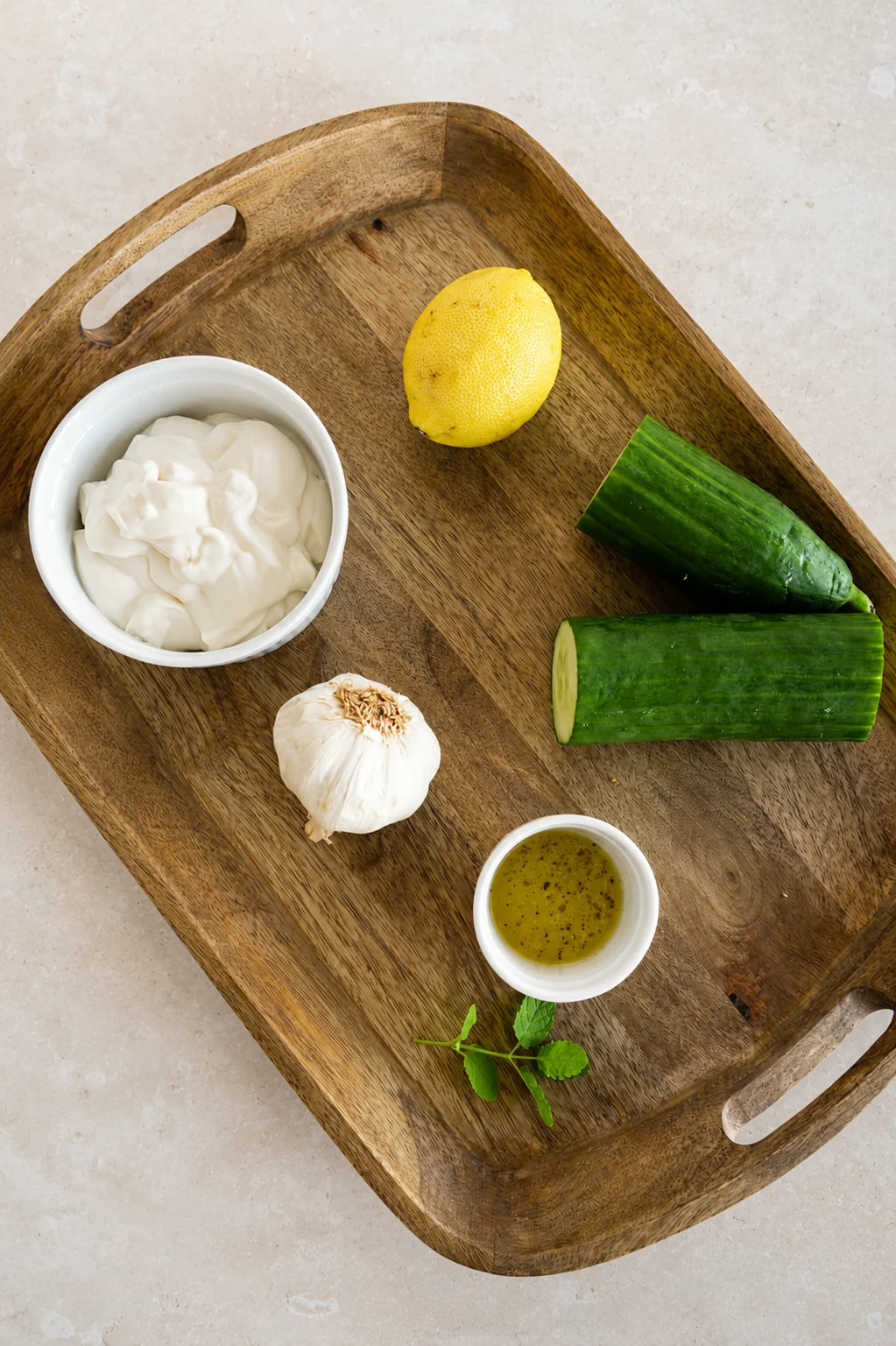
Unsweetened Plant-Based Yogurt
The yogurt is the base of this vegan tzatziki sauce, so it is the ingredient that matters most. Choose a plain, unsweetened plant-based yogurt with a thick and creamy texture. Soy yogurt is usually the best option because it has a neutral flavor and a natural tanginess that works very well in savory recipes.
Avoid sweetened or vanilla-flavored yogurts, even if the sweetness seems mild. Tzatziki needs to be fresh, savory, and slightly acidic, so any sweetness will change the balance of the sauce.
Substitution: If you do not want to use soy yogurt, you can use unsweetened coconut yogurt, cashew yogurt, or another thick dairy-free yogurt. . For a richer version, you can also add a spoonful of cashew cream to the yogurt. Alternatively, you can blend silken tofu or soaked cashews until smooth to create a creamy base without using yogurt.
Cucumber
Cucumber gives tzatziki its freshness, lightness, and cooling texture. For the best result, grate the cucumber and squeeze it very well before adding it to the yogurt. This step is important because cucumber contains a lot of water, and if you skip it, the sauce can become too loose.
You can peel the cucumber or leave the skin on, depending on the texture you prefer. If the skin is thin and tender, I usually keep it on for extra color and freshness.
Substitution: If you do not have cucumber, you can still make a creamy garlic yogurt sauce, but it will not be a true tzatziki-style sauce. For a similar fresh effect, you could use finely grated zucchini, but it should also be squeezed very well before mixing.
Garlic
Garlic gives tzatziki its sharp, umami savory depth. Because this sauce is not cooked, garlic stays quite strong, so a small amount is usually enough. Finely grate it or crush it into a paste so it blends smoothly into the yogurt instead of creating harsh pieces. If you prefer a more delicate flavor, start with half a clove, let the sauce rest, and taste it before adding more.
Substitution: For a milder version, you can use roasted garlic, garlic powder, or a small amount of garlic-infused olive oil. Garlic powder is less fresh, but it works if you want a softer and more even flavour.
Lemon Juice
Lemon juice adds brightness and acidity. It helps balance the richness of the yogurt and olive oil, while making the whole sauce taste fresher. Add it gradually and adjust at the end, because different plant-based yogurts have different levels of tanginess.
Substitution: You can replace lemon juice with white wine vinegar or apple cider vinegar. Vinegar gives a slightly sharper flavor, while lemon keeps the sauce softer and more fragrant.
Extra Virgin Olive Oil
Olive oil adds richness, body, and a more Mediterranean flavor. It also helps round out the acidity of the yogurt and lemon, making the vegan tzatziki sauce feel smoother and more complete. Use a good extra virgin olive oil if you can, because its flavor will be noticeable in the final sauce.
Substitution: You can omit the olive oil for a lighter version, but the sauce will taste less rounded. If needed, you can use another mild oil, although extra virgin olive oil is the best choice for both flavor and tradition of the recipe.
Fresh Mint
In this version, I use fresh mint instead of dill. While dill is traditionally used in Greek-style tzatziki, mint is more common in Turkish variations. Both are delicious, just slightly different in character.
I chose mint because it reminds me of the first tzatziki-style sauce I tasted in Istanbul: fresh, cooling, and incredibly fragrant. It gives the sauce a brighter, more refreshing flavor that pairs beautifully with cucumber and garlic. Use fresh mint if possible, finely chopped so it blends evenly into the yogurt.
Substitution: If you prefer a more classic Greek flavor, you can use fresh dill instead. Parsley also works for a milder, more neutral version, or you can combine mint and dill for a more layered herbal note.
Salt and Black Pepper
Salt is essential because it brings all the flavors together: the yogurt becomes tangier, the cucumber tastes fresher, and the garlic becomes more balanced. Black pepper adds a gentle warmth without making the sauce spicy. Taste the tzatziki after it has rested in the fridge, then adjust the seasoning if needed. The flavor will become more developed with time.
Substitution: You can use sea salt, fine salt, or flaky salt, depending on what you have. If you want a slightly more complex flavor, you can add a very small pinch of smoked salt, but keep it delicate so it does not overpower the freshness of the sauce.
Optional Decorations
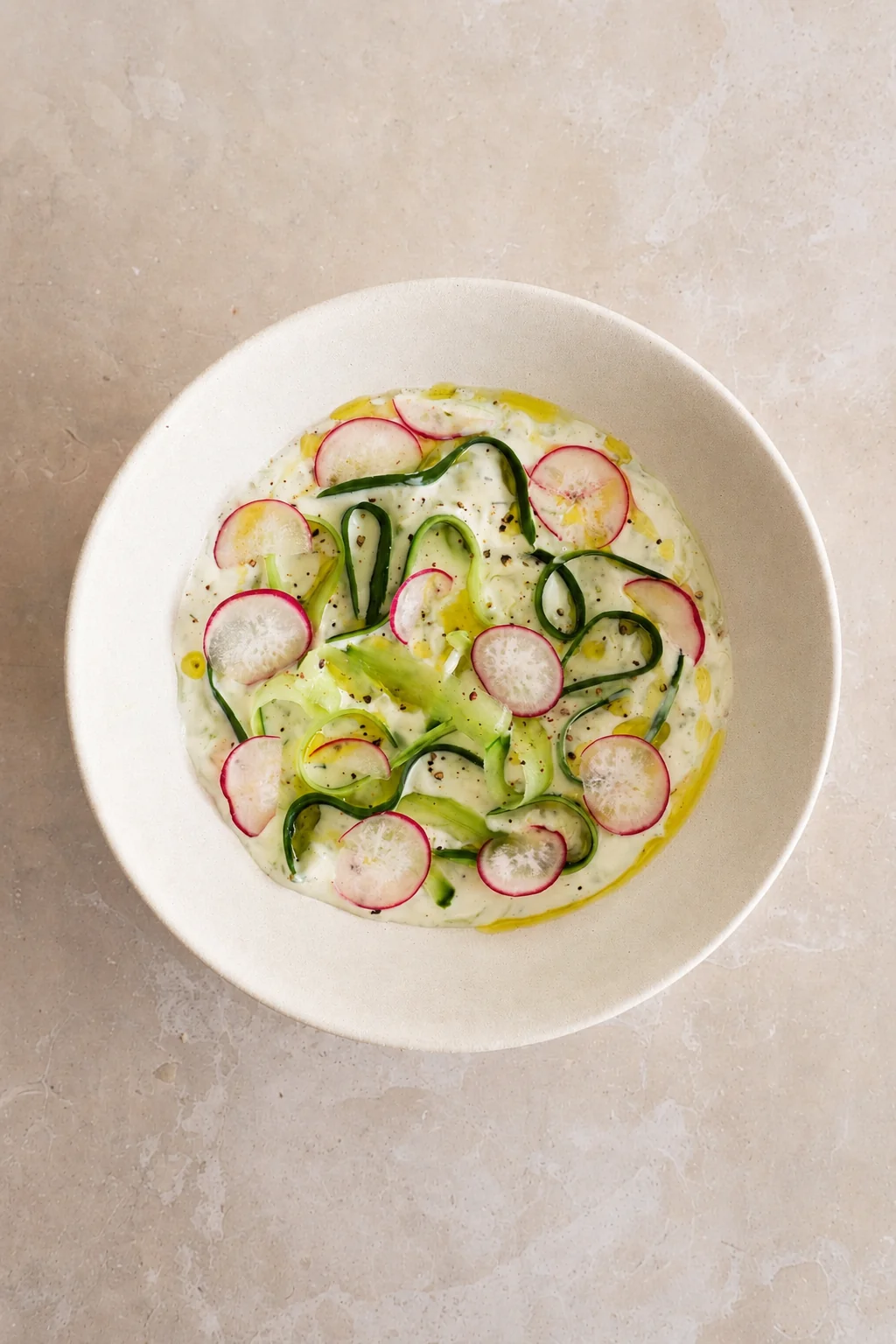
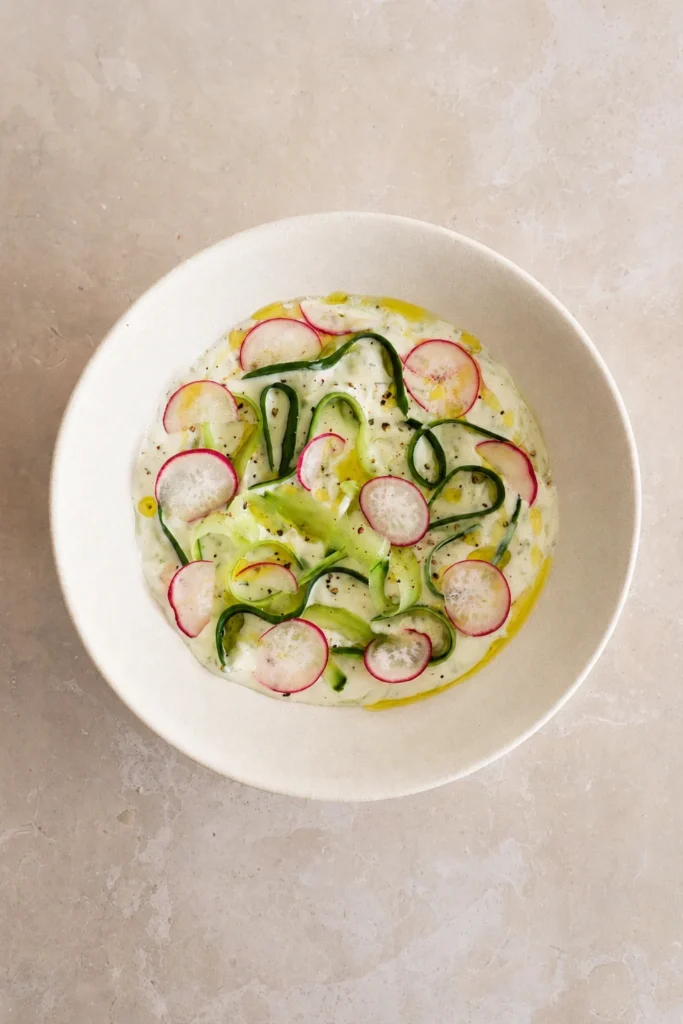
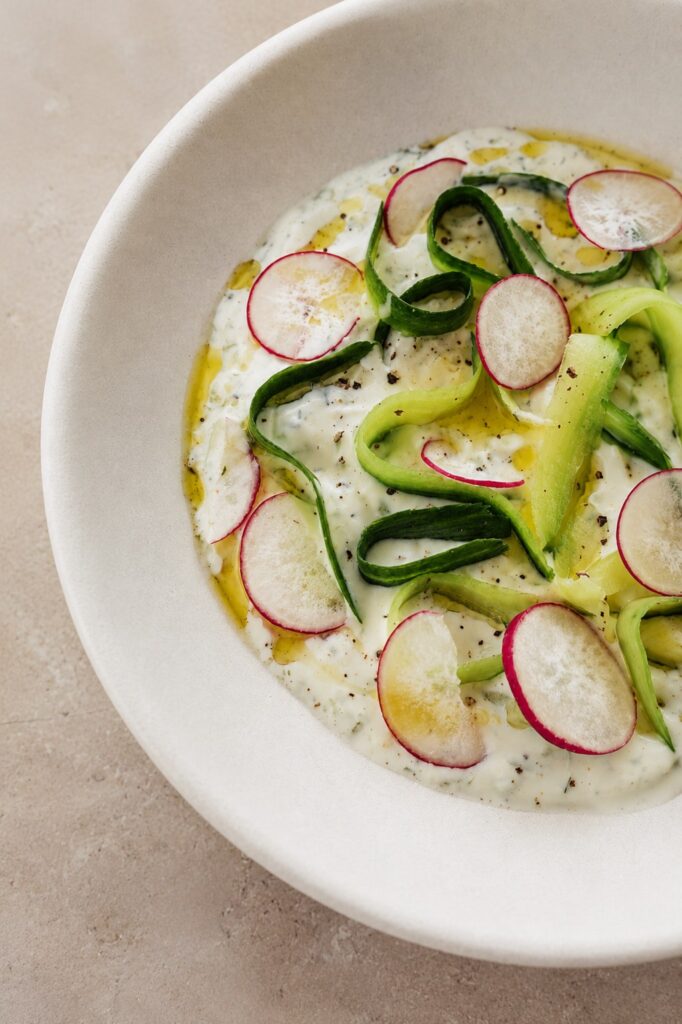
Decorating tzatziki is not essential, but it is one of those small gestures that can make a very simple sauce feel beautiful on the table. For this version, I used cucumber shaved into thin ribbons with a vegetable peeler and a few slices of radish, because if there is one contrast I always love in cooking, it is the meeting between pinks, purples, and greens.
You can be creative here and use whatever fresh vegetables, fruits, or herbs you have. Thin cucumber slices, radishes, fresh mint, dill, parsley, lemon zest, or a drizzle of olive oil all work beautifully.
In Turkey, I also saw tzatziki-style sauces decorated with pomegranate seeds and fresh mint, and the effect was truly stunning: fresh, colorful, and almost jewel-like.
How to Make Vegan Tzatziki Sauce
Veganizing tzatziki is simple and intuitive, at least in its most basic version. However, there are a few small steps that are essential to get it just right. As always, here we focus on the steps, but if you want to jump straight to the recipe, you’ll find everything in the card below.
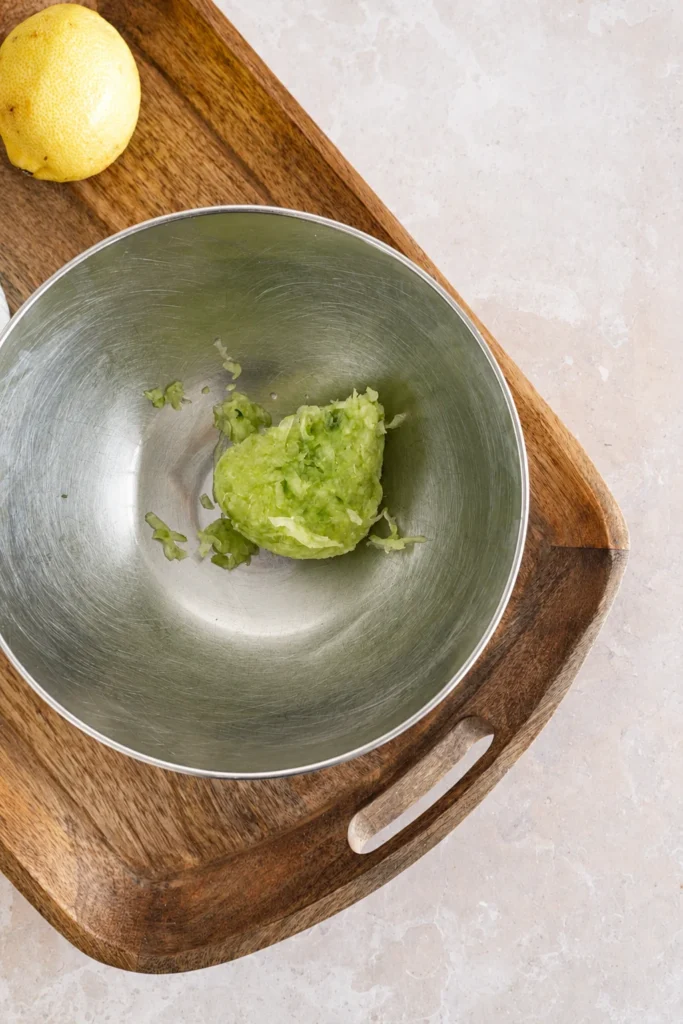
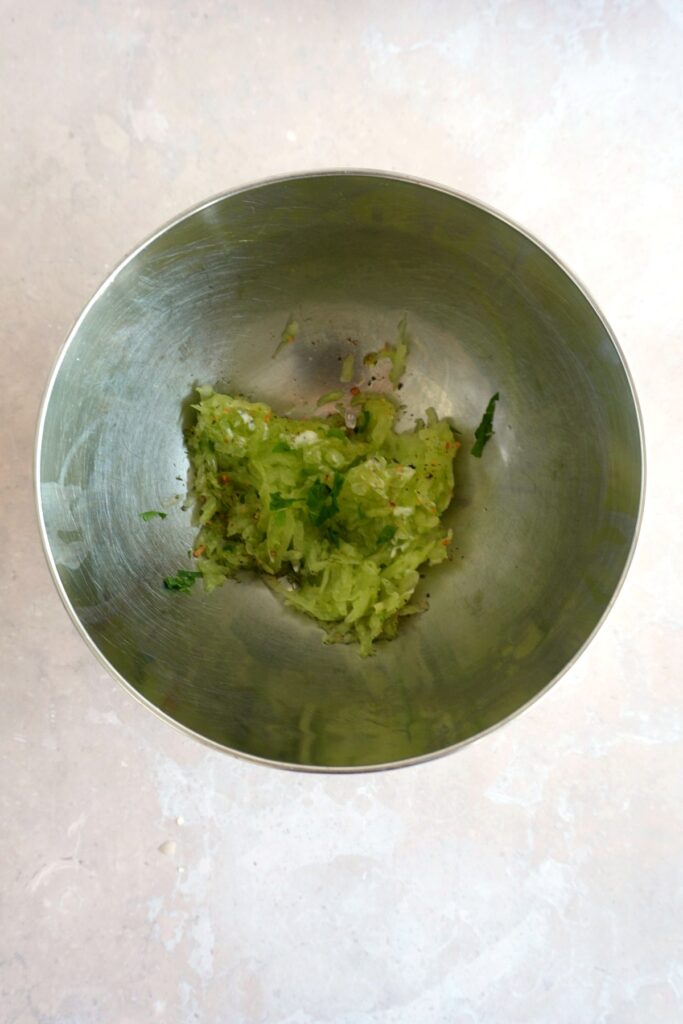
Step 1: Grate and Squeeze the Cucumber
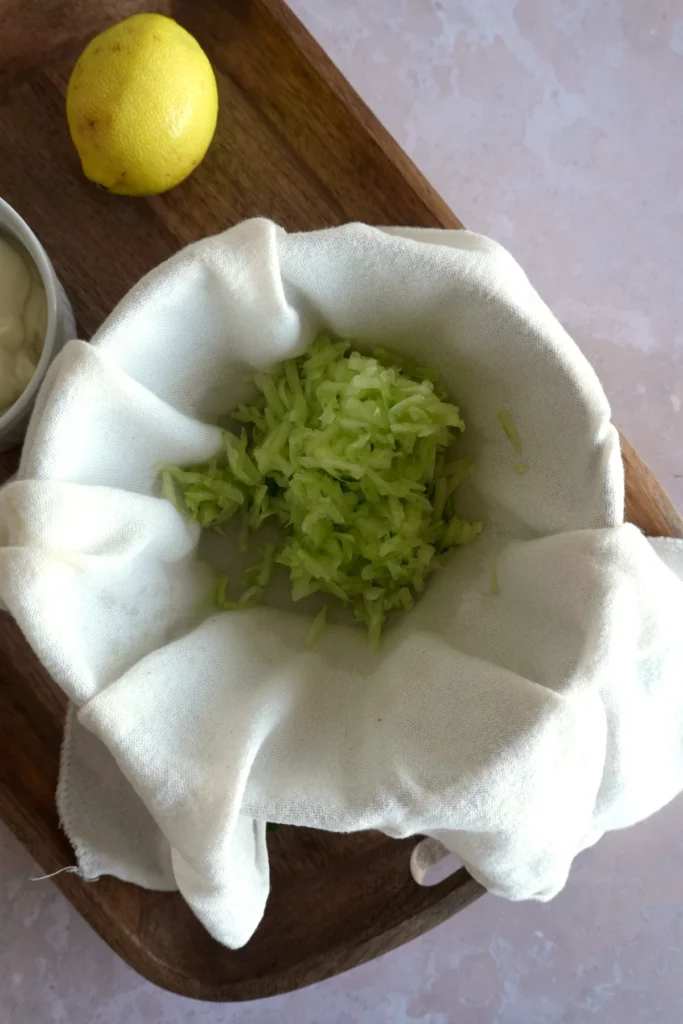
When grating the cucumber, use the coarse side of a box grater and grate it directly into a bowl. Once grated, gather the cucumber in your hands or place it in a clean kitchen towel or cheesecloth and squeeze firmly to remove as much liquid as possible. This step is essential to prevent the tzatziki from becoming watery and to keep the texture creamy.
Don’t throw away the cucumber water! Add a splash of lime and a drizzle of agave syrup, and you’ll have a refreshing drink.

Step 2: Mix the Base Ingredients
In a bowl, combine the unsweetened plant-based yogurt with the grated garlic, lemon juice, extra virgin olive oil, chopped fresh mint, salt, and black pepper. Mix everything until smooth and well combined.
Add the squeezed cucumber and stir again. At this point, taste the sauce and adjust it depending on your yogurt. Some plant-based yogurts are naturally tangier, while others are milder, so you may want to add a little more lemon juice, salt, or herbs.
Step 3: Let It Rest
For the best flavor, let the vegan tzatziki rest in the fridge for at least 20 minutes before serving. This gives the garlic time to soften, the herbs time to infuse the yogurt, and the whole sauce time to become fresher, creamier, and more balanced.
Step 4: Serve and Decorate
Before serving, stir it once more and finish with your decorations if you like: cucumber ribbons, radish slices, fresh mint, olive oil, or a few pomegranate seeds for a brighter, more colorful touch.
Best Vegan Yogurt for Tzatziki
The yogurt deserves its own section because the entire recipe depends on it. In general, my advice is to choose a Greek-style soy yogurt. I often use the one from Alpro, but other brands work just as well if you can’t find it (I know it’s not widely available everywhere). Whatever yogurt you choose, it’s important that it is unsweetened. We don’t want a sweet tzatziki.
Cashew yogurt is another excellent option if you want a richer and creamier vegan tzatziki sauce. It has a softer, rounder flavor and can make the sauce feel slightly more luxurious. The only downside is that it is not always as easy to find and can be more expensive. Alternatively, you can blend cashews with a small amount of water and mix them with lemon juice. You can then add a bit of plant-based milk if you find it too thick.
If, like me, you are gluten-free, always check the label, especially with oat-based yogurts, as not all of them are certified gluten-free. For the cleanest flavor and texture, my first choice remains plain unsweetened soy yogurt.
Should You Strain Vegan Yogurt for Tzatziki?
Many recipes recommend straining the yogurt through a fine-mesh sieve or cheesecloth, sometimes even overnight. This is definitely effective if you want a very thick, almost Greek-style cream, and it can be useful if your plant-based yogurt is quite runny.
However, it also depends on the texture you personally prefer. I like my vegan tzatziki to be creamy but still fresh and spoonable, with a medium-thick consistency rather than an overly dense one. When I use a thick soy yogurt, I don’t usually feel the need to strain it. It already gives the sauce enough body while keeping it light and refreshing. So, the best suggestion is to go with what you feel is best for you. The most important thing is to squeeze the grated cucumber well, because it is the ingredient that contains the most water.
How to Serve Vegan Tzatziki Sauce
Vegan tzatziki is one of those sauces that can move easily across the table. It is fresh enough to serve as a dip, creamy enough to use as a sauce, and bright enough to bring balance to warm, roasted, or spiced dishes. Here are few ideas:
- With vegetables and legumes: Serve vegan tzatziki as a fresh side for vegetables and legumes, whether they are roasted, boiled, sautéed, or raw. It works beautifully with simple vegetable dishes, especially sautéed zucchini, green beans, roasted carrots, potatoes, chickpeas, lentils, or white beans. You can also use it to dress salads: it pairs especially well with bean salads. Try spooning it into this vegan bean salad and mixing everything together for a creamier, fresher version.
- As a dip: Use it as a vegan tzatziki dip with cucumber sticks, carrots, radishes, cherry tomatoes, raw fennel, gluten-free crackers, or warm gluten-free flatbread. It is fresh, light, and perfect for sharing.
- With Mediterranean-style dishes: Vegan tzatziki is perfect with falafel, vegan gyros, chickpea patties, grilled eggplant, roasted peppers, stuffed vegetables, or rice bowls. It brings a cooling contrast to warm, savory, or spiced dishes.
- In wraps and sandwiches: Spread it inside wraps, pita-style breads, sandwiches, or gluten-free flatbreads. It adds creaminess without making the whole dish feel heavy.
- Over roasted potatoes: One of the simplest and best ways to serve it is with roasted potatoes. The contrast between crispy, golden potatoes and cold, creamy tzatziki is sooo good.
- With soups and curries: Have you ever tried using it as a topping over soups? I do it all the time, just like in Indian cuisine where yogurt is often added over curries. Try it as a garnish on my vegan korma for a fresh, creamy contrast.
- With spicy or smoky food: Tzatziki is especially useful next to dishes with heat, smoke, or strong spices. The yogurt, cucumber, lemon, and mint help soften the intensity and make the whole meal feel more balanced.

Vegan Tzatziki Sauce Recipe
Equipment
Ingredients
- 3/4 cup Unsweetened plant-based yogurt
- 3/4 cup Cucumber, grated
- 1 clove Garlic
- 1 tbsp Lemon juice
- 2 tbsp Extra virgin olive oil
- 1 tbsp Fresh Mint
- 1/4 tsp Fine Sea Salt
- To Taste Black Pepper
For the Decoration – Optional
- Few Cucumber Ribbons
- Few Radish Slices
- Few Fresh Mint Leaves
- 1 tbsp Extra virgin olive oil
Instructions
- Grate the cucumber using the coarse side of a box grater.3/4 cup Cucumber, grated
- Place the grated cucumber in your hands, a clean kitchen towel, or cheesecloth, and squeeze very well to remove as much liquid as possible. This step is essential to keep the vegan tzatziki creamy instead of watery.
- In a bowl, combine the 3/4 cup Unsweetened plant-based yogurt, grated garlic, lemon juice, 2 tbsp Extra virgin olive oil, chopped fresh mint, salt, and black pepper. Mix until smooth and well combined.3/4 cup Unsweetened plant-based yogurt, 1 clove Garlic, 1 tbsp Lemon juice, 2 tbsp Extra virgin olive oil, 1 tbsp Fresh Mint, To Taste Black Pepper, 1/4 tsp Fine Sea Salt
- Add the squeezed cucumber and stir again.3/4 cup Cucumber, grated
- Taste and adjust if needed, adding more lemon juice, salt, pepper, or mint depending on your yogurt and personal preference.
- Let the vegan tzatziki rest in the fridge for at least 20 minutes before serving. This allows the garlic to soften and the flavors to become more balanced.
- Before serving, stir once more and decorate with cucumber ribbons, radish slices, fresh mint, olive oil, or pomegranate seeds if desired.Few Cucumber Ribbons, Few Fresh Mint Leaves, 1 tbsp Extra virgin olive oil
Notes
Nutrition