This article contains affiliate links. If you purchase through them, INUMAMI may earn a small commission at no extra cost to you. We only recommend what we genuinely use and trust and your support means the world to us.
Just back from my travels in Andalusia, between Seville and Malaga, I went through that familiar phase that comes with loving both cooking and traveling: the one where you can’t stop thinking about what you’ve eaten. During those days, I tasted gazpacho in every possible form, every day, in every place.
I became so obsessed with this cold, fresh, and incredibly simple soup that I started experimenting with it in every way. A typical dish of Andalusian culture, gazpacho has ancient and fascinating origins. In the scorching summers of southern Spain, this soup is not just a dish, but a true cultural symbol and a natural remedy against the heat.
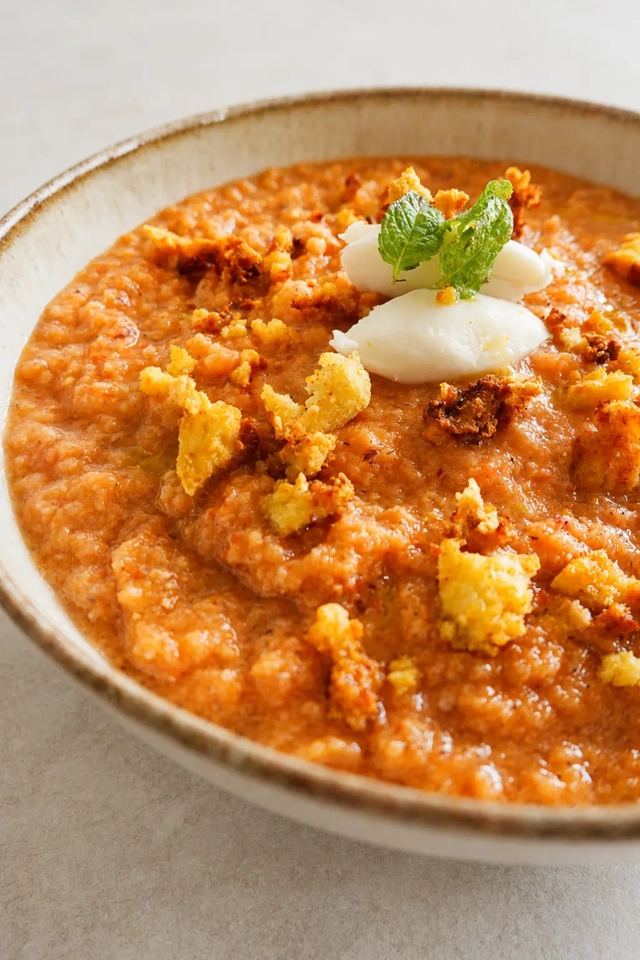
Gazpacho can be made in many ways, staying true to the traditional base while adding creativity and seasonal ingredients. My vegan gazpacho features melon and cherry tomatoes as the two stars of the dish and comes together in less than 15 minutes. In this recipe, you will find everything you need to know about this traditional Andalusian dish, along with a step-by-step guide.
The Origins of Gazpacho: A Simple Soup with Deep Roots
For centuries, gazpacho was the defining meal of Andalusian agricultural workers, harvesters, and shepherds. It was prepared directly in the fields by crushing the ingredients in large wooden mortars called dornillos. It was the perfect lunch: inexpensive, easy to carry, and able to quench thirst while providing mineral salts to those working under the sun for many hours.
Although today we tend to think of vegetables as the true stars of gazpacho, this dish was actually born as a way to avoid wasting stale bread from the previous days. Later, with the discovery of the Americas and the arrival of ingredients from overseas, gazpacho gradually made room for tomatoes as its main ingredient, becoming a symbol of the way Spain was able to merge its Roman and Arab roots with the discoveries of the New World.
Is Gazpacho Vegan?
In its most basic and traditional form, Andalusian gazpacho is a 100% vegan dish. It is made exclusively with plant-based ingredients: tomatoes, peppers, cucumber, garlic, stale bread, vinegar, salt, and extra virgin olive oil.
However, gazpacho is often served with what Andalusians call tropezones, small toppings or garnishes added just before serving. These can sometimes include chopped hard-boiled eggs. In this recipe, I use a special 100% vegan garnish instead. But if you want to replace chopped hard-boiled egg more directly, you can read my full list of egg substitutes brands and choose the option that works best for you.
Why You’ll Love This Vegan Gazpacho
This vegan gazpacho is built on the essential pillars of traditional Andalusian gazpacho, but with a few thoughtful additions and small adjustments to make it completely vegan and gluten-free.
By using gluten free bread and working with fresh vegetables and fruit, the result is lighter, more digestible, and still beautifully full-bodied. A small addition of peach brings a delicate sweetness that helps round out the acidity of the tomatoes and creates a gazpacho where all the flavors feel balanced and deeply connected.
Fresh, complex in its simplicity, and beautiful to serve, this is the kind of cold summer soup that immediately brings you back to Andalusia. ¡Olé!
Vegan Gazpacho Ingredients and Substitutions
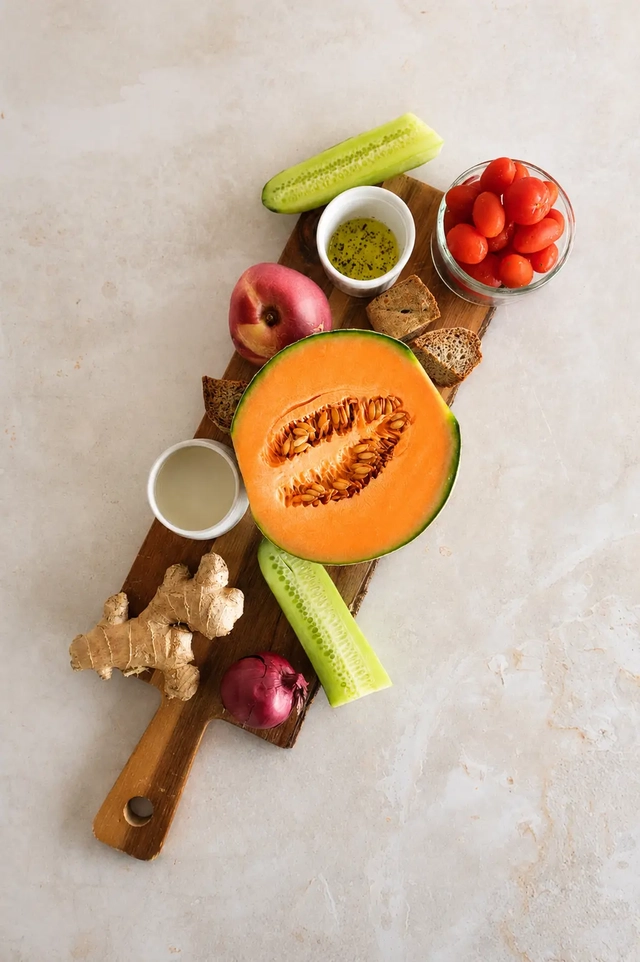
You will find the full recipe measurements in the recipe card below, but here we will focus on understanding which ingredients I used, why they matter, and which substitutions are possible.
If you are short on time and want to keep the promised 15-minute preparation — or even less — you can skip directly to the recipe card and follow the step-by-step instructions.
Stale Bread
Stale bread is one of the essential elements of traditional gazpacho. In fact, gazpacho was originally born as an economical, anti-waste recipe, created to use up bread from the previous days.
For this vegan gazpacho, I used homemade buckwheat bread that I had stored in the freezer. Since I rarely have leftover bread at home, I usually freeze it after baking, so I simply toasted it straight from the freezer before adding it to this recipe.
If you have bread in the freezer, you can do the same. Otherwise, use any stale bread you already have, or even fresh bread that has been lightly toasted to recreate the firmer texture of day-old bread.
I personally use only gluten-free flours, but if you are not gluten-free, you can also make this recipe with your usual wheat bread.
Vinegar
Vinegar is another core foundation of traditional Andalusian gazpacho. Historically, it was used to soak the stale bread, which, because of its gluten structure, responded better to vinegar than to water. Even though we are not relying on that same chemical effect here, vinegar still plays an essential role. It brings the perfect acidic note to a recipe that naturally contains many sweet ingredients.
I use apple cider vinegar, but you can also use rice vinegar or another vinegar you like. The important thing is to keep that bright acidic balance, because it is what makes gazpacho taste fresh, sharp, and complete.
Cantaloupe Melon
Cantaloupe melon is often used in more contemporary versions of Andalusian gazpacho, even though it was not part of the oldest traditional preparations. I use it as the star of the dish for this vegan gazpacho. It works beautifully because it brings freshness and a delicate sweetness that balances the acidity of the tomatoes, the sharpness of the vinegar, and the depth of the olive oil.
As an alternative, you can use other types of melon, such as yellow melon. You can also replace the melon with watermelon for an even juicier and more summery recipe version.
Tomatoes
Tomatoes are the true star of traditional gazpacho. After they arrived in Europe from the Americas, they were gradually incorporated into this recipe, which had always been shaped by what was available from the fields.
For this version, I used datterini tomatoes because I love their naturally sweet, intense, and concentrated flavor. They give this vegan gazpacho a beautiful depth without needing to add anything extra.
As an alternative, you can use any ripe, flavorful tomatoes you like. Vine-ripened tomatoes, Roma tomatoes, plum tomatoes, or San Marzano-style tomatoes all work well, as long as they are sweet, juicy, and fully ripe. Try to avoid pale or watery salad tomatoes, because gazpacho is a raw recipe and the flavor of the tomatoes remains at the center of the dish.
Cucumber
Before tomatoes became part of gazpacho, this cold Andalusian soup was much lighter in color, and cucumber was one of its most important vegetables. Farmers understood its value very well: cucumber is made almost entirely of water, which helped hydrate the body and naturally stretch the soup, making it more refreshing and abundant.
In this vegan gazpacho, I use cucumber for the same reason. It adds freshness, lightness, and a clean watery note that balances the sweetness of the tomatoes, melon, and peach.
If you do not have cucumber, you can simply omit it. As an alternative, you can use a small piece of peeled raw zucchini, which has a mild flavor and a similar water-rich texture. You can also add a little more tomato and a splash of cold water to keep the gazpacho fluid and refreshing. Celery can work too, but use it sparingly, as its flavor is much stronger and more aromatic.
Onion
Onion opens one of the great gazpacho debates. In some parts of Andalusia, people argue that onion should not be added to gazpacho, especially because this soup is often prepared the day before and stored in the fridge, where onion can ferment more quickly and alter the flavor.
In other areas of Andalusia, especially around Málaga and Granada, onion is accepted and often considered part of the flavor profile. Over time, one practical compromise has been to finely chop the onion and serve it separately as a garnish, so everyone can add it according to taste.
For this vegan gazpacho, I blend the onion together with the other ingredients because I do not make it for long storage. I usually serve it shortly after preparing it, when the flavor is still fresh and balanced.
If you do not have onion, you can simply omit it. If you are not sure everyone will enjoy it, serve it on the side in small cubes. And if you are firmly on team garlic, you can use garlic instead of onion for a sharper, more traditional note.
Ginger
Ginger was absolutely not part of the original gazpacho recipe. At the time, it would have been a luxury ingredient, rare and difficult to find.
Today, of course, that is no longer the case, and I personally love using it almost everywhere. In this vegan gazpacho, ginger adds a subtle spicy note and a more interesting flavor profile, bringing warmth and contrast to the freshness of the tomatoes, cucumber, and melon. It is also an ingredient appreciated for its digestive qualities, which makes it especially lovely in a cold raw soup like this one.
If you do not have ginger, or if you do not enjoy its flavor, you can omit it. But I personally recommend keeping it, because in this recipe it works beautifully.
Peach
Adding fruit to gazpacho, as with melon, belongs more to contemporary interpretations of the recipe than to the oldest traditional versions. In ancient gazpacho, the only real exception was grapes, which were abundant in the fields and naturally suited to this kind of preparation.
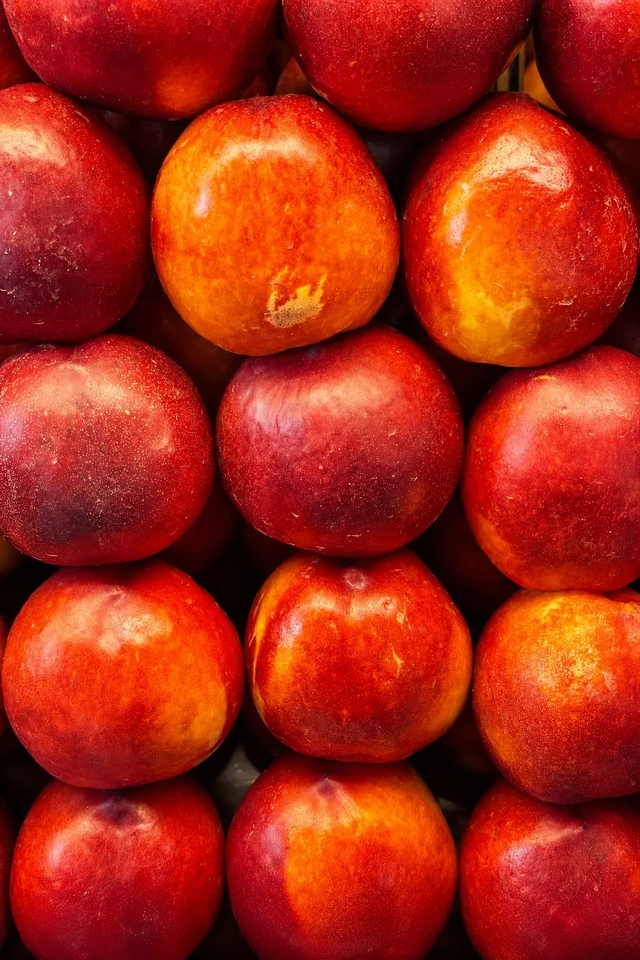
For this vegan gazpacho, I used peach because it was perfectly ripe and ready to be used instead of wasted. And in the end, this is very much the true spirit of gazpacho: taking what is available, ripe, and full of flavor, and turning it into something refreshing, generous, and complete.
If you do not have peach, you can use grapes to stay closer to the older tradition, or simply omit both. The gazpacho will still work beautifully, especially if your tomatoes and melon are ripe and flavorful.
Olive Oil, Salt, Pepper, and Dried Mint
Olive oil, salt, pepper, and dried mint are simple seasonings, but they play an important role in this recipe. In traditional gazpacho, salt was especially useful because it helped draw water out of the vegetables as they were crushed in the mortar, long before anyone had the convenience of my blender.
The olive oil gives the gazpacho a smoother texture and a more rounded flavor, while pepper and dried mint add a subtle aromatic note that keeps everything fresh and balanced. You can keep the seasoning simple, as I do here, or add other herbs you enjoy. Fresh basil, parsley, or a little extra mint would all work well.
Garnish
When it comes to the garnish, you can really get creative, just as many Andalusian restaurants do. Gazpacho is often served with small toppings that add contrast, texture, and a more complete feeling to the dish.
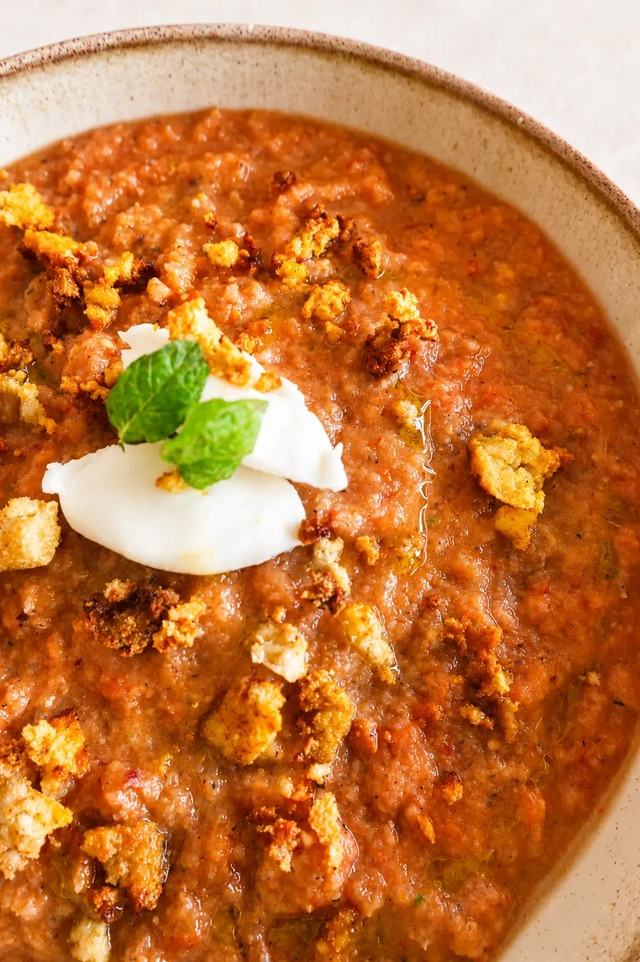
For this vegan gazpacho, I used two different garnish elements. The first is a simple cream made by mixing cashew cream with vegan cream cheese and a little lemon juice. It adds a fresh, slightly tangy, and creamy note that balances the acidity of the gazpacho without making it heavy.
The second element is crispy roasted tofu. I had some leftover tofu, so I roasted it until golden and crisp, then used it as a topping. It adds crunch, contrast, and a small protein component, which makes the gazpacho more satisfying if you want to serve it as a light meal rather than just a starter.
You can keep it simple like this, or use diced cucumber, tomato, onion, fresh herbs, croutons, fermented vegetables, or any other vegan garnish you like.
How to Make Vegan Gazpacho Step by Step
Making this vegan gazpacho is very simple, but the order matters. Since this is a raw recipe, there is no cooking step to correct or soften the flavors later. Everything depends on balance: the sweetness of the fruit, the acidity of the vinegar, the freshness of the vegetables, and the texture created by the bread and olive oil. If you prefer to go straight to the exact quantities and full recipe, you can jump directly to the recipe card.
Step 1: Prepare the Bread
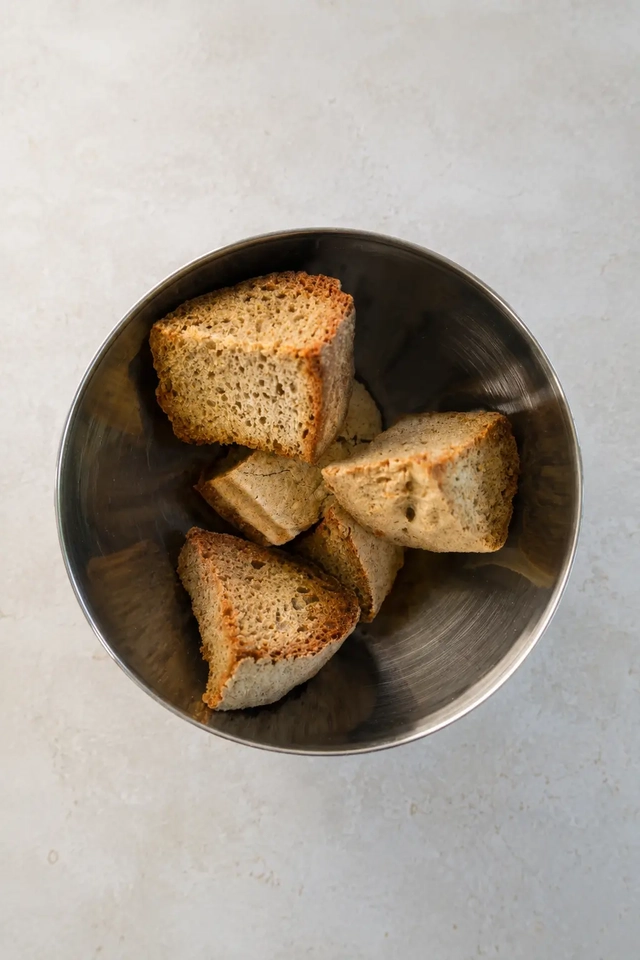
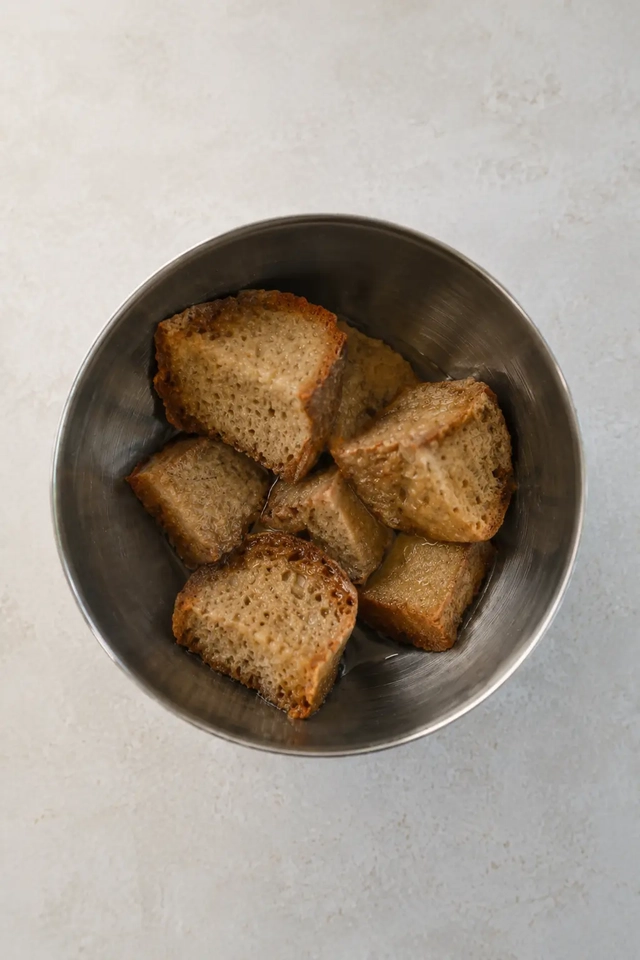
Start by preparing the bread. If you are using stale bread, tear it into smaller pieces and place it in a bowl with the vinegar. Let it soften while you prepare the rest of the ingredients.
If you are using frozen bread, toast it first, then break it into pieces and soak it with the vinegar in the same way. This will help it blend more easily and create a smoother, more traditional gazpacho texture.
Step 2: Prepare the Vegetables and Fruit
Wash the tomatoes, cucumber, cantaloupe melon, peach, and mint if you are using fresh herbs. Roughly chop everything into pieces that your blender can handle.
There is no need to be too precise here. Gazpacho was originally made by crushing ingredients together in a mortar, so the idea is not perfection, but extraction: helping the vegetables and fruit release their water, flavor, and natural sweetness.
Step 3: Add Everything to the Blender
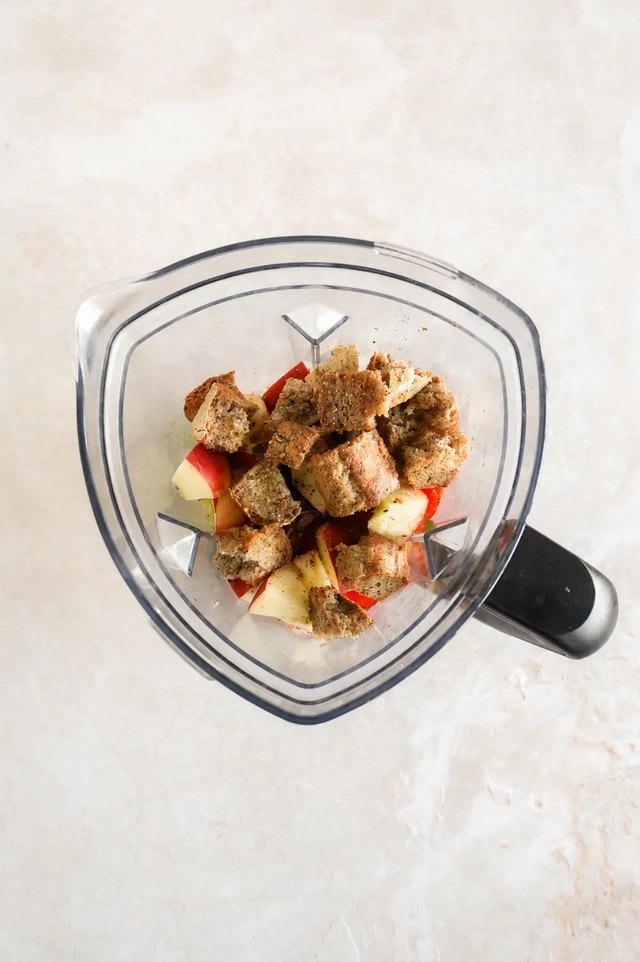
Add the tomatoes, cucumber, cantaloupe melon, peach, onion, ginger, soaked bread, vinegar, salt, pepper, dried mint, and extra virgin olive oil to a blender.
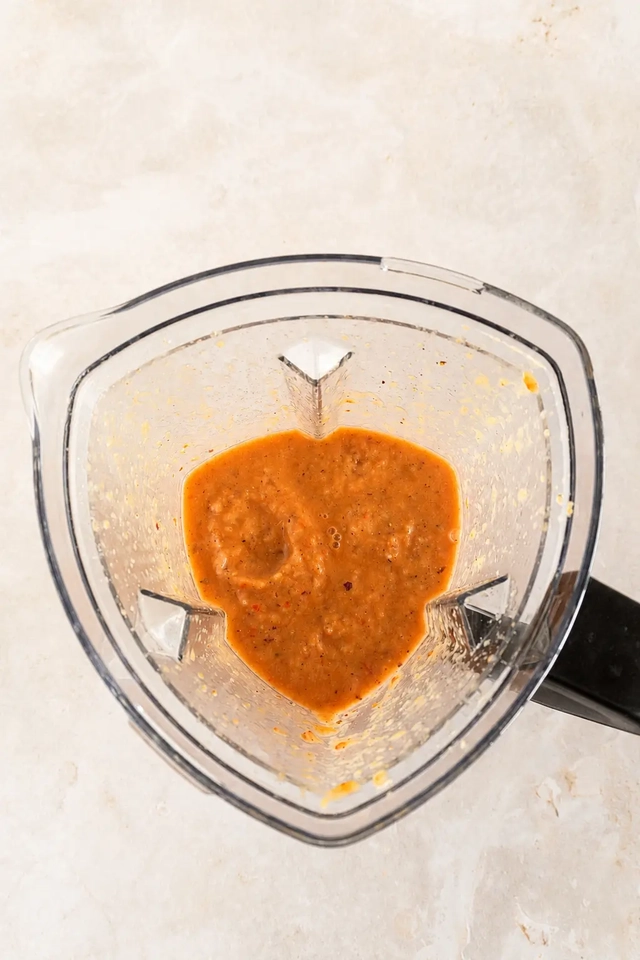
Blend until smooth. If the mixture feels too thick, add a small amount of cold water, one tablespoon at a time, until you reach the texture you prefer.
How much you blend is quite personal. I prefer gazpacho with some texture, so I never blend it until it is completely smooth, but this is just a matter of preference. Even in Andalusia, I have tasted both versions. Since this recipe was originally made using a mortar, it was probably not completely smooth to begin with.
Step 4: Taste and Adjust
Taste the gazpacho before chilling it. This is the moment to adjust the balance. If it tastes too sweet, add a little more vinegar or salt. If it tastes too sharp, add a little more melon or peach. If it feels flat, it probably needs a small pinch of salt or another drizzle of olive oil.
The goal is a gazpacho that feels fresh, rounded, and slightly acidic, with all the ingredients blending into one clean, harmonious flavor.
Step 5: Chill Before Serving
Transfer the gazpacho to the fridge and let it chill before serving. Even 30 minutes will help, but if you have time, one hour is better.
Chilling allows the flavors to settle and become more connected. It also makes the gazpacho much more refreshing, which is exactly what this recipe is meant to be.
Step 6: Serve with the Garnish
Serve the gazpacho cold, with your vegan garnish on top. You can also add diced cucumber, onion, tomatoes, melon, herbs, black pepper, or a drizzle of extra virgin olive oil.
In this recipe I prepared a cashew and vegan cheese cream. You can follow traditional garnishes and add vegan hard-boiled egg on top, or fermented beets. I also had some leftover tofu, so I roasted it until crisp and added it on top. This brings a crunchy element to the dish and also adds a little protein, making the gazpacho feel more complete as a light meal. Alternatively, you can simply dice cucumbers and tomatoes into small cubes, season them, and use them as a topping.
Vegan and Gluten Free Gazpacho Recipe: Cold, Fresh and Ready in 15 Minutes
Equipment
Ingredients
For the Gazpacho
- 3 cups Datterini tomatoes
- 1½ cups Cantaloupe Melon
- 1 Peach
- 1 Cucumber
- 1 cup Stale Bread or toasted gluten-free bread, cubed
- 2 tbsp Apple Cider Vinegar
- 3 tbsp Olive Oil
- ¼ cup Chopped Onion
- 1 tsp fresh grated ginger
- 1 tsp Mint
- To Taste Salt
- To Taste Black Pepper
For the Garnish – Optional
- 4.2 oz Cashew Cream Simply blend Cashew with water to obtain it
- 4.2 oz Vegan Cheese Cream
- 2 tsp Lemon juice
- 5 oz Tofu
- 2 tbsp Olive Oil
- To Taste Salt
Instructions
For the Gazpacho
- If you are using stale bread, tear it into smaller pieces and place it in a bowl with the vinegar. Let it soften while you prepare the rest of the ingredients.If you are using frozen bread, toast it first, then break it into pieces and soak it with the vinegar in the same way. This helps the bread blend more easily and gives the gazpacho a more traditional texture.
- Wash the tomatoes, cucumber, cantaloupe melon, and peach. Roughly chop everything into pieces that your blender can handle.
- Add the tomatoes, cantaloupe melon, peach, cucumber, onion, ginger, soaked bread, vinegar, olive oil, dried mint, salt, and black pepper to a blender.Blend until you reach your preferred texture. Taste and adjust with more salt, vinegar, olive oil, or pepper if needed.
- Transfer the gazpacho to the fridge and let it chill for 30 minutes before serving. This helps the flavors settle and makes the soup more refreshing.
For the Garnish – Optional
- In a small bowl, mix the cashew cream with the vegan cream cheese and lemon juice. Add a pinch of salt and stir until smooth. Taste and adjust with more lemon juice if you want a brighter, more acidic flavor.
- If using tofu as a garnish, cut it into small cubes and roast or pan-fry until golden and crisp. Season with salt and black pepper.
- Serve the vegan gazpacho cold with the creamy vegan garnish on top. Add crispy tofu if using, plus extra mint, black pepper, or a drizzle of olive oil.
Notes
Storage Note
Store the vegan gazpacho in an airtight container in the refrigerator for up to 2 days. Stir well before serving, as the texture may naturally separate slightly while resting. For the best flavor and freshness, serve it cold, but not icy.Nutrition Note
The nutritional information is an estimate and may vary depending on the exact tomatoes, bread, olive oil, vegan cream cheese, cashew cream, tofu, and quantities used. For the most accurate result, adjust the calculation based on the specific products and amounts you choose.Recipe Testing Note
All recipes on this site, including this vegan gazpacho, are tested before publication. The photos are original and taken during the actual recipe testing process, so they reflect the real final dish prepared in our kitchen.Substitutions Note
If you’d like to try ingredient substitutions or different variations, you can find all the suggested options in the dedicated sections above the recipe card.Nutrition