This article contains affiliate links. If you purchase through them, INUMAMI may earn a small commission at no extra cost to you. We only recommend what we genuinely use and trust and your support means the world to us.
I own a tofu press. I almost never use it for pressing tofu. I use it to make tofu from scratch, but when it comes to pressing a ready-made block, I always end up reaching for whatever else is in the kitchen instead. I genuinely cannot explain why. What I can tell you is that this particular habit has given me an unreasonable amount of experience with improvised pressing methods, failed experiments, and hard-won problem-solving that I am now very happy to pass on.
In this guide you will find every possible method for pressing tofu without a press, whether you do not own one, cannot find it, or simply share my inexplicable psychological resistance to taking it out of the cupboard. All methods tested in a real kitchen. No special equipment required, just a bit of creativity.
Why You Need to Press Tofu, and What Happens If You Don’t
Pressing tofu is not a fussy extra step, it is the difference between a block of protein that absorbs flavour and one that simply releases water into your pan. Tofu is essentially a sponge: its internal structure is full of tiny spaces that hold liquid between the protein fibres. When you press it, you compact those fibres, eliminate the spaces, and push the water out. What you are left with is a denser, drier block with room to actually absorb a marinade, hold a crust, and cook properly in a pan without steaming itself from the inside out. Once the tofu has been pressed, you can move on to building flavour; for that, you can read my full guide on how to marinate tofu.
That last point matters more than most people realise. Too much residual water in your tofu means that the moment it hits a hot pan, it boils rather than sears, and you lose that golden, crispy exterior entirely. Pressing is what makes the difference between tofu that is interesting and tofu that is disappointing.
The mechanism is simple: the tofu needs to be compressed, and the water needs somewhere to go. Squeezing it with your hands would break it apart, so that is not one of the methods I will be suggesting. What follows are the ones that actually work even if you don’t have a tofu press.
How to Press Tofu Without a Press: All the Methods
There are many ways to press tofu, some more technical, others improvised and creative, because in this life you have to make do with what you have, and the same applies in the kitchen. The one thing to keep in mind is this: the goal is to remove as much liquid as possible from the block. How you get there can become a creative discovery that leads to unexpected advantages along the way.
The Weight Method — Books, Pans and Whatever Is Heavy
The most obvious method, and the one that most closely replicates what a tofu press does. Place a chopping board or a flat plate on your work surface as a base. Wrap the tofu block in a clean kitchen towel or several layers of thick paper towel, place it on the base, then set another chopping board or plate on top. Now add weight, I use books, the heaviest ones I own, stacked one on top of the other. If you do not have books to hand, anything with a flat enough surface to press the tofu evenly will work. The key is coverage: you want the weight distributed across the whole block, not just the centre.
How long: 30 minutes is the standard recommendation, but in my experience, 45 minutes to an hour produces noticeably better results, removing almost all the liquid and leaving you with a significantly denser, drier block. If you have the time, let it go the full hour.
The Water Weight Method, When You Don’t Have Anything Heavy Enough
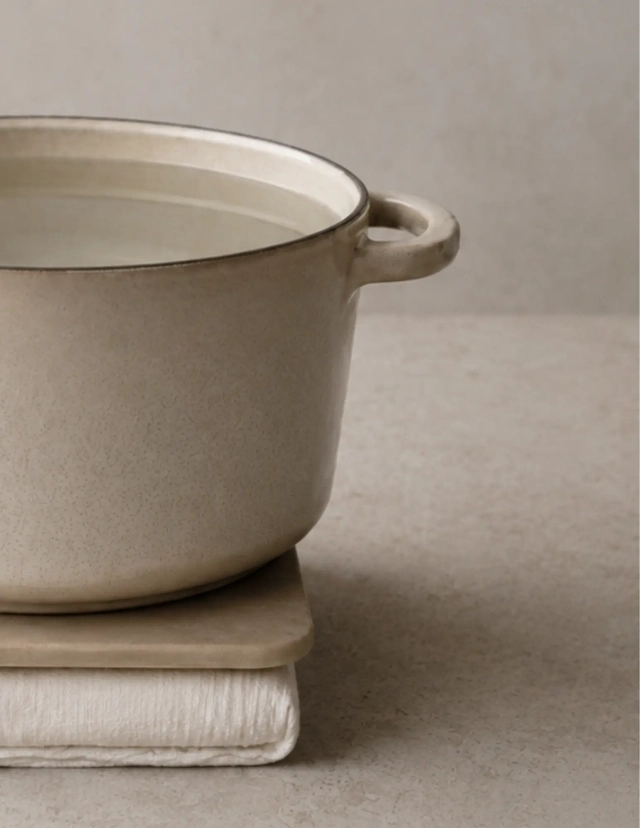
No heavy books? No problem, you can create your own weight using water. Wrap the tofu in a clean kitchen towel or thick paper towel as usual, place it on a flat surface, and put a chopping board or plate on top as a divider, both for hygiene and to distribute the weight evenly. Then place a large pot directly on top, the kind you would use for a big batch of soup, and fill it with water, right up to the rim if needed. You have just created a press from nothing.
How long: the same principle applies, 30 minutes minimum, but an hour is my personal ideal. One variable worth considering here is the size of your pot and how much water it holds. A smaller pot filled to the brim may not generate enough pressure, in which case you can push to an hour and a half without any risk of over-pressing. More water, more weight, more liquid out.
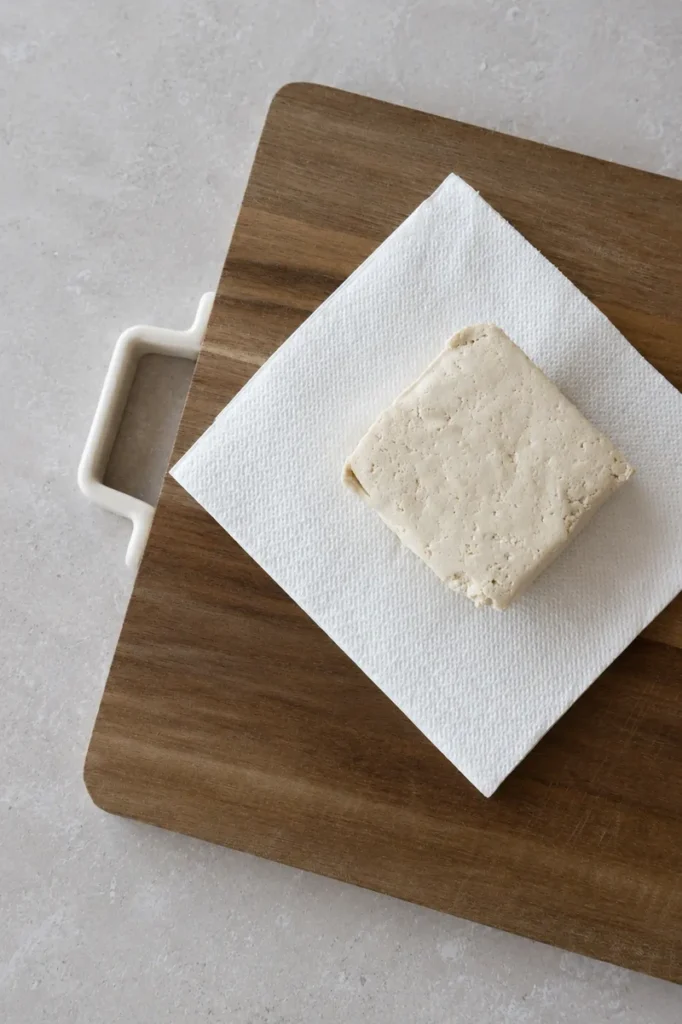
The Freezer Method: A Pro Trick That Also Changes the Texture
This is the simplest method on this list, and the most surprising. It is not just a shortcut for removing water without a press. It actually changes the structure of the tofu, making it more interesting to work with and significantly better at mimicking the texture of meat-based dishes.
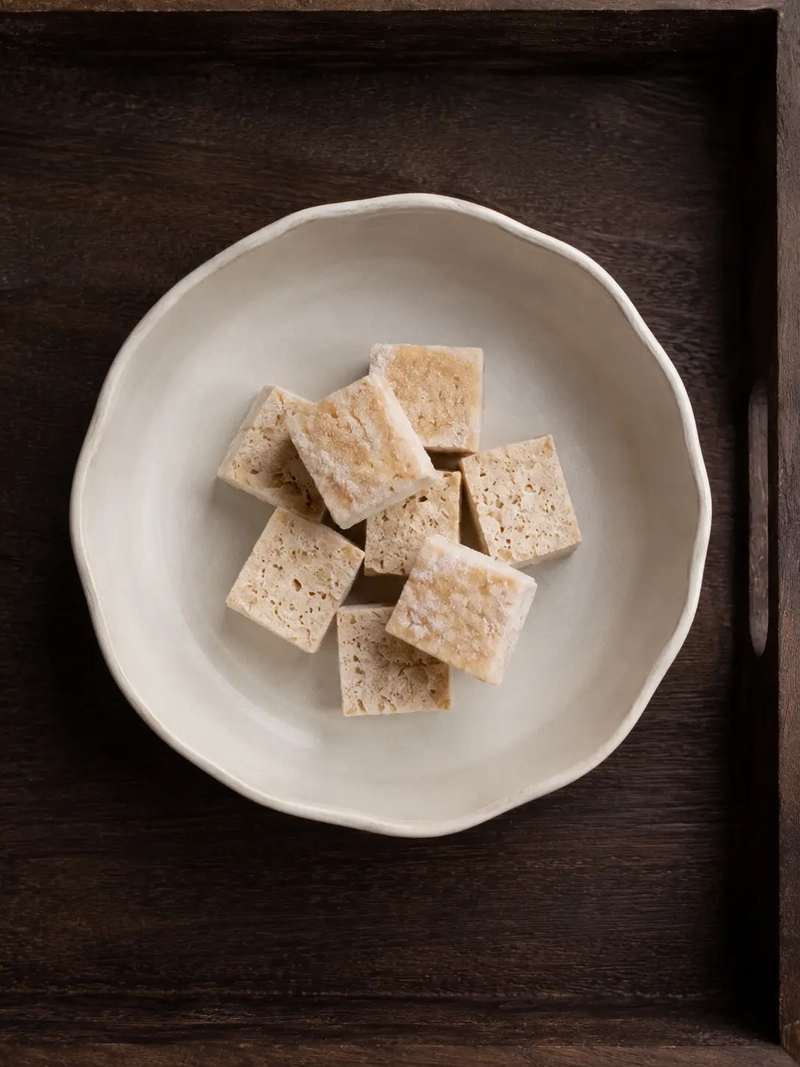
The process could not be simpler: place the tofu in the freezer, either in its original packaging or in a freezer bag if it is homemade. Leave it for at least a day, then remove it and let it thaw in the fridge. Once fully thawed, you can gently squeeze it with your hands, and no, it will not fall apart.
What happens in between is a small but precious piece of kitchen magic. When the water inside the tofu freezes, it expands and forms ice crystals that break through the internal protein structure. As it thaws, the water separates naturally from the soy fibres on its own. The ice crystals, as they melt, leave behind a dense network of microscopic holes and channels running through the block. The tofu transforms into a genuinely dry, porous sponge, one that absorbs marinades more deeply, holds its shape better during cooking, and produces a chewier, meatier texture that no other pressing method can replicate.
If you have never tried freezing your tofu before cooking it, this is the method I would recommend starting with. It requires zero effort and produces the best result.
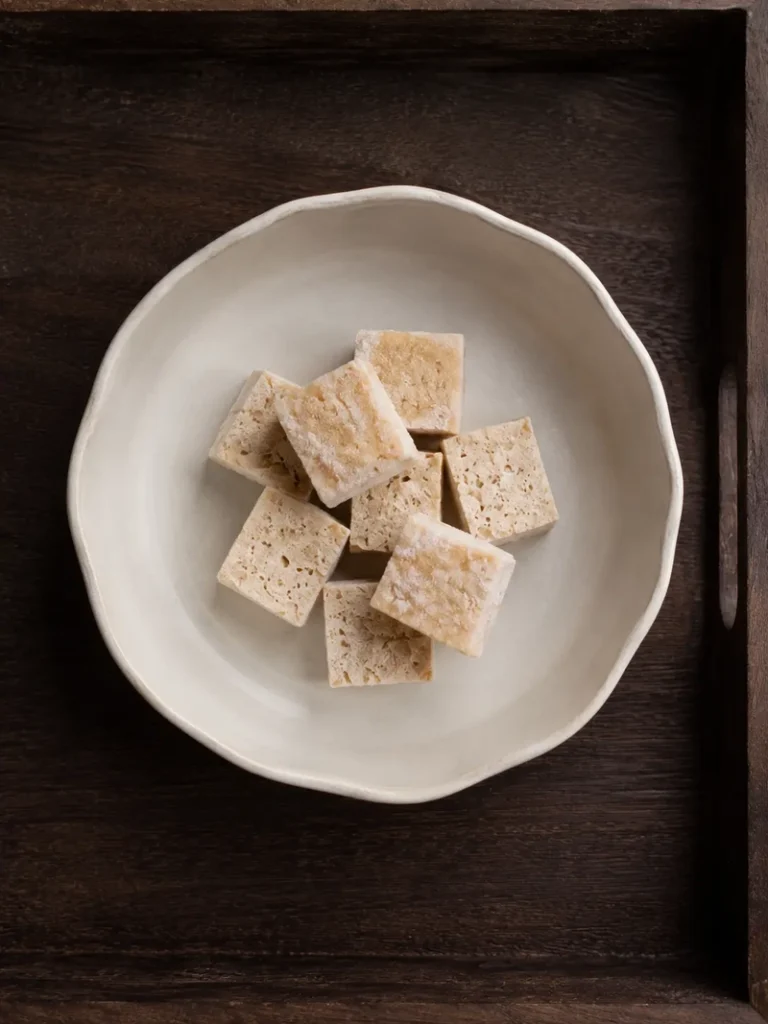
Using Water to Remove Water — The Osmosis Method
This is not a method I invented. It has long been used in Asian cooking, but I stumbled across it almost by accident. I had decided to boil tofu simply to see whether it became more digestible, and I added salt to the water just as I normally would when boiling other ingredients. What I discovered in the process was much more interesting than I expected.
The first thing I learned was that boiling tofu is not actually necessary in order to make it safe to eat. Commercial tofu has already undergone heat during production and can generally be eaten straight from the package. As for digestibility, boiling made very little practical difference for me.
The second discovery was far more useful: hot salted water can help tofu release some of its excess moisture while also changing its texture. The difference in salt concentration encourages the movement of water, while the heat affects the protein structure of the tofu, helping it become firmer and more compact.
I became so interested in this technique that I wrote an entire guide on how to boil tofu, why it works and how long to boil it, where I explain the process in detail, including how much salt to use, boiling times, texture and what to do with the tofu afterwards.
The method itself is straightforward. Cut the tofu into cubes and place it in salted water at a gentle simmer. Leave it for around 3 to 5 minutes, then drain it carefully and allow the steam and surface moisture to escape before drying it thoroughly. It is also one of the fastest methods on this list if you are planning to cook the tofu immediately afterwards. No waiting, no weights and no special equipment. Just a pot of salted water and a few minutes.
The Microwave Method — The Fastest Option (That I Have Never Tried)
I will be upfront: I have never used this method myself. I do not have a good relationship with microwaves, we simply do not get along, and I doubt I ever will. But I know people who use it regularly for convenience, and the chemistry behind it is entirely sound.
Wrap the tofu block in two layers of paper towel, place it on a microwave-safe plate, and heat on full power for 1 to 2 minutes. The microwaves heat the water molecules inside the tofu directly, causing them to evaporate rapidly and move toward the surface, where they are absorbed by the paper towel. Remove the tofu — carefully, it will be hot — let it rest for a minute, then discard the soaked paper. The block should be noticeably more compact and ready to use.
It is the fastest method on this list, no question. Whether the result is comparable to the weight method or the freezer method, I genuinely cannot tell you from experience. If you have tried it and want to share your results – texture, how much liquid came out, whether you would do it again – the comments are exactly the right place for that.
The Oven Method — When You Want a Firmer, Denser Tofu
This is a method I use regularly, but with one important caveat: it changes the texture of the tofu, making it significantly firmer and denser than any of the other methods on this list. That makes it useful only in recipes where a harder bite is exactly what you want.
Cut the tofu into thin slices or strips and arrange them on a baking tray lined with parchment paper, no oil, no seasoning, nothing else. Bake at 150-160°C for approximately 10 to 15 minutes. The moderate, consistent heat of the oven evaporates the excess moisture in a controlled way, drying the tofu gradually without burning it. Once out of the oven, you will notice the pieces are smaller and firmer, noticeably more compact than when they went in.
I reach for this method when I want a tofu with a real bite to it, something that holds its shape firmly when tossed in a pan with sauces, or that can take a coating without falling apart. It is not my first choice for marinating or for recipes that need a more delicate texture. But as a low-effort method that requires nothing more than an oven and a sheet of parchment, it earns its place on this list.
The No-Method Method — When You Have No Time, No Tools and No Patience
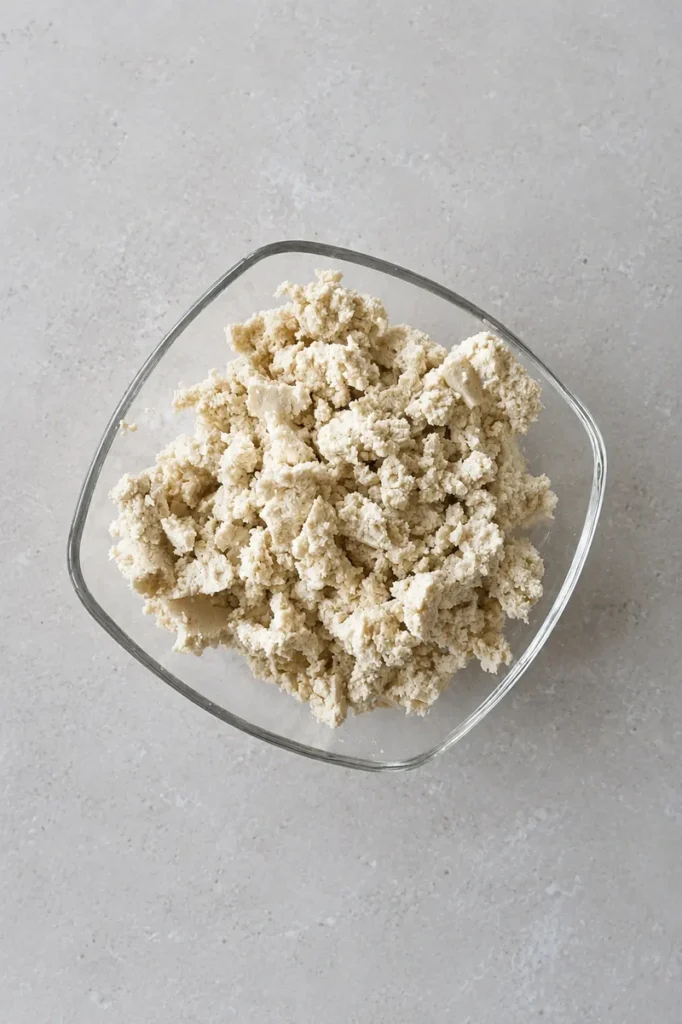
Sometimes you just need to cook. No waiting, no weight, no equipment, and honestly, that is fine too. If you are skipping the pressing altogether, there is one small trick that significantly improves the performance of unpressed tofu: tear it with your hands instead of cutting it with a knife.
When you tear tofu by hand, you create a rough, jagged, uneven surface full of natural cracks and fissures. In cooking, moisture evaporates far more easily from these irregular surfaces than from the clean, flat edges left by a knife. You are not removing the water before cooking, you are giving it a faster escape route during cooking.
I do this often. When I am making vegan scrambled eggs and time is short, I tear the tofu directly into the pan without pressing it at all. The result is excellent: at least for this specific recipe, which does not require marinating and benefits from a more irregular, broken texture anyway. For recipes that need deep flavour absorption or a very firm, dry block, pressing is still the better choice. But for a quick scramble or a fast stir-fry, tearing unpressed tofu works beautifully.
Which Pressing Method Should You Use? A Quick Reference
Not all methods are equa, and the right choice depends on what you are making, how much time you have, and what texture you are looking for. Use this table as a quick reference before you start cooking.
Quick reference
Which pressing method should you use?
| Method | Best for | Result | Time | Equipment |
|---|---|---|---|---|
| Weight Method | Marinating, frying, baking | Excellent: even pressure, consistent result | 30 to 60 min | Books, plates, towel |
| Water Weight Method | When you have no heavy objects | Very good: adjustable pressure based on water amount | 30 to 90 min | Large pot, water |
| Freezer Method | Meat-like texture, deep marinating, stir-fry | Outstanding: changes structure, maximum absorption | 24h freeze plus thaw | Freezer bag only |
| Osmosis Method | Cooking immediately, no marinating needed | Good: firms the tofu quickly and evenly | 3 to 5 min | Pot, salted water |
| Oven Method | Pan sauces, coatings, firm bite recipes | Good: firms and dries tofu, changes texture permanently | 10 to 15 min | Oven, parchment paper |
| Microwave Method | Quick weeknight cooking | Decent: less thorough than weight or freezer | 1 to 2 min | Microwave, paper towel |
| No-Method Method | Scrambled tofu, fast stir-fry, no marinating | Good enough: tear by hand for rough texture | 0 min | Just your hands |
FAQ’s
These are the questions I get asked most often about pressing tofu. If yours is not here, leave it in the comments below and I will do my best to answer it.
For each method covered in this guide I have included a specific time indication, so the most accurate answer depends on which method you are using. That said, as a general rule: if you are using the weight method, with or without a tofu press, my personal minimum is 45 minutes. Thirty minutes is often cited as the standard, but in my experience the difference between 30 and 45 minutes is noticeable: more liquid out, denser block, better result. If you have the time, go for a full hour.
Yes, and a clean kitchen towel or cloth actually works better than paper towels in most cases. The fabric absorbs more liquid and does not tear under the weight, which makes it the more practical choice for longer pressing sessions. Paper towels work fine too, especially for quick methods, but they can disintegrate if they get too saturated or if the weight is heavy. You can technically press tofu without any cloth or paper at all, but then the water has nowhere to go except onto your surface, which is not particularly convenient. Something absorbent between the tofu and the weight always gives a cleaner, more efficient result.
If you are not cooking it immediately, put it back in the fridge. The catch is that tofu keeps best when stored in water, which rather defeats the purpose of pressing it in the first place. For short-term storage of a few hours, wrapping it tightly in a clean kitchen towel or cling film in the fridge works fine.
For anything longer, my recommendation is the freezer. Not only does freezing preserve the tofu perfectly, it also gives you that structural transformation I described in the freezer method section, breaking down the internal fibres and creating a chewier, more absorbent texture. So if you have pressed your tofu and are not using it today, pop it in a freezer bag and freeze it. You get better storage and a better result when you eventually cook it. Two problems solved at once.
No, and there is no reason to. Silken tofu has an entirely different structure from firm or extra firm tofu: it contains significantly more water and has a delicate, custard-like texture that is not held together by the same protein network. Pressing it would simply break it apart. Silken tofu is not designed to be pressed, marinated, or cooked in a pan, it is used as it is, blended into sauces, creams, dressings and desserts, where its smooth, soft texture is exactly what you want. Try it out withy my strawberry cake. If a recipe calls for pressing tofu, it means firm or extra firm.