This article contains affiliate links. If you purchase through them, INUMAMI may earn a small commission at no extra cost to you. We only recommend what we genuinely use and trust and your support means the world to us.
Cooking tempeh is easier than it might seem. Still, as with most simple things, there are a few methods and small secrets that help you treat the ingredient properly and bring out its best flavor.
Tofu and tempeh are often seen simply as ways to increase protein in a vegan diet, as if their role in cooking were mostly nutritional rather than culinary. But, especially when it comes to tempeh, that is far from true.
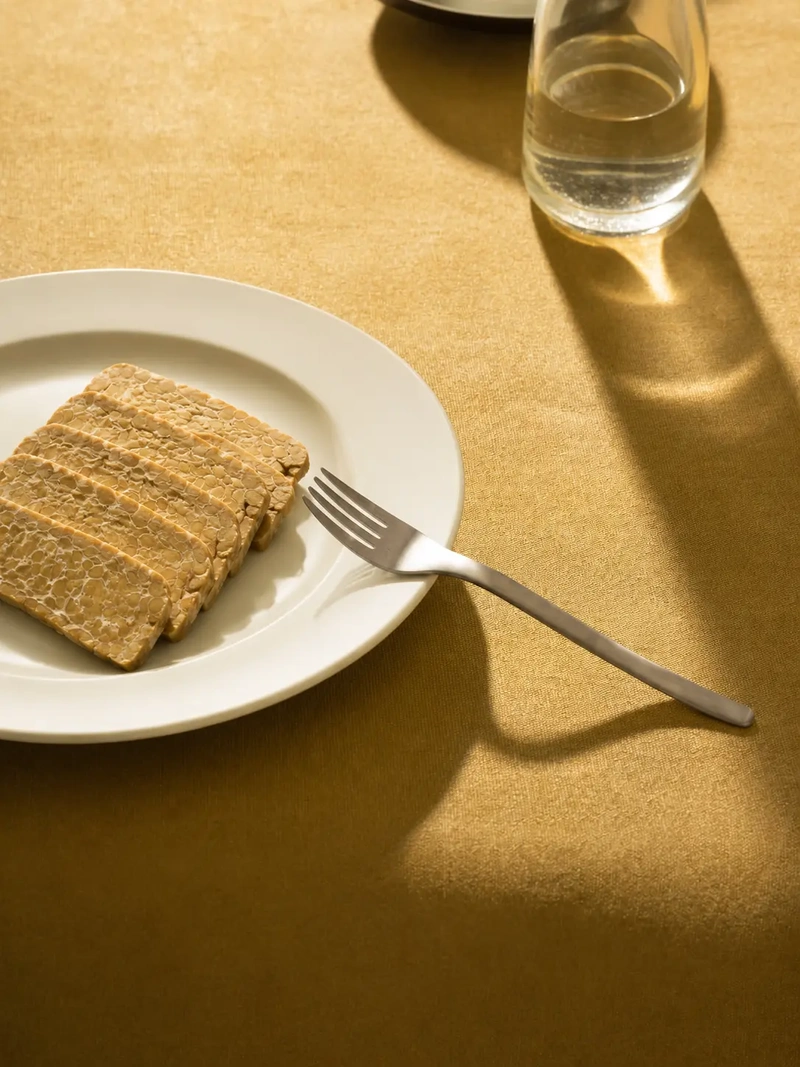
Tempeh has a rich, nutty, distinctive flavor and is an incredibly interesting ingredient to cook with. Learning how to prepare it properly is the key to using it not only as a main dish, but also as a way to add umami, texture and flavor to many other recipes.
How to Prepare Tempeh Before Cooking
First of all, if you want to know what tempeh is and how it is made, you can read my complete guide to What Is Tempeh? Here, instead, we are going to focus specifically on how to prepare and cook it.
Tempeh Should Be Cooked Before Eating
Tempeh is a fermented food, but fermentation does not automatically mean that it is ready to eat straight from the package. Some commercially produced tempeh is pasteurized and may technically be safe to eat without further cooking, while fresh or unpasteurized tempeh should always be cooked before eating.
For this reason, I recommend treating tempeh as an ingredient that is meant to be cooked, unless the packaging specifically states otherwise.
No Need To Press Tempeh Before Cooking
How you prepare tempeh depends largely on the cooking method you are going to use, but there are a few general things worth knowing first. The most important is that tempeh does not need to be pressed, as we often do with tofu. Tempeh does not hold excess water in the same way tofu does. Its compact texture comes from whole soybeans being bound together during fermentation, so pressing it will not significantly improve the way it cooks or absorbs flavor. In fact, applying too much pressure can simply damage its natural structure. You can therefore take it straight from the package, cut it according to the recipe you are making, and move on to the next step.
Steaming Tempeh Before Cooking
Another useful way to prepare tempeh before cooking is to steam it. This step is completely optional, but it can help soften the texture, mellow any slightly bitter notes and make the tempeh more receptive to marinades.
Steam the tempeh for around 10 to 15 minutes, then let it cool slightly before cutting or marinating it. If you are planning to use a marinade, steaming the tempeh first can be particularly useful, as the softened texture tends to absorb the seasoning more effectively. I would especially recommend this step if you find the flavor of tempeh a little too intense ( I don’t), or if you want a softer and more seasoned final result.
Marinating Tempeh
Marinating simply means leaving the tempeh in a seasoned mixture for a period of time before cooking, so that it can absorb more flavor.
The same basic rules apply as with any marinade: you want a balance of saltiness, acidity, sweetness, fat and umami. Ingredients such as soy sauce or tamari, lemon juice or vinegar, maple syrup, sesame oil, garlic, ginger and spices all work particularly well with tempeh.
The amount of time needed depends on how the tempeh is cut. Thin slices and small cubes will take on flavor more quickly, while larger pieces benefit from a longer marinating time. Even 20 to 30 minutes can make a noticeable difference, but if you have more time, you can leave it to marinate for a few hours in the refrigerator.
Tempeh is naturally quite dense, so it will not absorb a marinade in exactly the same way as tofu. For this reason, the marinade also plays an important role during cooking, coating the surface and helping the tempeh develop a more flavorful, caramelized exterior.
If you want to marinate tofu, I’ve written a complete guide dedicated specifically to that. You’ll also find several marinade recipes there that work beautifully with tempeh too.
How to Cook Tempeh
There are several ways to cook tempeh, and here I’ll walk you through the most common ones, the methods I use most often, and the techniques I find most useful and practical when adding tempeh to other dishes.
Pan-Frying Tempeh
Pan-frying is one of the quickest ways to cook tempeh, and also one of the most useful when you want to add it to other dishes such as salads, grain bowls or stir-fries.
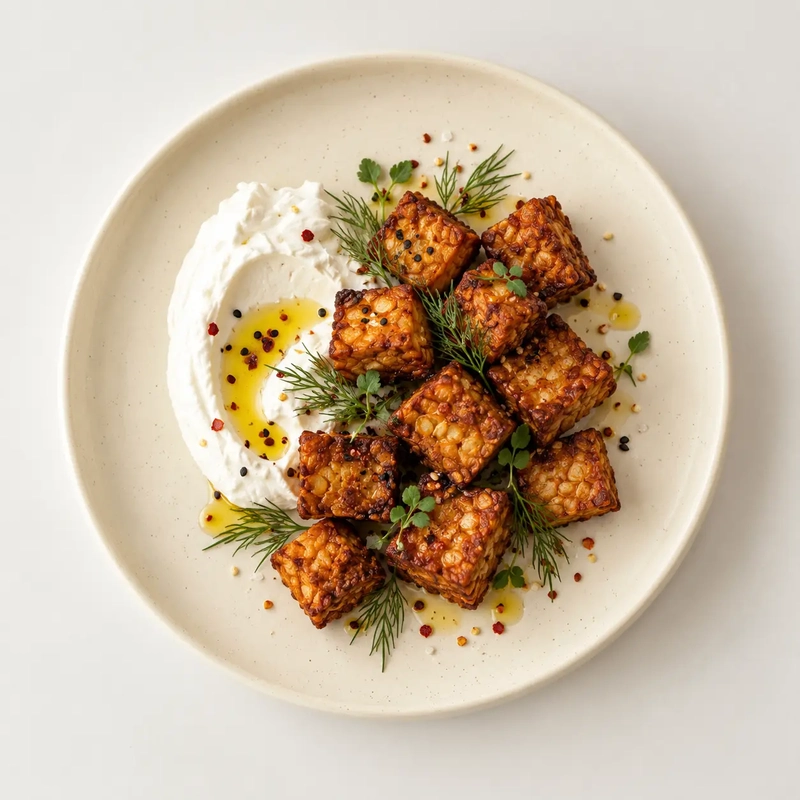
You can marinate the tempeh first, then add it to a hot pan with a little oil. Cook it until the surface is well browned and golden, turning the pieces so they color evenly. If you have not marinated the tempeh beforehand, you can build flavor directly in the pan by gently heating the oil with garlic, herbs or spices before adding it. This gives the tempeh a simple but flavorful coating while it cooks. For the best texture, avoid overcrowding the pan and give the pieces enough contact with the hot surface to develop a good golden crust.
About 10 minutes is usually enough. The tempeh is ready when the outside is golden, slightly dry and lightly crisp, while the inside remains soft and tender.
Baking Tempeh
Baking tempeh follows essentially the same idea as pan-frying, but the oven gives you a slightly drier, more evenly crisp exterior and is especially convenient when you are preparing a larger batch.
You can marinate the tempeh beforehand. For baking, I usually make a simple marinade with tamari, lemon juice, olive oil, agave syrup and spices. Let the tempeh marinate for at least 30 minutes so the flavors have time to coat and season it properly. Once marinated, arrange the tempeh on a baking tray in a single layer and bake at 200°C / 400°F for about 20 to 25 minutes, turning the pieces halfway through cooking. If you are using a fan oven, 190°C / 375°F is usually enough.
The tempeh is ready when the edges are golden and slightly crisp, while the inside remains tender. If there is any marinade left, you can brush a little more over the tempeh during the last few minutes of baking for extra flavor and caramelization.
This is a method I use especially when I am serving tempeh as the main part of a meal, with a simple side such as zucchini or eggplant. I also like baking tempeh when I am going to use it in sandwiches. In that case, I often marinate it first and season it with paprika and other smoky spices, which work particularly well with its naturally nutty flavor.
Air Frying Tempeh
Air frying is one of the quickest ways to cook tempeh and a great option when you want a crisp, golden exterior without using much oil.
You can marinate the tempeh beforehand, just as you would for pan frying or baking. If the marinade is very liquid, let the excess drip off before placing the tempeh in the air fryer basket. This helps the surface crisp up properly and also prevents ingredients such as agave or maple syrup from caramelizing too quickly.
Arrange the tempeh in a single layer, leaving a little space between the pieces so that the hot air can circulate around them. Air fry at 190°C / 375°F for around 10 to 15 minutes, turning or shaking the basket halfway through cooking.
The tempeh is ready when the edges are golden and crisp and the center is still tender. I particularly like this method for small cubes or thin slices that I want to add to bowls, salads or wraps, because it gives them plenty of texture without requiring much attention while they cook.
I really love using my air fryer because it is one of the quickest ways to achieve an oven-style result without using much oil There are many different models available, from very simple air fryers to larger and more professional machines. The one I use is, for me, the best compromise between something practical, easy to use and not too bulky, while still giving consistently good results.
Simmering Tempeh in Sauces
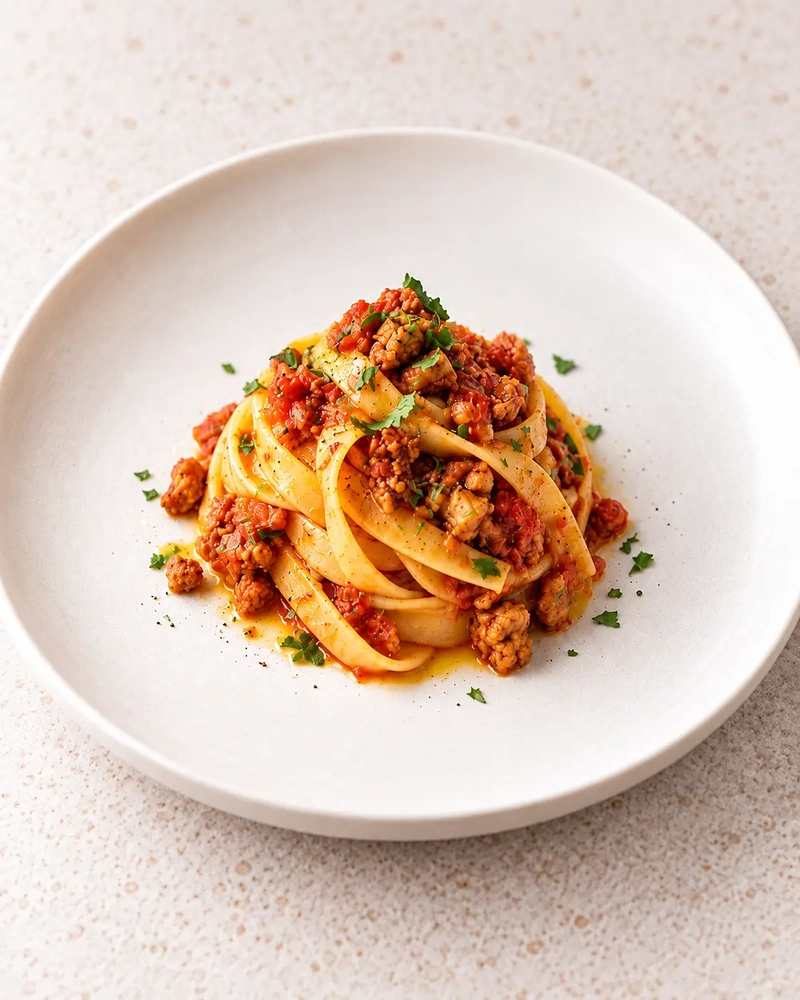
Tempeh can also be cooked directly in sauces and other slow-simmered dishes. This is one of my favorite methods when I want to use it as a base for recipes such as ragù, chili, curries or stews.
For this type of cooking, I usually crumble the tempeh rather than cutting it into slices or cubes. The smaller pieces mix naturally into the sauce and gradually absorb its flavors as everything cooks together.
You can first sauté the crumbled tempeh with a little olive oil, onion, garlic or spices to develop some color, then add the liquid ingredients and let everything simmer gently. Unlike pan-frying or air frying, here the goal is not to create a crisp exterior but to allow the tempeh to become tender, flavorful and fully integrated into the dish.
This method works particularly well as a plant-based alternative in recipes that traditionally use minced meat, because the crumbled tempeh retains some texture even after simmering.
As an Italian, I naturally love using tempeh to recreate traditional dishes in a plant-based way, especially recipes such as pasta with ragù or lasagna with a rich tempeh ragù. But this method works far beyond Italian cooking. You can also simmer tempeh in a creamy coconut milk sauce with curry and other spices, use it as a filling for wraps, or even turn it into a savory filling for ravioli. The possibilities are almost endless, and if I tried to list them all here, I would probably run out of space. As always, the best rule is simply to be creative.
How Long to Cook Tempeh
The cooking time obviously depends on the method you choose. In general, however, tempeh does not require particularly long cooking times. The goal is usually not to transform its texture completely, but to heat it through, develop flavor and create the right exterior depending on the method you are using.
Smaller cubes and thin slices will cook more quickly, while thicker pieces may need a little longer. As a general guide, pan-fried tempeh usually takes around 10 minutes, air-fried tempeh around 10 to 15 minutes, and baked tempeh around 20 to 25 minutes. If you are simmering it in a sauce, the cooking time can be longer, usually around 15 to 30 minutes, depending on the recipe.
More than relying only on the clock, look at the tempeh itself. With dry cooking methods, it should become golden on the outside, slightly crisp around the edges and remain tender inside.
| Method | Temperature | Cooking Time |
|---|---|---|
| Pan-Frying | Medium to medium-high heat | About 10 minutes |
| Baking | 200°C / 400°F | 20–25 minutes |
| Air Frying | 190°C / 375°F | 10–15 minutes |
| Steaming | Gentle steam | 10–15 minutes |
| Simmering in Sauces | Low to medium heat | 15–30 minutes |
How to Make Tempeh Taste Good
Unlike tofu, tempeh already has a strong and distinctive flavor of its own, so you do not always need to rely on heavy seasoning to make it interesting. Its taste is naturally nutty, earthy and slightly savory, which is one of the reasons I enjoy cooking with it so much. That said, like any ingredient, tempeh can absolutely be seasoned, marinated and adapted to different recipes. How much flavor you add really depends on the dish you are making and on the result you want.
One of my favorite ways to season tempeh is with a smoky marinade made with smoked paprika, tamari, olive oil and maple syrup. I usually add black pepper, lime juice and garlic as well. This combination gives the tempeh a deeper, slightly smoky flavor that works especially well for sandwiches, bowls and baked preparations.
But very often I do not marinate it at all. I simply cook it with olive oil, salt and pepper because I genuinely like the natural flavor of tempeh. Its nutty character is already quite pronounced, so sometimes the simplest preparation is the one that lets it shine the most.
FAQ’s
It depends a lot on the type of tempeh you are using and on personal taste, but in general a slight bitterness is not unusual. Tempeh is a fermented food, and fermentation naturally develops complex flavors that can include nutty, earthy and slightly bitter notes. Some of that bitterness also comes from the soybeans themselves and from compounds that become more noticeable during fermentation. The intensity can vary depending on how the tempeh was produced, how fresh it is and how long it was fermented.
Once cooked, tempeh can generally be stored in the refrigerator for 3 to 4 days. Let it cool, then transfer it to an airtight container and refrigerate it as soon as possible.
Tempeh is naturally high in protein, although the exact amount varies slightly depending on the brand and how it is made. As a general reference, 100 g of tempeh provides around 18 to 20 g of protein.