This article contains affiliate links. If you purchase through them, INUMAMI may earn a small commission at no extra cost to you. We only recommend what we genuinely use and trust and your support means the world to us.
Until a few years ago, tempeh was mostly known by chefs, traditional Asian kitchens, and the most curious plant-based eaters. It was not the obvious vegan protein. It was the ingredient you discovered when you wanted something more complex than tofu, more textured than beans, and more savory than the usual plant-based alternatives.
Tempeh is one of the most interesting sources of plant-based protein. Its flavor is deep, earthy, and naturally savory, with a taste that can recall a mix between nuts, mushrooms, and aged cheese. It is very different from tofu, its better-known competitor: firmer, richer, more structured, and much more distinctive.
For this reason, tempeh is an incredible resource in vegan cooking, not only because of its recognizable flavor, but also because of its nutritional value. It brings texture, depth, and substance to plant-based meals, making them more complete and satisfying.
In this guide, we will explore what tempeh is, what it is made of, what it tastes like, how it compares to tofu and seitan, whether it is gluten-free, and why it can become such a valuable ingredient in a balanced vegan diet.
What Is Tempeh and How Is It Made?
Tempeh is a traditional fermented food originally from Indonesia, usually made from whole soybeans fermented with Rhizopus oligosporus, a natural fungal culture that helps bind the beans together into a firm, compact block.
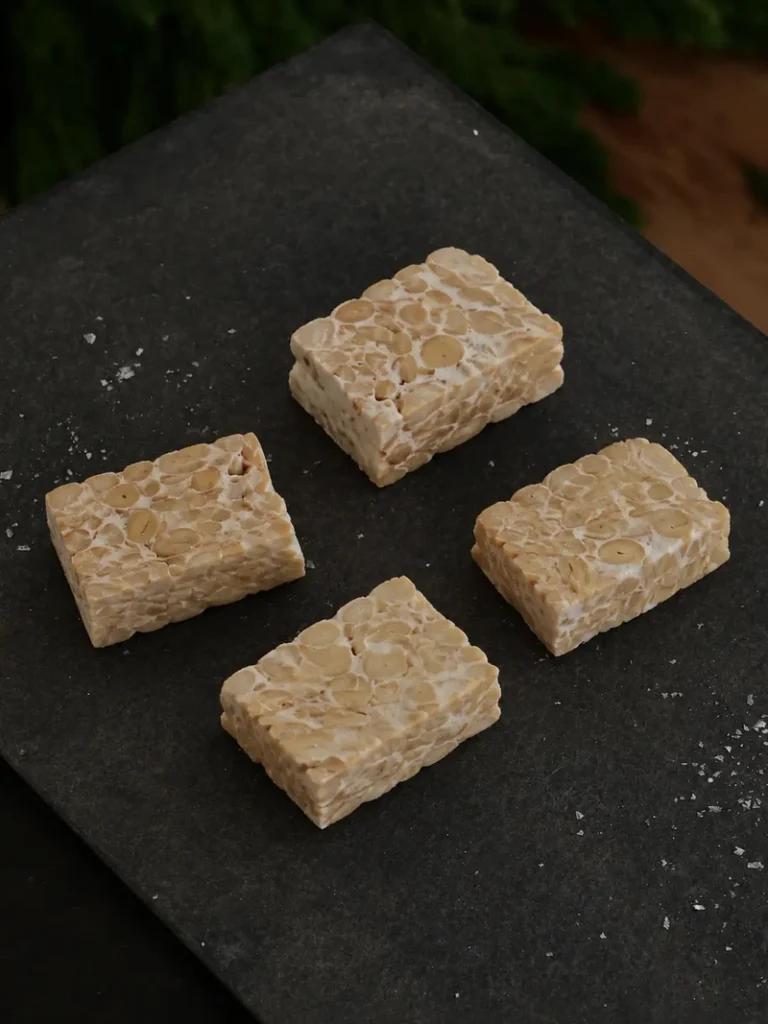
Unlike tofu, which is made from soy milk, tempeh is made from the whole soybean. This is one of the reasons why its texture is denser, more structured, and more substantial. You can actually see the beans inside the block, held together by the fermentation process.
During fermentation, the soybeans develop a white mycelium, a delicate network that binds them together and gives tempeh its characteristic firm texture. This process also contributes to its distinctive flavor: earthy, nutty, savory, and slightly fermented.
Classic tempeh is made with soybeans, but tempeh can also be made with different legumes, such as chickpeas, lentils, peas, beans, or lupins. Some varieties also include seeds, grains, or a combination of ingredients. These alternatives are becoming more common, especially in plant-based and health-focused cooking.
How Tempeh Is Made Through Fermentation
If you have ever tried to make tempeh at home, you know how fascinating the process is, and how quickly the ingredients transform during fermentation.
It begins with legumes, most traditionally soybeans, which are cooked until tender and then dried very carefully. This step is important because there should be no excess liquid left: the beans need to be moist enough for fermentation, but not wet.
Once cooled and dried, the legumes are mixed with a tempeh starter, usually containing Rhizopus Oligosporus. Some preparations also include a small amount of rice flour, which can help distribute the starter more evenly. At this point, the mixture is shaped into a compact layer and left to ferment in a warm environment, usually around 30°C, for about 24 hours or slightly longer.
During this time, a delicate white mycelium begins to grow around the legumes. This is what binds them together and transforms them from separate cooked beans into a firm, sliceable block. When the fermentation is complete, the tempeh has developed its characteristic structure: compact, solid, and held together by that fine white network.
This is part of what makes tempeh so fascinating. It is not simply cooked legumes pressed into a shape. It is a living fermentation process that changes texture, aroma, and flavor, turning humble ingredients into something much deeper, more structured, and naturally savory.

What Does Tempeh Taste Like?
The flavor of tempeh is complex and interesting, as is often the case with fermented foods. Tempeh has a nutty, earthy and savory taste, with subtle mushroom like notes and a gentle fermented tang. Many people also describe tempeh as slightly cheesy because, in some cases, its fermented flavor can be reminiscent of certain mold ripened cheeses, especially those with earthy, pungent notes and a deeper savory character.
Personally, if I had to describe the taste of tempeh to someone who had never tried it before, I would start with nuts, but with a slight tanginess. It reminds me especially of cashews.
I once made a cashew cream and added some dried mushroom powder to deepen the umami. I remember tasting it and immediately thinking of tempeh. That combination of nuttiness, subtle acidity and deep savory flavor comes very close to how I personally experience its taste.
There are also different types of tempeh, and their flavor can vary quite a lot. Smoked tempeh, for example, can have a much deeper, more intense savory taste. I have never eaten meat myself, so I cannot make that comparison from personal experience, but people who have eaten both often describe smoked tempeh as having a flavor that can be surprisingly reminiscent of meat.
Tempeh Nutrition: Benefits and Nutritional Value
Tempeh is sometimes called the “meat of vegans” and not without reason. The name comes mainly from its high protein potential, but also from the way it behaves in a dish: it has body, texture, and substance.
The exact amount of protein depends on the brand and the ingredients used, but soy tempeh usually provides around 18–20 g of protein per 100 g. This makes it one of the most concentrated sources of plant-based protein, especially useful in vegan meals where texture, satiety, and nutritional balance are important.
But tempeh is not valuable only because of its protein. This is what makes it especially interesting. Unlike many vegan alternatives that are built around one isolated nutrient, tempeh is made from whole legumes and transformed through fermentation. It contains protein, but also fiber, minerals, and a naturally complex structure.
More Than Protein: The Nutritional Power of Fermentation
Tempeh is often celebrated for its protein content, but its real nutritional value goes beyond protein. What makes tempeh especially interesting is fermentation: the process that transforms simple legumes into something more digestible, more complex, and more flavorful.
Scientific research is increasingly recognizing the value of fermented foods for gut health. Fermentation can increase the bioavailability of certain nutrients and may support a more diverse gut microbiome, which is often associated with better digestive balance and lower inflammation. As Stanford Medicine explains in its review of fermentation studies, fermented foods are being researched for several potential health benefits, from microbiome diversity to reduced inflammation and improved digestive health.
Fermentation can help break down some of the natural compounds found in legumes, which is one of the reasons some people find tempeh easier to digest than a large portion of regular beans. It also contributes to its deeper, more savory taste, creating that earthy, nutty, slightly fermented flavor that makes tempeh so recognizable.
For this reason, the benefit of tempeh is not only nutritional in a narrow sense. It is the combination of protein, fiber, minerals, fermentation, and flavor that makes it such a powerful ingredient in a balanced vegan diet.
Tempeh vs Tofu: What’s the Difference?
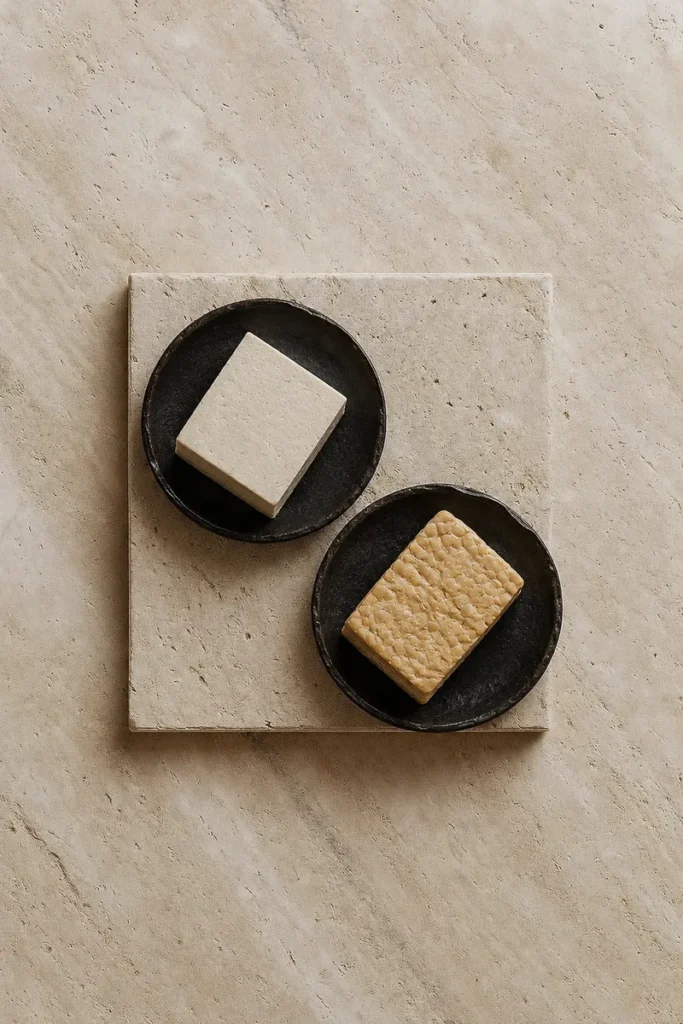
Tofu and tempeh begin from the same world, but they are made through completely different processes. Tofu is made by coagulating soy milk and pressing it into blocks, which gives it its smooth, delicate texture. Tempeh, instead, is made from whole soybeans transformed through fermentation by Rhizopus Oligosporus, the fungal culture that creates the white mycelium binding the beans together.
This difference is important both in terms of flavor and nutrition. Tempeh and tofu are both valuable foods in a plant-based diet, especially because of their protein content, but they behave very differently in the kitchen.
Tofu, for example, has a very neutral base. This makes it incredibly versatile: it can be used in savory recipes, but also in sweet preparations. Depending on the type, tofu can be fried, baked, scrambled, blended into creams, turned into sauces, or used as a cream for cakes. Its mild flavor allows it to absorb whatever surrounds it.
Tempeh works differently. It is not a neutral ingredient in the same way. Its flavor is stronger, nuttier, earthier, and more savory, which means it does not disappear into a recipe. It is less suitable for being blended into a cream or used as a delicate base for sweet dishes. Instead, tempeh works best when its texture and personality are allowed to remain visible: sliced, crumbled, marinated, baked, pan-fried, or added to bowls, sandwiches, salads, and savory mains.
Is Tempeh Gluten-Free?
Plain tempeh is naturally gluten-free when it is made only from soybeans, legumes, seeds, or other gluten-free ingredients. Traditional soy tempeh does not require wheat, barley, or rye to be made, so in its simplest form it can be suitable for a gluten-free diet.
However, it is still important to be careful, especially when buying packaged or industrial tempeh. Many brands sell tempeh already marinated, seasoned, or flavored, and this is where gluten can easily appear. Some flavored tempeh products may contain regular soy sauce, which is usually made with wheat, or other ingredients that are not suitable for people avoiding gluten.
The safest option is usually plain, unflavored tempeh made with gluten-free ingredients. This gives you full control over the seasoning and allows you to create your own marinades using gluten-free tamari, herbs, spices, citrus, miso, or other naturally gluten-free flavorings.
What About Eating Tempeh Raw?
Technically, some packaged and pasteurized tempeh can be eaten without further cooking, because the legumes have already been cooked before fermentation. However, eating tempeh raw is usually not the best choice.
Fresh, unpasteurized, or homemade tempeh should always be cooked before eating, both for food safety and for better flavor. Even when tempeh is made correctly, it is still a fermented food, and cooking helps reduce the risk of unwanted bacteria while also improving its texture and aroma.
Taste is another reason to cook it. Raw tempeh can taste stronger, more bitter, and more fermented. When it is steamed, baked, pan-fried, or added to a recipe, its flavor becomes rounder, warmer, and much more pleasant.
So, while tempeh may not always be “raw” in the strictest sense, the safest and most delicious approach is simple: cook it before eating.
How to Eat Tempeh: Easy Vegan Meal Ideas
Tempeh can be used in many different ways, but it works best when its firm texture and savory personality are allowed to remain visible.
A piece of advice I can give you directly from my own kitchen is this: try to let go of the idea that tofu and tempeh should be treated in the same way. Tempeh does not need us to build flavor from nothing, because it already has a flavor of its own. Its taste is naturally deep, savory, and rich in umami. If you are not familiar with umami and why we find it so satisfying, you can read my full guide on vegan umami foods.
During fermentation, tempeh has already been transformed. This is why, in cooking, it does not need to be transformed again as much as it needs to be enhanced. The goal is not to hide its personality, but to work with it: to balance its earthy, nutty, fermented notes and allow them to become part of the dish.
Here are a few simple ideas for using tempeh in vegan meals:
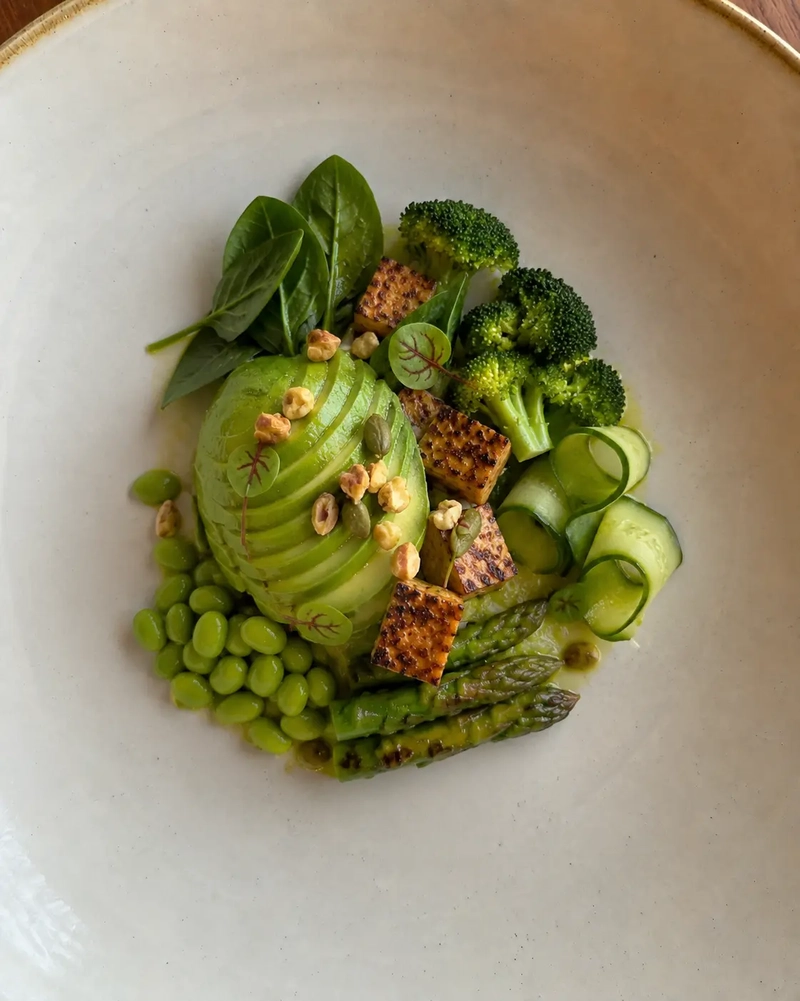
- In bowls: sliced or cubed sauteed tempeh works beautifully with rice, quinoa, sauteed zucchini, fresh greens, avocado, and creamy sauces.
- In sandwiches and wraps: thin slices of tempeh can become a rich, savory filling with lettuce, tomatoes, pickles, aioli, vegan mayonnaise, or fermented vegetables.
- With roasted vegetables: baked or pan-fried tempeh pairs beautifully with seasonal vegetables, especially when finished with a savory sauce or marinade.
- As tempeh “bacon”: when sliced thinly and seasoned with smoky, salty, slightly sweet flavors, tempeh can become a delicious plant-based alternative for sandwiches, brunch plates, and salads.
Can You Freeze Tempeh?
Freezing tempeh is one of the easiest ways to extend its shelf life, especially if you buy it in larger blocks or do not plan to use it within a few days. Plain tempeh can be frozen directly in its original package if it is still sealed. If it is homemade and not sealed in a package, wrap the tempeh well or place it in an airtight container or freezer bag to prevent it from drying out or absorbing other smells from the freezer.
Freezing may reduce the activity of some of the live microorganisms, but this does not remove the value of tempeh as a fermented food. The fermentation process has already transformed the legumes, changing their structure, flavor, and digestibility. Many commercial tempeh products are also pasteurized, and tempeh is usually cooked before eating anyway.
You can freeze tempeh whole, sliced, or cut into cubes, depending on how you plan to use it later. Freezing it already sliced can be useful if you want to add it quickly to salads, stir-fries, sandwiches, or marinades.
To use frozen tempeh, let it thaw in the refrigerator overnight. Once thawed, its texture may be slightly softer or more porous, but this can actually help it absorb marinades better. As a general rule, use frozen tempeh within about 2–3 months for the best texture and flavor.
FAQ’s
Tempeh is simple once you understand it, but it can feel unfamiliar at first. Because it is fermented, firm, and naturally more flavorful than many other plant-based proteins, it often raises practical questions: how to use it, whether it is gluten-free, how it compares to tofu, and how to store it properly.
Here are the most common questions about tempeh, with clear answers to help you use it with more confidence in your everyday vegan cooking. If you didn’t find what you were looking for, feel free to leave your question in the comment section.
The first thing to understand is that tempeh already has a very distinctive flavor. It is not neutral like tofu. Its taste is earthy, nutty, savory, slightly fermented, and sometimes a little bitter if it is not prepared well. For this reason, making tempeh taste good does not mean hiding its flavor completely. It means enhancing it. Tempeh works best when you build around its natural depth with ingredients that balance and frame it: gluten-free tamari, miso, lemon or lime juice, garlic, ginger, smoked paprika, maple syrup, herbs, spices, or creamy sauces.
Dogs can usually eat small amounts of plain, cooked tempeh, as long as they are not allergic or sensitive to soy. Tempeh itself is not considered toxic to dogs, but it should only be given occasionally and in moderation. The important thing is that the tempeh must be plain. Many packaged or flavored tempeh products contain ingredients that are not suitable for dogs, such as garlic, onion, spices, excess salt, soy sauce, or marinades. For this reason, seasoned tempeh should not be shared with dogs.
Yes, tempeh can go bad, especially because it is a fresh fermented food. Even though fermentation helps preserve and transform the legumes, tempeh still has a limited shelf life and should be stored properly. Fresh tempeh usually has a firm texture, a pleasant nutty or slightly fermented smell, and a white mycelium holding the beans together. Some dark or gray spots can be normal, especially as the culture matures, but the smell should never be unpleasant. In general, tempeh should smell fermented, but not spoiled. If the smell makes you hesitate, it is safer not to use it.
Yes, plain tempeh is generally considered low FODMAP in moderate portions. As always, portion size matters. A common low FODMAP serving is around 100 g of plain tempeh, but individual tolerance can vary.
Unopened tempeh should be kept in the refrigerator and used by the date printed on the package. The exact shelf life depends on the brand, whether the tempeh is pasteurized, and how it has been packaged. Homemade tempeh usually has a shorter shelf life than packaged tempeh, because it is fresh and typically not pasteurized. Once fermentation is complete, it should be refrigerated as soon as possible and used within a few days.
Tempeh can be suitable for a keto diet in moderation, but it depends on the portion size and the type of tempeh you choose. Plain soy tempeh is relatively low in carbohydrates compared to many other legumes, and it is rich in protein and fat, which can make it easier to include in a low-carb or keto-style meal. However, it is not completely carb-free, so the amount matters.
Yes, soy tempeh contains all nine essential amino acids, which means it is considered a complete plant-based protein. This is one of the reasons tempeh is often appreciated in vegan and plant-based diets: it does not only provide a good amount of protein, but also a complete amino acid profile.