This article contains affiliate links. If you purchase through them, INUMAMI may earn a small commission at no extra cost to you. We only recommend what we genuinely use and trust and your support means the world to us.
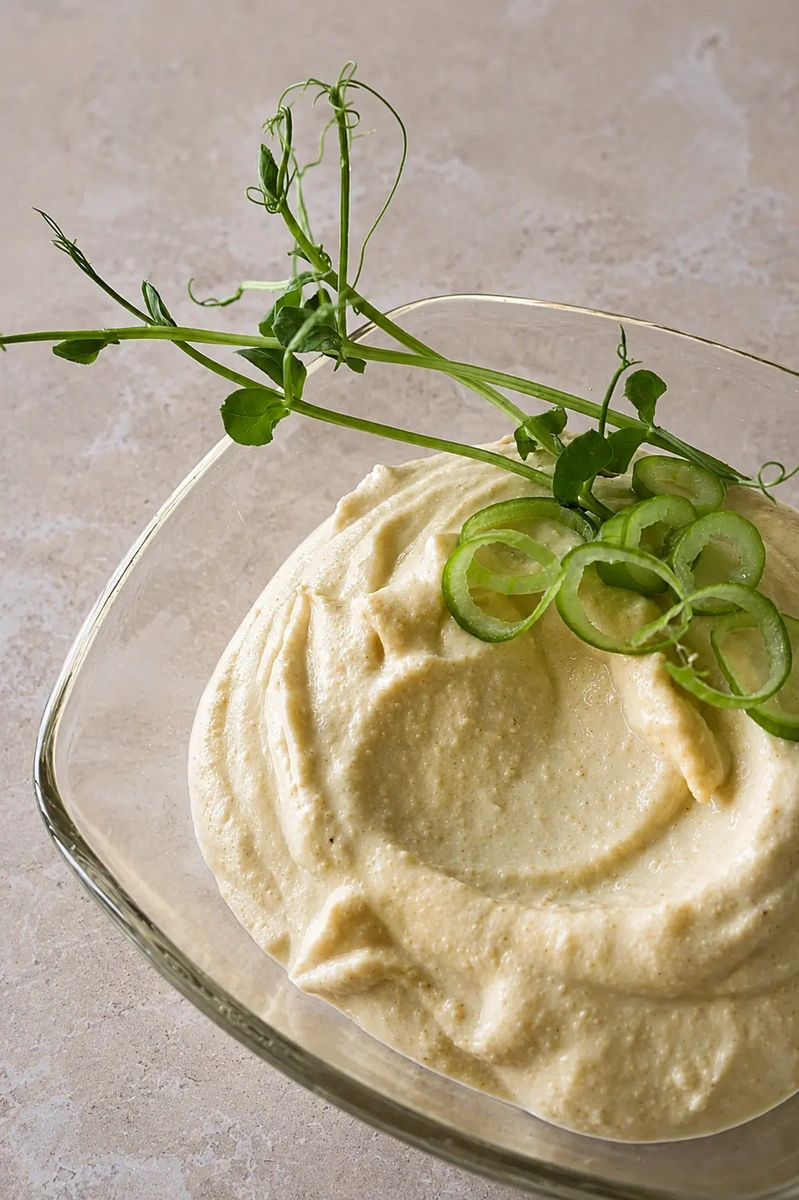
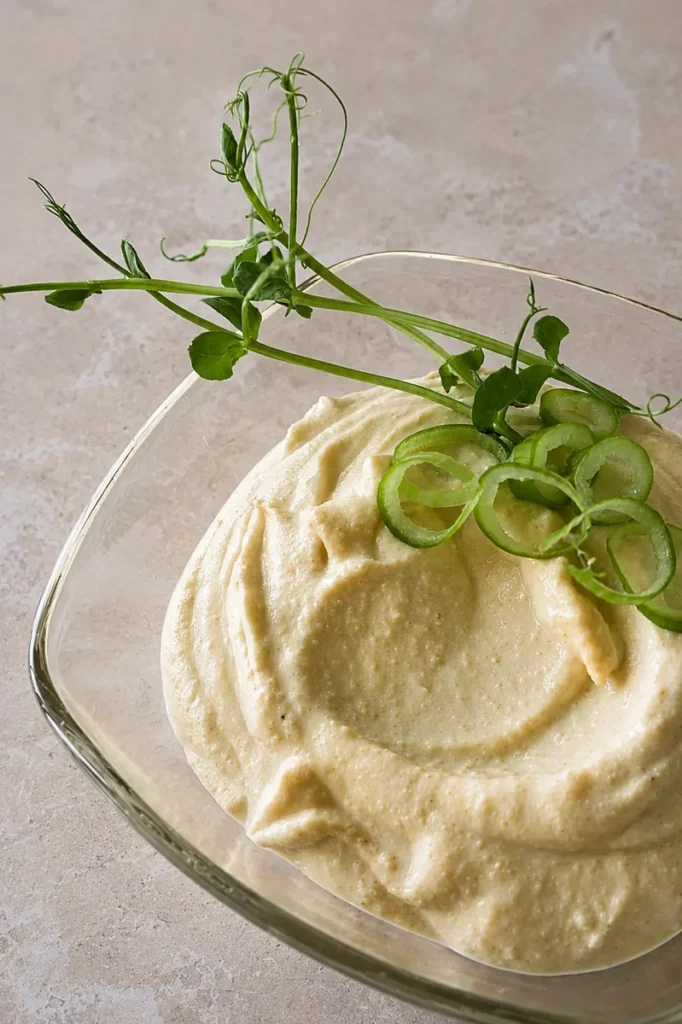
Vegan aioli is often described as a garlic mayonnaise, but when done properly, it becomes something more refined. At its core, aioli is about balance. The sharpness of garlic, the richness of fat, and the way these elements come together into a smooth texture.
This vegan version follows the same principle, but replaces traditional ingredients with plant-based alternatives that allow you to achieve the same creamy structure without eggs, and without relying entirely on oil. Because of this, it can also be a lighter option in terms of calories, while still delivering a satisfying and well-balanced result.
In this recipe, you’ll learn how to make a vegan aioli that is stable, smooth, and deeply flavorful. More importantly, you’ll understand how to control the texture and adjust the intensity of the garlic, so it works not just as a sauce, but as a base you can shape depending on what you need.
What Is Vegan Aioli?
Vegan aioli is a plant-based version of traditional aioli, a sauce originally made by emulsifying garlic and oil into a smooth, creamy texture. Depending on the method, it can be made using ingredients such as plant milk, tofu, or other emulsifying bases combined with oil, garlic, and an acid like lemon juice.
The result is a sauce that is rich, smooth, and deeply umami, with a more balanced and often lighter profile compared to traditional versions.
Is Aioli Vegan?
Traditional aioli, in its original form, is already vegan, as it is made simply with garlic and oil. However, especially in some modern or regional variations, ingredients such as milk or egg yolks are often added to stabilize the texture. In these cases, it becomes much closer to a garlic mayonnaise.
In this vegan aioli recipe, you’ll learn how to replace these animal-based elements with plant-based alternatives, creating a sauce that is just as creamy and satisfying, with nothing to envy from the traditional version.
What Makes This Vegan Aioli Recipe Different
This vegan aioli takes a slightly different approach compared to most traditional and vegan versions. Instead of relying almost entirely on oil to build structure, this recipe uses a lighter base that allows you to achieve a creamy texture with a more balanced composition.
By reducing the amount of oil and using plant-based ingredients that naturally create structure, the result is a sauce that feels smoother and less heavy, while still maintaining the richness and depth you expect from an aioli.
At the same time, this method gives you more control over both texture and flavor. The garlic can be adjusted depending on how intense you want it to be, and the final result can be shaped to suit different uses. The goal is not to recreate a heavier version of aioli, but to offer a more balanced alternative, one that is easier to use, easier to enjoy, and just as satisfying.
Vegan Aioli Ingredients (and Why They Work)
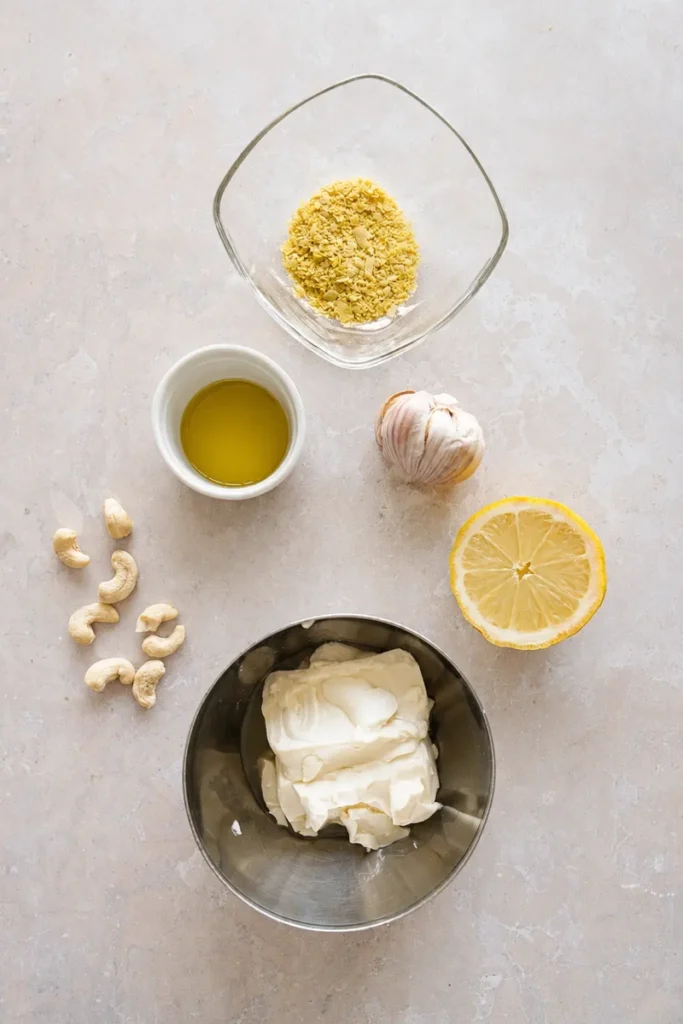
Vegan aioli relies on a few simple ingredients, but each of them plays a specific role in creating the final texture and flavor.
- Silken tofu. Acts as the main base, providing a smooth and light texture while reducing the need for large amounts of oil. Using tofu as a base also makes this aioli sauce high in proteins.
- Cashews (a small amount). Add body and a subtle richness, helping recreate the creaminess of a traditional aioli without making it heavy. Note: If you prefer to avoid nuts, for dietary reasons or allergies, you can refer to the substitutions section below.
- Garlic. The key flavor element, bringing sharpness and depth. Its intensity can be adjusted depending on your preference.
- Lemon juice (or vinegar). Adds acidity, balances the richness, and helps stabilize the mixture.
- Oil (in a controlled amount). Used to round out the flavor and improve texture, without dominating the recipe.
- Salt. Essential to enhance and unify all the elements.
- Nutritional yeast (optional). Adds a subtle umami depth and a slightly savory, rounded flavor that enhances the overall balance of the aioli. If fortified, it can also provide vitamin B12. Use it in small amounts to enrich the flavor without overpowering the garlic.
How to Make Vegan Aioli (Step-by-Step Recipe)
The full recipe, with precise measurements and detailed instructions, can be found in the recipe card below. What follows is a step-by-step guide focused on the method, ingredients and tools so you can understand how the texture forms and adjust it with confidence.
Step 1: Soak the cashews
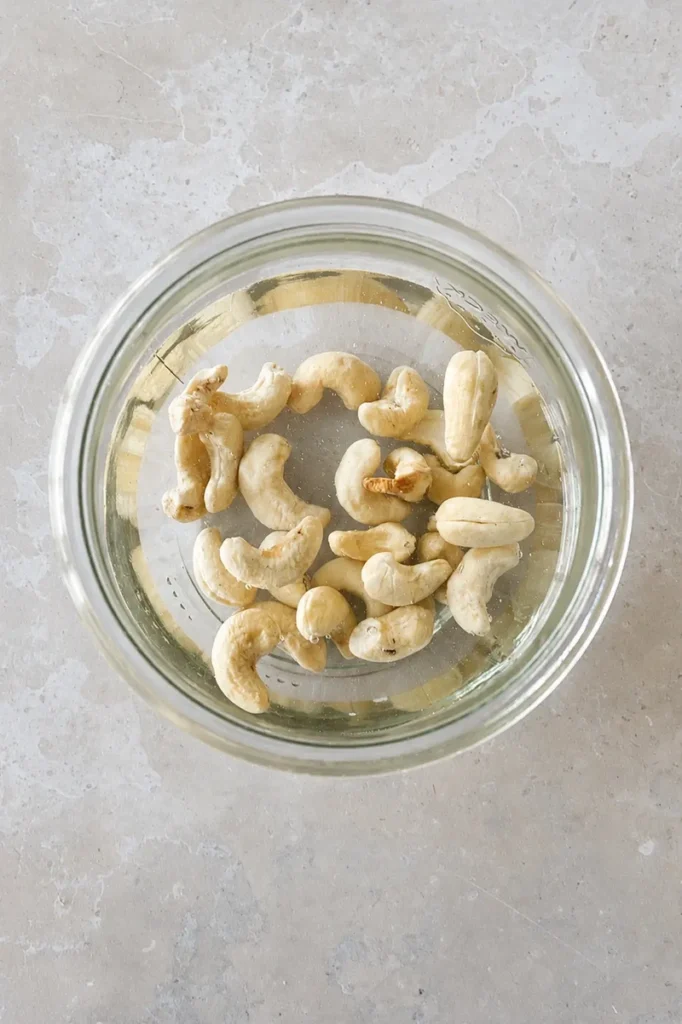
If you’re using cashews ( read substitutions ), soak them in hot water for about 10–15 minutes, then drain well. This helps soften them and ensures a smoother, creamier final texture. Alternatively, you can soak the cashews in cold water overnight. This is the more traditional method, but if you’re short on time, soaking them in hot water for 10–15 minutes will give you the same result.
Step 2: Blend the base
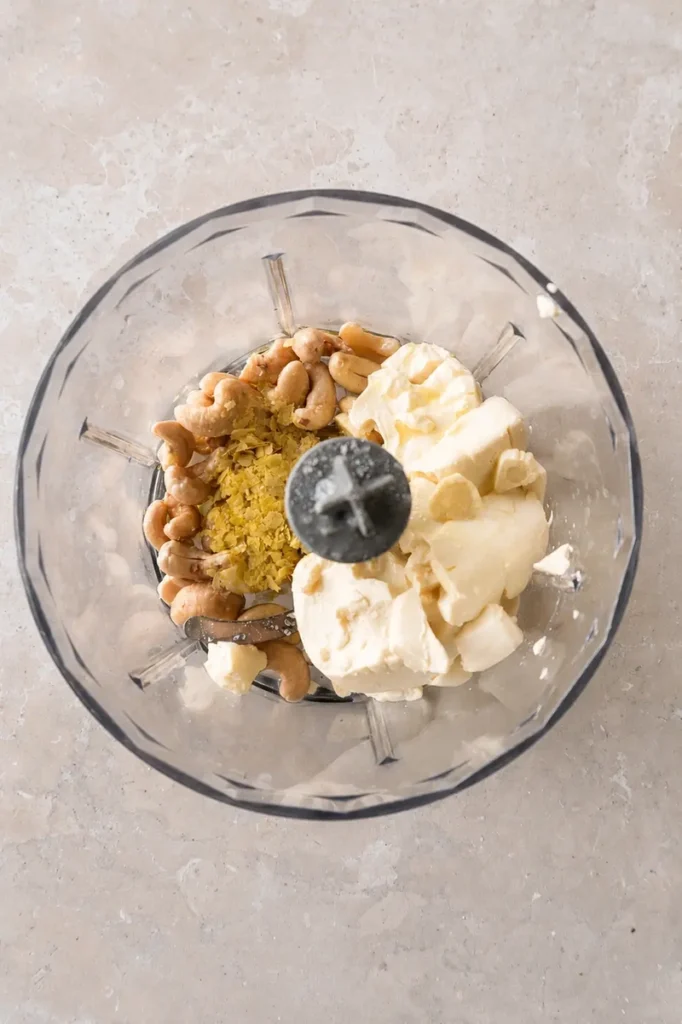
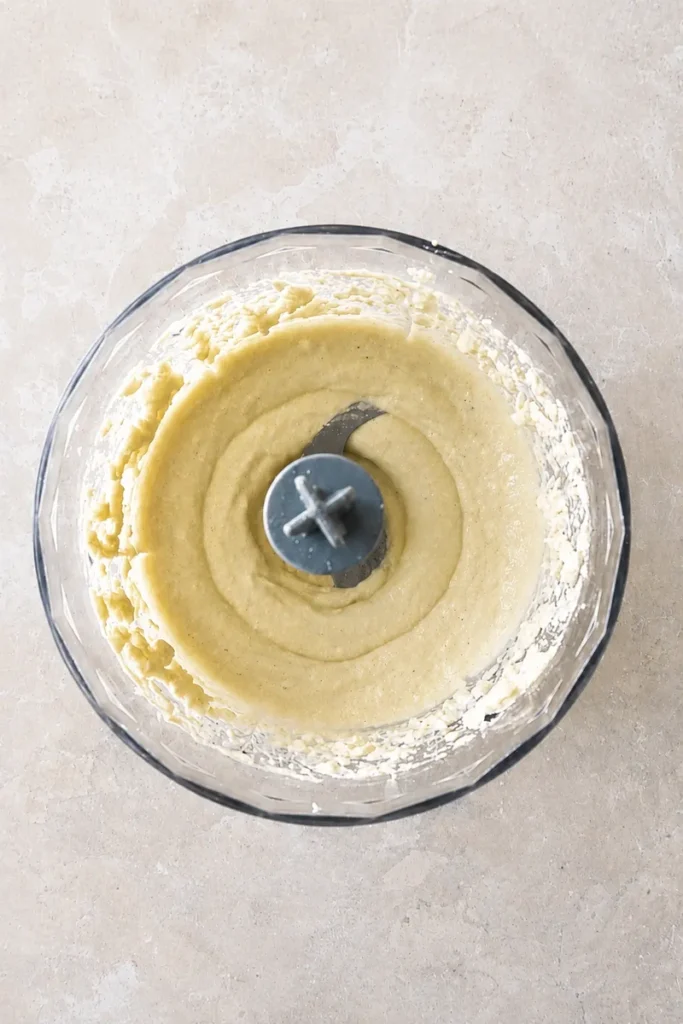
Add the soaked cashews ( drained), silken tofu, garlic, lemon juice, nutritional yeast (if using), and salt to a blender. Blend until completely smooth: you’re looking for a silky, lump-free cream.
Step 3: Adjust the texture with oil
Once the base is smooth, start adding the oil gradually while blending. This step helps create a more cohesive texture and adds a subtle richness, without making the aioli too heavy.
Step 4: Taste and balance
Taste the aioli and adjust as needed. You can add more lemon juice for brightness, more garlic for intensity, or a pinch of salt to bring everything together.
Step 5: Let it rest (optional but recommended)
Let the aioli rest in the fridge for 20–30 minutes. This allows the flavors to settle and the texture to slightly thicken. Ideally, prepare it the day before and let it rest overnight in the refrigerator. This gives the garlic time to mellow and blend with the other ingredients, resulting in a deeper flavor.
Vegan Aioli Substitutions
This recipe is designed to be flexible and easy to adapt. Here are the most useful substitutions while maintaining a good balance of texture and flavor.
- If you don’t want to use nuts ( cashews ). You can omit them and rely entirely on silken tofu for a lighter result. The texture will be slightly less rich, but still smooth and stable. For a bit more body, you can increase the amount of tofu slightly.
- If you don’t have silken tofu. You can use regular tofu, as long as it is plain and not flavored. Since it is firmer, blend it with a small amount of unsweetened soy milk to soften the texture and achieve a smoother consistency.
- If you don’t want to use oil. You can reduce or omit it entirely for an even lighter version. The aioli will be less rich, but still creamy thanks to the tofu and cashews. If you do choose to use oil, different types will affect both flavor and texture. I used olive oil for a more pronounced taste, but you can also use avocado oil for a smoother, more neutral profile. Other options like sunflower oil or light vegetable oil work well if you prefer a milder flavor.
- If you don’t have fresh lemon juice. You can use a mild vinegar instead. It will still provide the necessary acidity, although the flavor will be slightly different.
- If you don’t want to use nutritional yeast. You can omit it. The aioli will still work, but you may lose a bit of depth and umami.
How to Use Vegan Aioli (Serving Ideas & Pairings)
Vegan aioli is a versatile sauce that can be used in many different ways, depending on the texture and intensity you choose.
- With plant-based proteins. Pairs well with tofu, tempeh, or legumes, adding richness and balance. You can pair it with our Vegan Schnitzel, I promise you it will be the perfect combo.
- As a dip. Perfect for roasted vegetables, potatoes, or fries. Its creamy texture and garlic flavor make it ideal for simple, comforting combinations. You can pair it with our roasted green beens or our sauteeed zucchini.
- In sandwiches and wraps. Adds moisture and depth, replacing traditional spreads with a more flavorful option.
- With grilled or roasted vegetables. Works especially well with eggplant, zucchini, and peppers, enhancing their natural sweetness.
- As a base for other sauces. You can build on it by adding herbs, spices, or a touch of acidity to create variations.
FAQ’s
Here are some of the most common questions about vegan aioli, covering ingredients, variations, and how it differs from traditional versions. If you have a question that I did not cover here, feel free to drop it in the comment section.
Vegan garlic aioli is made by blending a plant-based base with garlic, oil, and an acid until smooth and creamy. The process is simple, but the key is achieving the right balance of texture and flavor.
No, Subway’s garlic aioli is not vegan, as it contains egg-based ingredients. Always check with the specific location, as recipes can vary.
It depends on the recipe. Some versions are made only with garlic and oil and are naturally vegan, while others include eggs or dairy. It’s always best to check the ingredients or make it at home.
In most cases, no. Chipotle aioli is often based on mayonnaise, which contains eggs. A vegan version can be made by combining the vegan aioli with chipotle or smoked chili.
Yes, absolutely. If you don’t have all the ingredients, you can use our basic vegan mayonnaise as a base and simply add garlic. The result will be closer to a garlic mayonnaise than a traditional aioli, and higher in calories, but still incredibly good and full of umami.
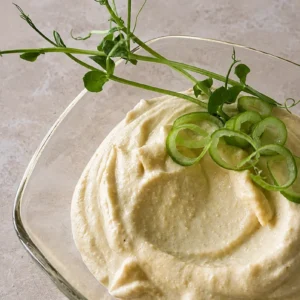
Vegan Aioli (A Creamy Garlic Sauce That Actually Works)
Equipment
Ingredients
- ½ cup Silken Tofu You can also use Firm Tofu
- 2 tbsp Cashew
- 1 clove Garlic
- 1 tbsp Lemon Juice
- 2 tbsp Olive Oil
- 1 tsp Nutritional Yeast Optional
- ¼ tsp Salt or To Taste
- 1–2 tbsp Water Only if needed
Instructions
- Place the cashews in hot water and let them soak for 10–15 minutes, then drain well.
- Add the soaked cashews, silken tofu, garlic, lemon juice, nutritional yeast if using, and salt to a blender or food processor.
- Blend until completely smooth and creamy, scraping down the sides if needed.
- While blending, add the olive oil gradually until the aioli becomes more cohesive and silky.
- Taste and adjust with more salt, lemon juice, or garlic if needed. If the aioli is too thick, add 1 tablespoon of water at a time until you reach the desired consistency.
- Optional: Transfer the aioli to a jar or container and let it rest in the refrigerator for 20–30 minutes before serving, so the flavor can settle and the texture can thicken slightly.
Notes
Nutrition