This article contains affiliate links. If you purchase through them, INUMAMI may earn a small commission at no extra cost to you. We only recommend what we genuinely use and trust and your support means the world to us.
Vegan ricotta is one of those preparations that reveals how simple ingredients can be transformed into something unexpectedly refined. Ricotta is one of those ingredient that can be used in so many ways in the kitchen, from sweet recipes to savory dishes, or even as a simple side. Recreating it in a plant-based, healthier, and above all ethical way is one of the real achievements of vegan cooking.
In this version, made with almond flour, the result is naturally rich in healthy fats, including omega-3 and omega-6, while remaining light and easy to digest. It becomes something that not only supports the body, but also aligns with a more conscious way of eating.
In this recipe, you will learn how to make vegan ricotta using plant-based ingredients, and how to adjust its texture depending on how you want to use it. The result is soft, balanced, versatile, and above all, respectful of the animal world.
What Is Vegan Ricotta Made Of?
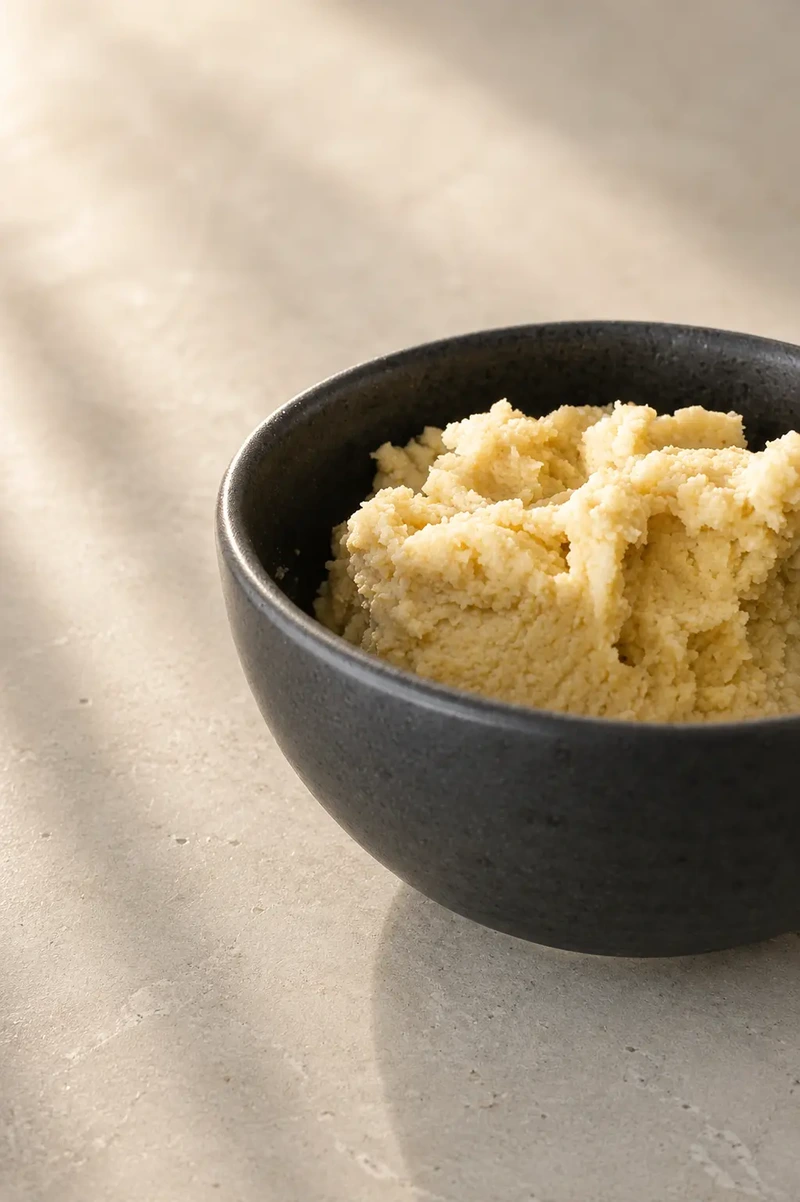
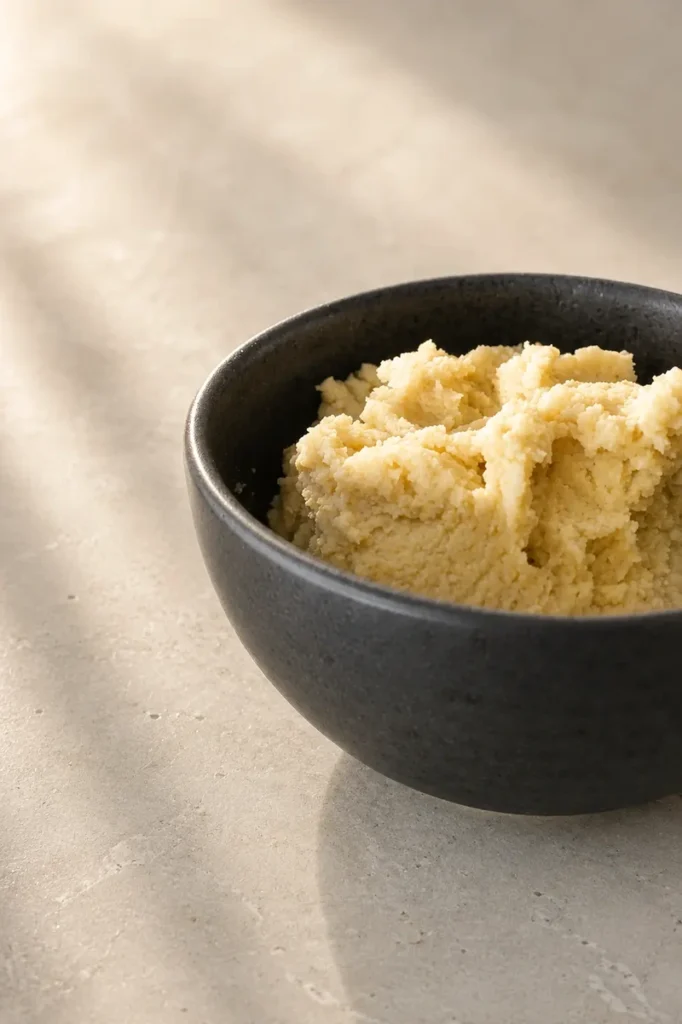
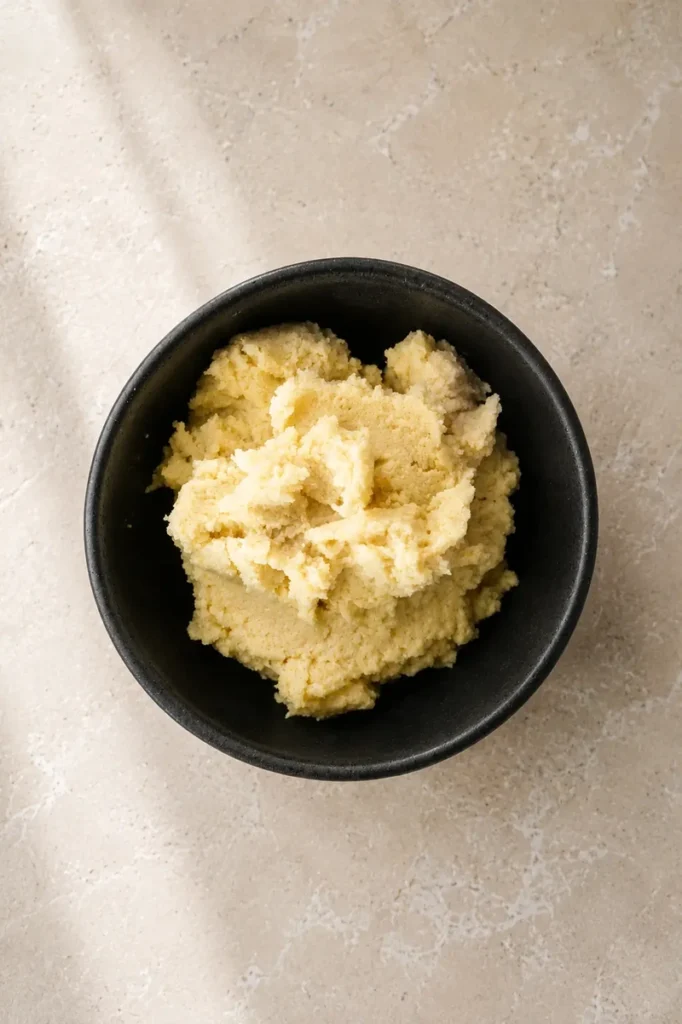
In this recipe, we use almond flour to create a vegan ricotta that is simple, quick, and easy to replicate. The texture is very close to traditional ricotta, soft, slightly grainy, and light, while the overall mouthfeel remains familiar and satisfying.
Of course, this is not the only way to make vegan ricotta. There are several plant-based alternatives, using different ingredients that lead to slightly different results. Here, the focus is on a version that is balanced, versatile, and accessible, while still delivering a texture that feels true to the original.
Ingredients for the Vegan Ricotta
You will find the full recipe card below with exact measurements and detailed instructions. Here, we focus on the ingredients themselves, what they are and how they contribute to the final result. Each component plays a specific role in building texture, flavor, and balance.
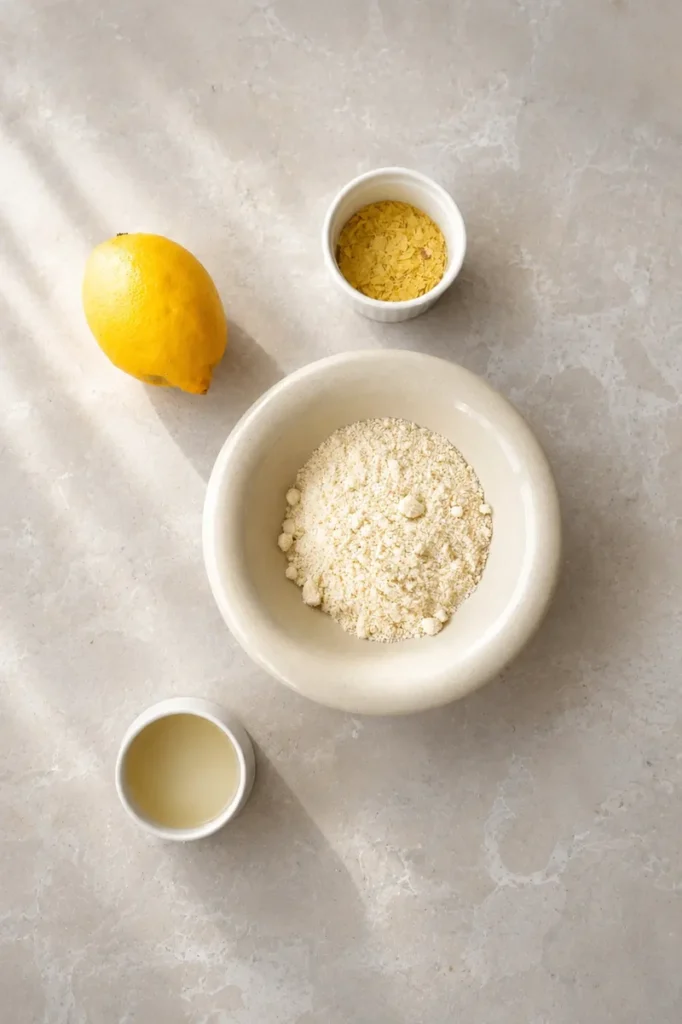
Almond Flour
Almond flour is the base of this recipe. It creates a naturally soft and slightly grainy texture that closely resembles traditional ricotta. Its mild, slightly nutty flavor also works well in both savory and sweet preparations.
If you don’t have almond flour, you can make it by blending shelled almonds until finely ground. Just be careful not to over-process them, as they can release oils and turn into a paste.
Water
Water helps bring the mixture together. It allows the almond flour to hydrate and creates the soft, creamy consistency that defines the final texture.
Nutritional Yeast
Nutritional yeast adds a subtle savory note. It enhances the flavor and gives a “cheesy” undertone without overpowering the balance of the ricotta.
Lemon Juice
Lemon juice brings freshness and acidity. It helps balance the richness of the almonds and adds brightness to the overall flavor.
Apple Cider Vinegar
Apple cider vinegar adds an additional layer of acidity. Together with lemon juice, it helps recreate the slight tang that is characteristic of traditional ricotta.
Salt
Salt enhances all the other flavors. It should be adjusted carefully to bring balance without making the ricotta too sharp.
How to Make Vegan Ricotta Step by Step
You will find the full recipe card below with exact measurements and simplified instructions. Here, we focus on the process itself, so you can better understand how the texture comes together and the best practices.
Step 1 – Blend the base
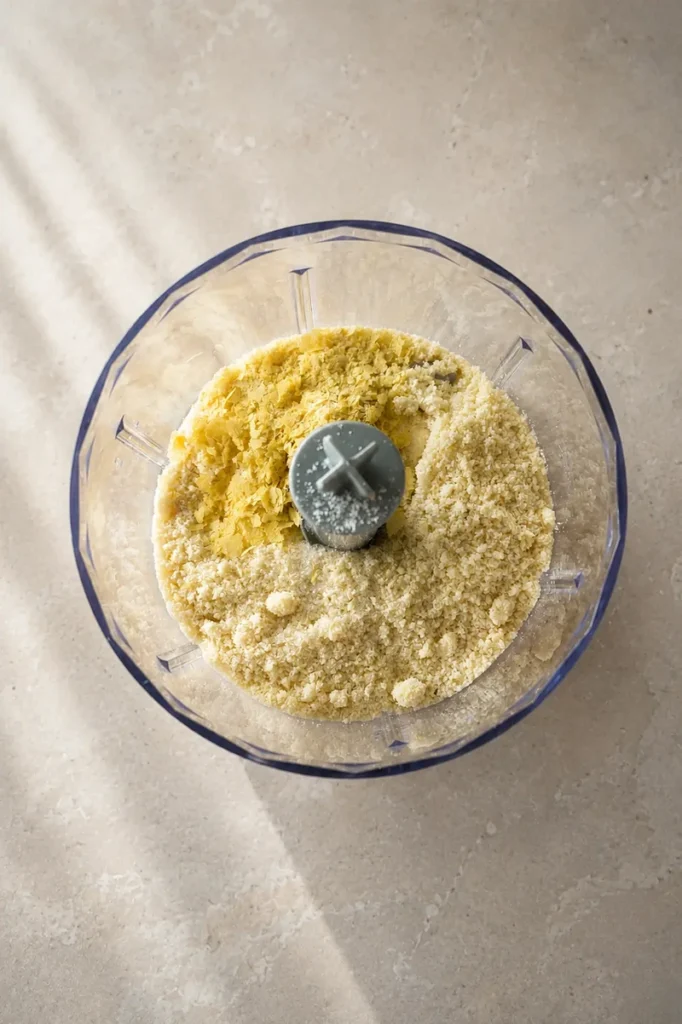
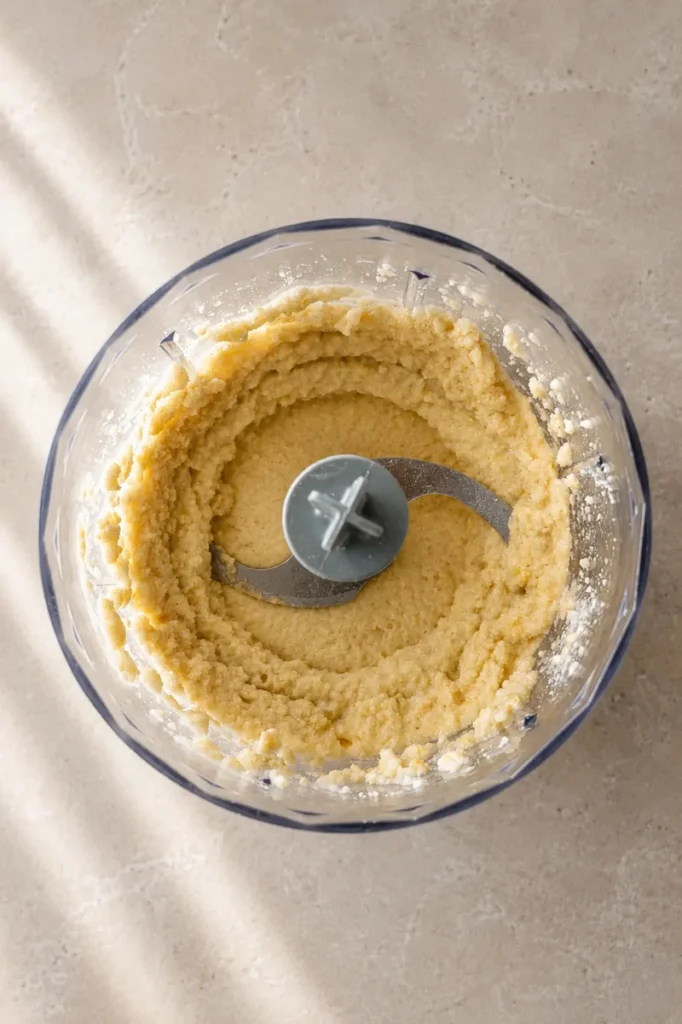
Add the almond flour to a high-speed blender or food processor. Then add the nutritional yeast, lemon juice, and salt, and start blending while gradually adding the water.
At this stage, it’s important to stay flexible and pay attention to the texture. Add the water little by little and stop when the mixture reaches the right consistency. The ideal result is smooth but not overly blended, something that still retains a slight grain, similar to traditional ricotta.
Step 2 – Cook the mixture
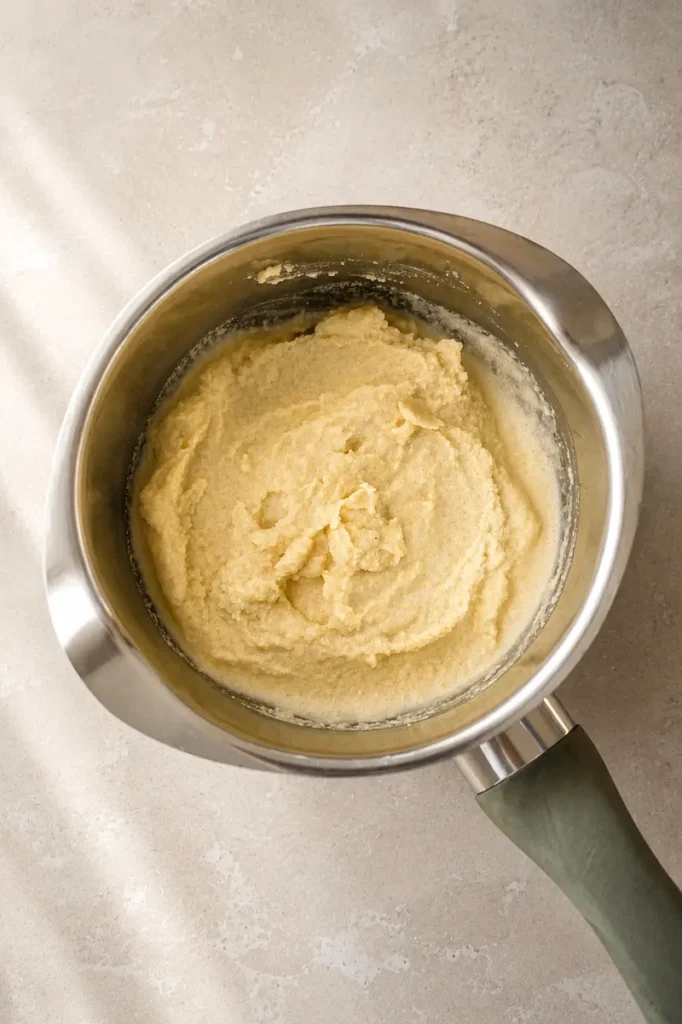
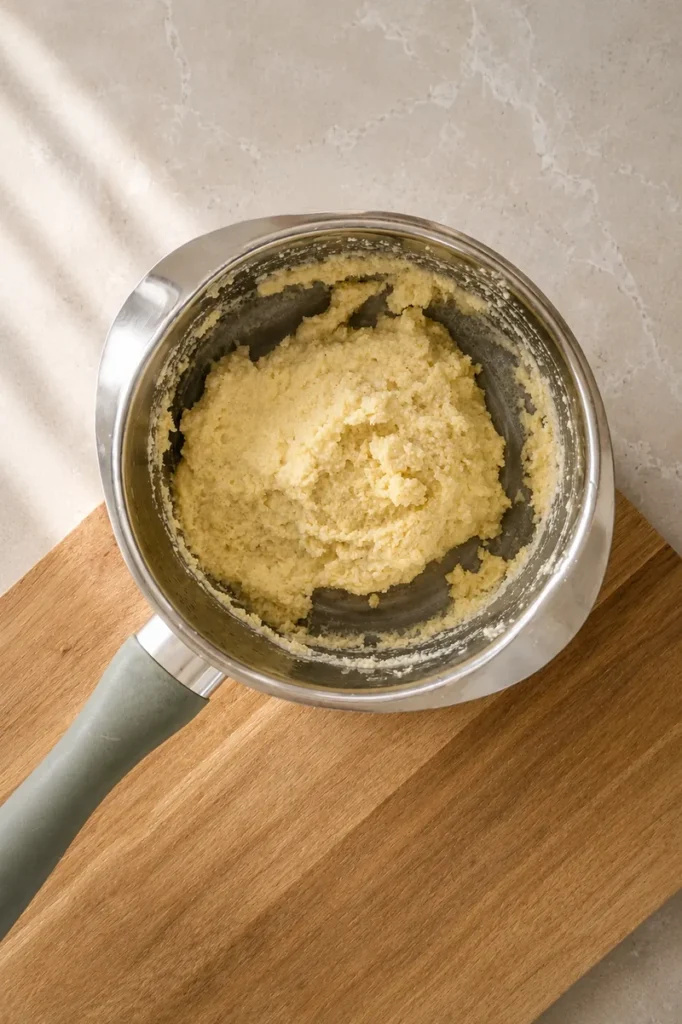
Transfer the blended mixture to a saucepan. Cook it over medium heat, stirring continuously, until it reaches a gentle boil. As it heats, the texture will begin to thicken and become more cohesive.
Once it comes to a boil, remove it from the heat and let it cool down at room temperature. As it cools, the ricotta will continue to set, developing a more defined and slightly firmer texture.
Step 3 – Adjust and set
Once the mixture has cooled, check the consistency. If there is any excess liquid, you can strain it lightly using a fine sieve or cloth. If the texture already feels balanced, you can simply transfer the ricotta to a container and place it in the fridge to set further. Chilling helps the texture become more defined and slightly firmer.
Step 4 – Season and use
When ready to use, taste the ricotta and adjust as needed. You can add a pinch of salt or a drizzle of olive oil to enhance the flavor, depending on how you plan to serve it.
For a sweeter, more neutral version, suitable for desserts, you can reduce the salt during preparation and add natural sweeteners before using it, such as maple syrup or rice syrup.
How To Use Vegan Ricotta
Vegan ricotta is a versatile preparation that can be used in many different ways, depending on the texture and flavor you choose to create. Because of its balanced structure, it works naturally in both savory and sweet recipes, adapting easily to different contexts.
Pasta Dishes
Vegan ricotta works beautifully in pasta. It can be used as a filling for ravioli or stuffed pasta, or simply mixed into sauces to create a creamy and light texture. It pairs particularly well with vegetables like spinach, zucchini, or roasted peppers.
Baked Dishes
It can also be used in baked preparations such as lasagna. Layered between pasta sheets and vegetables, it adds softness and helps create a more balanced and cohesive dish.
Spread or Side
Vegan ricotta can be served on its own as a simple side. Spread it on bread, drizzle with olive oil, and add herbs or vegetables for a minimal but satisfying preparation.
Sweet Recipes
When prepared in a more neutral version, vegan ricotta can also be used in desserts. It works well in recipes like cheesecakes or as a filling for sweet pastries, where its soft texture and mild flavor can be easily adapted with natural sweeteners.
FAQs
Here you will find answers to some of the most common questions about vegan ricotta, how it’s made, how to store it, and how it fits into a plant-based diet. If you don’t find the answer you’re looking for, feel free to leave your question in the comments. We’re always happy to help.
No, traditional ricotta is not vegan. It is a dairy product made from milk, so it belongs to animal-based foods. Vegan ricotta, on the other hand, is a plant-based alternative made using ingredients such as almonds, tofu, or other plant sources. The goal is not to replicate it exactly, but to recreate a similar texture and versatility using plant-based ingredients.
Yes, vegan ricotta should be stored in an airtight container in the fridge. It will keep well for up to 3–4 days, depending on the ingredients used. In many cases, the texture becomes even more cohesive after a few hours, as the mixture has time to settle. Before using it, you can give it a quick stir and adjust the consistency and the taste if needed.
Vegan ricotta can sometimes be found in well-stocked supermarkets or specialty stores, particularly those focused on plant-based products. Some store-bought options can be quite good. That said, making it at home is often the best option. It allows you to control the ingredients, adjust the texture, and create a fresher, more refined result.
Yes, this version of vegan ricotta can be a healthy and balanced option. Made with almond flour, it naturally provides healthy fats, including omega-3 and omega-6 fatty acids, along with a good amount of vitamin E. It is also free from cholesterol and dairy, making it a lighter alternative to traditional ricotta for many people. At the same time, it remains simple and minimally processed, using a small number of ingredients that work together to create both flavor and texture. As with any preparation, balance is key, but when used as part of a varied diet, this vegan ricotta can be a nourishing and versatile addition to your meals.
How to Make Vegan Ricotta
Ingredients
- 1 cup Almond Flour
- ¾ cups Water More if needed
- 1 tbsp Nutritional Yeast
- 1 tbsp Lemon Juice
- 1 tsp Apple Cider Vinegard
- ½ tsp Salt
Instructions
- Add the almond flour, nutritional yeast, lemon juice, apple cider vinegar, salt, and ½ cup of water to a high-speed blender or food processor.
- Blend while gradually adding the remaining water, little by little, until the mixture becomes creamy but still slightly grainy, similar to traditional ricotta.
- Transfer the mixture to a small saucepan and cook over medium heat, stirring continuously, until it reaches a gentle boil and begins to thicken.
- Remove from the heat and let the ricotta cool at room temperature. It will continue to set as it cools.
- If there is excess liquid, strain it lightly with a fine mesh sieve or cheesecloth. Transfer the ricotta to an airtight container and refrigerate for at least 30 minutes to help the texture become more defined.
- Before serving, taste and adjust with more salt, lemon juice, or a drizzle of olive oil for a savory version.
Notes
Nutrition