This article contains affiliate links. If you purchase through them, INUMAMI may earn a small commission at no extra cost to you. We only recommend what we genuinely use and trust and your support means the world to us.
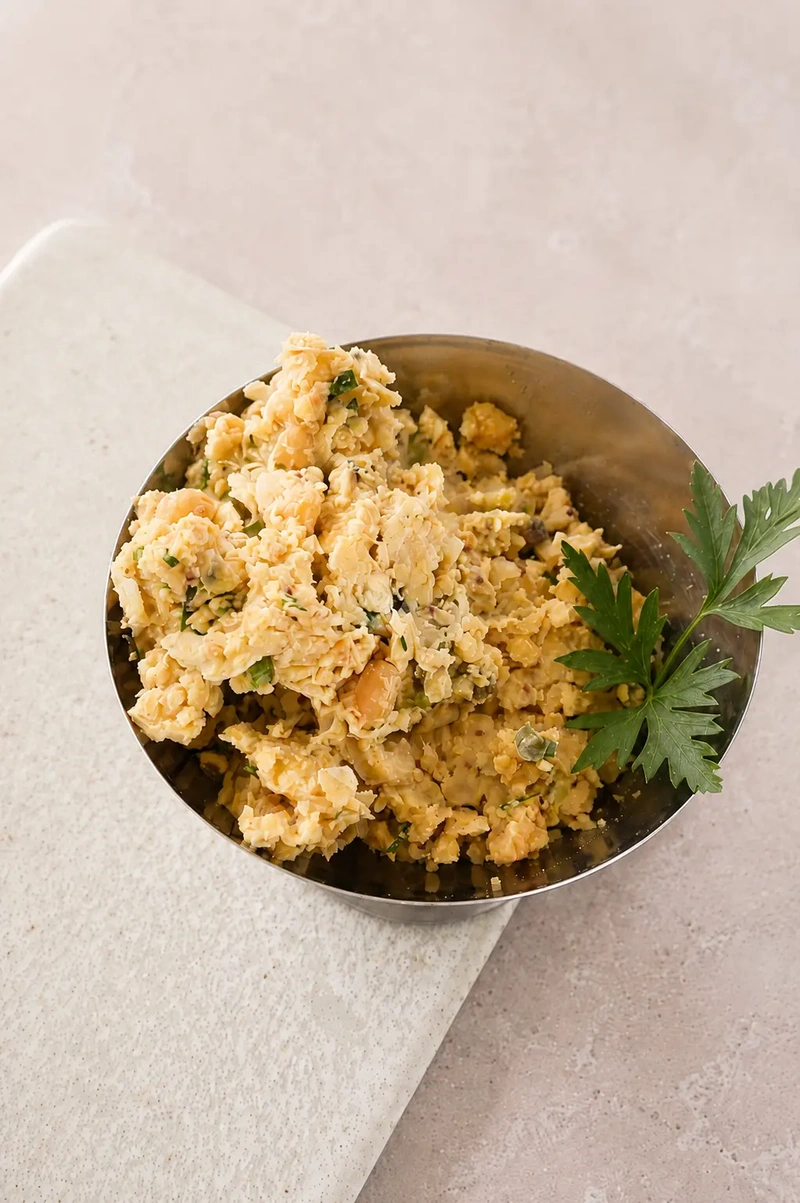
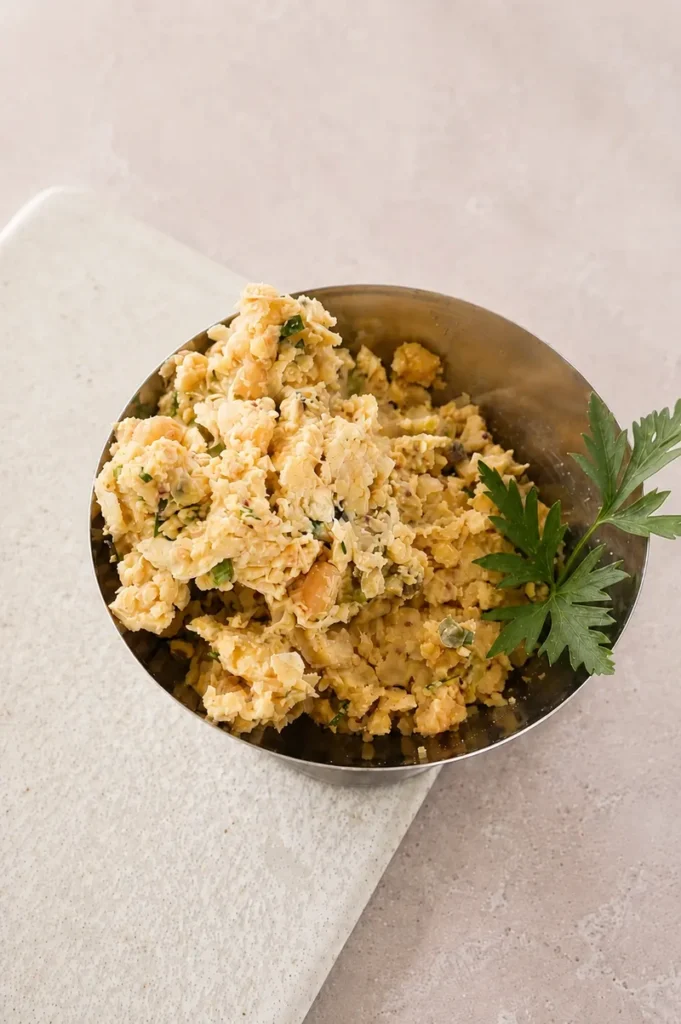
Making vegan tuna is simpler and quicker than you might expect. And no, it’s not only about imitation. It’s about understanding how to create a satisfying dish that stands on its own, while still offering something familiar for those who enjoy recipes traditionally made with tuna, such as tuna salad or sandwiches.
In this recipe, you will learn how to build that balance, through texture, creaminess, and flavor, using simple plant-based ingredients.
What Is Vegan Tuna Made Of?
Vegan tuna is most commonly made using chickpeas as the base. When lightly mashed, chickpeas create a texture that is soft but still slightly chunky, similar to traditional tuna preparations. From there, ingredients like vegan mayonnaise, mustard, lemon juice, and finely chopped vegetables are added to build creaminess and flavor.
Other variations can include white beans, tofu, or even more creative alternatives, but chickpeas remain the most widely used option for their balance of texture and taste.
In this recipe, we choose chickpeas not only for their texture, but also because they are one of the quickest and most practical options. Canned chickpeas work perfectly, making the preparation fast and accessible without compromising the final result.
If using canned chickpeas, it’s worth keeping their liquid: the aquafaba. It can be stored in a sealed container in the fridge and used for other preparations, making this recipe not only simple but also naturally zero-waste.
Ingredients for Vegan Tuna
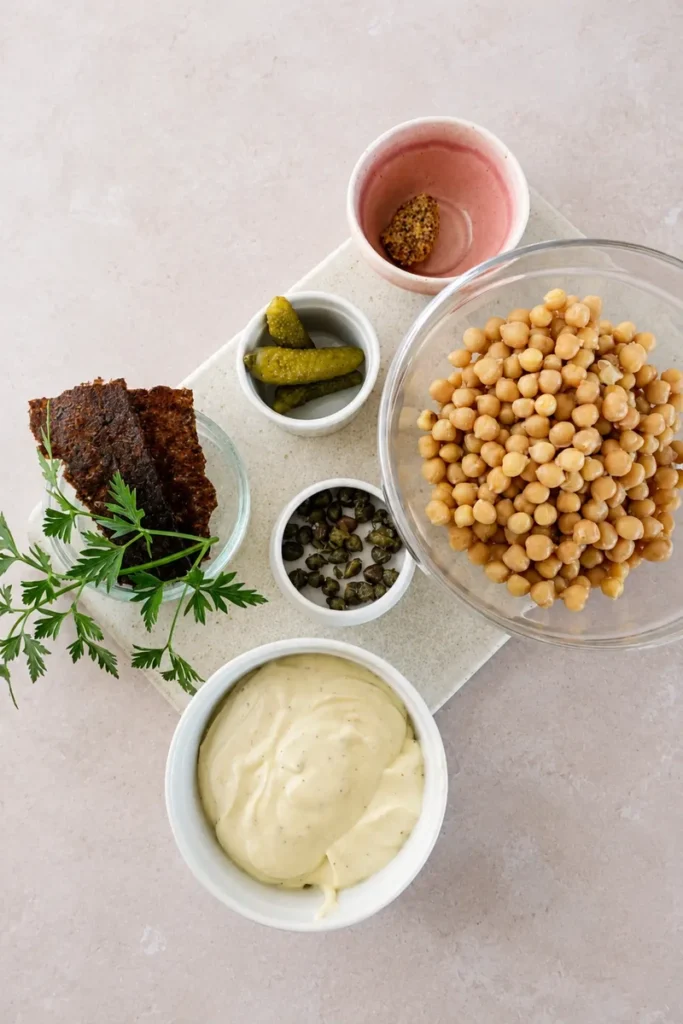
You will find the full recipe card below with exact measurements and spets. Here, we focus on the ingredients themselves, what they are and why they are used. Each component has a specific role, contributing to texture, flavor, and balance.
Chickpeas
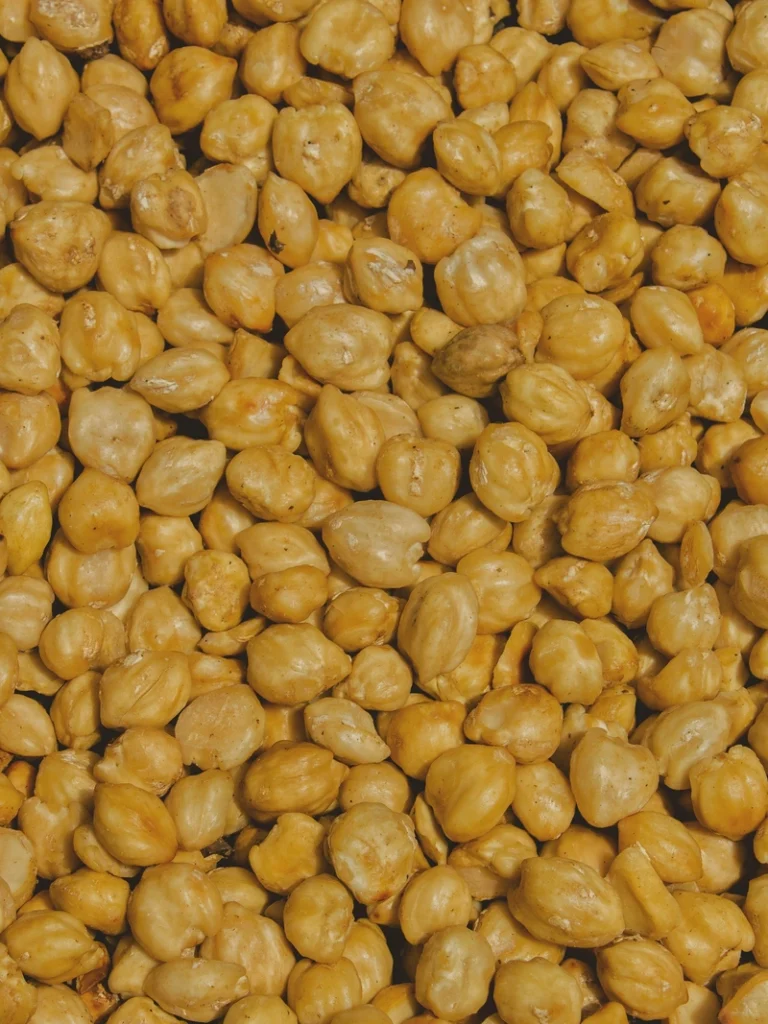
Chickpeas form the base of this recipe. When lightly mashed, they create a texture that is soft but still slightly chunky, which is essential for recreating the structure of a tuna-based dish. Their neutral flavor also makes them ideal for absorbing the other ingredients.
Creamy Element
A creamy component is what brings everything together. Vegan mayonnaise is the most common choice, adding richness and helping to bind the mixture. It also softens the texture, making the final result more cohesive.
You can use a homemade version by following our vegan mayo recipe, which allows you to control both flavor and texture. If you’re short on time, a good store-bought option works just as well.
Flavor, Freshness, and Depth
This is where the character of this vegan tuna is built. Finely chopped pickled adds sharpness and freshness, while mustard and lemon juice introduce acidity, helping to balance the richness of the mayonnaise. Capers bring a slightly salty, briny note that enhances the savory profile, making the flavor more complex and reminiscent of traditional tuna-based dishes.
Seaweed, such as nori, is an essential element in this recipe. It adds a subtle marine note that helps recreate the depth typically associated with tuna, while still keeping the overall flavor balanced and clean. Fresh parsley completes the mixture, adding brightness and a clean finish that ties everything together.
How to Make Vegan Tuna Step by Step
You will find the full recipe card below, where everything is laid out clearly with exact measurements and simplified step-by-step instructions. Here, we focus on the process itself, so you can better understand how the texture and flavor come together.
Step 1 – Prepare the chickpeas
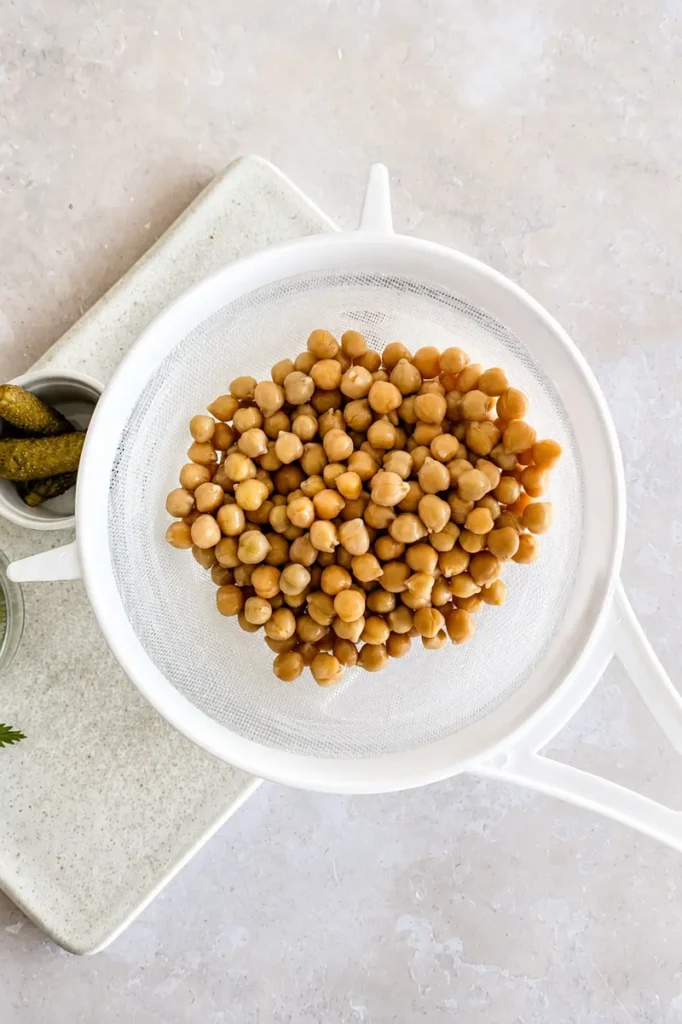
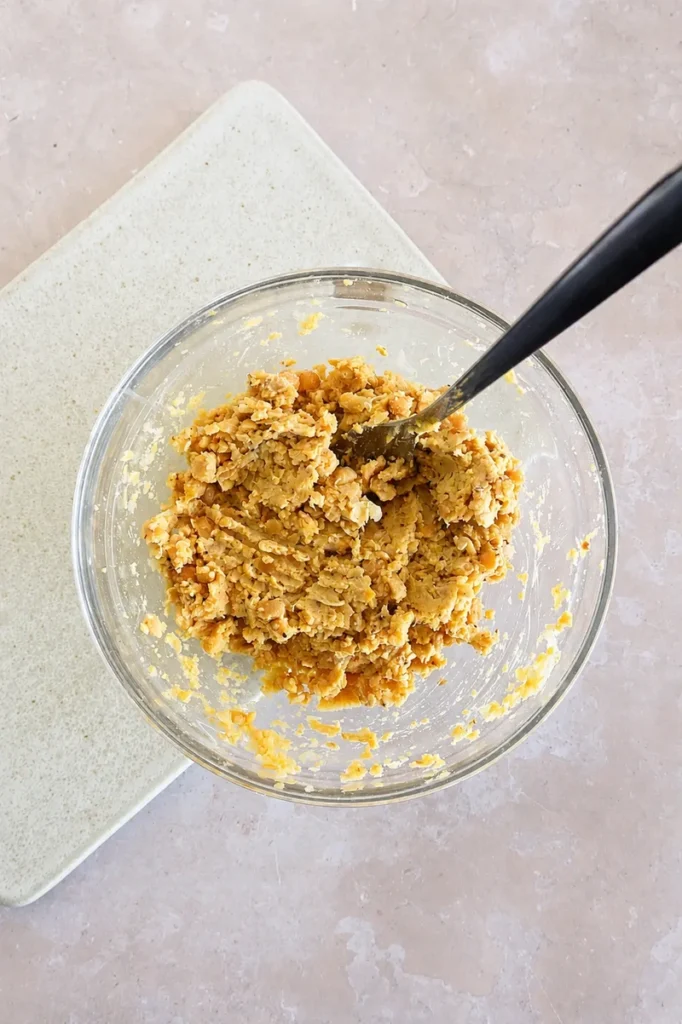
Drain the canned chickpeas and rinse them well. Do not discard the aquafaba, as it can be stored in a sealed jar in the fridge and used for other preparations. Then place the chickpeas in a bowl and mash them lightly with a fork. The goal is not to turn them into a purée, but to keep some texture so the final result remains soft, slightly chunky, and more satisfying to eat.
Step 2 – Prepare the flavor base
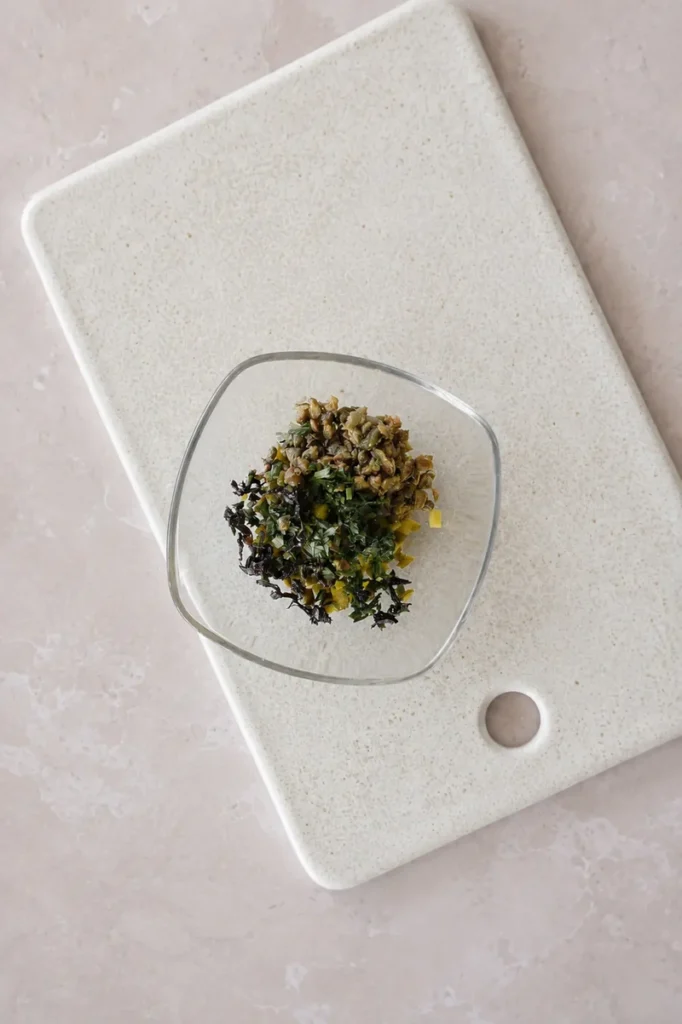
Finely chop the pickles, capers, parsley, and seaweed. These ingredients should be cut quite small so they distribute evenly through the mixture and build flavor without creating large, isolated bites.
Step 3 – Add the creamy and acidic elements
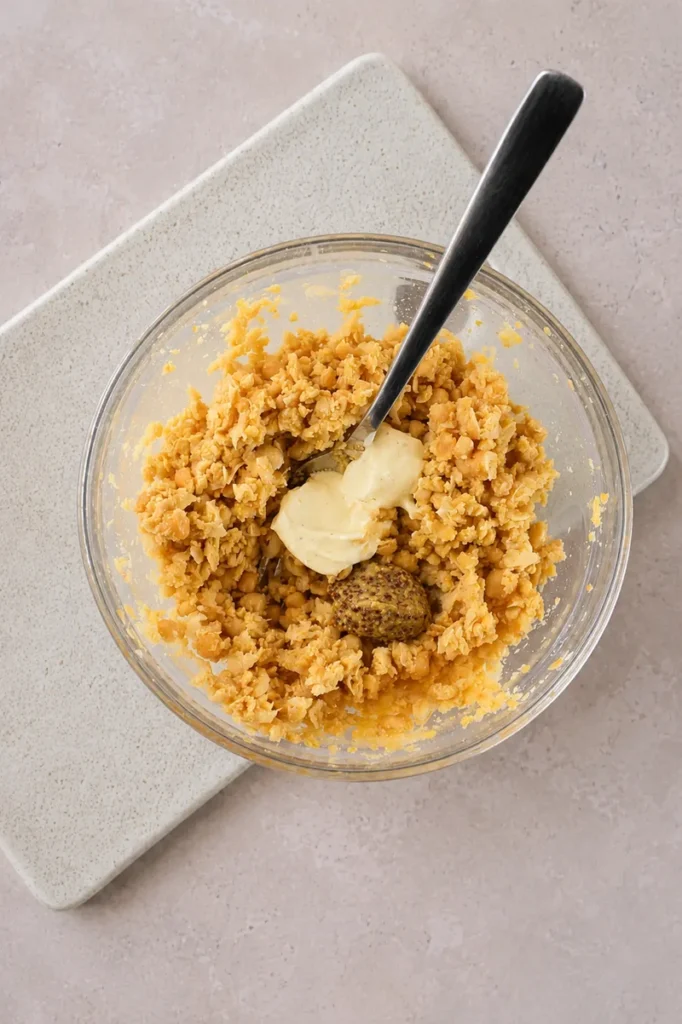
Add the vegan mayonnaise, mustard, and lemon juice to the mashed chickpeas. These ingredients bring the mixture together, giving it creaminess, brightness, and balance.
Step 4 – Mix everything together
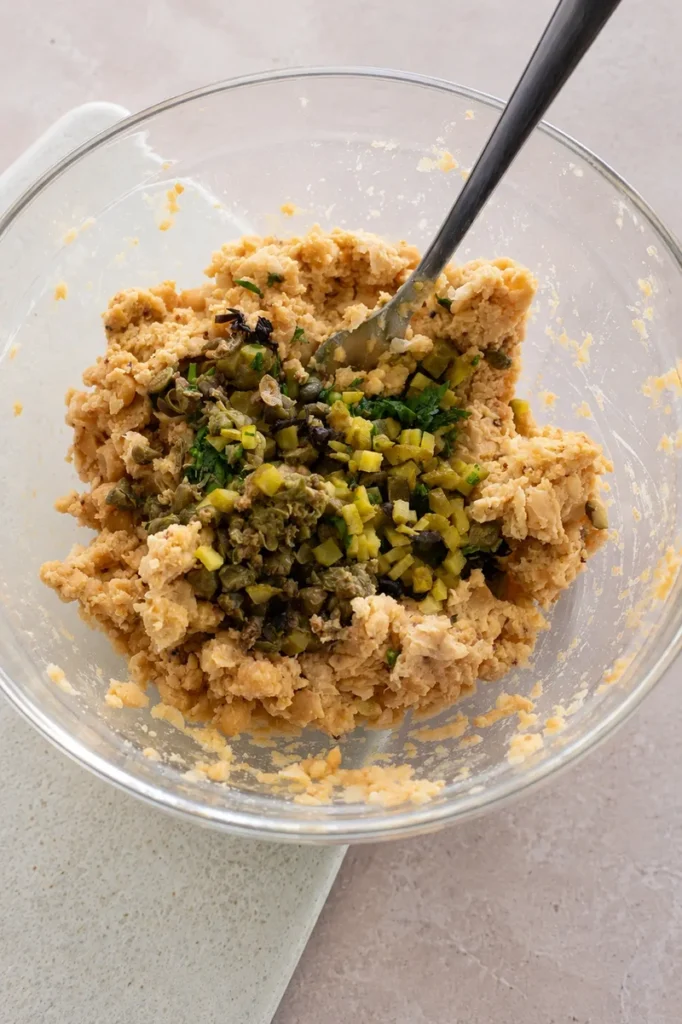
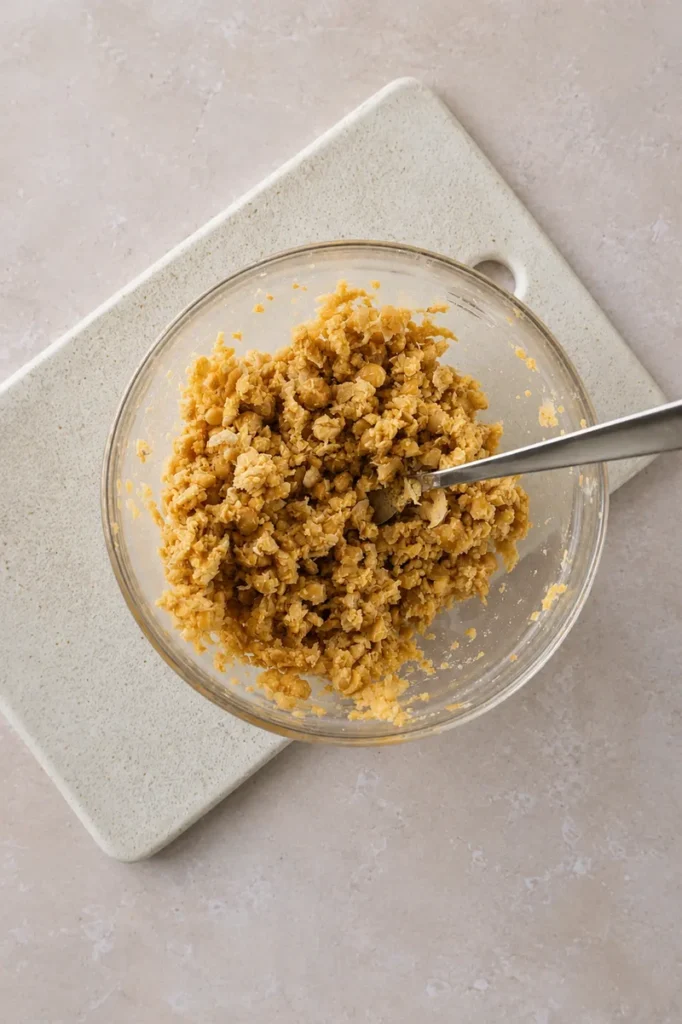
Add the chopped pickles, capers, parsley, and seaweed to the bowl, then mix everything until well combined. At this stage, the mixture should feel cohesive but not overly smooth. It should still retain some texture.
Step 5 – Taste and adjust
Taste the vegan tuna and adjust if needed. You can add a little more lemon juice for brightness, more mayonnaise for creaminess, or a pinch of salt if necessary.
Step 6 – Let it rest
If possible, let the mixture rest in the fridge for a few minutes before serving. This helps the flavors settle and blend more naturally.
Tips for the Best Vegan Tuna
Small adjustments can make a noticeable difference in both texture and flavor.
Adjust the Texture
For the best result, it’s recommended to mash the chickpeas with a fork. This keeps some of their structure, creating a texture that is soft but still slightly chunky.
If you prefer a smoother and more spreadable version, especially for sandwiches or more refined preparations, you can blend the mixture briefly using a blender or food processor. You can also add a small amount of aquafaba while blending. This helps create a creamier, lighter consistency without needing to add more mayonnaise.
Balance the Flavor
The key to a good vegan tuna is balance. Acidity from lemon and pickles, creaminess from the mayonnaise, and saltiness from capers should all work together. These elements create contrast and prevent the mixture from feeling too heavy or flat. Taste as you go and adjust gradually, rather than adding too much at once.
Chop Ingredients Finely
Ingredients like pickles, capers, and parsley should be finely chopped. This ensures they distribute evenly throughout the mixture, so every bite has a balanced flavor rather than isolated strong notes.
Alternative Base
If you prefer not to use chickpeas, you can substitute them with tofu. Simply crumble or mash the tofu and follow the same recipe. This will give you a slightly different texture, but still a balanced and satisfying result. For best results, use a semi-firm tofu. It holds enough structure while remaining soft enough to blend well with the other ingredients. Silken tofu is not recommended here, as it would make the mixture too smooth and less defined.
How and where to Use Vegan Tuna
This vegan tuna preparation can be used in many different ways, both as a substitute in traditional recipes that call for tuna, and in more creative, plant-based dishes. Since it is made from chickpeas, it naturally provides both protein and carbohydrates, making it suitable not only as a filling or topping, but also as a component of a more complete main dish.
Salads
Vegan tuna works naturally as a base for salads. It can be served on its own or combined with fresh vegetables to create a more complete and balanced dish. Its creamy texture pairs well with crisp elements, adding both substance and flavor.
One of the most popular options is a vegan tuna salad, where this preparation becomes the main component of the dish. It’s a simple yet satisfying way to turn it into a complete meal, and you can explore it further in our dedicated vegan tuna salad recipe.
Sandwiches – Bread
One of the most classic uses is in sandwiches. Spread it over good bread, add some fresh greens, and you have a simple yet satisfying meal. It also works well in panini, where the warmth slightly softens the mixture and enhances its flavor.
Appetizers or Sides
For a fresher and more minimal approach, vegan tuna can be used in lighter preparations. It works well in small portions, served in lettuce leaves or used to fill ingredients like cucumber, creating simple dishes that can be enjoyed as appetizers or light sides. These options highlight its texture and flavor in a more delicate way, without turning it into a full meal.
Cold Dishes
The Vegan Tuna can also be added to cold pasta salads or rice salads, where it brings both creaminess and substance, turning these dishes into more balanced and satisfying meals.
How to Store Vegan Tuna
Vegan tuna should be stored in an airtight container in the fridge and will keep well for up to 3–4 days. In fact, it often tastes even better the next day. Letting it rest allows the flavors to develop and blend more naturally, making the final result more balanced and cohesive.
For this reason, it’s a great option to prepare in advance, especially if you plan to use it in different dishes over a few days. Vegan tuna is best enjoyed fresh and is not ideal for freezing. The texture can change once thawed, especially due to the creamy elements and fresh ingredients.
FAQs
These FAQs will help you customize the recipe, keep it balanced, and use it in different dishes, from sandwiches to salads and cold pasta. If you do not find the answer you are looking for, feel free to leave your question in the comments and we will be happy to help.
No, tuna is not a vegan food, it is a fish. Vegan tuna is a plant-based alternative that recreates some of the characteristics of tuna-based dishes using ingredients such as chickpeas. The goal is not to replicate the original exactly, but to offer a different option that is lighter, plant-based, and still satisfying in terms of texture and flavor.
No, tuna is not part of a vegan diet. A vegan diet excludes all animal-derived foods, and since tuna is a fish, it is not considered vegan. However, there are plant-based alternatives, like this vegan tuna made from chickpeas, that can offer a similar experience in terms of texture and flavor, while remaining fully plant-based. These alternatives allow you to recreate familiar dishes in a way that aligns with a vegan lifestyle, without giving up the structure or satisfaction of the original.
The best vegan tuna salad is one that feels balanced, flavorful, and satisfying, not just a simple mixture, but a complete dish. A well-made version combines a good vegan tuna base with fresh elements, a creamy component, and enough texture to make it enjoyable to eat. It should feel cohesive, not heavy, and work both on its own and as part of a larger meal. Our vegan tuna salad recipe is built exactly with this in mind, combining simplicity with balance to create a version that is both practical and refined.
How to make Vegan Tuna
Equipment
- 1 Fork
- 1 Airtight container, for storage
- 1 Knife
Ingredients
- 1 can chickpeas
- 4 tbsp Vegan Mayo
- 1 tsp Mustard
- 1 tbsp Lemon Juice
- 1 tbsp pickles, finely chopped
- 1 tbsp salted capers, finely chopped
- 1 tbsp fresh parsley, finely chopped
- ½ sheet nori, finely chopped or crumbled
- To Taste Salt Optional
Instructions
- Drain and rinse the chickpeas. If using canned chickpeas, keep the aquafaba aside for other recipes or to adjust the texture.
- Add the chickpeas to a mixing bowl and mash them with a fork or potato masher. Keep some texture: the mixture should be soft and slightly chunky, not completely smooth.
- Finely chop the pickles, capers, parsley, and nori.
- Add the vegan mayonnaise, mustard, and lemon juice to the mashed chickpeas. Mix until creamy and combined.
- Add the chopped pickles, capers, parsley, and nori. Stir well until everything is evenly distributed.
- Taste and adjust with salt, black pepper, more lemon juice, or extra vegan mayo if needed.
- For the best flavor, let the vegan tuna rest in the fridge for 10 minutes before serving.
Notes
Nutrition