This article contains affiliate links. If you purchase through them, INUMAMI may earn a small commission at no extra cost to you. We only recommend what we genuinely use and trust and your support means the world to us.
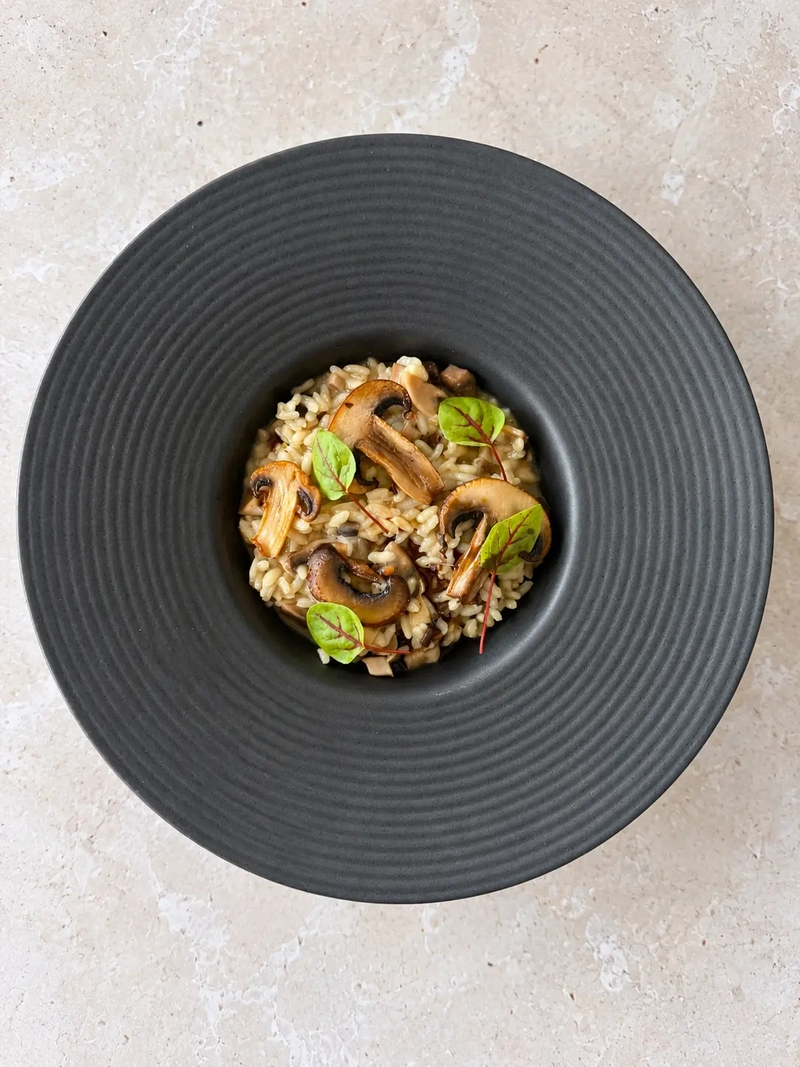
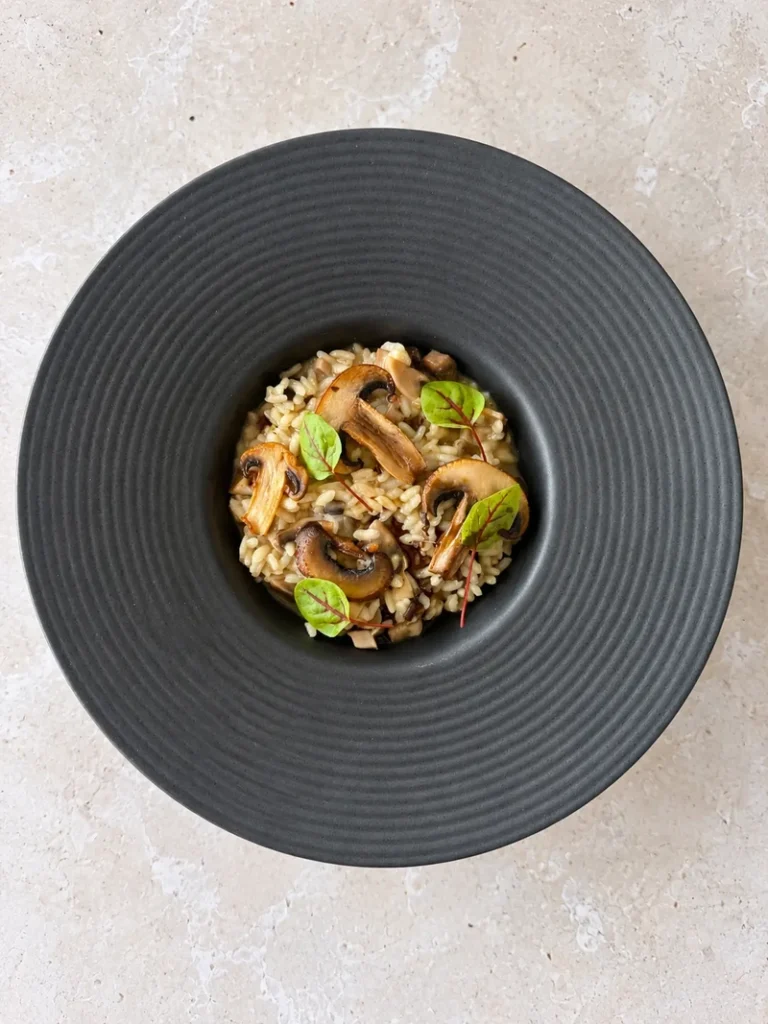
This mushroom risotto is rich in umami, deeply flavorful, creamy, and perfect for welcoming the autumn season. Even just looking at the finished dish, it brings to mind the woods, the earth, and nature slowly changing its colors.
In my version of mushroom risotto, everything is completely plant based and gluten free, and I used a mix of different mushrooms to create more depth and texture. If you keep reading, you will also find a few useful tips that can be applied to almost any plant based risotto.
A Creamy Risotto Does Not Need Dairy
This is one of the most important things to know about risotto: its creaminess does not come exclusively from butter, cheese, or cream.
A large part of that texture comes from the starch released by the rice as it cooks, from the way the broth is added and the risotto is stirred, and from the fat used during the final stage of cooking. And yes, that fat can absolutely be plant based.
For this vegan mushroom risotto, I intentionally did not make it all’onda. I wanted it creamy, but slightly more structured. If you are not familiar with the term, risotto all’onda is an Italian expression that literally refers to a risotto that moves “like a wave.” When the pan is gently shaken, the risotto should flow back and forth in a soft wave rather than sitting firmly in place. On the plate, it should spread naturally while still remaining creamy, never watery or soupy.
It is a beautiful way to serve risotto ( and my favourite!) , but it is not the only correct texture. For this mushroom version, I preferred something a little thicker and more substantial, while still keeping that characteristic creaminess that a good risotto should have.
Ingredients You Need For This Vegan Mushrooms Risotto
Mushrooms
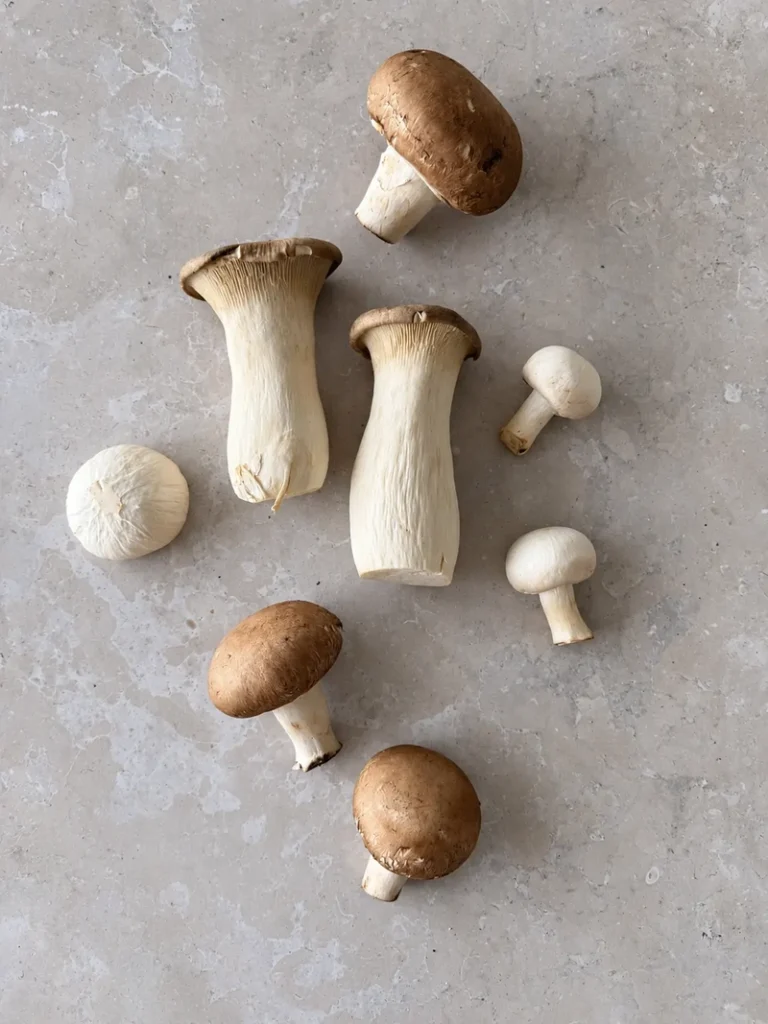
I used a mix of whatever mushrooms were available, including oyster mushrooms, button mushrooms, and porcini, using a little of each. Combining different types of mushrooms gives the risotto a more complex flavor, but it also lets you play with different cuts and textures. It is not essential, though. You can absolutely make this risotto using just one type of mushroom.
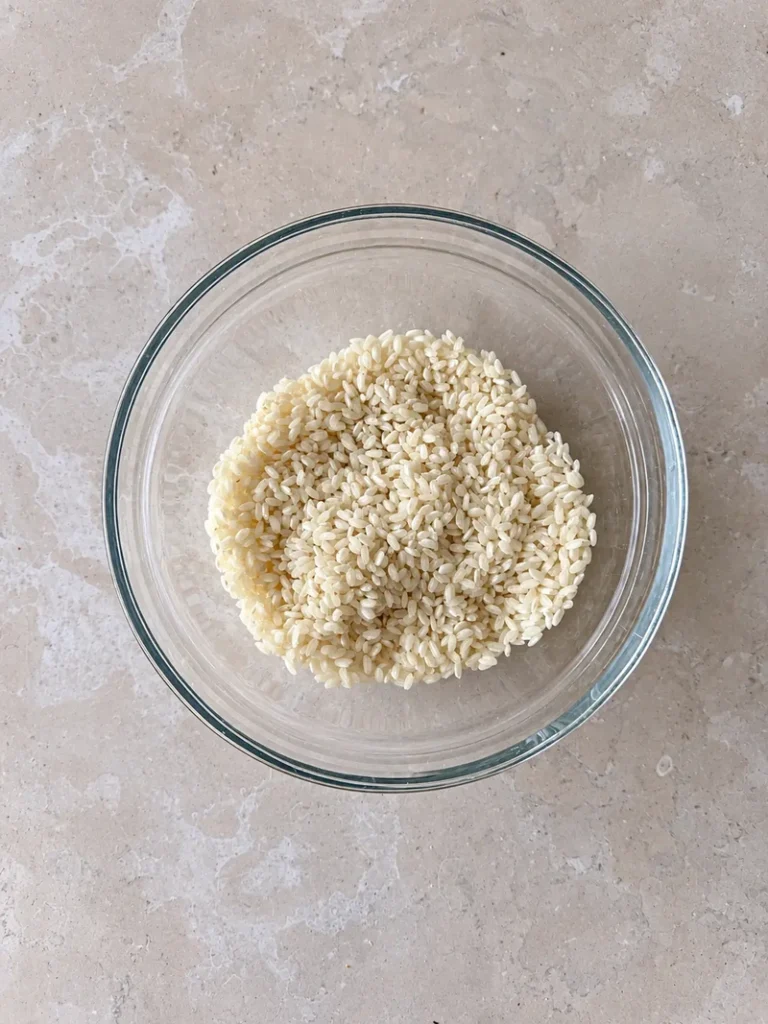
Rice
This part really matters, because the type of rice makes a huge difference to the final texture of a risotto. When I am in Italy, or whenever I can find it, I use Vialone Nano, a variety of rice from Verona and, to me, definitely the best one to reach that creaminess that a restaurant’s style risotto has. When I cannot get it, I usually choose Carnaroli, which holds its shape beautifully and keeps the grains pleasantly al dente. Arborio is another good option, although it tends to swell more as it absorbs a greater amount of liquid.
Choose the variety you prefer. These are simply the ones I personally reach for most often. Over time, you can experiment, compare them, and see which texture you like best. The cooking method remains the same.
Broth
This is another essential part of risotto, because it creates the base of the flavor while also being the liquid the rice cooks in.
You have a few options here. You can make a classic vegetable broth with carrots, onion, and celery, and for this recipe I would also add a few dried mushrooms. Or you can make a quick broth using miso paste, which is what I did here.
Broth matters because it gives the risotto depth, but the truth is that if your main ingredients are fresh, seasonal, and well balanced, you can also use plain hot water. The important thing is that whatever liquid you add stays hot throughout the cooking process.
White wine
Use whichever white wine you like or already have open. You do not need anything expensive or particularly sophisticated here. The wine adds acidity and another layer of flavor before the broth is added.
Vegan butter
You do not always need to use vegan butter as the fat for mantecatura, but I did use it in this recipe. I used a salted vegan butter, which helped add both richness and seasoning at the end. You can also use other plant based fats, such as extra virgin olive oil, cashew butter, or almond butter. Each one will give the risotto a slightly different finish, so you can choose depending on the flavor and texture you prefer.
If you want to explore more options, I have a complete guide to vegan butter substitutes with alternatives for both cooking and baking.
Nutritional yeast
This is perfect for finishing the risotto in place of Parmesan. It does not create creaminess on its own, but it adds flavor, savoriness, umami, and a subtle cheesy note that works especially well with mushrooms.
If you do not have nutritional yeast, it is not a big problem. You can use a little vegan cheese, finely blended almonds, toasted almond flakes, or even a spoonful of soy sauce added at the end of cooking. Each option gives a slightly different result, but all of them can add extra savoriness and depth to the risotto.
Vinegar
I almost always add a little acidity during the final mantecatura. It helps balance the richness of the risotto and makes the other flavors feel brighter and more defined. You only need about a tablespoon. Rice vinegar, apple cider vinegar, or another mild vinegar all work well. This ingredient is completely optional, but I really recommend trying it.
How to Make Vegan Mushroom Risotto
Here we go into a little more detail, but if you are in a hurry ( and have the famous 14 to 18 minutes it takes to cook risotto), you can jump straight to the recipe card below. Or you can stay here, read through the method, and pick up a few useful tricks for making the perfect risotto every time. Your choice.
STEP 1. Prepare the Mushrooms
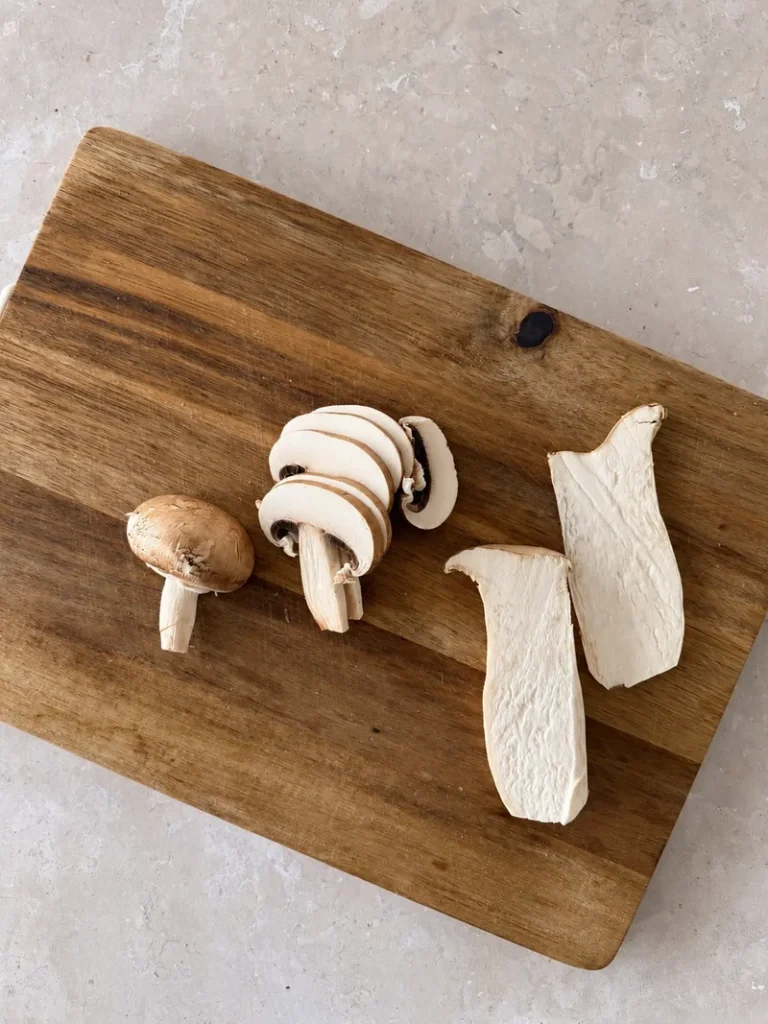
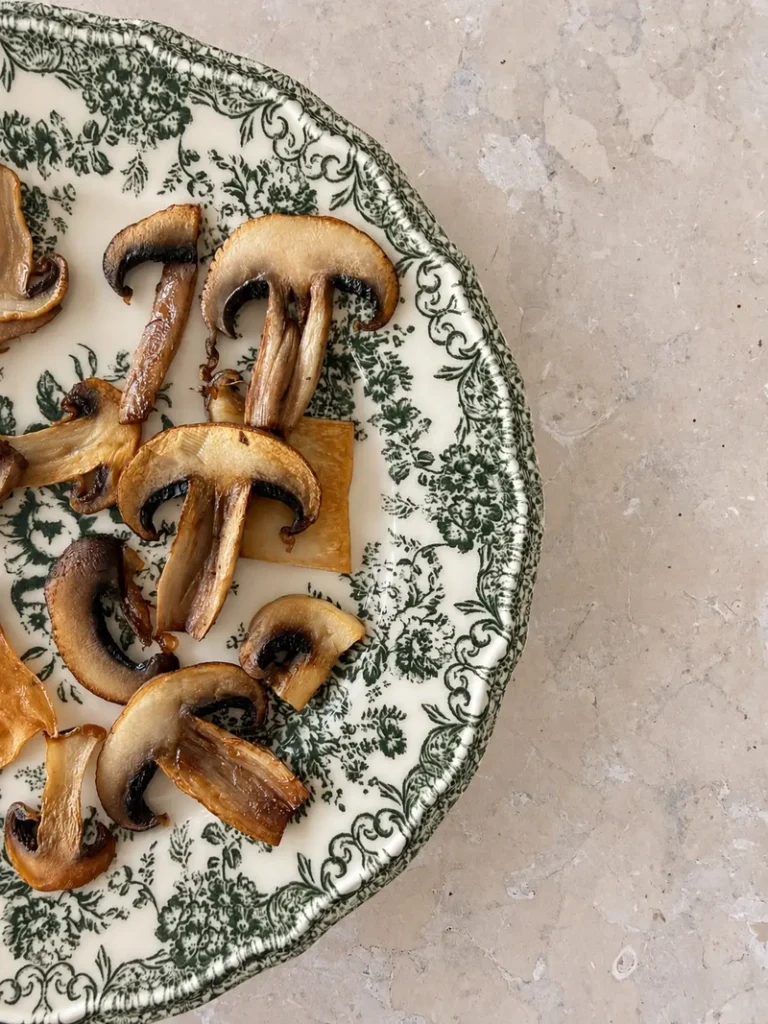
Clean the mushrooms and divide them depending on how you want to use them. I kept some pieces larger because I wanted to serve them on top of the risotto. Cook these in a hot pan with a little olive oil, salt, and black pepper, without moving them too much at first. This allows the Maillard reaction to develop, giving the mushrooms a deeper flavor and a beautiful golden surface.
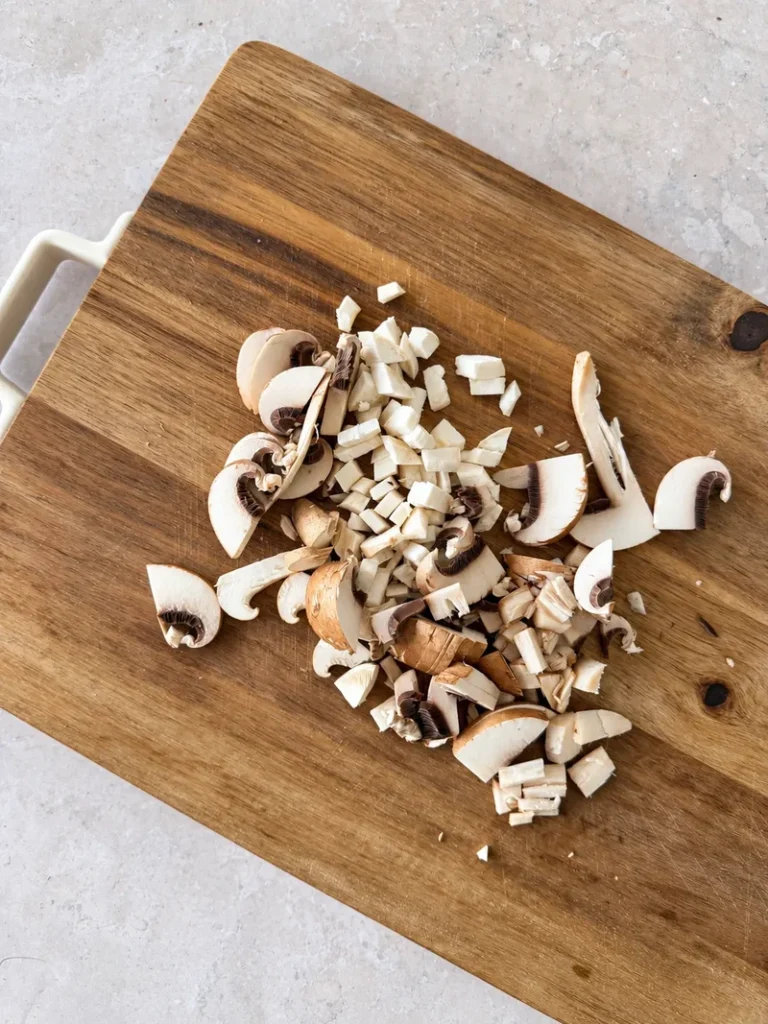
For the mushrooms that will go directly into the risotto, cut them into smaller, irregular cubes. They do not need to look perfect. In fact, the different shapes help them blend into the rice while still keeping a little texture.
STEP 2. Cook the Mushrooms
Cook the mushrooms in two different ways depending on how you will use them in the risotto.
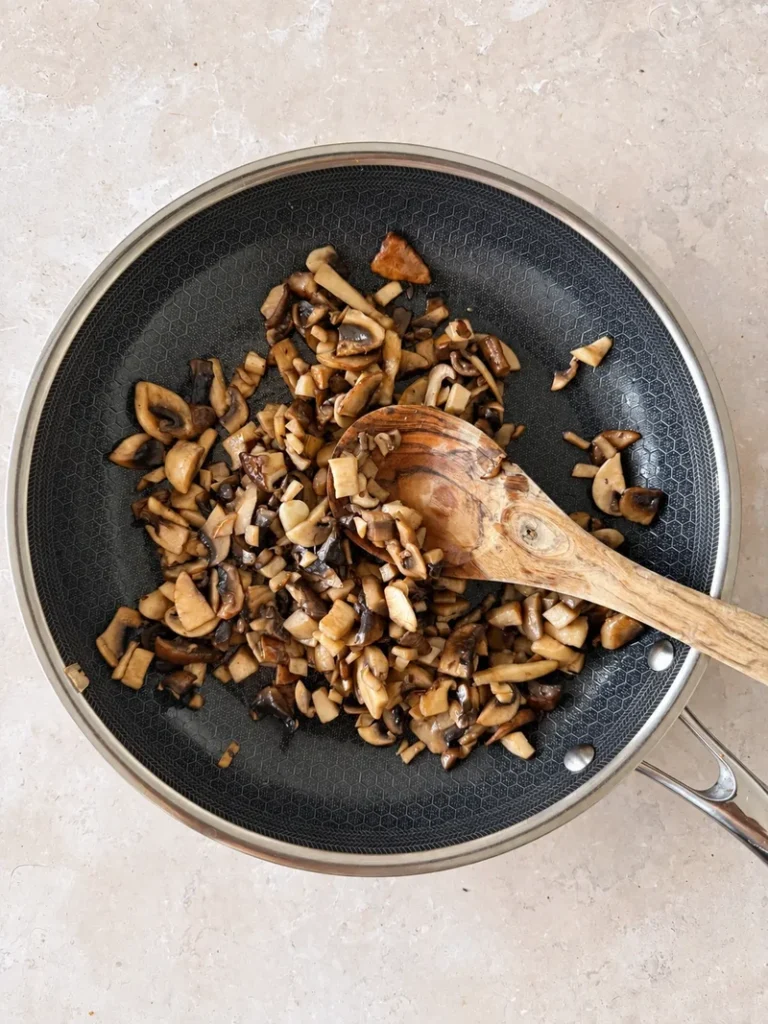
For the mushrooms cut into small irregular cubes, heat a little extra virgin olive oil in a pan with a clove of garlic. Add the mushrooms and cook them until softened, fragrant, and lightly golden. These are the mushrooms that will later be added directly to the rice.
For the larger slices that will be used on top, heat a small amount of neutral oil in a separate pan. Add the mushrooms and cook them for a few minutes on each side until deeply golden. Try not to move them too much while they cook. You can also gently press them against the hot surface of the pan to encourage better contact and help them develop a beautiful browned crust.
Once cooked, keep both batches aside. The smaller pieces will go into the risotto during cooking, while the larger golden mushrooms will be added only when serving.
STEP 3. Keep the Broth Hot and Heat the Pan
If your broth is already prepared, keep it hot in a separate saucepan over low heat while you make the risotto.
At the same time, place the pan you will use for the rice over medium heat and let it warm up properly before adding anything. Keeping the broth hot is important because each ladle should continue the cooking process rather than cooling the rice down. Once the pan is hot, you are ready to toast the rice.
Note: You do not always need to start risotto with a traditional flavor base such as finely chopped onion. Some of the best risottos are toasted dry, especially when the broth is flavorful and the main ingredients are good quality. In that case, adding more aromatics is not necessary.
STEP 4. Toast the Rice Dry
Add the rice directly to the hot pan, without oil or onion, and toast it dry for a couple of minutes. This is a delicate moment, because you want the grains to become hot and slightly glossy without actually burning them. Keep the rice moving and watch it closely.
I have to admit that sometimes I get distracted and a few grains become a little too brown. It has happened more than once, and strangely enough, I actually enjoy the slightly toasted aftertaste that this little mistake creates. Still, the goal here is not to brown the rice, but simply to toast it gently before you start adding the broth.
STEP 5. Deglaze with White Wine
Pour in the white wine and let it cook until the alcohol has evaporated and the liquid has been mostly absorbed. This is the moment when the acidity starts to balance the richness of the risotto and adds another layer of flavor before the broth goes in.
Keep the heat fairly lively and stir gently while the wine reduces. Once you can no longer smell the sharp alcohol and the rice has absorbed most of the liquid, you are ready to start adding the hot broth.
STEP 6. Start Cooking the Risotto
Begin adding the hot broth a little at a time. Add just enough to barely cover the rice, then let it cook and absorb the liquid. As soon as the pan starts to look dry again, add another ladle of broth.
Continue like this throughout the cooking process, always keeping the rice moist but never completely submerged. The idea is to let the rice gradually absorb the broth while releasing its starch, which is what helps create that characteristic creamy risotto texture.
STEP 7. Add the Mushrooms
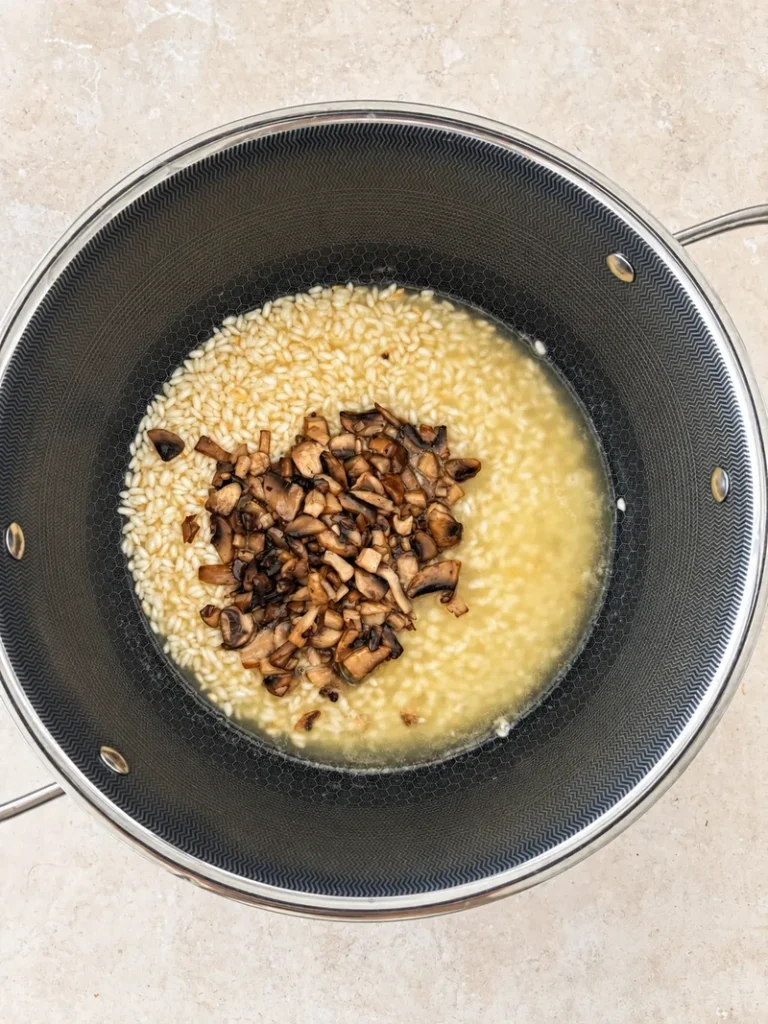
After about 5 minutes of cooking, add the mushrooms you cut into small irregular cubes. The timing of this step can change depending on the style of risotto you are making. If the mushrooms had been blended into a smooth purée, I would add them much closer to the end, especially for a looser risotto all’onda style. That is a version I would use for a different recipe.
Here, because the mushrooms are chopped and we want them to become part of the risotto while still keeping some texture, add them after roughly 5 minutes of cooking, around 10 minutes before the risotto is ready.
STEP 8. Finish the Risotto Off the Heat
After about 14 minutes of total cooking time, turn off the heat. Add the salted vegan butter and nutritional yeast, then stir vigorously. This helps incorporate air into the risotto and gives it a creamier, more cohesive texture.
Once everything is well combined, cover the pan with a lid and let the risotto rest for about 5 minutes. This resting time is important. It allows the texture to settle, the flavors to come together, and the risotto to finish cooking gently without becoming overdone.
STEP 9. Plate and Finish
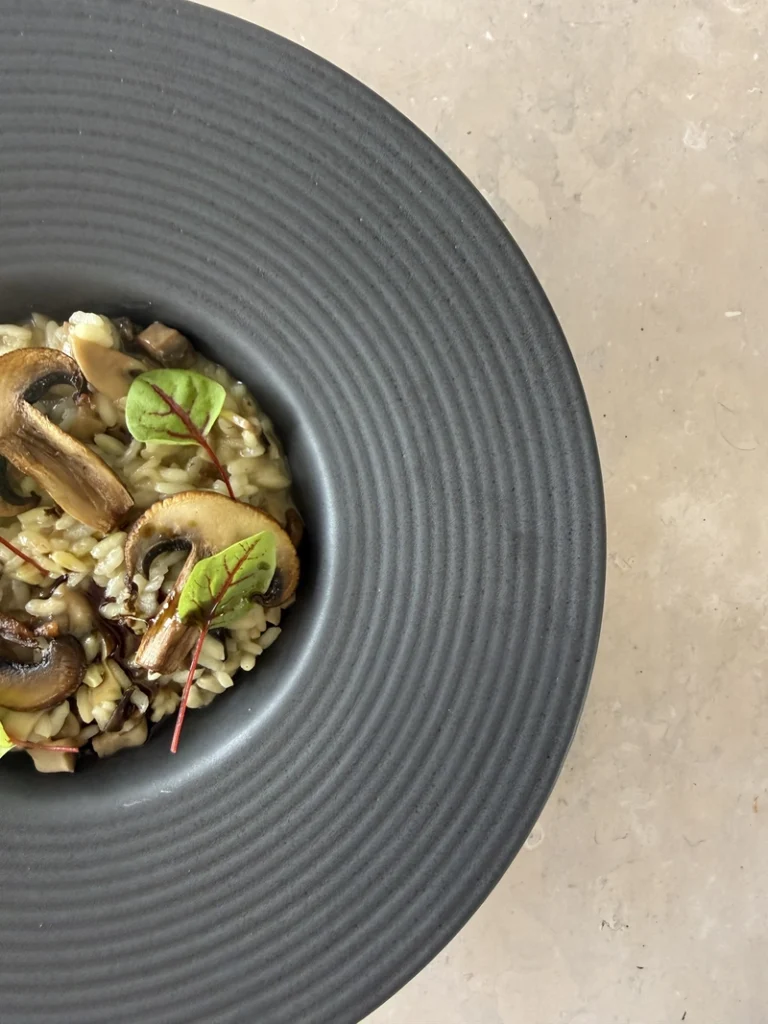
Serve the risotto in a shallow bowl or on a flat plate, depending on the presentation you prefer. Finish with the larger golden mushroom slices you kept aside, then add a few fresh herbs on top. I used microgreens for a fresh, delicate finish and a little contrast against the earthy colors of the risotto. I wanted it to looks like a fall garden.
Is Risotto Vegan or Dairy Free?
Traditional risotto is not vegan, because the classic Northern Italian preparation includes butter, Grana Padano or Parmigiano, and sometimes other cheeses as part of the final seasoning.
So, does risotto have dairy? Very often, yes. And is risotto dairy free? Not by default. It depends entirely on how it is prepared.
If you are interested in understanding the difference between vegan and dairy free a little better, I have also written a complete guide that should answer most of the common questions and clear up the confusion between the two terms.
If we want to go further back, though, the history becomes more interesting. When rice began to spread through Mediterranean trade routes and was later cultivated across the plains of Northern Italy, it was originally prepared in much simpler ways, often simply boiled in water. The technique we now associate with risotto, where the rice is gradually cooked with liquid and then finished with butter and cheese, developed later. So, for the true historical purists, we can say that dairy was not always part of the story.
In any case, making risotto completely plant based is absolutely possible, easy, and does not take anything away from what makes risotto so good. Animal based fats can be replaced with plant based ones without sacrificing richness or texture.
Vegan butter, nut butters, and plant based cheeses made from almonds, soy, or coconut can all work beautifully during the final mantecatura. Nutritional yeast is also especially useful when you want to recreate that savory, slightly cheesy finish without using dairy.
Vegan Mushroom Risotto Recipe | Creamy & Dairy Free
Equipment
Ingredients
- 320 gr Rice My favourite type of rice are Carnaroli, Vialone Nano or Arborio
- 400 gr Mushrooms
- 1 clove Garlic
- 2 tbsp extra virgin olive oil
- 100 ml White Wine
- 1 liter Hot Vegetable Broth or Hot Water
- 30 gr Vegan butter
- 20 gr Nutritional Yeast
- 1 tbsp Apple Cider Vinegar
For the Decoration – Optional
- Fresh Herbs I used Micro Greens
Instructions
- Clean the mushrooms and divide them according to how you want to use them. Keep some pieces larger for serving on top of the risotto. Cut the remaining mushrooms into small, irregular cubes.
- Heat the extra virgin olive oil in a pan with the garlic. Add the diced mushrooms and cook until softened, fragrant and lightly golden. Remove from the heat and set aside.For the larger mushroom slices, heat the oil in a separate pan. Cook them for a few minutes on each side until deeply golden. Try not to move them too much. You can gently press them against the pan to encourage better contact and browning.Set them aside for serving.
- Keep the prepared vegetable or miso broth hot in a saucepan over low heat.Heat the pan you will use for the risotto separately. When the broth is flavorful and the ingredients are good quality, the rice can be toasted directly in the dry pan.
- Add the rice to the hot pan without oil and toast it for around 2 minutes, stirring frequently. The grains should become hot and slightly glossy without browning too much.
- Pour in the white wine and let it cook until the sharp smell of alcohol disappears and most of the liquid has been absorbed.
- Begin adding the hot broth gradually.Add just enough to barely cover the rice. Allow it to absorb before adding more. Each time the pan starts to become dry, add another ladle of hot broth. Continue cooking this way throughout the process.
- After around 5 minutes of cooking, add the diced cooked mushrooms. Continue adding broth gradually and cook until the rice is al dente, around 14 minutes in total depending on the variety of rice you are using.
- Turn off the heat. Add the salted vegan butter, nutritional yeast and vinegar. Stir vigorously to incorporate air and bring everything together into a creamy consistency.
- Cover with a lid and leave the risotto to rest for about 5 minutes.
- Serve in a shallow bowl or on a flat plate. Finish with the larger golden mushroom slices, freshly ground black pepper and fresh herbs. I used microgreens for mine.
Notes
Nutrition