This article contains affiliate links. If you purchase through them, INUMAMI may earn a small commission at no extra cost to you. We only recommend what we genuinely use and trust and your support means the world to us.
Tomato pasta is one of the most essential dishes in traditional Italian cooking. It is simple, inexpensive, and deeply familiar: the kind of dish that has always belonged to everyday tables, family lunches, quick dinners, and the quiet rhythm of home cooking. A plate of pasta with tomato sauce may look humble, but in Italian cuisine, simplicity is often where technique matters most.
Because even though tomato pasta is made with just a few ingredients, making it truly flavorful is not always as easy as it seems. A flat tomato sauce can taste watery, acidic, or unfinished, while a well-made one has depth, sweetness, brightness, and that warm, savory quality that makes you want another forkful. It is a perfect example of how the vegan Mediterranean diet transforms simple, plant-based ingredients into deeply satisfying food through balance, technique, and quality.
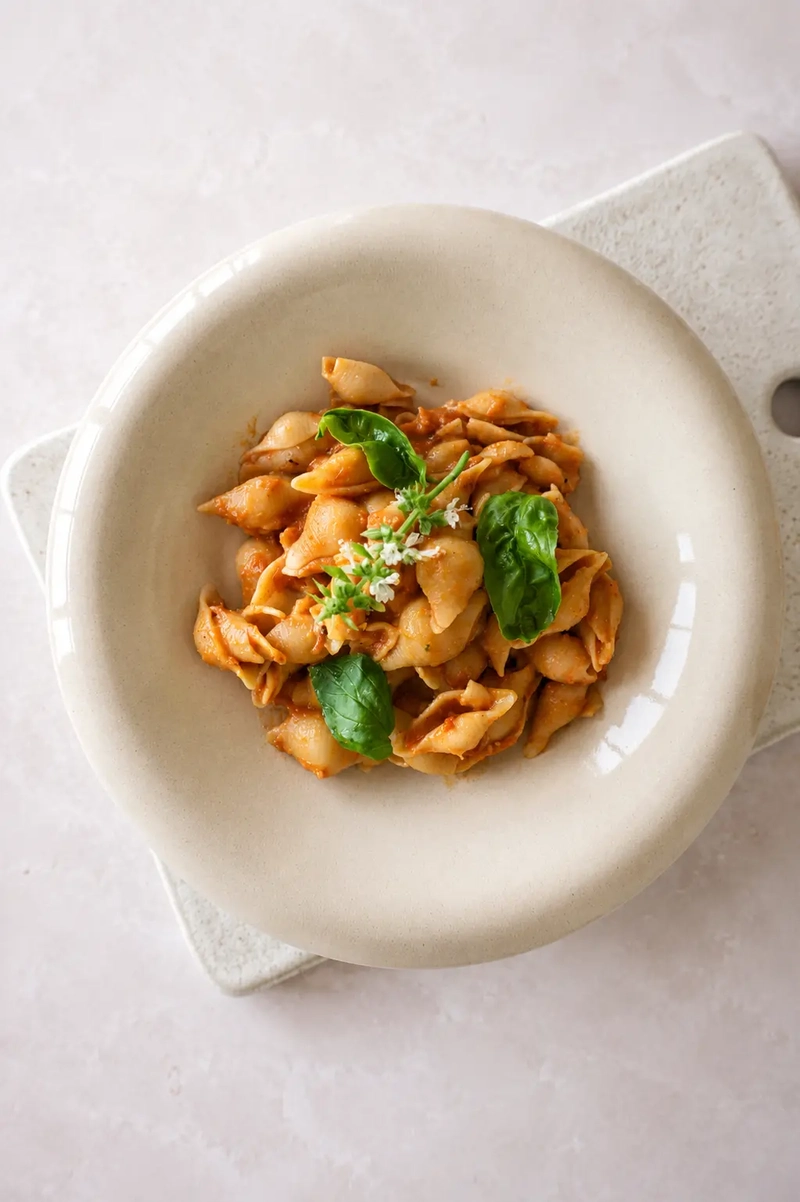
In this vegan tomato pasta, we keep the spirit of the classic dish but make it entirely plant-based and gluten-free. We use pasta made with naturally gluten-free flours, so the recipe remains suitable for a gluten-free diet without losing the comfort and pleasure of a proper bowl of pasta.
The real secret is in the sauce. Instead of using a quick raw tomato sauce, we roast datterini tomatoes until they become soft, sweet, and slightly caramelized. As they cook, their flavor concentrates and they release a deep, natural umami that makes the sauce richer without needing cheese, butter, or animal-based ingredients.
In this recipe, you’ll learn how to make a simple but deeply flavorful vegan tomato pasta using roasted datterini tomatoes, naturally gluten-free pasta, and a creamy blended tomato sauce. You’ll also learn how roasting the tomatoes helps concentrate their sweetness and umami, how to blend the sauce for a smooth texture, and how to bring everything together so the pasta feels rich, balanced, and comforting without dairy or gluten.
Ingredients for Vegan Tomato Pasta
The beauty of this vegan tomato pasta is that it starts from very simple ingredients. Like many traditional Italian recipes, it does not need a long list of complicated elements. What matters is the quality of the tomatoes, the way they are cooked, and the balance between sweetness, acidity, salt, and fat.
You only need a few ingredients, but each one plays an important role in creating a pasta that feels simple, comforting, and full of flavor.
Datterini Tomatoes
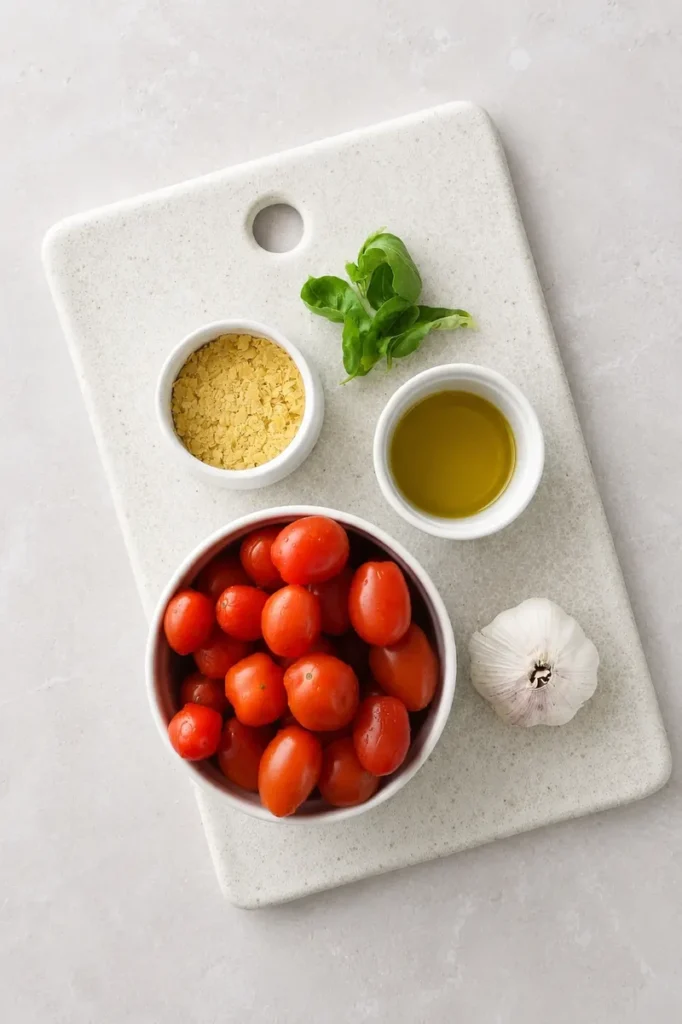
Datterini tomatoes are the heart of this vegan tomato pasta. They are small, naturally sweet, and usually less watery than larger tomatoes, which makes them perfect for roasting. When cooked in the oven, they soften, release their juices, and become more concentrated in flavor. This is what gives the sauce its depth, sweetness, and natural umami.
Choose datterini tomatoes that are ripe, bright in color, and slightly firm to the touch. They should smell fresh and sweet, not sour or watery. If they are very pale or too hard, the sauce may taste less rich. If they are overripe and too soft, they can still work, but remove any damaged parts before roasting. If you cannot find datterini tomatoes, you can use cherry tomatoes or grape tomatoes instead. The result will still be delicious, especially if the tomatoes are ripe and flavorful.
Gluten-Free Pasta
For this recipe, I used gluten-free pasta made with naturally gluten-free flours. You can choose pasta made from rice, corn, quinoa, amaranth, oats, or a blend of different gluten-free grains. Each type has a slightly different texture and flavor, so choose the one you enjoy most.
Rice pasta has a more neutral taste and works well with a delicate tomato sauce. Quinoa or amaranth pasta can have a more earthy, slightly nutty flavor, which pairs beautifully with roasted tomatoes. Oat pasta can feel softer and more comforting, especially if you want a gentle texture.
The most important thing is to cook the pasta al dente and avoid overcooking it. Gluten-free pasta can become too soft more quickly than wheat pasta, so check it often and follow the package instructions carefully.
Seasoning for the Roasted Tomatoes
The seasoning for the roasted tomatoes is simple: salt, black pepper, oregano, garlic and a small amount of coconut sugar. Salt brings out the natural flavor of the tomatoes, while black pepper adds a gentle warmth. Oregano gives the sauce a classic Mediterranean aroma, making the pasta feel familiar and comforting.
The coconut sugar is optional, but useful if your tomatoes are not perfectly sweet. You only need a small amount: it helps balance acidity and encourages the tomatoes to caramelize slightly in the oven. This is not meant to make the sauce sweet. It simply rounds out the flavor and helps create a deeper, softer tomato base.
Nutritional Yeast
Nutritional yeast is added when the roasted tomatoes are blended into the sauce. It gives the vegan tomato pasta sauce a more savory, almost cheesy flavor without using dairy. It also helps make the sauce taste fuller and more complete, especially because this recipe does not use cheese or cream. You do not need much. A small amount is enough to add depth and enhance the natural umami of the roasted tomatoes.
Fresh Basil
Fresh basil is used at the end, as a garnish. It adds color, freshness, and that classic Italian aroma that works beautifully with tomato pasta. Because basil is delicate, it is better to add it after cooking rather than roasting it with the tomatoes. You can tear the leaves by hand or place them whole over the pasta just before serving. This keeps the flavor bright and fragrant.
How to Make Vegan Tomato Pasta – Step by Step
Making this vegan tomato pasta is very simple. The main step is roasting the datterini tomatoes until they become soft, sweet, and deeply flavorful, then blending them into a creamy sauce.
Step 1: Prepare the Datterini Tomatoes
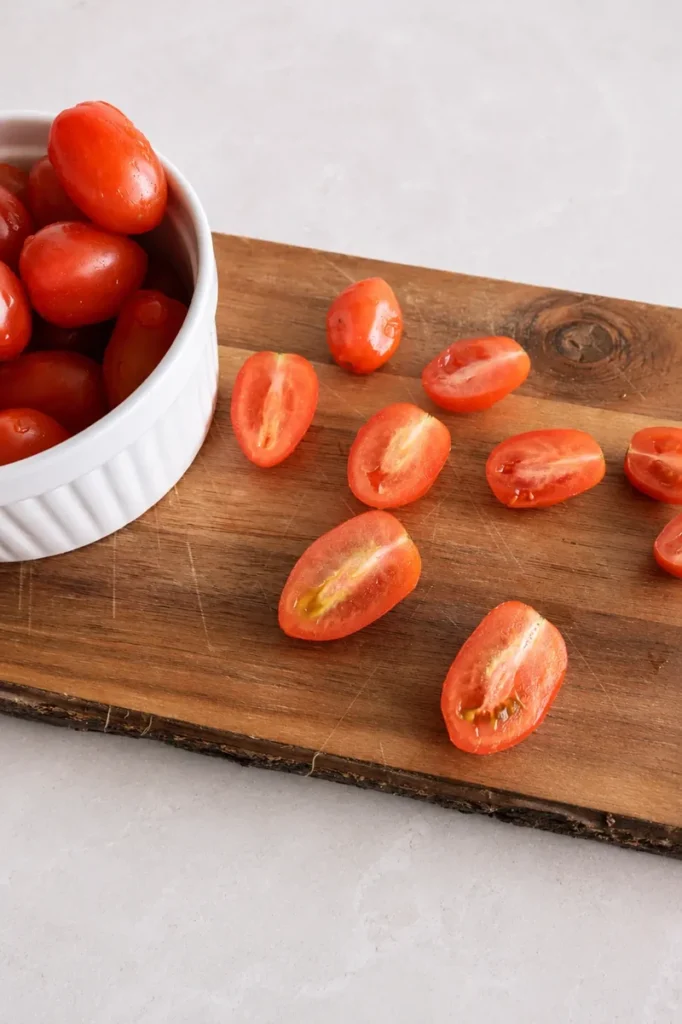
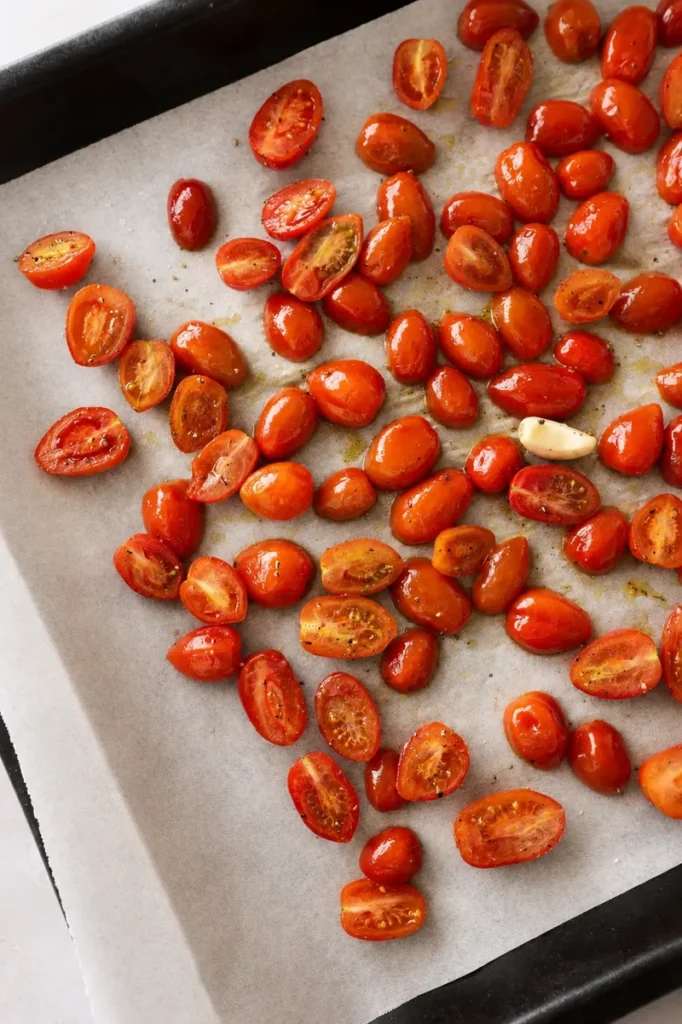
Wash the datterini tomatoes and cut them in half lengthwise. Place them on a baking tray lined with parchment paper, with the cut side facing up. This helps the tomatoes roast evenly and allows some of their moisture to evaporate, making the flavor more concentrated. Season with extra virgin olive oil, salt, black pepper, oregano, garlic and a small pinch of coconut sugar. The coconut sugar is optional, but it helps balance the natural acidity of the tomatoes and supports a light caramelization in the oven.
Step 2: Roast the Tomatoes
Roast the tomatoes at 200°C / 400°F for about 25–30 minutes, or until they are soft, slightly wrinkled, and lightly caramelized around the edges. Avoid burning them: you want the tomatoes to become concentrated and tender, not dry or bitter.
Step 3: Cook the Pasta
While the tomatoes are roasting, cook the pasta in salted boiling water according to the package instructions. For this recipe, we use gluten-free pasta made with naturally gluten-free flours such as rice, quinoa, amaranth, oats, or a gluten-free grain blend. This is our choice to keep the recipe gluten-free, but you can also use regular wheat pasta if gluten is not a concern for you.
Cook the pasta al dente and check it often, especially if using gluten-free pasta, because it can become too soft if overcooked. Before draining, reserve a little pasta cooking water. This can help loosen the sauce later and make it coat the pasta more evenly.
Step 4: Blend the Roasted Tomato Sauce
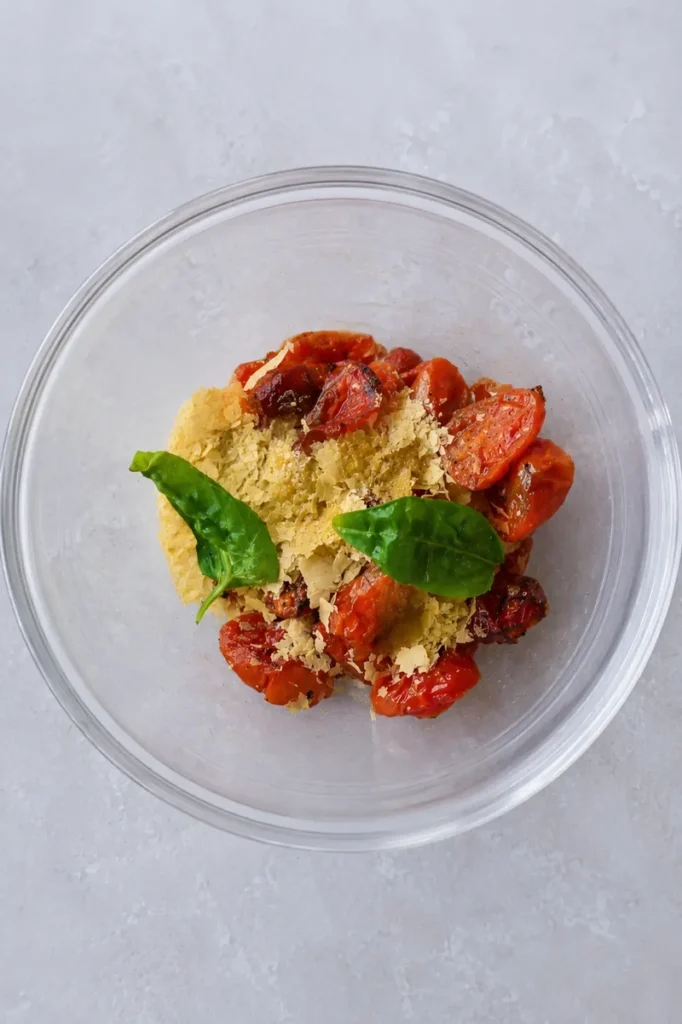
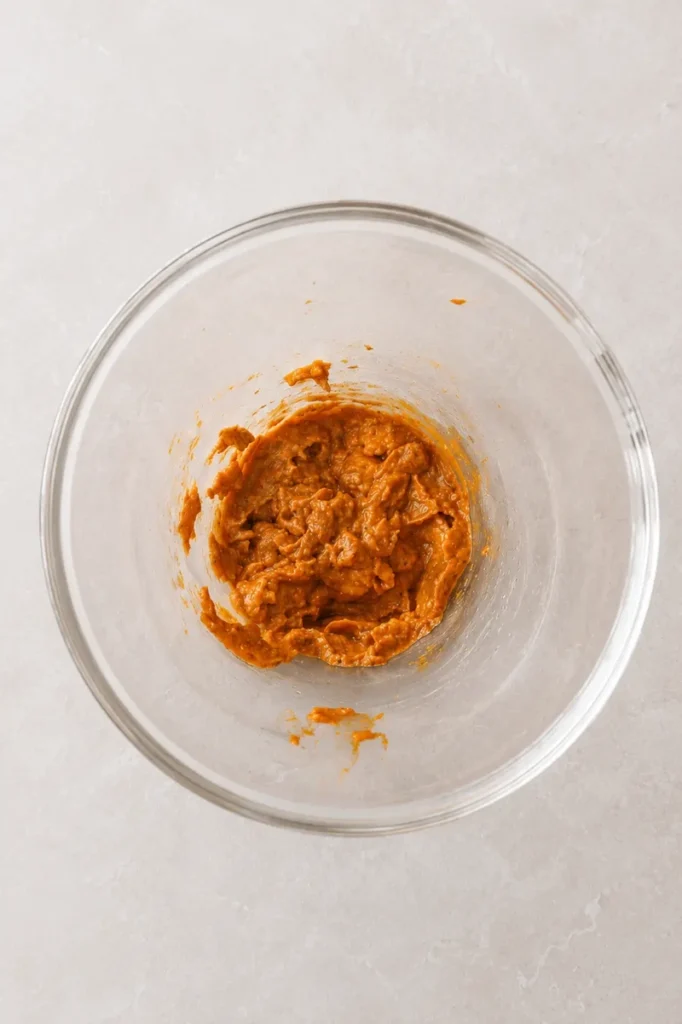
Transfer the roasted datterini tomatoes to a blender or food processor. Add nutritional yeast and blend until smooth and creamy. If the sauce feels too thick, add a splash of reserved pasta water or a little extra olive oil until you reach the texture you prefer. Taste and adjust the seasoning if needed. You can add more salt, pepper, or oregano depending on the sweetness and intensity of your tomatoes.
Step 5: Combine the Pasta and Sauce
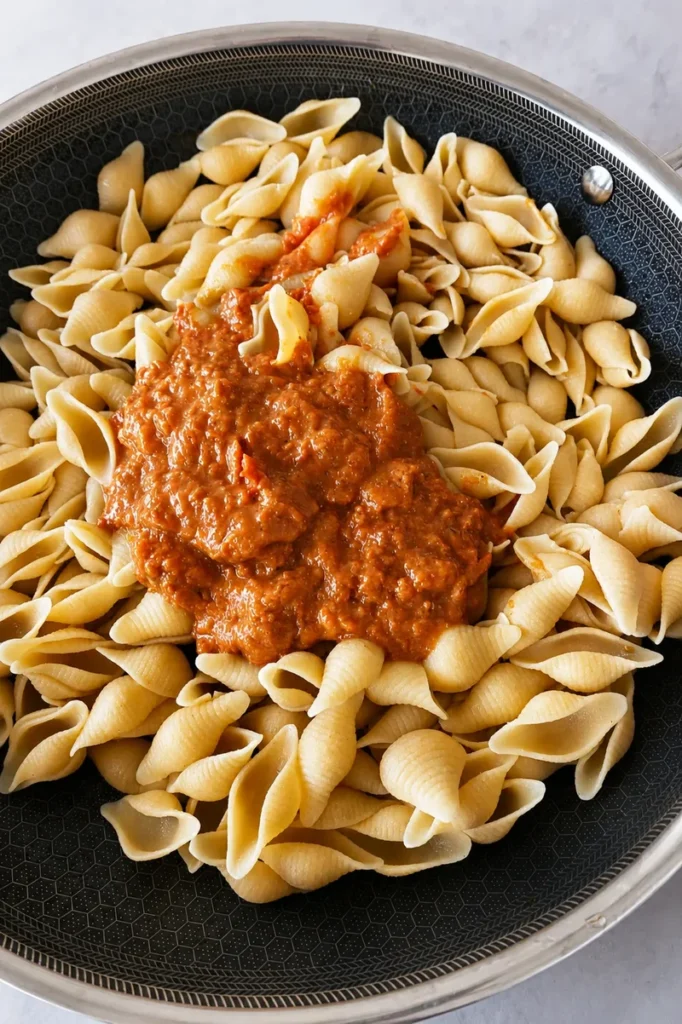
Pour the roasted tomato sauce into a pan and warm it gently over low heat. Add the cooked pasta and toss until well coated. If needed, add a small amount of reserved pasta water to help the sauce become silky and cling to the pasta. Let everything come together for a minute, then remove from the heat.
Step 6: Serve with Fresh Basil
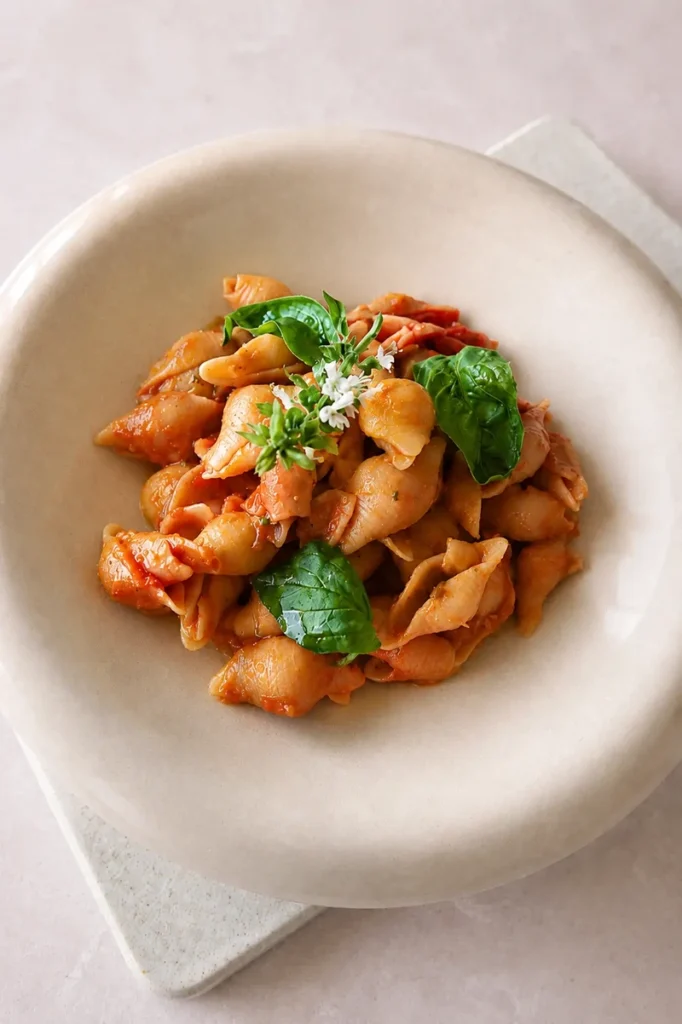
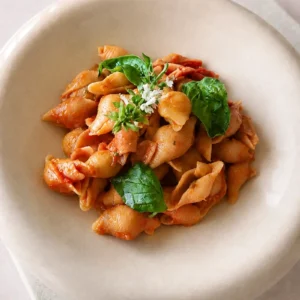
Serve the vegan tomato pasta warm, topped with fresh basil. You can tear the basil leaves by hand and scatter them over the pasta just before serving. This adds freshness, color, and a classic Mediterranean aroma that balances the richness of the roasted tomato sauce.
FAQ’s
Here are a few useful tips to help you make this vegan tomato pasta creamy, flavorful, and balanced. If you do not find the answer you are looking for, feel free to leave your question in the comments and we will be happy to help.
Yes, you can use regular wheat pasta if you do not need the recipe to be gluten-free. For this version, we use pasta made with naturally gluten-free flours, such as rice, quinoa, amaranth, oats, or gluten-free grain blends. This is our choice to keep the dish gluten-free, but the sauce works beautifully with any type of pasta.
Yes. The sauce is already creamy because the roasted tomatoes are blended with olive oil, nutritional yeast, and a little pasta water. If you want an even creamier vegan tomato pasta sauce, you can add a spoonful of cashew cream, a splash of vegan cream, or a few soaked cashews before blending. This will make the sauce richer and softer, but the roasted tomato flavor will still remain the main element.
Store leftover vegan tomato pasta in an airtight container in the refrigerator for up to 2–3 days. To reheat it, add it to a pan with a small splash of water or olive oil and toss it over medium-low heat until warm and creamy again. The next day, this pasta can actually become even more flavorful. As it rests, the sauce has more time to absorb into the pasta, and reheating it in a pan helps bring everything together again with a deeper, richer taste. If using gluten-free pasta, just be gentle when reheating, as it can be more delicate than regular wheat pasta.
Yes, you can make the roasted tomato sauce ahead of time. Roast and blend the tomatoes, then store the sauce in an airtight container in the refrigerator for up to 3 days. When ready to serve, cook the pasta fresh and warm the sauce gently in a pan. This is a good option if you want a quick dinner but still want the deeper flavor of roasted tomatoes.
Many vegetables work beautifully with tomato pasta because tomato sauce is naturally versatile, sweet, and slightly acidic. For this vegan tomato pasta, you can keep it simple with fresh basil, or add vegetables such as zucchini, eggplant, spinach, mushrooms, bell peppers, or broccoli. Roasted vegetables work especially well because they add sweetness and depth, while leafy greens like spinach make the dish feel fresher and lighter. If you want a Mediterranean flavor, try roasted zucchini, eggplant, or bell peppers.
Vegan Tomato Pasta with Roasted Cherry Tomatoes
Equipment
- 1 Blender
- 1 Large pot, for cooking the pasta
Ingredients
- 3 cups Datterini Tomatos
- 2 tbsp Extra Virgin Olive Oil
- 1 tsp Dried Oregano
- ½ tsp Salt
- ¼ tsp Black Pepper
- 1 clove Garlic
- ½ tsp Coconut Sugar Optional
- 2 tbsp Nutritional Yeast Optional
- 11 oz Gluten Free Pasta
- To Taste Fresh Basil
Instructions
- Preheat the oven to 200°C / 400°F and line a baking tray with parchment paper.
- Wash the datterini tomatoes and cut them in half lengthwise.
- Place the tomatoes on the baking tray with the cut side facing up. Drizzle with olive oil, then season with oregano, salt, black pepper, garlic ( optional) and coconut sugar if using.
- Roast for 25–30 minutes, or until the tomatoes are soft, slightly wrinkled, and lightly caramelized around the edges. For a more concentrated, jammy flavor, roast for up to 35 minutes, keeping an eye on them toward the end.
- While the tomatoes are roasting, cook the pasta in salted boiling water according to the package instructions. Cook it al dente, then reserve a little pasta cooking water before draining.
- Transfer the roasted tomatoes to a blender or food processor. Add the nutritional yeast and blend until smooth and creamy. If needed, add a splash of reserved pasta water or extra olive oil to adjust the texture.
- Pour the sauce into a large pan and warm it gently over low heat.
- Add the cooked pasta and toss until well coated. Add a little reserved pasta water if needed to make the sauce silky and help it cling to the pasta.
- Taste and adjust with more salt, black pepper, or oregano if needed.
- Serve warm with fresh basil and a drizzle of extra virgin olive oil if desired.
Notes
Nutrition