This article contains affiliate links. If you purchase through them, INUMAMI may earn a small commission at no extra cost to you. We only recommend what we genuinely use and trust and your support means the world to us.
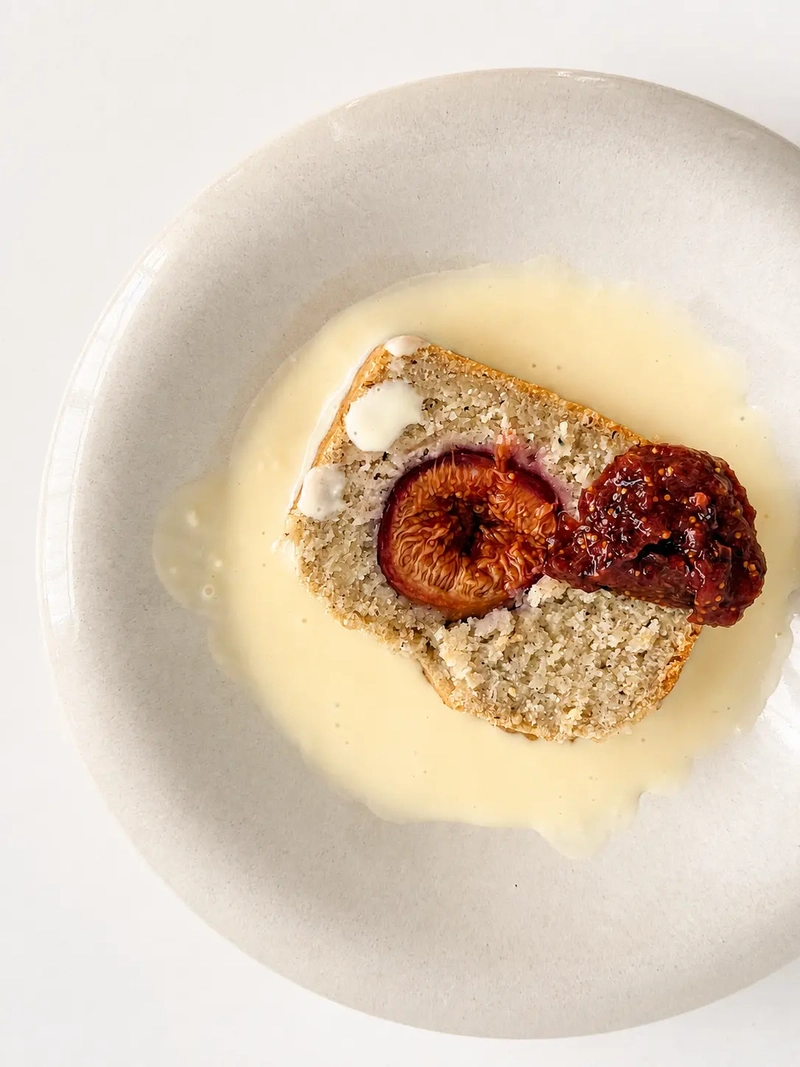
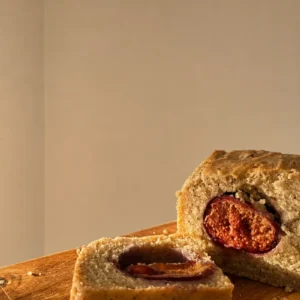
This fig bread is basically banana bread without the banana, and with fresh figs instead. Rather than chopping the figs and folding them into the batter, which would still be completely delicious, I decided to leave them whole so that every slice looks a little like a painting.
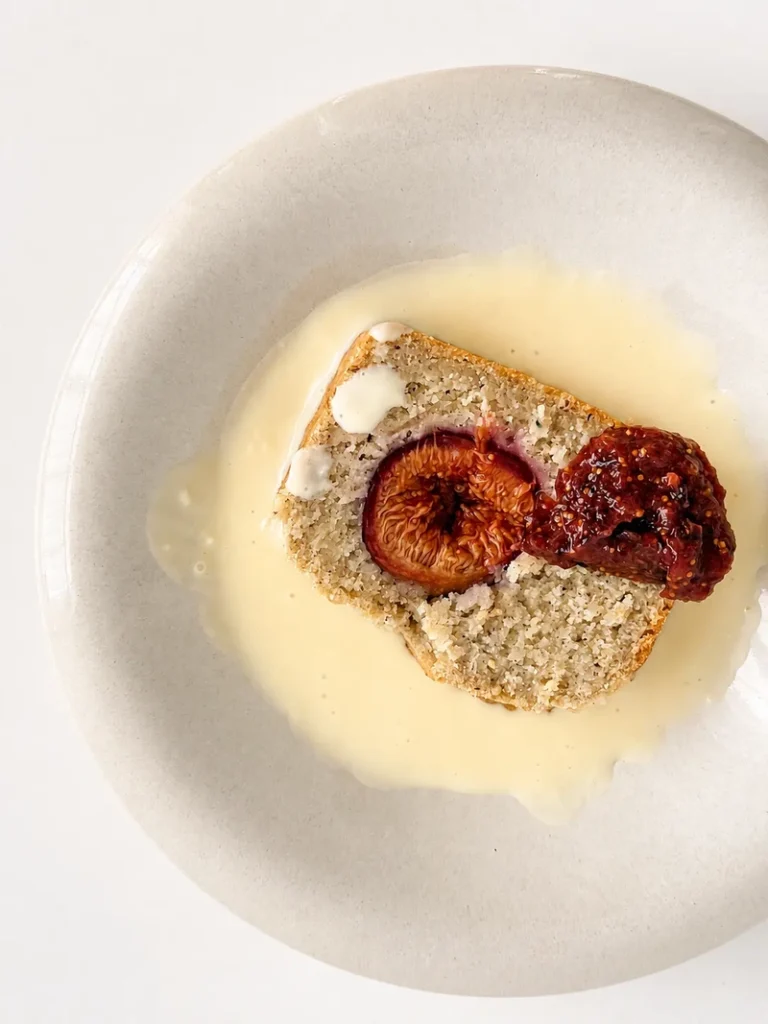
It tastes just as good as it looks, too: that whole fig in the centre makes each bite softer, juicier, and much more interesting. I served it with warm vegan crème anglaise, and I swear it might be the perfect late-summer breakfast. Like my banana bread, this fig bread is also gluten-free and refined sugar-free.
Looking for a little twist on the classic banana bread? Give this apple bread recipe a try!
Why You’ll Love This Fresh Fig Bread
Every recipe seems to start with a title like this, and fair enough. When you cook something and you’re genuinely happy with the result, there’s this irresistible urge to make everyone around you taste it.
I have friends who practically avoid my house when they don’t want to leave carrying containers full of food. I understand them. Sort of. Eating in a way that is healthy, ethical, and conscious is one of life’s great pleasures, so I’ll keep defending my case.
And yes, like every other food person in the world, I’m now going to try to convince you that this fig bread is one of the best you could make. If the words don’t do it, I’m hoping the photos will.
Few Valid Reasons to Make This Fig Bread
- Fresh figs in every slice: Instead of chopping the figs and mixing them into the batter, I leave them whole and arrange them in a line through the centre of the loaf. This means every slice has its own fig running through it: prettier, juicier, and much more satisfying to eat.
- Soft, moist, but not heavy: The combination of soy yogurt, almond flour, and starches keeps the crumb tender and moist without turning it dense or gummy. You still get that comforting quick-bread texture, just with a fresher, lighter feel.
- Naturally gluten-free and refined sugar-free: There’s no wheat flour and no refined sugar here. I use a mix of gluten-free flours and maple syrup, so the loaf stays sweet enough while letting the flavour of the fresh figs come through.
- It looks far more complicated than it is: The whole-fig centre makes the loaf look almost designed when you slice it, but there’s no complicated technique involved. The only real trick is placing the figs in one continuous line before covering them with the rest of the batter.
- Very easy to make your own: Add vanilla, cinnamon, cardamom, citrus zest, nuts, or keep it simple and let the figs do all the work. It’s a good base recipe to play with depending on what you have at home.
Ingredients & Possible Substitutions
Let’s take a closer look at the ingredients, what each one does, and the substitutions you can make if needed. If you’d rather skip straight to the recipe, you’ll find the full recipe card at the bottom of the article.
Gluten-Free Flour Mix
I created my own flour blend to get the right gluten-free texture, using rice flour, almond flour, potato starch, buckwheat flour, and psyllium husk, which helps recreate some of the structure normally provided by gluten.
If you don’t have the time, or all the individual ingredients, you can simply use a ready-made gluten-free flour blend in the same total quantity. In that case, omit the psyllium and potato starch as well, since a good gluten-free blend will usually already contain starches and binders.
Wet Ingredients
In a classic banana bread, bananas also help replace some of the role of eggs. I’ve explained how egg substitutes work in baking in my full guide to vegan egg replacements.
Since we’re not using banana here, I use soy yogurt instead. It helps bind the batter, adds moisture, and keeps the crumb soft without making the loaf too heavy.
The rest of the wet ingredients are soy milk, neutral oil, maple syrup, vanilla extract, and lemon juice.
You can replace the soy milk with another plant-based milk, and the maple syrup with another liquid sweetener, such as agave syrup.
For the yogurt, I use an unsweetened soy yogurt because that’s what I prefer, but coconut, rice, or oat-based yogurt can also work. I recommend choosing an unsweetened version if you want to keep the bread refined sugar-free.
Fresh Figs
I used small black figs, which are usually among the last ones I find at the end of the season, but really, any fresh figs will work here.
No figs? Technically, you may be in the wrong recipe, but also, not necessarily. You can use small pears in exactly the same way, arranging them through the centre of the loaf, or try small apples, either whole or cut in half depending on their size.
The result will obviously be a different bread, but the same idea works beautifully: whole fruit baked into the centre so every slice gets its own little piece of it.
Baking Powder, Baking Soda & Lemon Juice
I use both baking powder and baking soda in this fig bread to help give the loaf as much lift as possible, especially since gluten-free batters can naturally be a little heavier.
The baking soda needs an acidic ingredient to react with, which is why I add lemon juice to the wet ingredients. If you don’t have lemon, you can replace it with the same amount of apple cider vinegar. You won’t taste either once the bread is baked, they’re simply there to help create a lighter, more aerated crumb.
Recommendation: The first time I tested this fig bread, I left the finished batter sitting out for about 20 minutes before putting it in the oven. I got a phone call, got distracted, it happens.
The loaf still turned out well, but it didn’t rise as much as it should have. That’s because the baking soda starts reacting with the lemon juice as soon as the wet and dry ingredients are combined, producing the gas that helps the batter rise. If the batter sits for too long, part of that reaction happens on the counter instead of inside the oven, so some of that precious lift is lost before baking even begins. The psyllium also continues absorbing liquid while the batter rests, making it thicker and slightly harder to expand.
So once your batter is mixed and the figs are in place, get it into the preheated oven straight away. This is not the moment to answer the phone.
How to Make Fig Bread with Fresh Figs
The method is very simple, but there are two things that really matter here: don’t overmix the batter and get it into the oven as soon as it’s ready. Gluten-free batters containing psyllium will continue to thicken as they sit, while the baking soda starts reacting as soon as it meets the lemon juice.
Step 1. Prepare the Loaf Pan and Figs
Preheat the oven to 185°C / 365°F and line your loaf pan with parchment paper. Wash the figs gently and dry them very well. Leave the figs for the centre whole. If you want to decorate the top as well, cut a couple of additional figs in half ( I did not do it because I wanted the surprise effect).
Step 2. Mix the Dry Ingredients
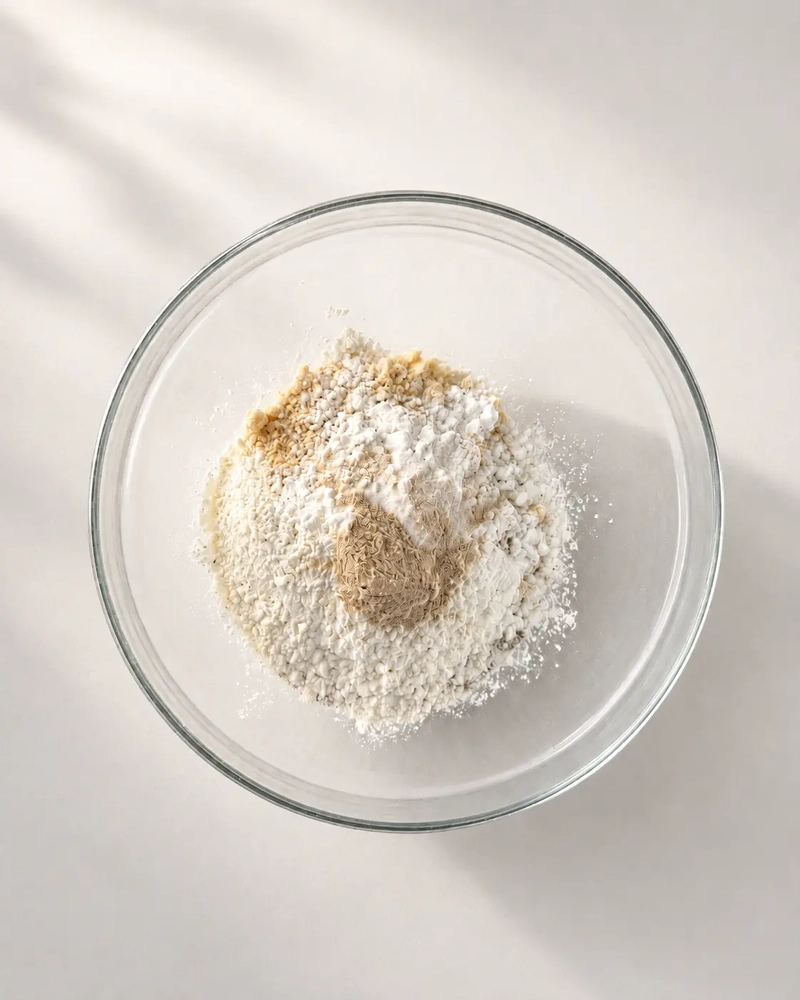
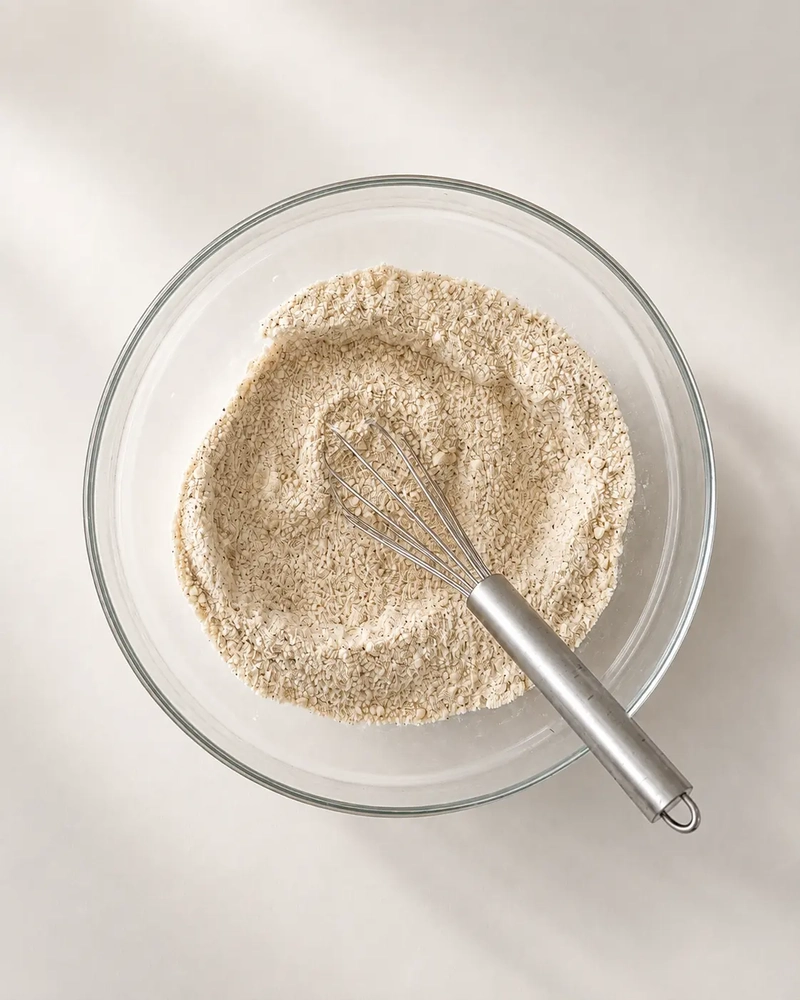
In a large bowl, whisk together the rice flour, almond flour, potato starch, buckwheat flour, psyllium husk, baking powder, baking soda, and salt. Mix them thoroughly so that the raising agents and psyllium are evenly distributed throughout the flour.
Step 3. Mix the Wet Ingredients
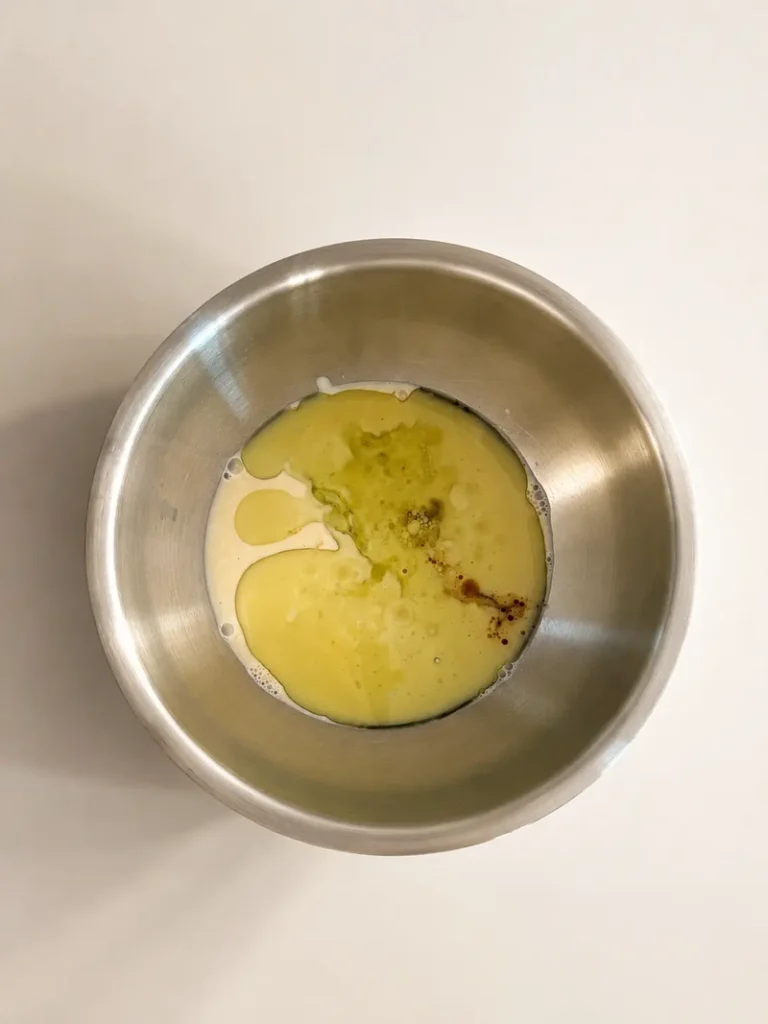
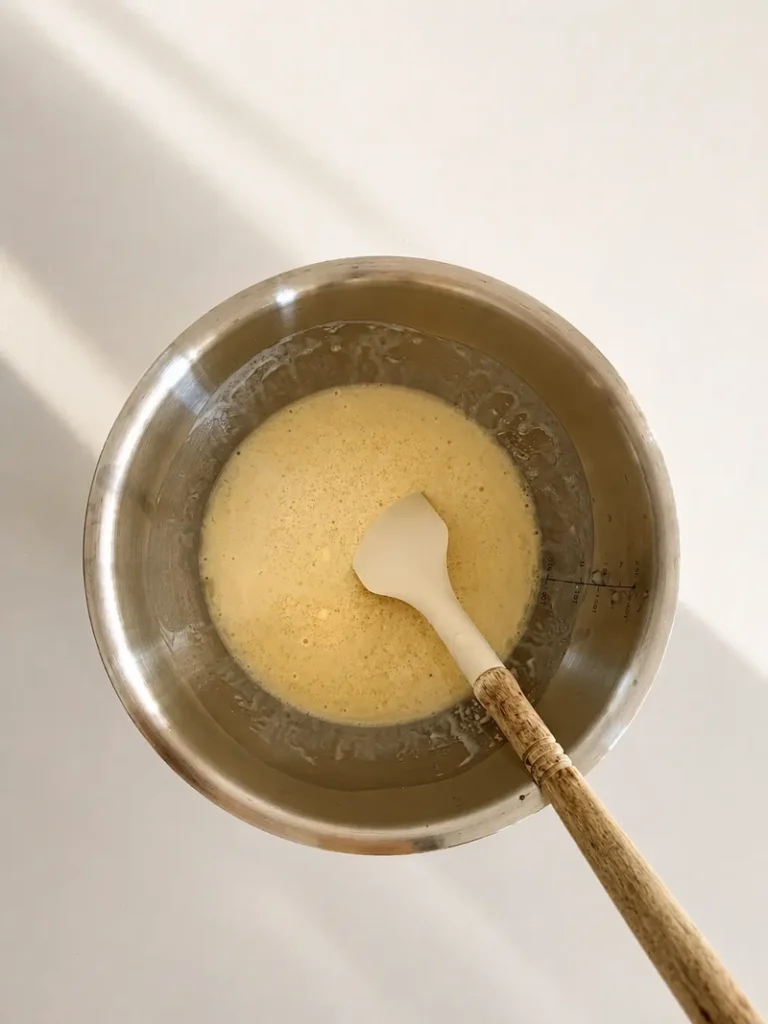
In a separate bowl, combine the soy yogurt, soy milk, neutral oil, maple syrup, vanilla, and lemon juice. Whisk until completely smooth and homogeneous.
Step 4. Combine Wet and Dry
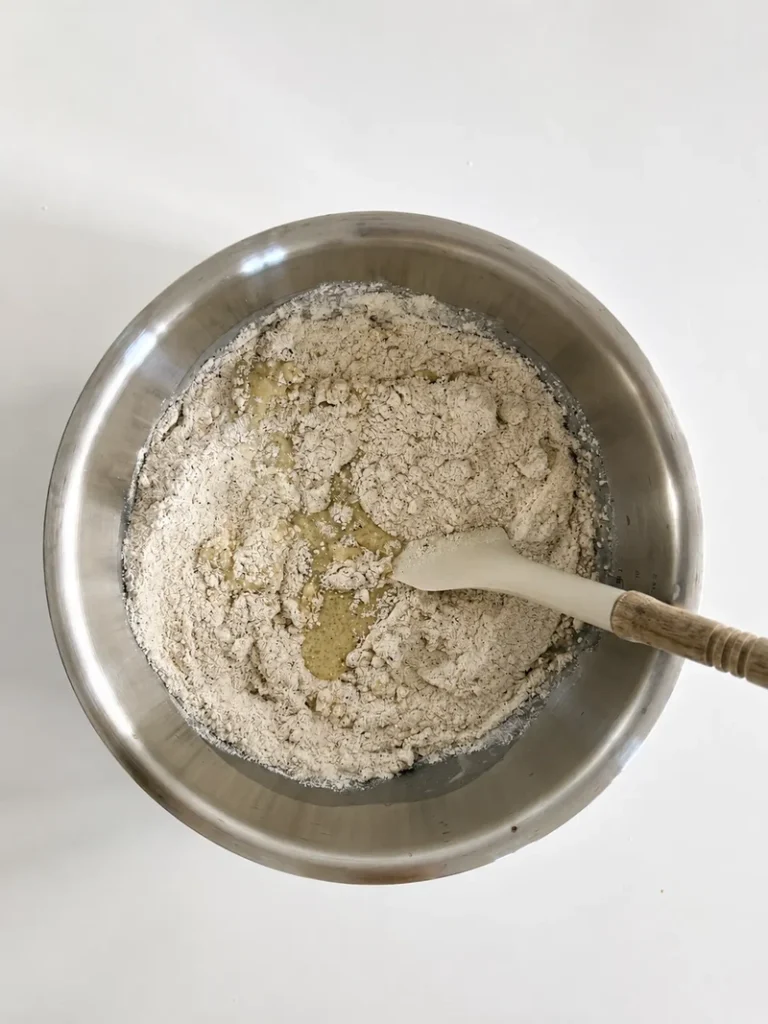
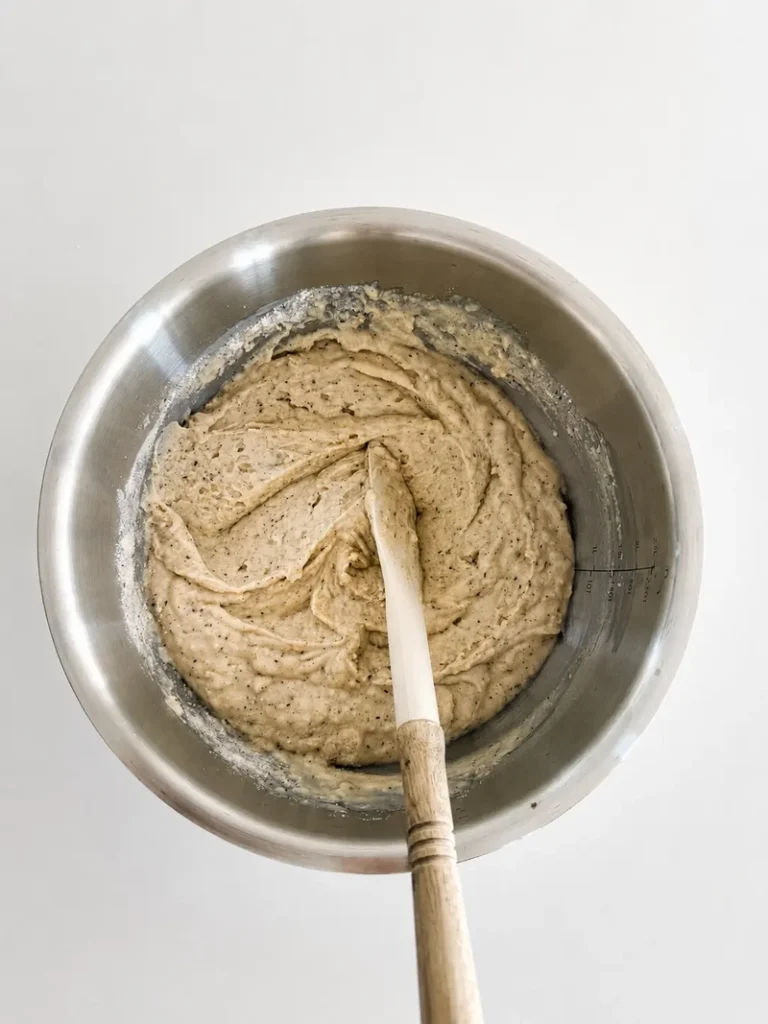
Pour the wet mixture into the dry ingredients and fold everything together with a spatula just until no dry flour remains. Avoid overmixing. The batter should be thick and creamy but still soft enough to slowly fall from the spatula. If it feels excessively stiff, add a small splash of plant-based milk.
Step 5. Add the Whole Figs
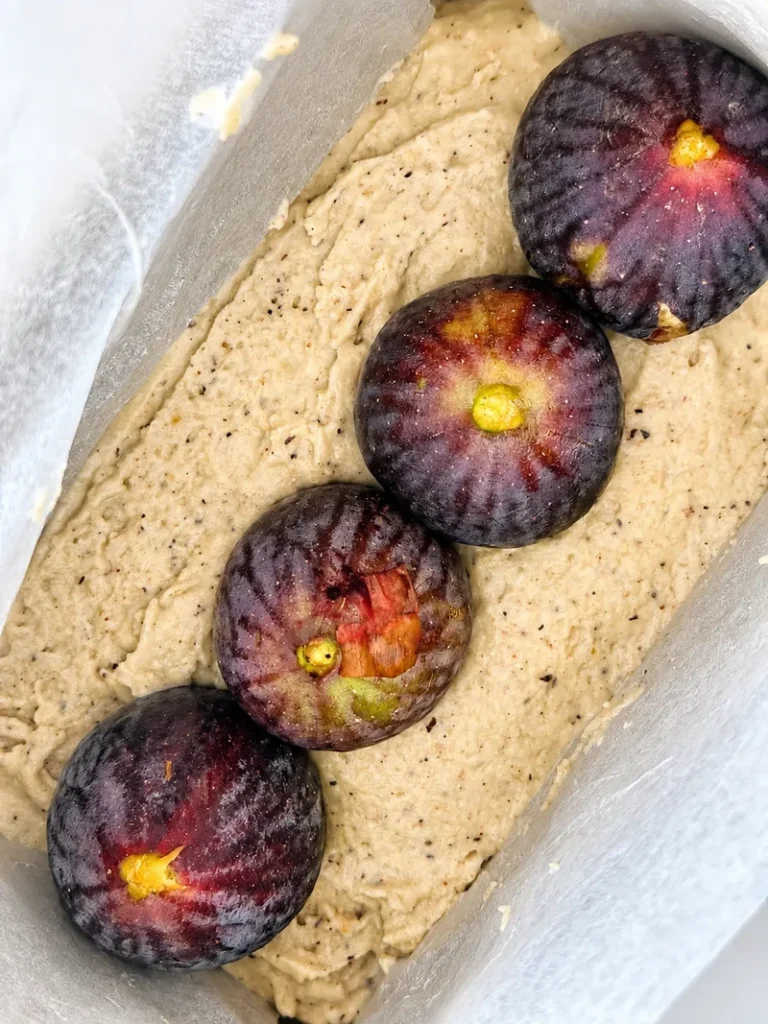
Pour approximately half of the batter into the prepared loaf pan. Arrange the whole figs directly through the centre, one after another in a continuous line along the entire length of the loaf. Try to choose figs of a similar size so that every slice has a beautiful, even section of fruit in the middle.
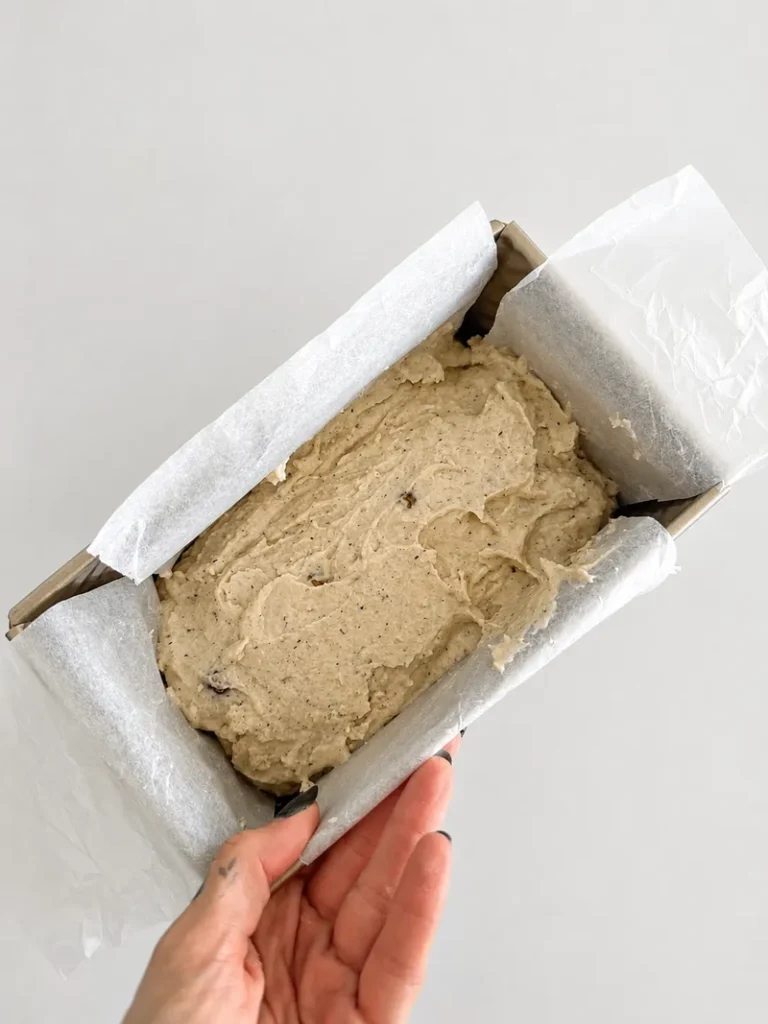
Cover carefully with the remaining batter, making sure not to move the figs too much. If you’re decorating the top, gently place the halved figs over the surface without pushing them deeply into the batter.
Step 6. Bake
Bake at 185°C / 365°F for the first 10 minutes, then reduce the temperature to 170°C / 340°F and continue baking for around 45–55 minutes.
If the top is browning too quickly, loosely cover it with foil during the final part of baking. To check for doneness, insert a skewer into an area of the crumb rather than straight through a fig, otherwise it will obviously come out wet.
Step 7. Let It Cool Completely
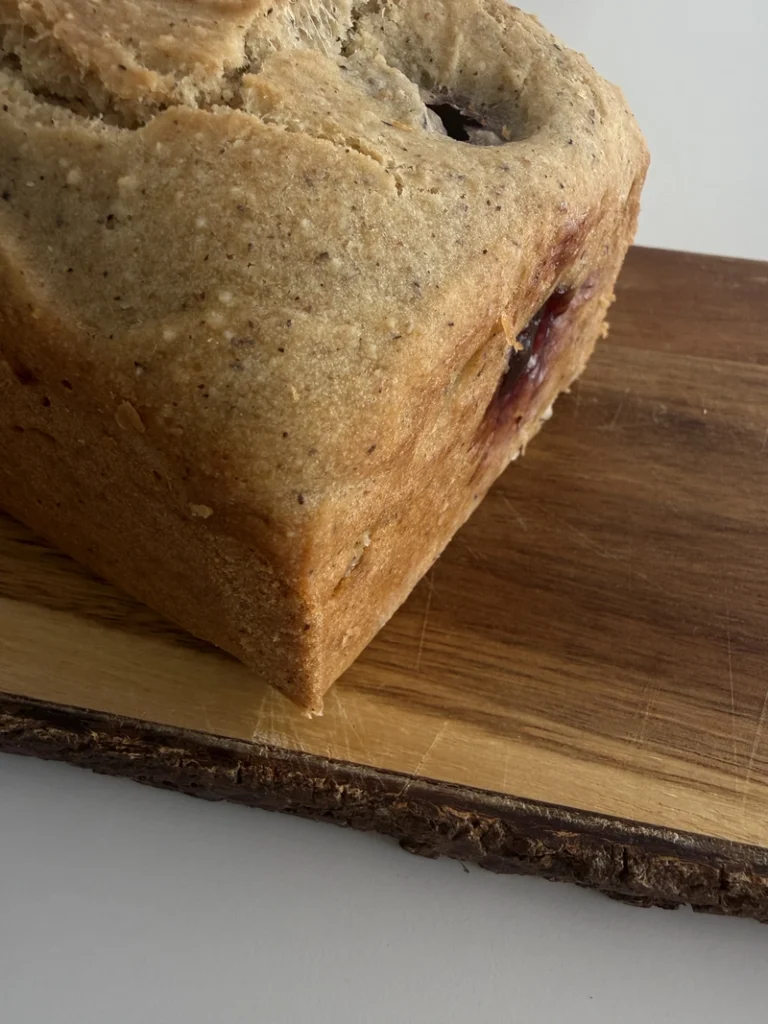
Leave the fig bread in the pan for around 15 minutes, then carefully lift it out and transfer it to a cooling rack. And this is one of those moments where patience really matters: let it cool completely before slicing. The crumb continues to set as it cools, especially because this loaf is gluten-free and contains whole fresh fruit.
Then comes the best part: cut across the loaf and hopefully find that beautiful little fig painting waiting inside every slice.
Step 8. Serve
Slice the fig bread and serve it as it is, or do what I did: cut a thick slice in half and pour over some warm vegan crème anglaise.
I swear, it’s the perfect pairing. The soft, juicy fig in the centre, the tender crumb, and that warm, silky custard sauce together are ridiculously good.

Common Problems with Gluten-Free Fig Bread
Gluten-free baking can be a little less forgiving than traditional baking, especially when you’re also adding whole fresh fruit to the centre. Most problems, however, come down to texture, moisture, or timing rather than anything particularly complicated. Don’t forget to check these helpful guides if you are about to approach gluten-free and plant-based baking:
- The Best Vegan Egg Substitute Brands: Honest Reviews and When to Use Them
- Vegan Egg Substitutes: The Complete Guide to Replacing Eggs in Any Recipe
- Vegan Butter Substitute: The Complete Guide to Replacing Butter in Any Recipe
The Bread Is Too Dense or Gummy
This usually happens when the batter is too thick, overmixed, or left sitting for too long before baking. Psyllium keeps absorbing liquid as it rests, so the batter becomes progressively heavier. If it looks more like a dough than a thick cake batter, add a small splash of plant-based milk before baking. Also, mix only until the ingredients are combined. Gluten-free batter doesn’t need prolonged mixing.
The Fig Bread Didn’t Rise Enough
First, make sure your baking powder and baking soda are still active. The other important factor is timing. Once the lemon juice meets the baking soda, the reaction begins. If you leave the batter sitting on the counter for too long, some of the gas that should help the bread rise is lost before it reaches the oven. Always preheat your oven first and bake the bread immediately after assembling it.
The Bread Is Too Dry
This can happen if you add too much flour, bake it for too long, or use a gluten-free flour blend that absorbs considerably more liquid than mine. Measure the dry ingredients carefully and start checking the loaf toward the end of the recommended baking time. Remember that it will also continue to set as it cools.
The Centre Is Very Wet
There’s an important distinction here: the area immediately around the figs will naturally be moist. They release juice as they bake, and that’s part of what makes this bread so good. However, the surrounding crumb should still be properly baked.
When testing it, insert a skewer into the bread itself rather than through one of the figs. Otherwise, it will obviously come out wet and make the loaf look underbaked even when it isn’t.
The Figs Sank to the Bottom
Make sure the first layer of batter is thick enough to support them before adding the row of whole figs. I also recommend drying the figs extremely well after washing them. You can give them a very light coating of starch before arranging them in the batter, which helps reduce some of the moisture immediately around the fruit.
The Bread Crumbles When I Slice It
Don’t slice it while it’s still warm. Gluten-free cakes and breads continue to develop structure while cooling, and this one needs a little extra patience because of the whole figs inside. Let it cool completely before cutting it if you want clean slices and that beautiful fig section in the centre.
The Top Is Browning Before the Centre Is Cooked
This is quite normal with a tall loaf. If the surface already looks beautifully golden but the centre still needs time, loosely cover the top with aluminium foil and continue baking. That way the inside can finish cooking without turning the top too dark.
Vegan & Gluten-Free Fig Bread with Fresh Figs
Equipment
Ingredients
For the Gluten Free Flour Mix
- 180 grams Rice Flour
- 85 grams Almond Flour
- 70 grams Potato Starch
- 35 grams Buckwheat flour
- 5 grams Psyllium Husk Powder
Leavening
- 12 grams Baking Powder ( Mine is certified Gluten Free)
- ½ tsp Baking Soda
- ½ tsp Sea Salt
- 1 tbsp lemon juice or Apple Cider Vinegar
Wet Ingredients
- 185 grams Unsweetened plant-based yogurt
- 120 grams Unsweetened Soy Milk Use more if needed
- 80 grams neutral oil, such as sunflower, canola, or vegetable oil
- 100 grams Maple Syrup
- 2 tsp Vanilla Extract
Figs
- 5 – 6 Fresh Figs Small, or enough to create one continuous row through the loaf
Instructions
- Preheat the oven to 185°C / 365°F. Line the loaf pan with parchment paper. Gently wash the figs and dry them very thoroughly. Leave the figs for the centre whole.
- In a large bowl, whisk together the rice flour, almond flour, potato starch, buckwheat flour, psyllium husk, baking powder, baking soda, and salt until evenly combined.
- In a separate bowl, whisk together the soy yogurt, soy milk, neutral oil, maple syrup, vanilla, and lemon juice until smooth.
- Add the wet mixture to the dry ingredients and fold together with a spatula just until no dry flour remains. Do not overmix.The batter should be thick and creamy but still fall slowly from the spatula. If it feels excessively stiff, add a small splash of soy milk.
- Pour approximately half of the batter into the prepared loaf pan.Arrange the whole figs through the centre of the loaf, one after another in a continuous line along its entire length.Carefully cover with the remaining batter. If decorating the top, gently place the halved figs over the surface without pushing them too deeply into the batter.
- Bake at 185°C / 365°F for 10 minutes, then reduce the oven temperature to 170°C / 340°F and continue baking for approximately 45–55 minutes.If the top browns too quickly, loosely cover it with aluminium foil. Check for doneness by inserting a skewer into the crumb rather than through a fig.
- Leave the fig bread in the pan for about 15 minutes, then transfer it to a cooling rack. Allow it to cool completely before slicing so the gluten-free crumb has time to set.
- Serve as it is, or cut a thick slice in half and pour over some warm vegan crème anglaise. The soft fig, tender crumb, and silky warm custard sauce are genuinely the perfect pairing.
Video
Notes
Storage Note
Because the loaf contains whole fresh figs, store it in an airtight container in the refrigerator once completely cool. For best quality, consume within 3–4 days.Original Content Note
All recipes published on INUMAMI are original and developed from my personal cooking experience. The recipe, written content, styling, and photographs featured in this post were created by me. No AI is used to create recipes. All food photographs are original and owned by INUMAMI.Substitutions Note
For ingredient swaps and alternative options, see the Ingredients & Possible Substitutions section in the article above the recipe card.Nutrition