This article contains affiliate links. If you purchase through them, INUMAMI may earn a small commission at no extra cost to you. We only recommend what we genuinely use and trust and your support means the world to us.
I first tried Kachumber salad in London, at an Indian restaurant that felt a little like walking into someone’s home uninvited and somehow ending up at their lunch table. Everything felt genuine, informal, and almost ritualistic.
At the time, I thought the salad I had alongside my lentil dal and rice was simply one of the restaurant’s side dishes. Later, I discovered that it actually had a name, and that it is a traditional Indian salad: Kachumber salad.
It is fresh, anything but boring, and incredibly easy to make.
If you’re planning a trip to London and want to know where to eat vegan and gluten-free, I’ve also written a guide to some of the best restaurants I tried in the city.
As for Kachumber salad, here you’ll find everything you need to know to discover it, make it, and hopefully love it as much as I do.
What Is Kachumber Salad?
The title may sound a little obvious, I know, but it is genuinely useful, because this salad deserves to be better known. If you already know Kachumber and simply want to learn how to make it, you can scroll straight down to the recipe card.
I did my homework and tried to trace its origins, understand its history, and find a way to tell you a little more about where it comes from. From what I could find, it has ancient roots and, like many Indian side dishes, it was created to refresh the palate alongside strongly spiced food.
A little like gazpacho in Andalusia, Kachumber also seems to have developed as a zero-waste recipe, which is why every region, and often every family, has its own version.
One ingredient, however, remains constant: cucumber, the ingredient that gives the salad its name.
Ingredients and Substitutions
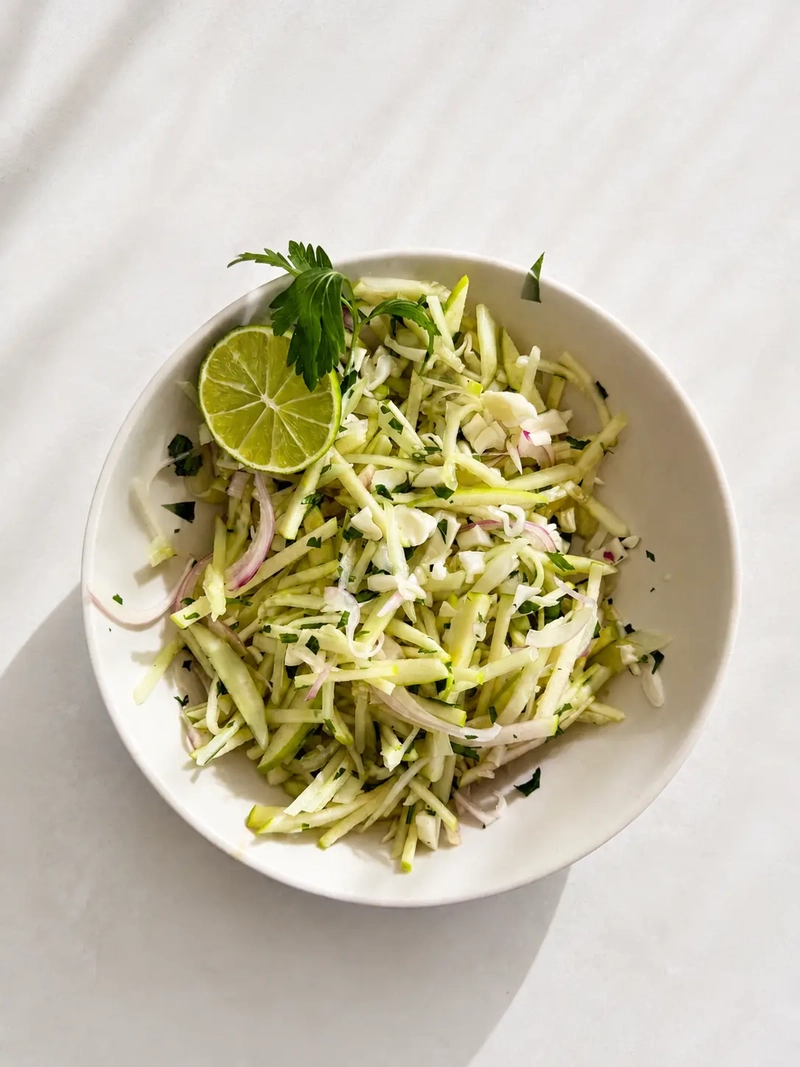
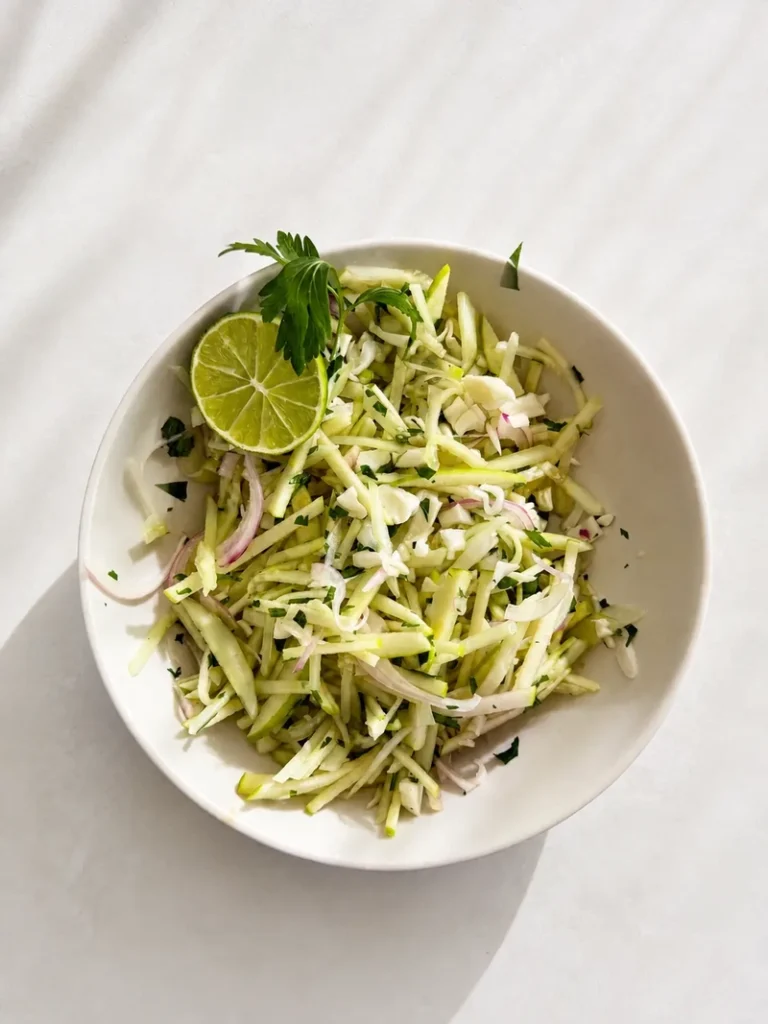
The Kachumber salad I first tried had only a few ingredients, but they were put together so thoughtfully that nothing felt missing. It was served with the vegetables cut into thin julienne strips, and that is how I like to prepare it too.
That said, I have seen many Indian versions where the vegetables are simply diced. I honestly don’t know which cut could be considered the most traditional — and I suspect there isn’t just one — but the version I’m sharing here is delicious, and I do think the way the vegetables are cut makes a difference to the final texture.
Cucumber
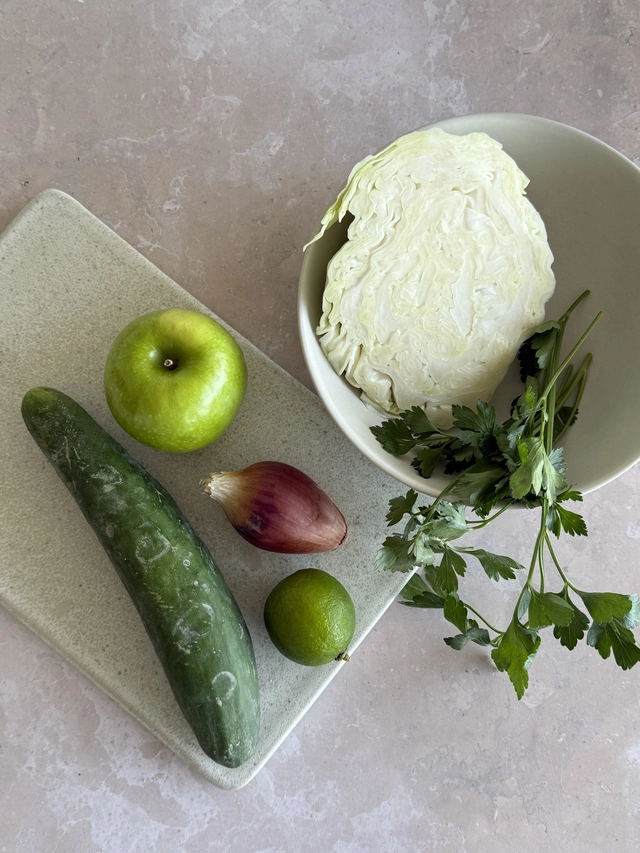
The star of the dish. Both long cucumbers and baby cucumbers work well, baby cucumbers, in particular, have an even more intense flavour. Really, any variety will do, as long as it is a cucumber. Otherwise, it wouldn’t be called Kachumber, right?
Red onion
I think other types of onion would work too, but red onion adds a beautiful touch of colour to a salad that is otherwise quite pale — still beautiful, just more delicate. If you want to make the onion a little easier to digest and soften its sharpness, you can soak it for about 30 minutes in a mixture of water and vinegar.
White Cabbage
While browsing online and through Indian cooking forums, I noticed that many versions use tomato, while far fewer include white cabbage. But this is how I first tried it, and part of the reason I loved it so much was precisely the cabbage: it gives the salad a more interesting bite and a little extra crunch. I think purple cabbage would work beautifully too, and just imagine the colour!
Green Apple
Choose a tart green apple rather than a particularly sweet one, the same kind you would normally use for a Waldorf salad. Its freshness and acidity work beautifully with the cucumber and cabbage.
I haven’t tried it yet with a sweeter apple, but I actually think it could give Kachumber salad an interesting little twist. So if that’s the only kind you have at home, I’d consider it an excuse to try a slightly sweeter version.
Fresh Coriander
Use plenty of it, finely chopped and fresh. I didn’t have any at home when I remade the salad for this recipe, and I couldn’t find fresh coriander either, so I replaced it with parsley.
The result was still really good, so parsley is definitely a valid option. But if you want to stay closer to the flavours traditionally used in Indian cooking, fresh coriander is absolutely the better choice.
Lime (or Lemon)
The Kachumber salad I first tried was definitely made with lime, but I’m quite sure that using lemon instead would do no harm to this fresh salad.
Lime gives it a slightly sharper, more aromatic flavour, while lemon keeps things bright and fresh, so use whichever you have on hand.
Salt, Pepper and Cumin
This salad doesn’t need any oil. The dressing is simply lime juice with salt, pepper — or a little chilli if you prefer — and cumin.
Keep the seasoning simple and don’t go too heavy on the spices. The whole point of Kachumber is to feel fresh and light, helping to refresh the palate alongside richer, more heavily spiced dishes.
Pomegranate
The Kachumber salad I tried in London also had pomegranate seeds, and they completed the flavour beautifully with little bursts of sweetness and acidity.
Pomegranates weren’t in season when I photographed the version for this recipe, so I used pomegranate molasses instead. I bought mine in Istanbul, where I discovered how often it is used in dressings and savoury dishes. ( If you’re planning a trip there, I also tried some of the best vegan restaurants in Istanbul and put together a full guide you can save for your next visit.)
How to Make Kachumber Salad
If you prefer, you can skip straight to the recipe card below for the full ingredients and instructions. Here, though, I want to go a little more into the details, especially the way the vegetables are cut and the small choices that can really change the final texture of the salad.
Kachumber is very simple to make, but with such a short ingredient list, those little details matter more than you might expect.
1. Prepare the Cabbage
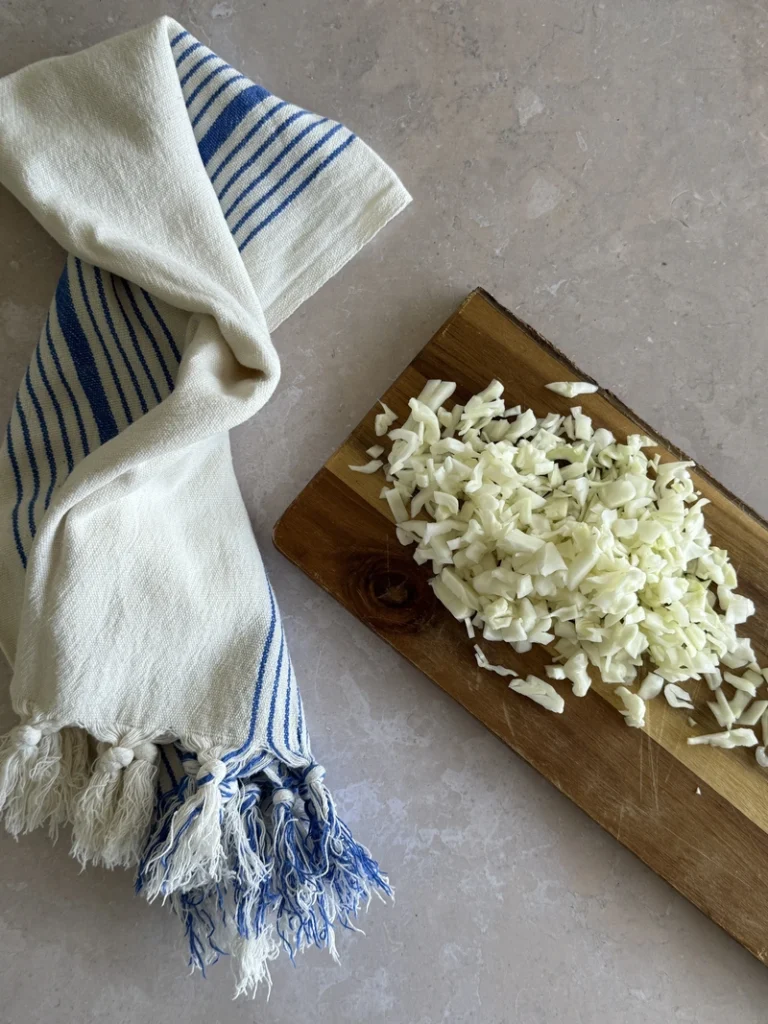
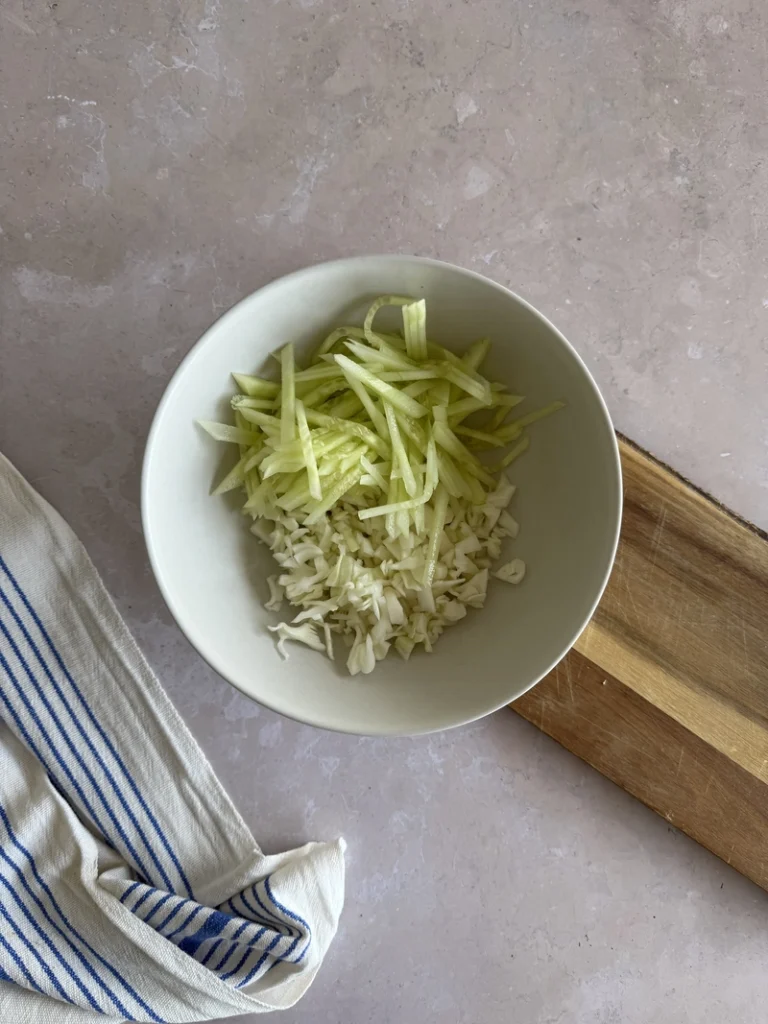
Start by washing the white cabbage and cutting it into small pieces. I don’t make them perfectly uniform on purpose, I like leaving a little variation in size so the cabbage keeps some bite and gives the salad a more interesting crunch.
2. Julienne the Cucumber and Apple
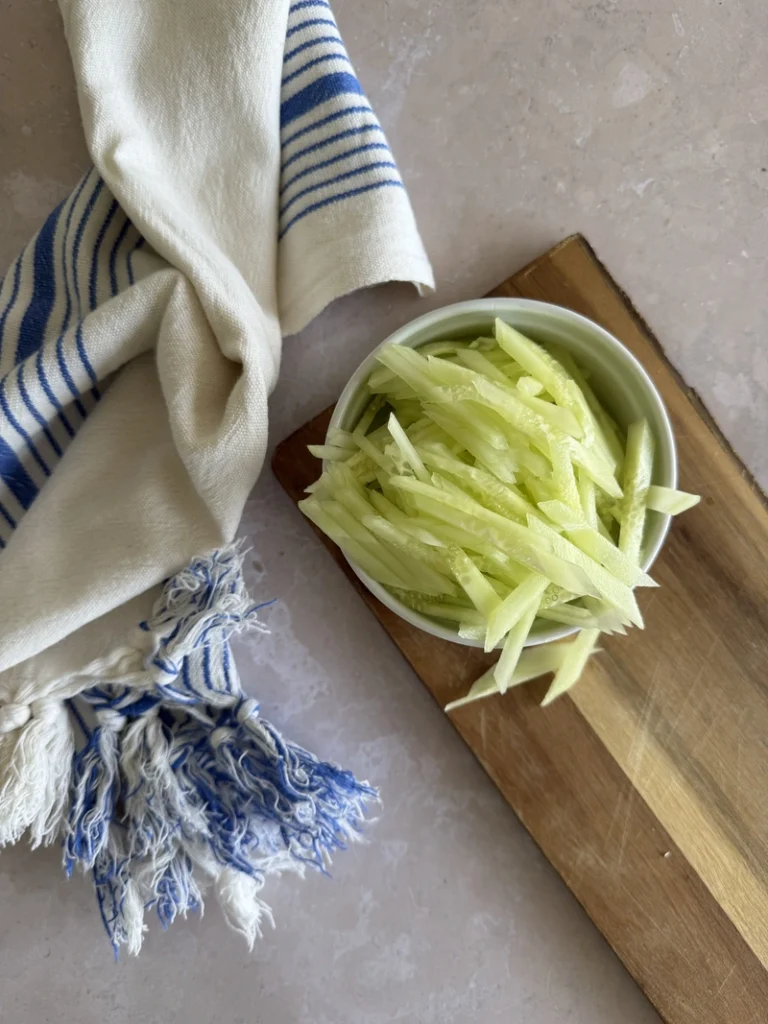
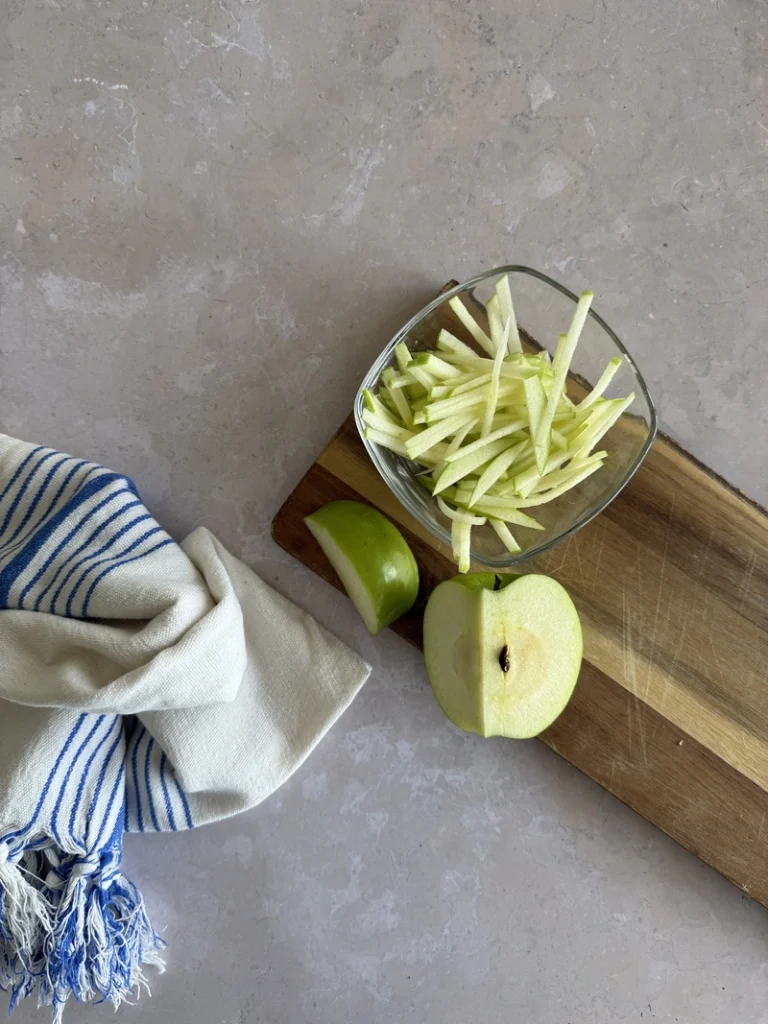
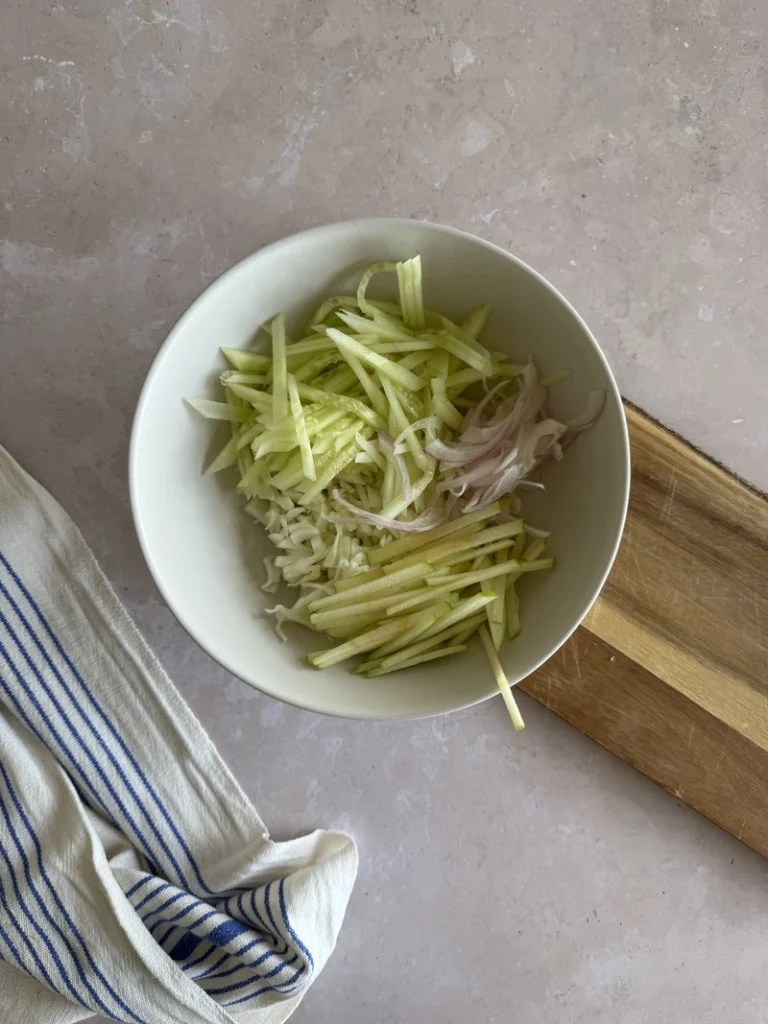
Cut the cucumber and green apple into thin julienne strips, trying to keep them roughly the same size. This helps the salad feel more balanced when you eat it and gives it that fresh, crisp texture I loved in the version I first tried.
3. Soften the Red Onion
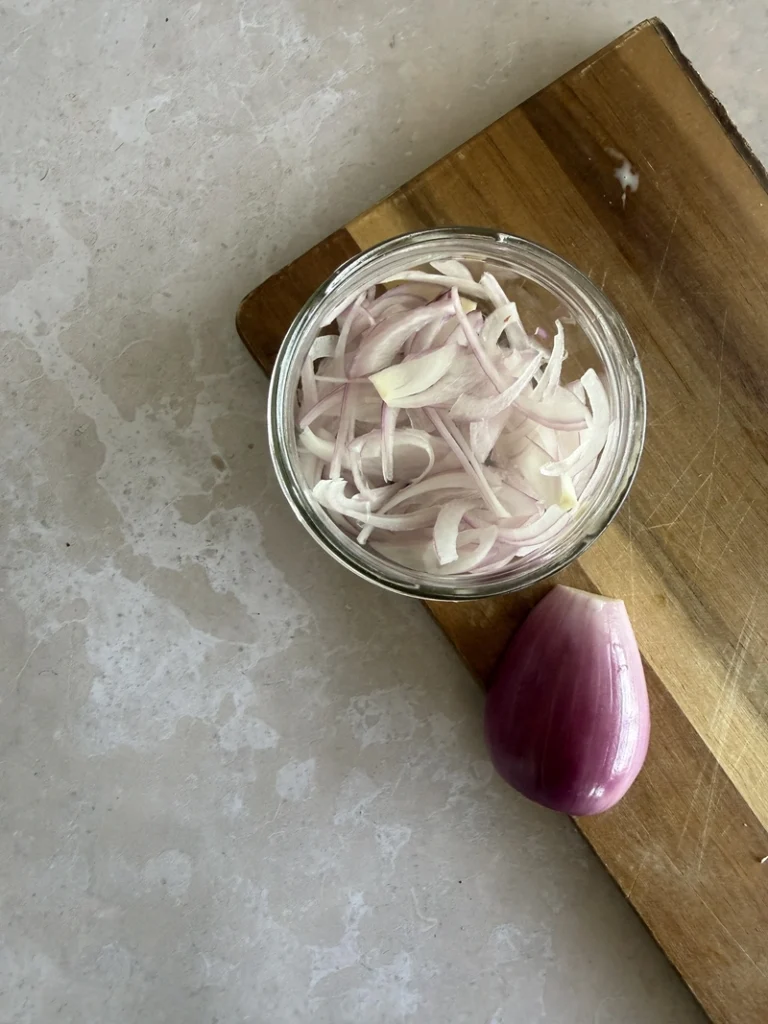
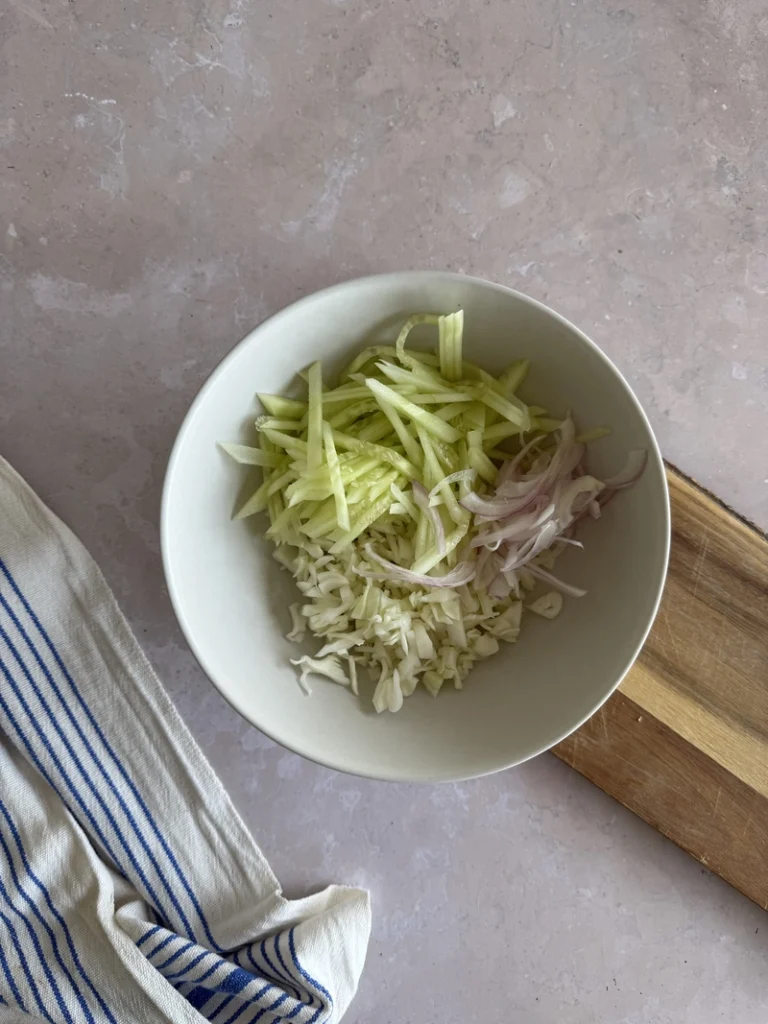
Slice the red onion very thinly, then leave it to soak for about 30 minutes in water and vinegar. This helps soften both the flavour and the sharpness of the onion. Once ready, drain it well and gently squeeze out any excess liquid before adding it to the salad.
4. Chop the Fresh Herbs
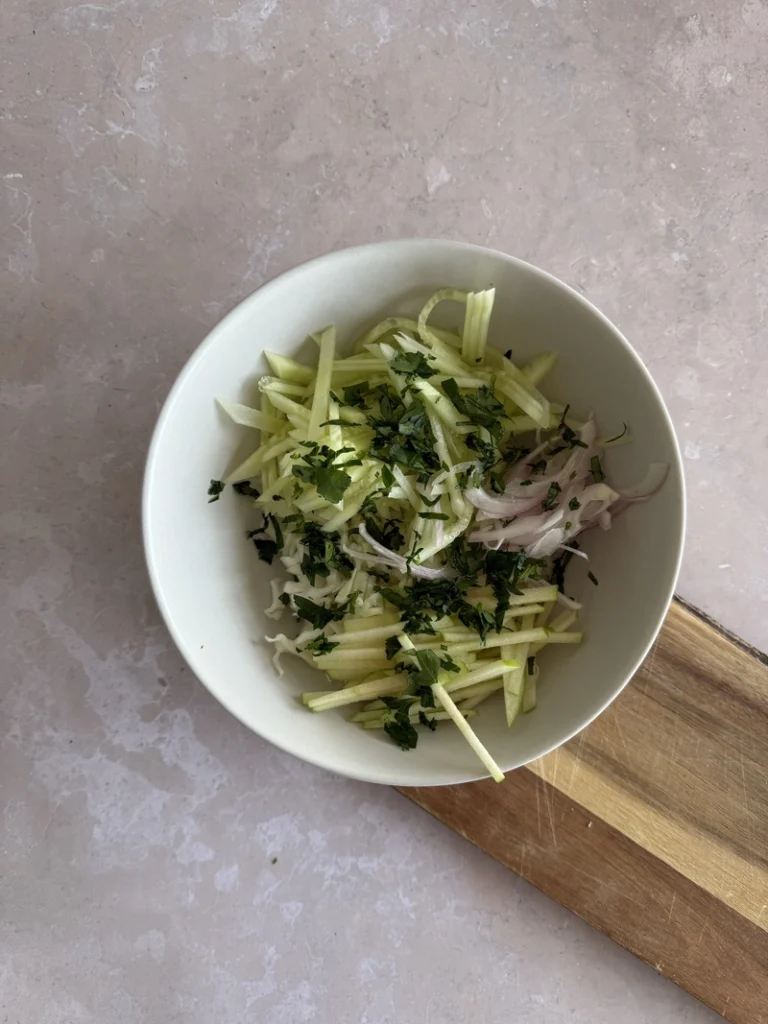
Finely chop the fresh coriander. I actually used parsley when I made and photographed this version, but coriander is the more traditional choice and works beautifully with the rest of the ingredients.
5. Mix and Season
Add the cabbage, cucumber, apple, onion and herbs to a large bowl. Season with fresh lime juice, pomegranate molasses, salt, black pepper, cumin and a little chilli. Toss everything together well so the dressing lightly coats all the vegetables.
Taste before adding anything else: Kachumber should stay fresh, crisp and light rather than heavily seasoned.
What to Serve with Kachumber Salad
Kachumber was created precisely as a cool, fresh contrast to hot and heavily spiced dishes. The first time I tried it, it was served alongside lentil dal, rice, and a starter that was something like a chickpea flour and onion fritter. The combination made perfect sense: the salad brought freshness and crunch between every bite of warm, spiced food.
For that reason, it works beautifully with almost any hot and aromatic dish. You can serve it as a side with a vegan vegetable korma, a vegan curry, or any kind of vegan dal, together with rice or flatbread if you like.
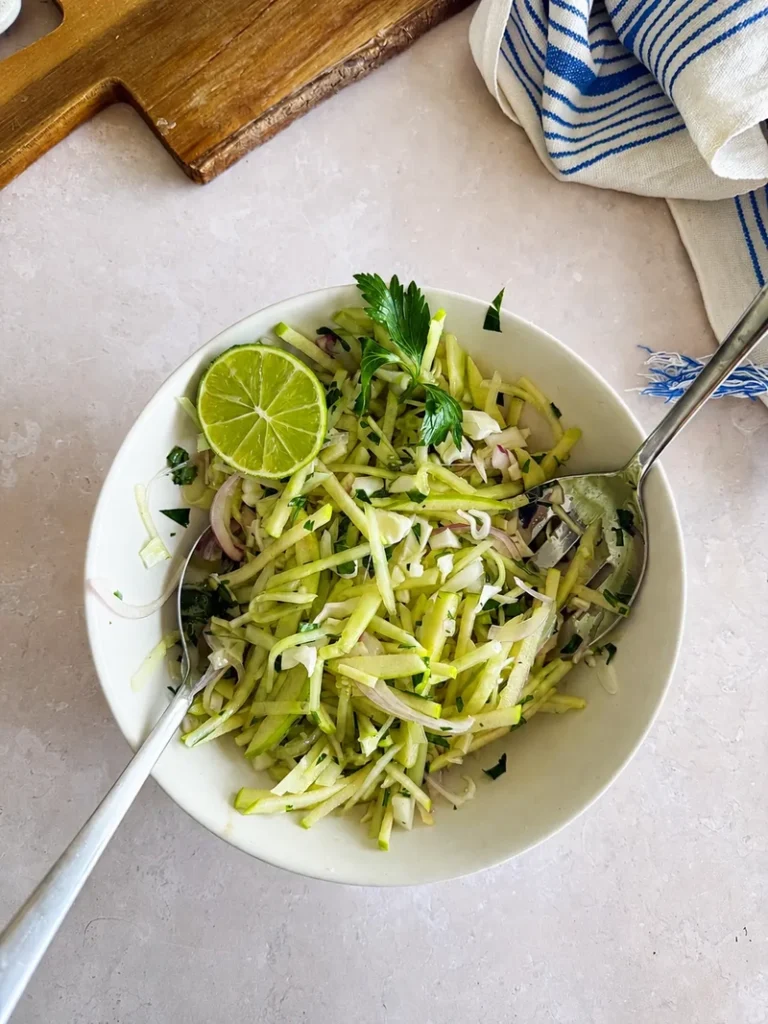
Mix It with Dishes from Other Cuisines
And who says every dish on the table has to come from the same cuisine? Certainly not me. Kachumber is such a light salad — it doesn’t even contain oil — that it can work as a fresh side dish for all kinds of mains. I would happily serve it next to vegan schnitzel, a simple pesto pasta, roasted vegetables, crispy tofu or tempeh, or even alongside a creamy potato purée when I want something raw and acidic to balance the meal.
Sometimes the best plate is simply the one where different cuisines happen to work beautifully together.
FAQ’s
Kachumber is often described as an Indian cucumber salad, although cucumber is usually combined with other fresh vegetables such as tomato and onion. Recipes vary a lot between regions and families, so you may find versions with different vegetables, herbs and seasonings. My version includes cabbage and green apple, inspired by the Kachumber salad I first tried in London.

No. Tomato is very common in Kachumber, which is why you will often see it described as an Indian cucumber tomato salad, but there are many variations. Some versions use cabbage, carrot, radish or other raw vegetables depending on the region, season and family recipe.
Yes, but it is best to add the lime juice and salt shortly before serving. Cucumber naturally releases water once it is salted, so seasoning the salad too early can make it softer and more watery. You can prepare the vegetables in advance, keep them refrigerated, and dress the salad just before serving.
Kachumber Salad (Indian Cucumber Salad)
Equipment
- 1 Knife
Ingredients
- 1 Cucumber
- 100 gr White cabbage
- 1 Green Apple
- 1 Small Red Onion
- 1 Handful Fresh Coriander
- 1 Lime
- 1 tsp Pomegranate molasses Optional
- ¼ tsp Ground Cumin
- To Taste Sea Salt
- To Taste Black Pepper
- 1 pinch Chilli powder
For Soaking the onion ( Optional)
- 120 ml water
- 2 tbsp Apple Cider Vinegar
Instructions
- Wash the cabbage and cut it into small pieces. They don’t need to be perfectly uniform: leaving a little variation in size gives the salad a more interesting crunch.
- Cut the cucumber and green apple into thin julienne strips, keeping them roughly the same size.
- Thinly slice the red onion. For a milder flavour, place it in a small bowl with the water and vinegar and leave it to soak for about 30 minutes. Drain well and gently squeeze out any excess liquid.
- Finely chop the fresh coriander or parsley.
- Add the cabbage, cucumber, apple, onion and herbs to a bowl.
- Add the lime juice, pomegranate molasses, cumin, salt, black pepper and chilli, if using.
- Mix everything well until the vegetables are lightly coated. Taste and adjust the lime, salt or spices if needed. Serve immediately for the best crunch.
Notes
Storage Note
Kachumber salad is best enjoyed fresh, while the vegetables are still crisp. Store any leftovers in an airtight container in the refrigerator and consume within 1–2 days. Keep in mind that the cucumber and salt will naturally release some liquid over time, so the salad may become softer.Make ahead Note
You can prepare the vegetables in advance, but add the lime and salt shortly before serving so the cucumber doesn’t release too much water.Original Content Note
All recipes published on INUMAMI are original and developed from my personal cooking experience. The recipe, written content, styling, and photographs featured in this post were created by me. No AI is used to create recipes. All food photographs are original and owned by INUMAMI.Substitutions Note
For ingredient swaps and alternative options, see the Ingredients section in the article above the recipe card, where I explain possible substitutions for the herbs, citrus, pomegranate, and other ingredients.Nutrition