This article contains affiliate links. If you purchase through them, INUMAMI may earn a small commission at no extra cost to you. We only recommend what we genuinely use and trust and your support means the world to us.
I first tried Ajo Blanco in Málaga, and I loved it so much that I simply had to recreate it at home. This traditional Andalusian recipe is naturally plant-based and wonderfully nourishing.
Unlike traditional gazpacho, which is made primarily with raw vegetables, Ajo Blanco has almonds at its heart, giving it a beautifully creamy texture and making it rich in healthy unsaturated fats, plant-based protein, and essential nutrients.
My version stays quite faithful to the original recipe, with just one small adjustment: I replaced traditional wheat bread with gluten-free bread, making this Spanish classic suitable for a gluten-free diet without compromising its authentic character.
What Is Ajo Blanco?
Ajo Blanco, also called white gazpacho, is a traditional cold almond soup from Andalusia, southern Spain, particularly associated with the provinces of Málaga and Granada.
Despite its name, which literally translates to “white garlic,” almonds are the real stars of this dish. Traditionally prepared with blanched almonds, stale bread, garlic, olive oil, vinegar and water, Ajo Blanco has a delicate, creamy consistency without needing any dairy products.
Its origins are centuries old, often linked to the Moorish influence on Andalusian cuisine. Unlike the tomato-based gazpacho we know today, Ajo Blanco belongs to a culinary tradition that predates the arrival of tomatoes in Europe from the Americas. You can also find the classic preparation in Spain’s official collection of traditional recipes.
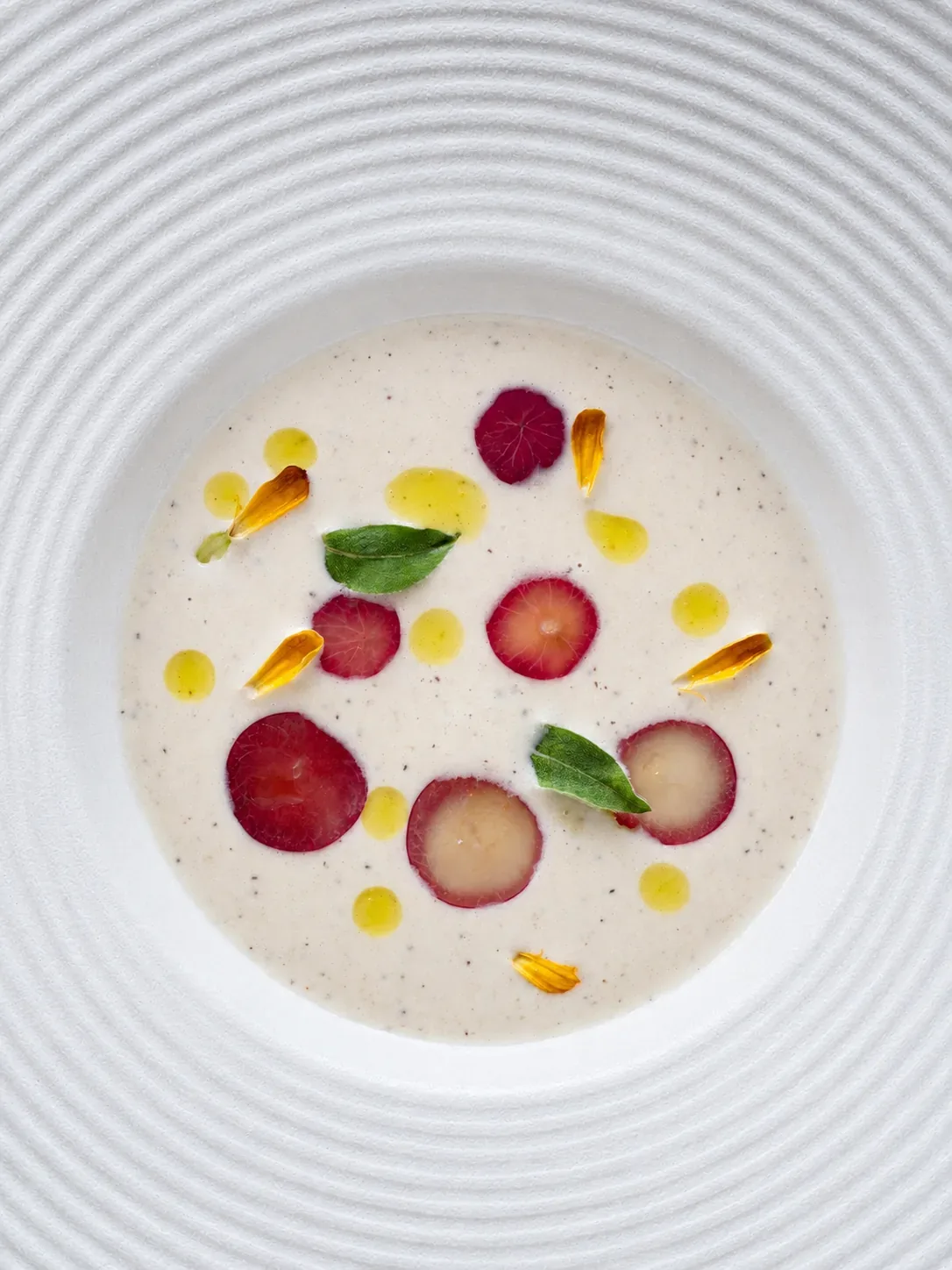
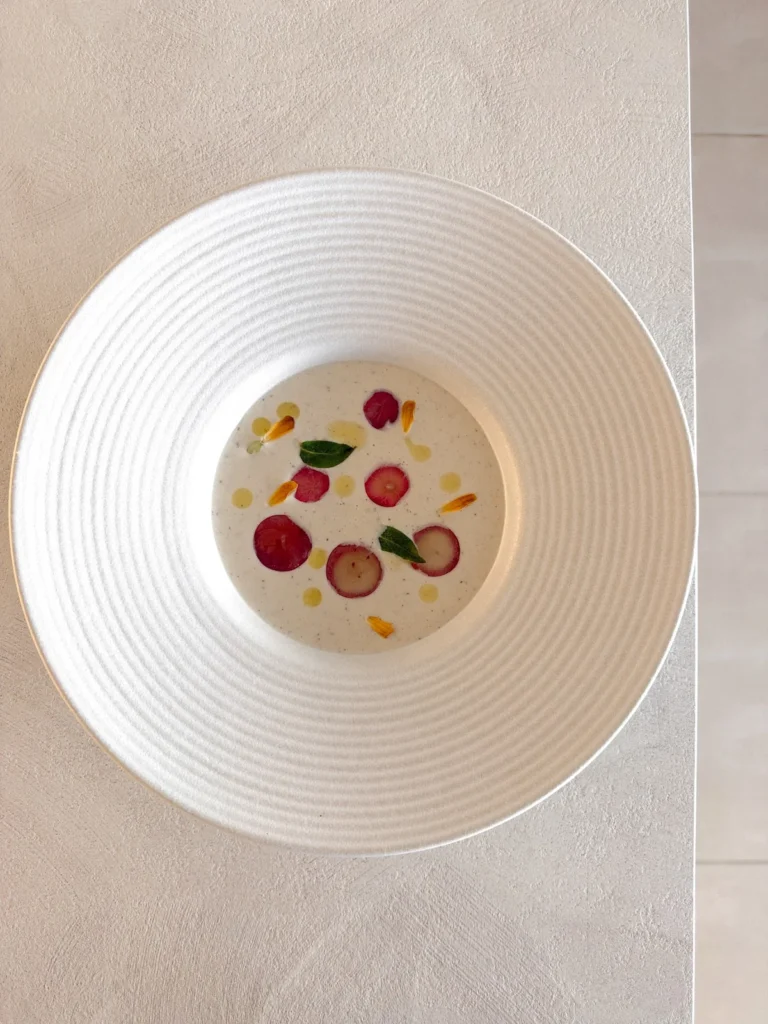
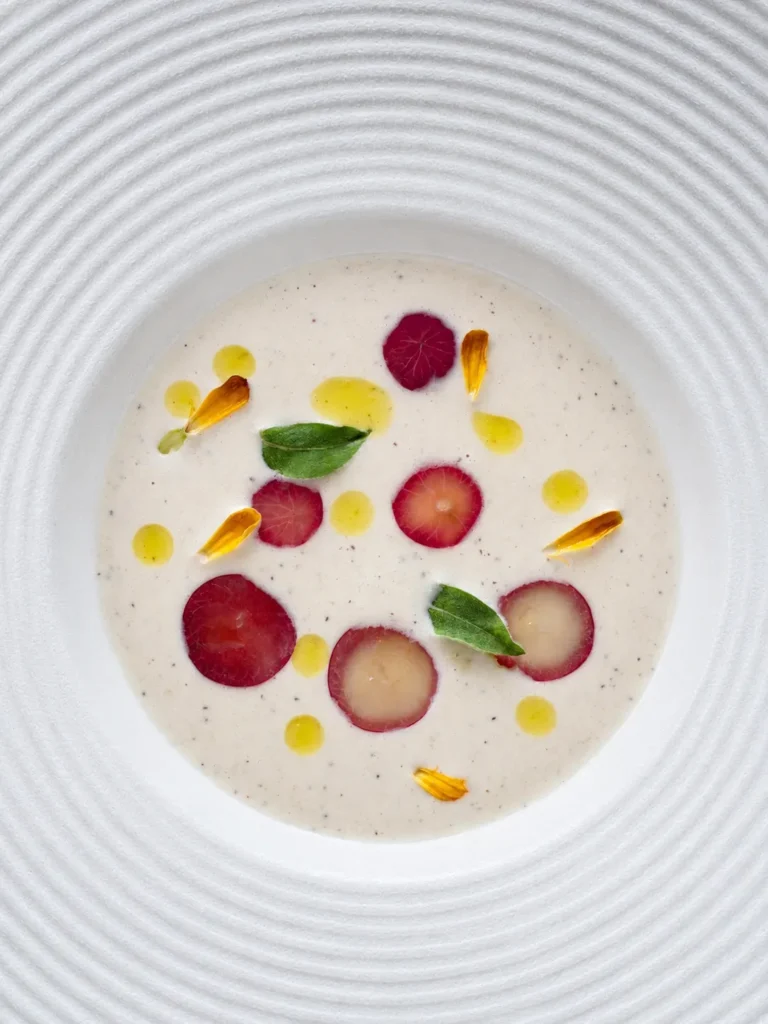
One of its most distinctive traditions is serving the soup cold with fresh grapes, particularly the sweet Moscatel grapes grown around Málaga. The contrast between the creamy almonds and the juicy fruit is part of what makes this simple dish so special.
In fact, Ajo Blanco is so deeply connected to the region’s culinary identity that the small village of Almáchar, in Málaga’s Axarquía region, has celebrated its annual Fiesta del Ajoblanco since 1968, bringing locals and visitors together to enjoy this traditional soup.
Originally a humble dish made from everyday ingredients, Ajo Blanco remains a beautiful example of how Mediterranean cooking can turn simplicity into something extraordinary.
Is Ajo Blanco Vegan and Gluten-Free?
One of the things I love most about Ajo Blanco is that it’s naturally vegan. Unlike many creamy soups, it doesn’t require milk, cream, butter or any other animal-derived ingredients. Its rich, velvety texture comes entirely from almonds, bread and olive oil, making it a wonderful example of traditional plant-based Mediterranean cooking.
However, traditional Ajo Blanco isn’t gluten-free, as it’s usually prepared with wheat bread. Fortunately, making it suitable for a gluten-free diet is incredibly simple: just replace the traditional bread with your favourite gluten-free bread as I did!
The gluten-free bread still helps give the soup body and a creamy consistency, while the almonds provide richness and flavour. Just make sure your bread is certified gluten-free if you’re preparing this recipe for someone with coeliac disease.
There’s no need for complicated substitutions or unusual ingredients. With this one small adjustment, you can enjoy a traditional Spanish recipe that’s both vegan and gluten-free, without losing the character that makes Ajo Blanco so special.
Ajo Blanco Ingredients & Substitutions
One of the beautiful things about Ajo Blanco is its simplicity. You only need a handful of ingredients to create a wonderfully creamy, nourishing soup, and most of them are probably already in your kitchen.
The secret is choosing good-quality almonds, using a delicate olive oil and finding the right balance between creaminess and acidity.
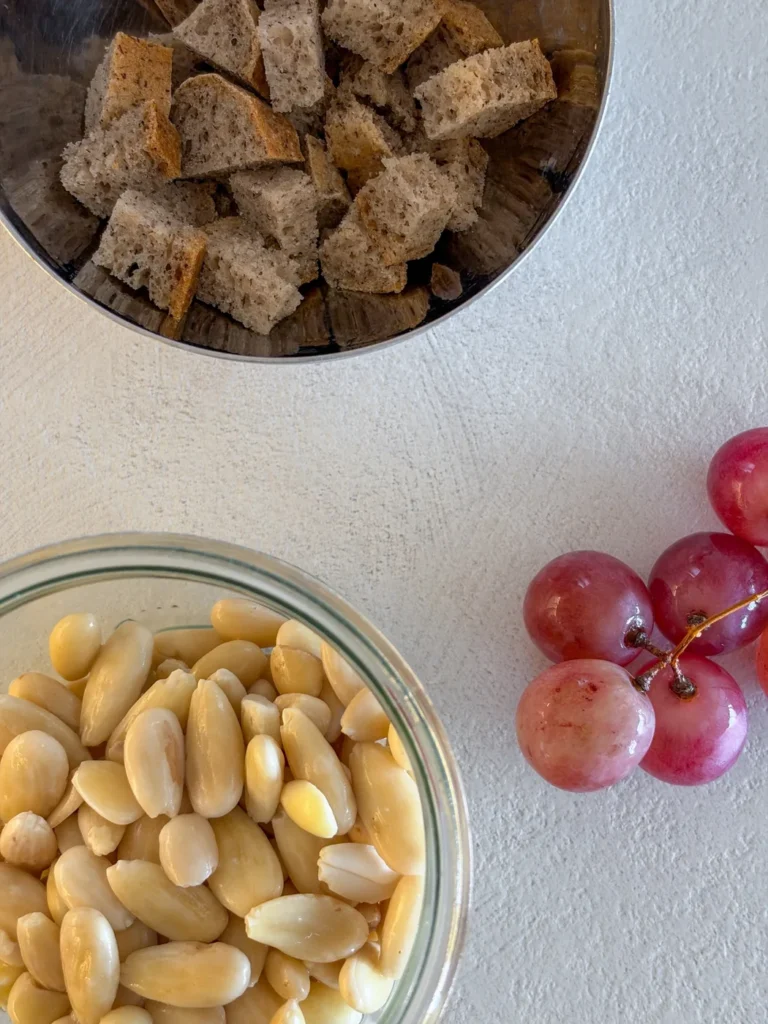
For the Ajo Blanco
- Blanched almonds (100 g): The heart of this recipe! Use raw, peeled, unsalted almonds, not roasted ones. Soaking them overnight helps soften them and makes blending easier, giving the soup a smoother consistency.
- Gluten-free bread (25 g, plus extra if needed): I use my homemade gluten-free bread made with buckwheat flour, which is why you might notice little dark specks in my Ajo Blanco. However, you can use any gluten-free bread you prefer, including store-bought varieties. Just keep in mind that the type of bread you choose may slightly affect the colour, flavour and texture of the soup.
- Cold water (approximately 300 ml): Used to blend the almonds and bread into a creamy soup. Add it gradually, as the amount needed may vary depending on your bread and the consistency you prefer.
- Extra virgin olive oil (20 g): Adds richness and helps create a creamy emulsion. I recommend choosing a mild, fruity olive oil that won’t overpower the almonds.
- Apple cider vinegar (10 ml): Brings a gentle acidity that balances the richness of the almonds and olive oil. Traditional recipes often use sherry vinegar, which you can also use here.
- Garlic (¼ small clove): A little goes a long way! Garlic is essential to the character of Ajo Blanco, but I prefer keeping it subtle so the almond flavour remains the star.
- Salt: To taste, for bringing all the flavours together.
For the Garnish
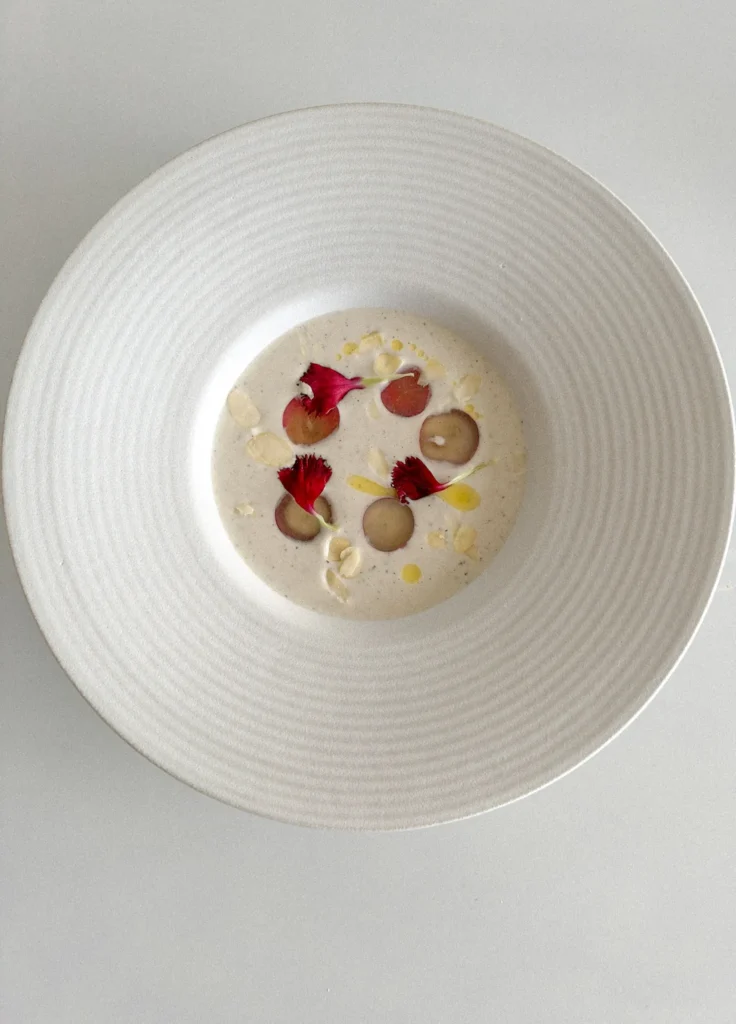
- Red grapes: Traditionally served with Ajo Blanco, grapes provide a beautiful contrast to the creamy soup. I recommend using fresh, firm, seedless red grapes, sliced in half.
- Toasted flaked almonds: Add a delicate crunch and a deeper, nutty flavour. Toast them lightly in a dry pan until just golden.
- Extra virgin olive oil: A few drops over the finished soup add a lovely shine and an extra layer of flavour.
- Edible flowers or fresh basil leaves: Entirely optional, but perfect for adding a delicate botanical touch and a little colour to the final presentation. Make sure any flowers you use are specifically grown for culinary consumption.
How to Make Ajo Blanco (Step by Step)
Making Ajo Blanco is surprisingly simple, and you don’t need any special cooking skills. In fact, there’s no actual cooking involved! All you need is a good blender, a little patience while the almonds soak, and some time in the fridge to let the soup chill.
The most important part is getting the consistency right. You want something creamy and smooth, but still fluid enough to pour easily into a bowl.
Step 1: Soak the Almonds
Start by placing 100 g of blanched, raw almonds in a bowl and covering them generously with cold water. Leave them to soak in the refrigerator for 8–12 hours, preferably overnight.
The next day, drain and rinse them thoroughly. Discard the soaking water. This step helps soften the almonds, making them easier to blend into a creamy soup.
Step 2: Prepare the Bread and Blend
Soak 25 g of gluten-free bread in a little cold water for about 5 minutes to soften it. I usually like to add half of the vinegard to the bread but you can also wait and add it on the blender with all the ingredients.
Transfer the soaked almonds, softened bread, garlic and approximately 250 ml of cold water to a high-speed blender. Blend for 2–3 minutes, pausing occasionally to scrape down the sides, until the mixture becomes as smooth and creamy as possible.
Step 3: Add the Olive Oil and Vinegar
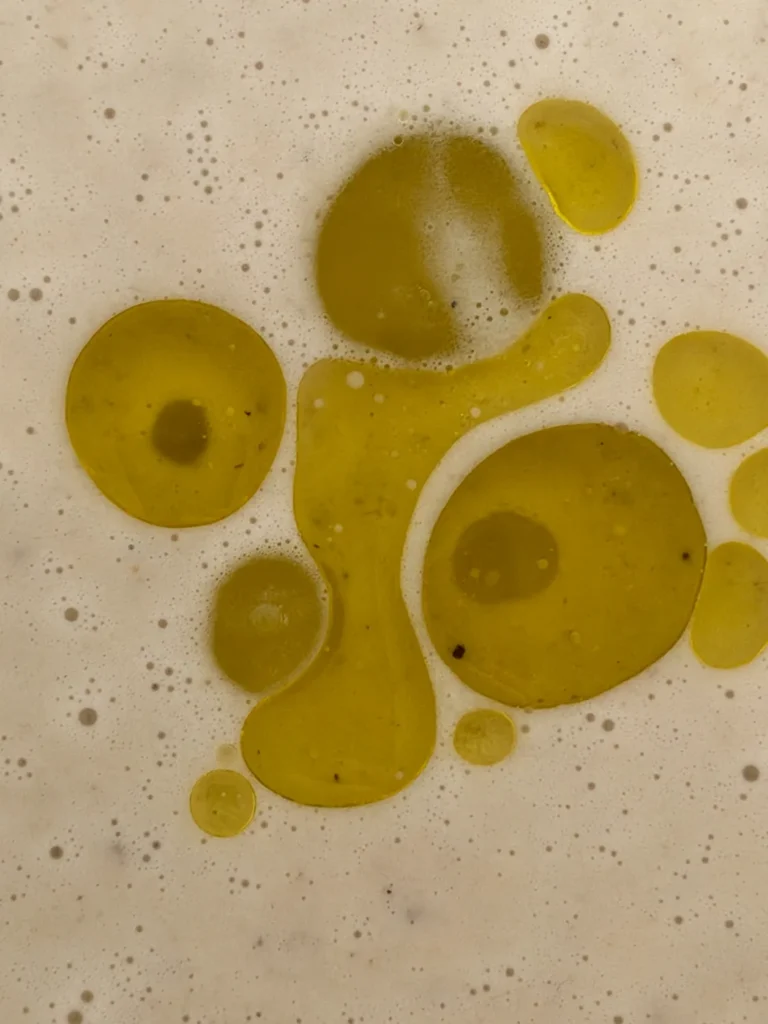
With the blender running at medium-low speed, gradually pour in 20 g of extra virgin olive oil. Adding it slowly helps create a creamy emulsion.
Next, add the apple cider vinegar and a pinch of salt. Blend again until everything is well combined. Taste and adjust the seasoning if necessary. The garlic should be noticeable but never overpowering, while the vinegar should bring just enough acidity to balance the richness of the almonds.
Step 4: Adjust the Consistency
This is probably the most important step! Your Ajo Blanco should have a creamy, pourable consistency, somewhere between a light cream and a chilled soup.
If it’s too thick, gradually add some of the remaining cold water. If it’s too thin, add a little more gluten-free bread, let it soften for a few minutes, and blend again.
The exact amount of water and bread you need will depend on the type of bread you’re using and how thick you prefer your soup.
Should you strain Ajo Blanco? That’s entirely up to you! For an exceptionally silky texture, you can pass it through a fine-mesh sieve. Personally, sometime I skipped this step because I love the slightly rustic consistency.
Step 5: Refrigerate Before Serving
Transfer the Ajo Blanco to a covered container and refrigerate for at least 2 hours. This allows the soup to become properly chilled and gives the flavours time to come together.
Before serving, stir well and taste once more. You may want to add a little extra salt, vinegar or cold water to achieve your preferred balance and consistency.
And that’s it! Your homemade Ajo Blanco is ready to be garnished and served.
Yes! Although bread is traditionally used to give Ajo Blanco its creamy consistency, you can prepare a bread-free version using almonds, garlic, olive oil, vinegar and water. However, keep in mind that removing the bread will change the texture. You may need to reduce the amount of water or increase the almonds to achieve a similarly creamy result. I haven’t tested this particular variation, so I recommend starting with less water and adjusting gradually.
Not necessarily, but I highly recommend it. Soaking the almonds for 8–12 hours helps soften them, making them easier to blend into a smooth, creamy soup.
The consistency of Ajo Blanco depends mainly on the ratio of almonds, bread and water. Some gluten-free breads absorb considerably less liquid than others, which can make the soup thinner than expected. If your Ajo Blanco is too watery, add a little extra gluten-free bread, let it soften and blend again. Alternatively, you can add a small amount of finely ground almonds to give it more body. I always recommend adding the water gradually rather than all at once.
Homemade Ajo Blanco is best enjoyed fresh, but you can store it in an airtight container in the refrigerator for approximately 2–3 days, keeping it at 4°C or below. The soup may separate slightly during storage, so give it a good stir or blend it briefly before serving.
Ajo Blanco Recipe: Spanish Almond Soup with Red Grapes (Vegan & Gluten Free)
Equipment
- 1 Blender
Ingredients
For the Ajo Blanco
- 100 g Raw blanched almonds Unsalted
- 25 g Gluten-free bread Plus extra if needed
- 300 ml Cold Water Added gradually
- 20 g extra virgin olive oil
- 10 ml Apple Cider Vinegar
- 1 clove Garlic
- To Taste Sea Salt
For the Garnish
- 8 Red grapes
- 1 tbsp Flaked almonds
- To Taste Extra virgin olive oil For drizzling
- Few Edible flowers or small fresh basil leaves
Instructions
Prepare the Ajo Blanco
- Place the blanched almonds in a bowl, cover generously with cold water and soak in the refrigerator for 8–12 hours. Drain and rinse thoroughly.
- Soak the gluten-free bread in a little cold water for approximately 5 minutes, until softened.
- Add the soaked almonds, softened bread, garlic and approximately 250 ml of cold water to a high-speed blender. Blend for 2–3 minutes, or until creamy and well combined.
- With the blender running at medium-low speed, gradually add the extra virgin olive oil. Add the apple cider vinegar and salt, then blend again until smooth.
- Check the consistency. The soup should be creamy but still pourable. If too thick, add a little of the remaining water. If too thin, add a small amount of extra gluten-free bread, allow it to soften and blend again.
- Taste and adjust the salt or acidity if necessary. For a perfectly silky texture, you can strain the soup through a fine-mesh sieve, although this is entirely optional.
- Transfer to a covered container and refrigerate for at least 2 hours before serving.
Prepare the Garnishes and Serve
- Toast the flaked almonds in a dry pan over medium-low heat for approximately 2–3 minutes, stirring frequently, until lightly golden. Set aside to cool.
- Wash and dry the red grapes, then slice them in half lengthwise.
- Pour the chilled Ajo Blanco into two shallow bowls.
- Arrange the red grapes over the soup, drizzle with a little extra virgin olive oil and scatter the toasted almond flakes on top.
- Finish with a few edible flowers or small basil leaves and serve immediately.
Notes
Nutrition