This article contains affiliate links. If you purchase through them, INUMAMI may earn a small commission at no extra cost to you. We only recommend what we genuinely use and trust and your support means the world to us.
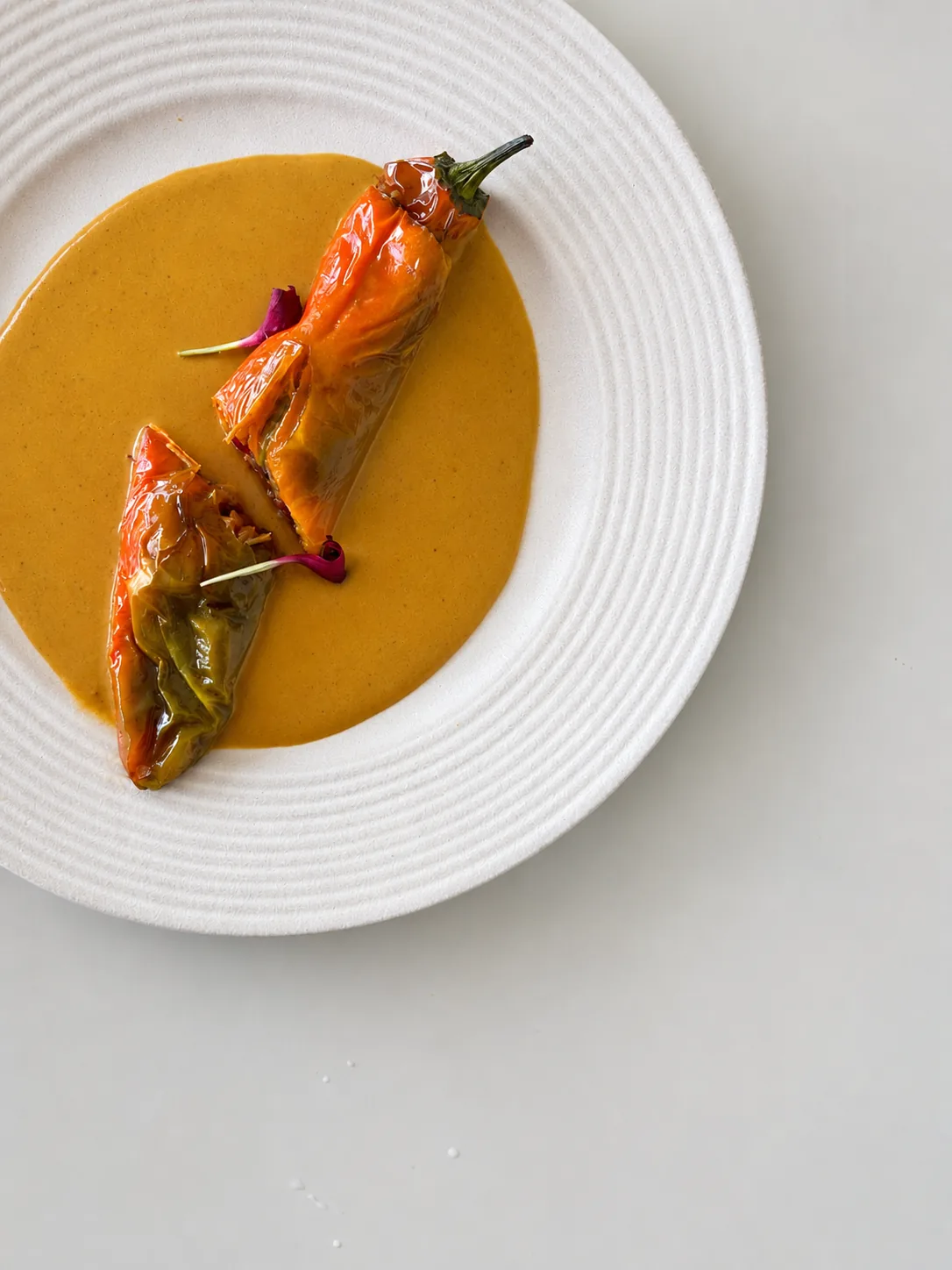
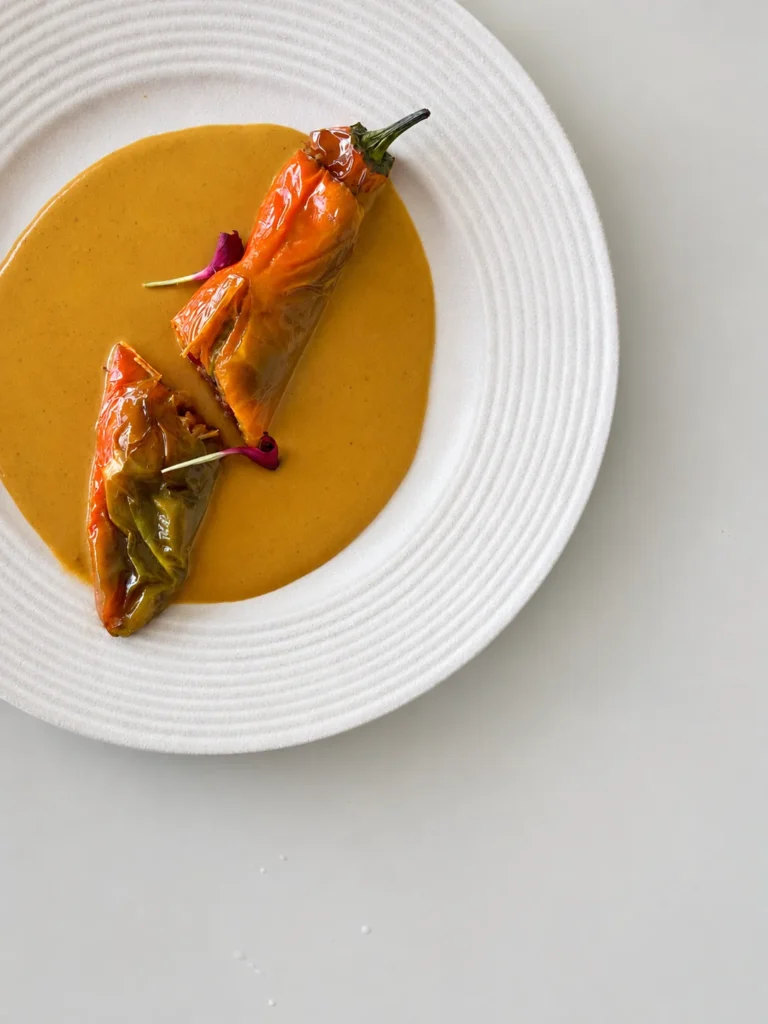
These stuffed peppers may be completely meat-free, but they’re bursting with umami. Oyster mushrooms, walnuts, and fresh plums come together to create a filling that’s rich, delicious, and surprisingly easy to make. The silky curry sauce adds warmth, depth, and just the right amount of richness, turning what could have been a simple side dish into a satisfying main course in its own right. Entirely plant-based, gluten-free, and packed with flavour.
Why You’ll Love These Vegan Stuffed Peppers
I know, I know. Every food recipe article seems to start a section like this. Maybe I’m not quite brave enough to break the tradition. But the truth is, I genuinely want to convince you to make this recipe, and that means telling you exactly why I think you’ll love it.
First of all, these aren’t your usual stuffed peppers. No meat and rice, not even the classic rice-only filling. Instead, we’re working with a slightly unexpected combination of oyster mushrooms, fresh red plums, and walnuts. It might sound unusual, but trust me, these flavours work beautifully together.
Then there’s the curry sauce. Delicate, silky, and carefully balanced. It doesn’t overpower the filling; it brings everything together and makes the whole dish a little more interesting.
And the textures? We’ve got them all. The meaty bite of the mushrooms, the crunch of the walnuts, the silkiness of the sauce, and the tender, roasted peppers. Every mouthful has something going on.
And here’s another reason to love it: you’re also giving your body something genuinely nourishing. Oyster mushrooms contain beneficial compounds such as beta-glucans and ergothioneine, which researchers are studying for their antioxidant properties and potential roles in immune and metabolic health.
Have I convinced you yet?
Ingredients You’ll Need
The beauty of these vegan stuffed peppers is that you don’t need anything particularly complicated to create something full of flavour. We’re combining a handful of ingredients that might seem a little unexpected together, but each one has a specific role in making this dish work.
I’ve divided everything into four parts to make the preparation easier: the peppers, the marinated oyster mushrooms, the plum and walnut filling, and the silky coconut curry sauce.
You’ll find the ingredients below, along with a few tips on why I chose them. If you’re ready to start cooking, feel free to jump straight to the recipe card at the bottom of this post, where you’ll find the exact quantities and step-by-step instructions.
For the Stuffed Peppers
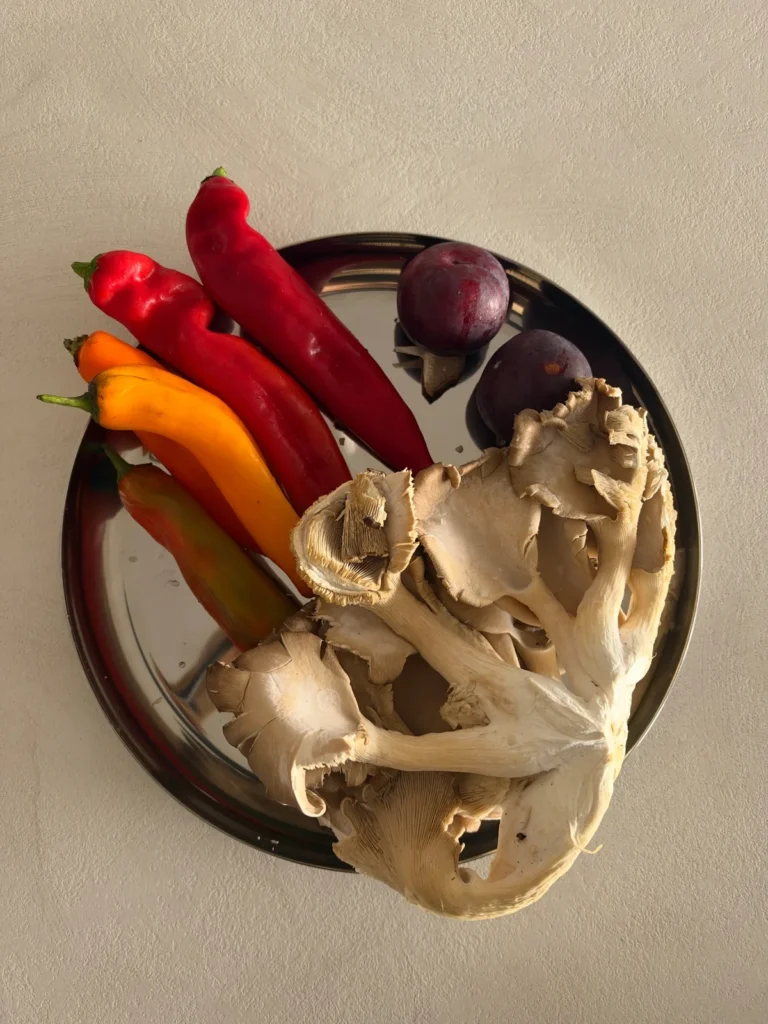
- 2 long sweet peppers: Choose peppers that are large enough to hold the filling. Red or yellow varieties both work beautifully.
- 1 tbsp extra virgin olive oil: For brushing the peppers before roasting.
- A pinch of salt: To season the peppers.
- 2 tbsp water: For the bottom of the baking dish.
For the Marinated Oyster Mushrooms
- 250–300 g oyster mushrooms: Their wonderfully meaty texture and rich umami flavour make them the star of our filling.
- 1 tbsp extra virgin olive oil: For the marinade.
- 2 tsp gluten-free tamari: Adds a savoury depth without overpowering the mushrooms. ( If you want to know more about this ingredient, i wrote a complete guide on Tamari and how to use it)
- ½ tsp maple syrup (optional): For a subtle sweetness and a little extra caramelisation.
- ½ tsp smoked paprika: Adds a delicate smoky note.
- Fresh thyme: A few sprigs to bring an aromatic, earthy flavour.
- Freshly ground black pepper: To taste.
For the Red Plum & Walnut Filling
- 1–2 fresh red plums: Choose ripe but still relatively firm plums. Their sweet-tart flavour creates a beautiful contrast with the savoury mushrooms.
- 25–30 g walnuts: Roughly chopped and lightly toasted for a satisfying crunch.
- 1 tsp extra virgin olive oil: To dress the plums.
- Fresh lemon thyme: Its delicate citrus notes bring freshness to the filling.
- Salt and freshly ground black pepper: To taste.
- ½ tsp apple cider vinegar (optional): Particularly useful if your plums are very sweet and need a little acidity.
For the Silky Coconut Curry Sauce
- 80 ml full-fat coconut milk: Use the canned variety for a naturally rich, silky texture.
- 25–40 ml water: To adjust the consistency. We want a fluid sauce that spreads beautifully across the plate.
- ½ small shallot: Finely chopped, for a delicate aromatic base.
- 6 g tomato paste: Adds depth and helps create that gorgeous orange colour.
- ¼ tsp mild curry powder: Just enough to introduce warmth without overpowering the filling.
- ¼ tsp sweet paprika: For colour and gentle sweetness.
- A pinch of turmeric: To enhance the golden-orange colour.
- ½ tsp extra virgin olive oil: For gently cooking the shallot and spices.
- Salt and white pepper: To taste.
- A few drops of fresh lime juice (optional): To balance the richness of the coconut milk.
How to Make Stuffed Peppers Without Meat
Making these vegan stuffed peppers is easier than you might think, even if the final result looks a little fancy. The secret is to prepare each element separately before bringing everything together: marinate and sauté the oyster mushrooms, prepare the fresh plum and walnut filling, make the silky curry sauce, and finally stuff and roast the peppers.
I’ll walk you through the entire process below, with a few tips to help you get the best flavour and texture. And if you’d rather skip straight to cooking, you can scroll down to the recipe card at the bottom of this post, where you’ll find the exact measurements and complete instructions.
Step 1: Marinate the Oyster Mushrooms
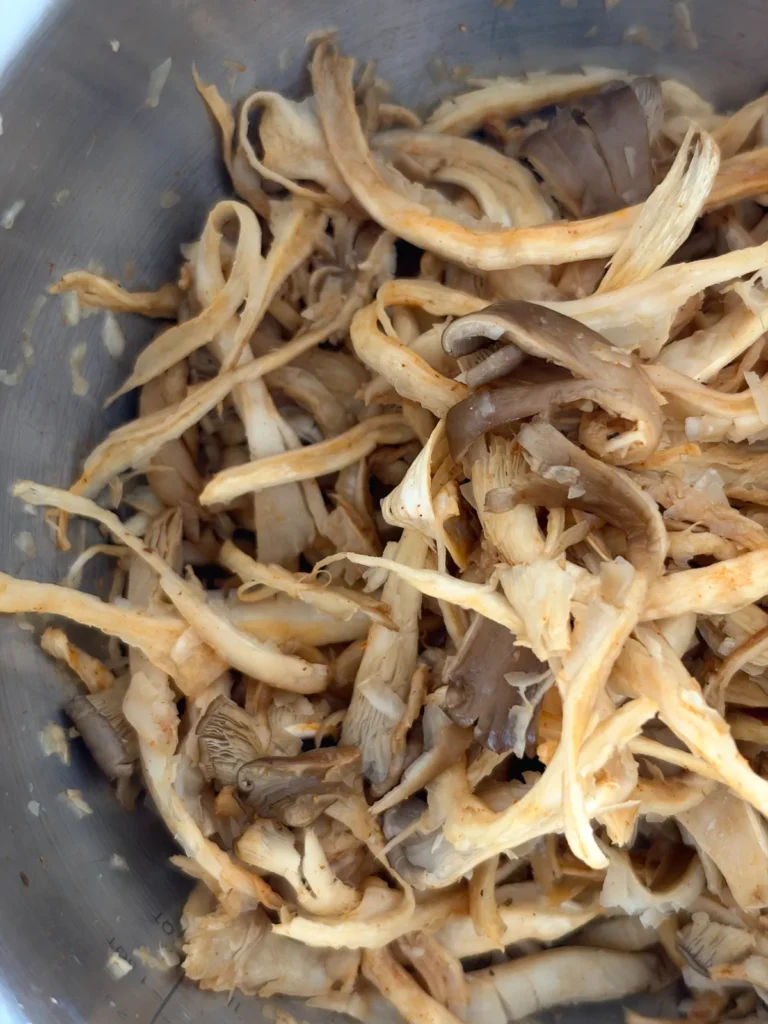
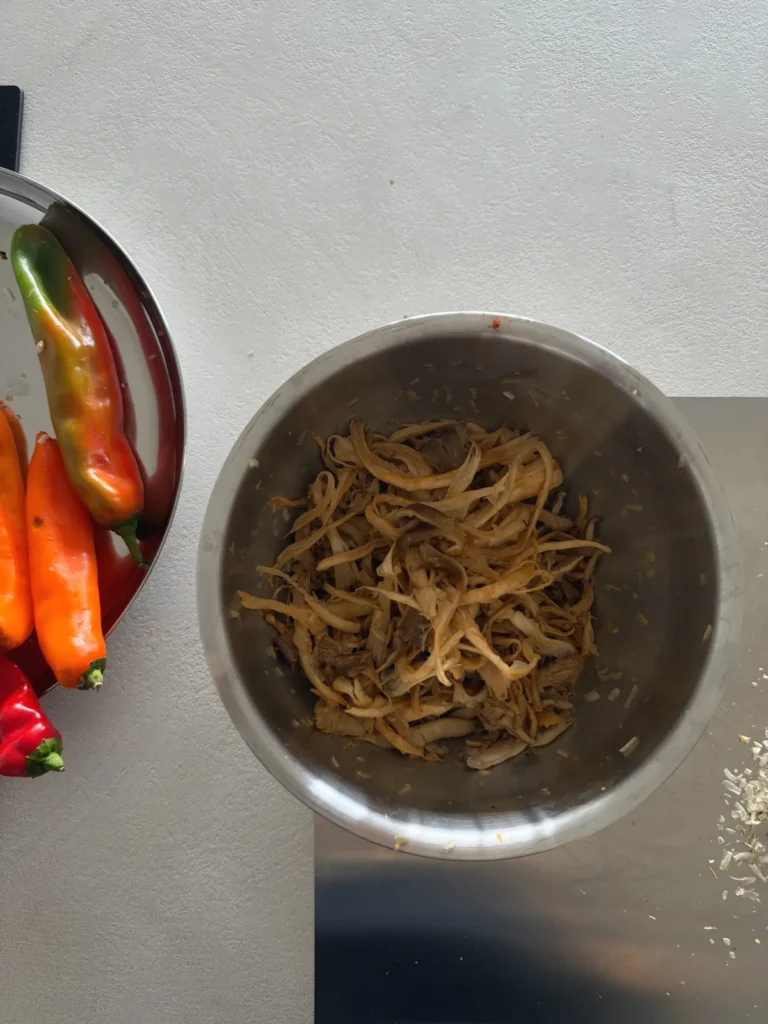
Start by gently tearing 250–300 g of oyster mushrooms into fairly large strips. Their texture is naturally meaty, so there’s no need to chop them too finely.
In a small bowl, combine 1 tablespoon of extra virgin olive oil, 2 teaspoons of gluten-free tamari, ½ teaspoon of smoked paprika, ½ teaspoon of maple syrup (optional), fresh thyme, and a little black pepper.
Pour the marinade over the mushrooms and toss gently until evenly coated. Cover and leave to marinate for at least 10–15 minutes. You can also refrigerate them for up to an hour if you want to prepare the other elements in the meantime.
Step 2: Prepare the Plum and Walnut Filling
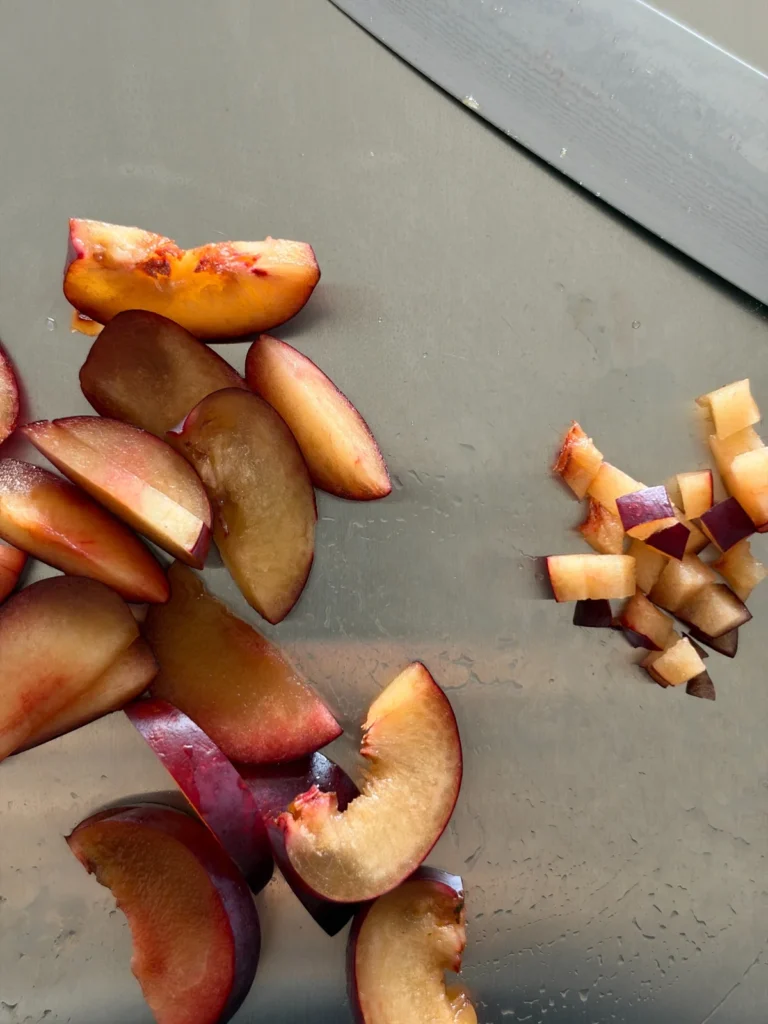
While the mushrooms are marinating, cut 1–2 fresh red plums into small cubes. Ideally, the plums should be ripe but still firm enough to hold their shape during baking.
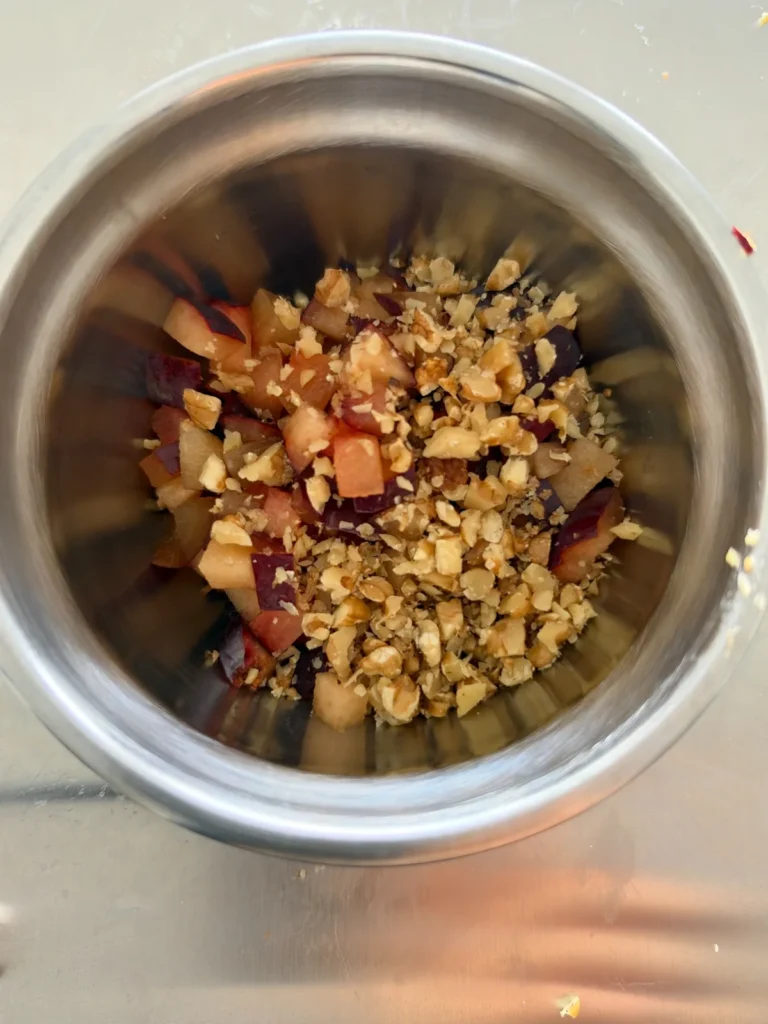
Roughly chop 25–30 g of walnuts and lightly toast them in a dry pan until fragrant.
Season the plums with 1 teaspoon of extra virgin olive oil, a few fresh lemon thyme leaves, a pinch of salt, and freshly ground black pepper. If your plums are particularly sweet, add ½ teaspoon of apple cider vinegar for a little extra acidity.
Keep the walnuts separate for now so they retain as much crunch as possible.
Step 3: Make the Silky Coconut Curry Sauce
Heat ½ teaspoon of extra virgin olive oil in a small saucepan over medium-low heat. Add ½ finely chopped shallot and cook for approximately 3 minutes, until softened but not browned.
Stir in 6 g of tomato paste and cook for another 30 seconds. Add ¼ teaspoon of mild curry powder, ¼ teaspoon of sweet paprika, and a pinch of turmeric, stirring briefly to release their aromas.
Gradually pour in 80 ml of canned coconut milk and 25 ml of water, whisking until combined.
Allow the sauce to simmer gently for 3–4 minutes, then blend until completely smooth. For an especially silky finish, pass it through a fine-mesh sieve.
Season with salt, white pepper, and a few drops of lime juice if desired. Add up to 15 ml more water if necessary. The sauce should be fluid enough to spread naturally across the plate, but still have a delicate, velvety texture.
Set aside until serving.
Step 4: Sauté the Oyster Mushrooms
Heat a large frying pan over medium-high heat. Add a small drizzle of olive oil if needed.
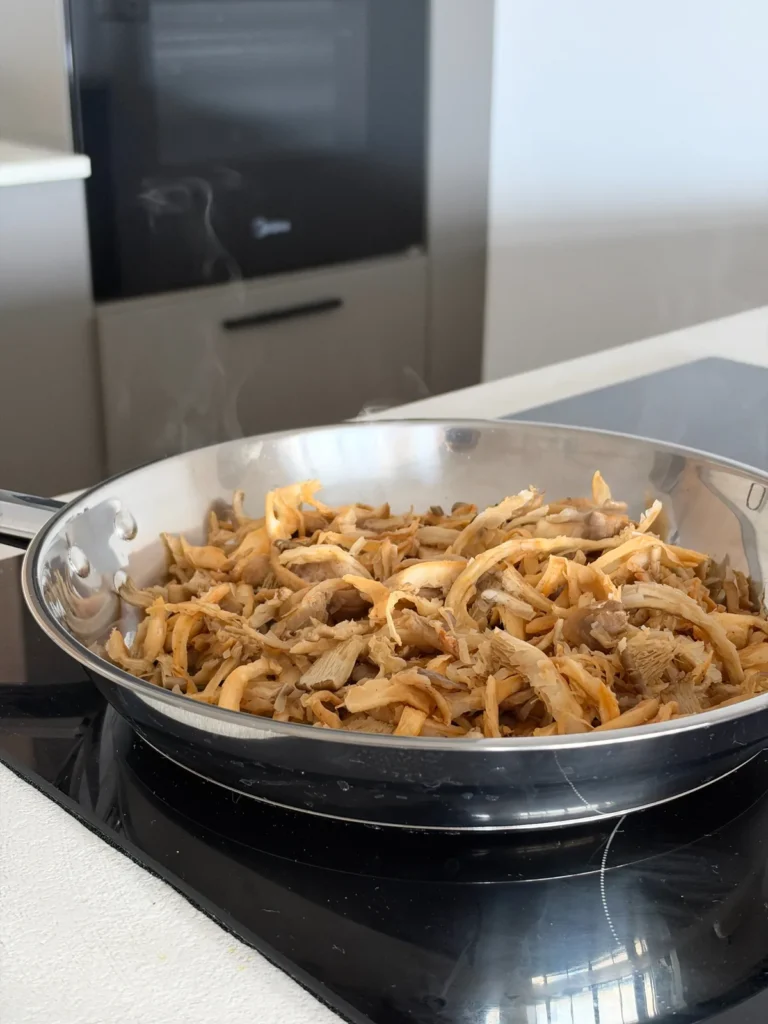
Drain any excess marinade from the mushrooms, then arrange them in a single layer in the hot pan. Cook for approximately 2–3 minutes without stirring, allowing them to develop a beautiful golden crust.
Turn the mushrooms and cook for another 3–4 minutes, until golden and most of their moisture has evaporated. If your pan is too small, work in batches rather than overcrowding it.
Remove from the heat and let the mushrooms cool slightly before gently combining them with the seasoned plums and toasted walnuts.
Step 5: Prepare and Stuff the Peppers
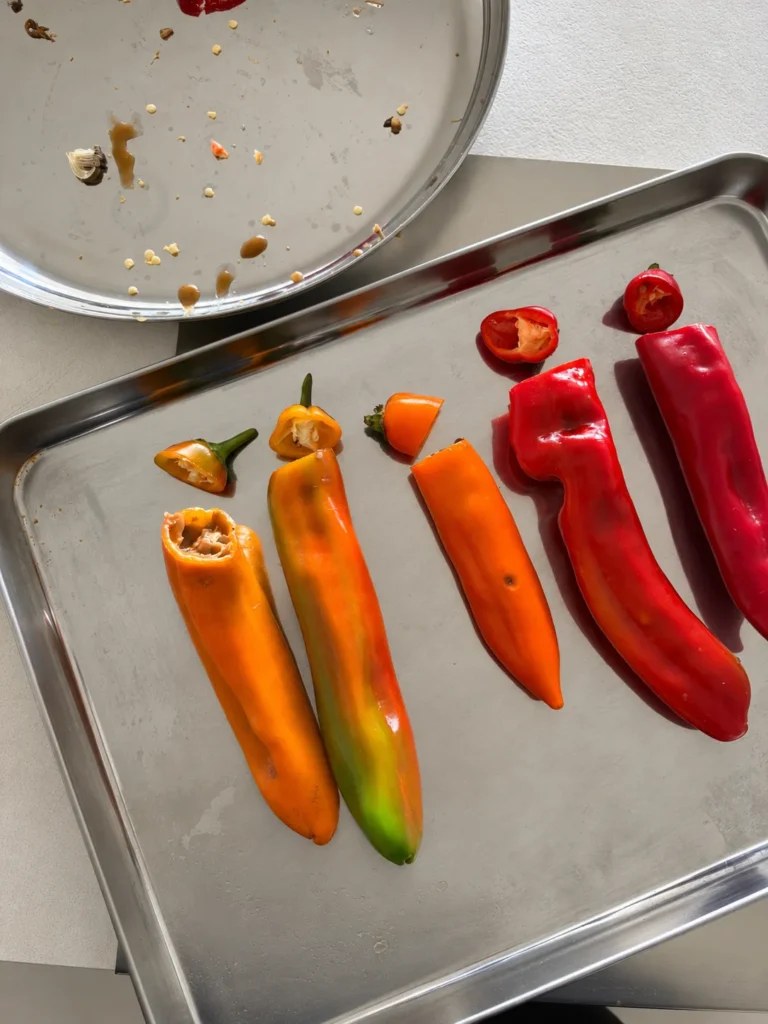
Preheat your oven to 190°C (375°F), conventional setting. Wash and thoroughly dry 2 long sweet peppers. Carefully slice off the tops to create little lids, keeping the stems attached if possible.
Remove the seeds and white membranes without damaging the peppers. Brush the inside and outside with approximately 1 tablespoon of extra virgin olive oil in total, then season lightly with salt.
Spoon the mushroom, plum, and walnut mixture into each pepper, filling them generously without packing the mixture too tightly. Leave a little space near the opening and replace the tops.
Step 6: Bake the Stuffed Peppers
Place the stuffed peppers on their sides in a lightly oiled baking dish. Add approximately 2 tablespoons of water to the bottom of the dish to prevent the juices from burning.
Cover loosely with aluminium foil and bake at 190°C (375°F) for 15–20 minutes. Remove the foil and continue baking for another 10–15 minutes, until the peppers are tender, their skins are slightly wrinkled, and the filling is thoroughly heated. Cooking times may vary depending on the thickness and size of your peppers. Check them after approximately 25 minutes: the tip of a knife should slide easily into the flesh, but the peppers should still hold their shape.
Let them rest for 5 minutes before serving.
Step 7: Plate and Serve
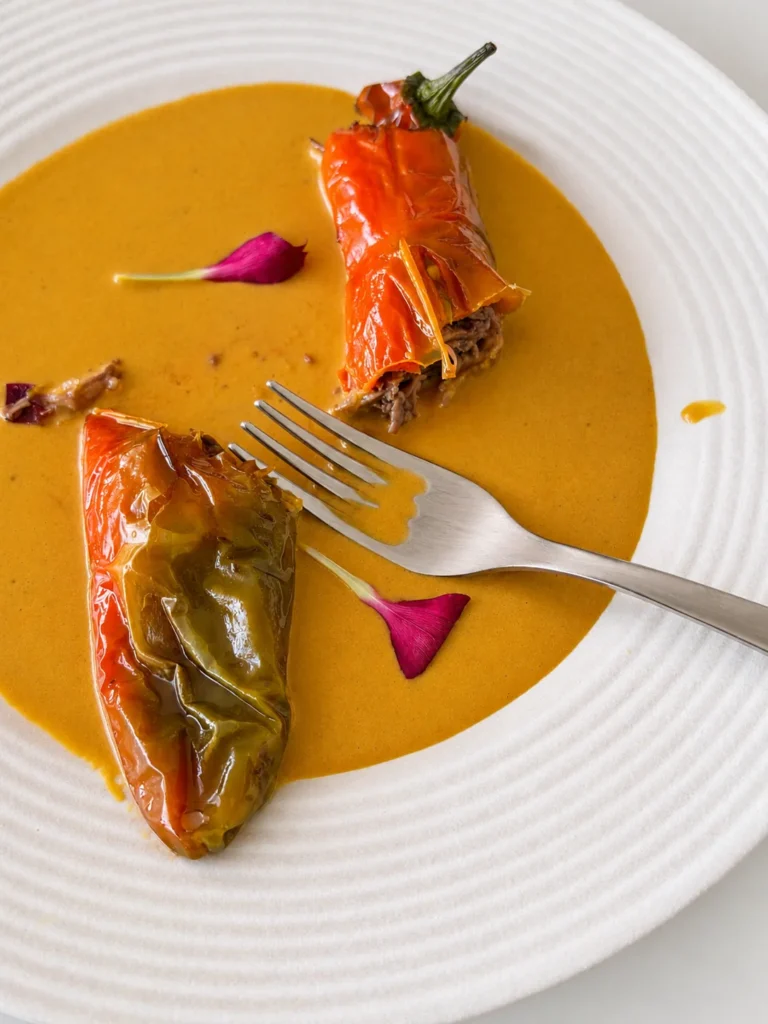
Gently reheat the coconut curry sauce over low heat, adding a splash of water if it has thickened. Pour approximately 3–4 tablespoons of sauce onto each plate, allowing it to spread into a beautiful orange pool.
Carefully place one roasted stuffed pepper on top of the sauce, keeping the lid in place for presentation. For the finishing touch, add a few fresh lemon thyme leaves or a sprinkle of finely chopped toasted walnuts, if desired.
Serve warm, and don’t forget to lift the little pepper lid before taking your first bite!
What to Serve with Stuffed Peppers
This is essentially a vegetable-based dish, but it also contains some lovely sources of healthy fats, particularly the walnuts and coconut milk. To turn it into a more complete and balanced lunch or dinner, I’d suggest adding an extra source of protein and some carbohydrates.
Tofu or tempeh would work beautifully for the protein, while a few slices of toasted gluten-free bread would be perfect for soaking up every last drop of that silky curry sauce. Trust me, you won’t want to leave any behind!
Alternatively, instead of serving one stuffed pepper per person, you could double or triple the recipe, arrange all the peppers on a large serving platter, and turn them into part of a colourful mezze spread. I love the idea of serving them alongside some pink hummus, harissa-roasted carrots with vegan labneh, and a fresh, crunchy salad to balance all those rich, warm flavours.
How Long to Bake Stuffed Peppers
The answer depends on a few things, particularly the size and shape of your peppers, the thickness of their flesh, and the type of filling you’re using.
For this recipe, I used long, narrow sweet peppers, which generally cook faster than larger, round bell peppers. I baked mine at 190°C (375°F) in a conventional oven, allowing approximately 25–30 minutes for them to become tender while still holding their shape.
Does the Filling Affect the Baking Time?
Absolutely! Traditional stuffed peppers often contain raw meat, which needs to reach a safe internal temperature, or rice, which may require additional moisture and cooking time depending on how it’s prepared.
In our case, things are much simpler. The oyster mushrooms are already sautéed before stuffing, while the fresh plums and walnuts don’t require a long cooking time.
This means we’re primarily baking the peppers until they’re tender and slightly roasted, while allowing the filling to heat through and the flavours to come together.
I recommend covering the peppers loosely with aluminium foil for the first 15–20 minutes, then removing it for the final 10–15 minutes. This helps soften the peppers without drying out the filling, while encouraging a little caramelisation on the outside.
If you’re using larger, thicker bell peppers, you may need around 35–45 minutes, sometimes longer depending on their size.
How to Tell When Stuffed Peppers Are Done
The best way to check isn’t just by watching the clock. Look for a few simple signs:
- The skin: It should be slightly wrinkled, with a few lightly roasted spots.
- The flesh: A small knife should slide into the pepper easily, without much resistance.
- The structure: The pepper should be tender but still firm enough to hold its shape.
- The filling: It should be thoroughly heated, including at the centre.
And one last tip: let the peppers rest for about 5 minutes before serving. This makes them easier to handle and allows the filling to settle before you place them on that beautiful pool of coconut curry sauce.
FAQ’S
Not necessarily! For this recipe, I used long, narrow sweet peppers, which generally have thinner walls and cook relatively quickly in the oven. There’s no need to blanch them beforehand. However, if you’re using larger bell peppers with thicker flesh, blanching them in boiling water for 2–3 minutes can help soften them before stuffing. Just make sure to drain and dry them thoroughly before adding the filling. Personally, I prefer skipping this step whenever possible. It’s one less pot to wash!
There are two main ways to cut peppers for stuffing: slicing them lengthwise into two halves or removing the tops to keep them whole. For this recipe, I chose the second method because I wanted the peppers to maintain their beautiful shape. Simply cut off the top of each pepper, keeping the stem attached to create a little lid. Carefully remove the seeds and white membranes without damaging the flesh. If you’re using long, narrow peppers like mine, you can lay them on their sides during baking rather than trying to make them stand upright.
These stuffed peppers can be stored in an airtight container in the refrigerator for 3–4 days, provided they’re cooled promptly and refrigerated within 2 hours of cooking at 4°C (40°F) or below.
I recommend storing the stuffed peppers and coconut curry sauce in separate containers. This prevents the peppers from sitting in the sauce and becoming too soft. When you’re ready to enjoy them again, reheat thoroughly until the centre reaches 74°C (165°F), and warm the sauce separately.
They certainly can be, and this plant-based version offers plenty of nutritional benefits!
Bell peppers are particularly rich in vitamin C, while oyster mushrooms provide fibre and naturally occurring compounds such as beta-glucans and ergothioneine. Walnuts contribute unsaturated fats, and fresh plums add more fibre and beneficial plant compounds.
The coconut milk gives our curry sauce its lovely creamy texture, although it also contains saturated fat, so it’s worth keeping portions balanced.
While this recipe contains some protein, I would pair it with tofu, tempeh, or another protein-rich food if you’re serving it as a complete meal. As always, it’s the overall balance and variety of your diet that matters most, but these stuffed peppers are certainly a delicious way to enjoy more vegetables.
Vegan Stuffed Peppers with Oyster Mushrooms, Plums & Curry Sauce
Equipment
Ingredients
For the Stuffed Peppers
- 2 Long sweet peppers
- 1 tbsp extra virgin olive oil
- Pinch Sea Salt
- 2 tbsp water for the baking dish
For the Marinated Oyster Mushrooms
- 250 Oyster mushrooms
- 1 tbsp extra virgin olive oil
- 2 tsp Tamari Soy Sauce
- ½ tsp Maple Syrup optional
- ½ tsp Smoked Paprika
- A few sprigs of fresh thyme
- Freshly ground black pepper
- 1 tsp extra virgin olive oil for sautéing
For the Plum & Walnut Filling
- 2 Fresh red plums diced
- 25 g Walnuts roughly chopped
- 1 tsp extra virgin olive oil
- Few Sprigs fresh lemon thyme
- Salt and freshly ground black pepper to taste
- ½ tsp Apple Cider Vinegar optional
For the Coconut Curry Sauce
- 80 ml Full-fat canned coconut milk
- 25 ml Water
- ½ Small shallot finely chopped
- 6 g Tomato Paste
- ¼ tsp Mild curry powder
- ¼ tsp Sweet Paprika
- Pinch Turmeric
- ½ tsp extra virgin olive oil
- Salt and white pepper to taste
- Few Drops Fresh Lime Juice optional
Instructions
- Gently tear the oyster mushrooms into large strips. In a bowl, combine the olive oil, gluten-free tamari, maple syrup (if using), smoked paprika, fresh thyme, and black pepper.Add the mushrooms and toss until evenly coated. Cover and refrigerate for 15–60 minutes.
- Cut the fresh red plums into approximately 1 cm cubes. Season with olive oil, fresh lemon thyme, salt, and black pepper. Add apple cider vinegar if the plums are particularly sweet.
- Roughly chop the walnuts and toast them in a dry frying pan for 2–3 minutes over medium-low heat, stirring frequently. Set aside.
Make the Coconut Curry Sauce
- Heat ½ tsp olive oil in a small saucepan over medium-low heat. Add the chopped shallot and cook for approximately 3 minutes until softened.
- Add the tomato paste and cook for 30 seconds. Stir in the curry powder, sweet paprika, and turmeric for another 15–20 seconds. Gradually add the coconut milk and 25 ml water, whisking to combine. Simmer gently for 3–4 minutes.
- Blend until smooth, then pass through a fine-mesh sieve for a silky consistency. Season with salt, white pepper, and a few drops of lime juice if desired.
Sauté the Oyster Mushrooms
- Heat a large frying pan over medium-high heat, adding a little olive oil if needed.
- Drain any excess marinade from the mushrooms and arrange them in a single layer. Cook undisturbed for 2–3 minutes, then turn and continue cooking for another 3–4 minutes until golden brown and most of the moisture has evaporated.
- Remove from the heat and allow to cool slightly. Gently combine with the seasoned plums and toasted walnuts.
Prepare and Stuff the Peppers
- Preheat the oven to 190°C (375°F), conventional setting.
- Wash and dry the peppers. Carefully cut off their tops, keeping them as lids, and remove the seeds and white membranes.
- Brush the peppers inside and outside with olive oil and season lightly with salt.
- Fill with the oyster mushroom, plum, and walnut mixture without pressing it too tightly. Replace the pepper tops.
Roast the Stuffed Peppers
- Arrange the stuffed peppers on their sides in a lightly oiled baking dish. Add 2 tablespoons of water to the bottom.
- Cover loosely with aluminium foil and bake for 15–20 minutes. Remove the foil and continue baking for another 10–15 minutes, or until the peppers are tender, slightly wrinkled, and the filling is thoroughly heated.
Plate and Serve
- Gently reheat the coconut curry sauce, adding a splash of water if necessary to restore its fluid consistency. Pour approximately 3–4 tablespoons of sauce onto each plate.
- Carefully place one stuffed pepper over the sauce and garnish with fresh lemon thyme or a few additional toasted walnuts. Serve warm.
Notes
Nutrition