
This article contains affiliate links. If you purchase through them, INUMAMI may earn a small commission at no extra cost to you. We only recommend what we genuinely use and trust and your support means the world to us.
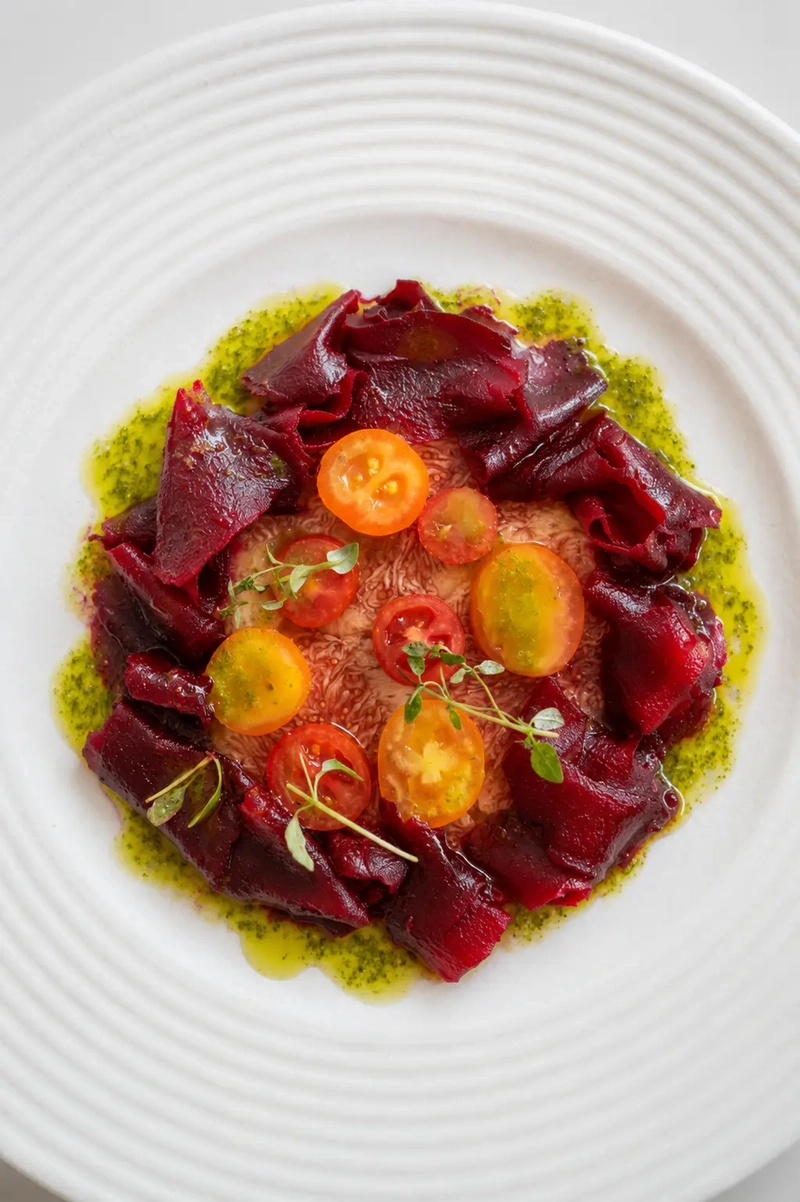
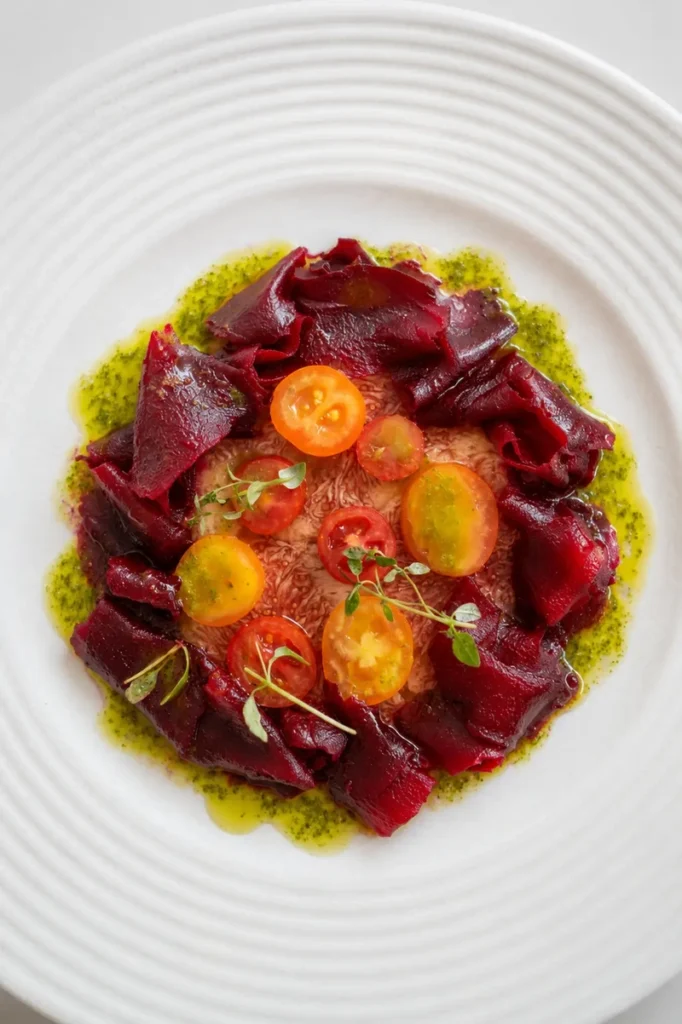
This Fig Carpaccio is one of the best ways to enjoy the natural sweetness of figs, paired with earthy beetroot, juicy cherry tomatoes and a fresh basil oil. It looks like a super fancy dish, but it’s actually incredibly simple, fresh, and perfect as a late-summer appetizer.
I used small black figs, the late-season kind you usually find at the end of August and throughout September, but you can use any variety of figs you like. I also use whole fresh figs in my vegan fig bread, where they’re baked directly into the centre of the loaf so every slice gets its own piece of fruit. Before you start, have a look at my guide on how to cook beetroot if you want to prepare it fresh. Otherwise, pre-cooked beetroot works perfectly well too.
And if you have any figs left over, this is the perfect opportunity to try my Vegan Fig Risotto with Caramelized Onions , a beautifully creamy Italian risotto that brings together the sweetness of fresh figs, slowly caramelized onions and a tangy whipped vegan feta.
In this recipe, you’ll find everything you need to make possibly the coolest fig carpaccio ever.
Carpaccio: What It Is and Why You Don’t Need Meat to Make It
Carpaccio traditionally began as a dish of raw meat, sliced very thinly and simply seasoned. The recipe was created at Harry’s Bar in Venice by its founder, Giuseppe Cipriani.
Speaking of Venice ( my hometown ) if you’re planning a trip to what I will always call the most beautiful city in the world, have a look at my guide to where to eat vegan in Venice.
Back to carpaccio. In contemporary cooking, the word no longer refers only to the original dish created in Venice, but has come to describe a way of preparing and presenting ingredients: sliced or pressed very thinly, served raw, and dressed in a way that lets their natural flavour and texture take centre stage.
Figs work particularly well for this. They’re soft, fleshy and naturally juicy, so when sliced or gently pressed they create that delicate, almost melt-in-your-mouth texture that makes a carpaccio so satisfying. Their sweetness also gives us plenty to play with: earthy beetroot, acidic tomatoes, lemon and fresh basil all bring contrast and turn what could simply be a plate of figs into a proper savoury dish.
And that’s also why a carpaccio really doesn’t need meat to be interesting. Sometimes you just need a very good ingredient and a reason to let it shine.
Ingredients and Substitutions
Here we’re going through the ingredients and a few useful substitutions, but if you already have everything ready and just want to get cooking, scroll down to the recipe card. You’ll find everything you need to have this dish on the table in no time.
Yes, it does need a little time to rest in the fridge, but the actual prep is incredibly quick.
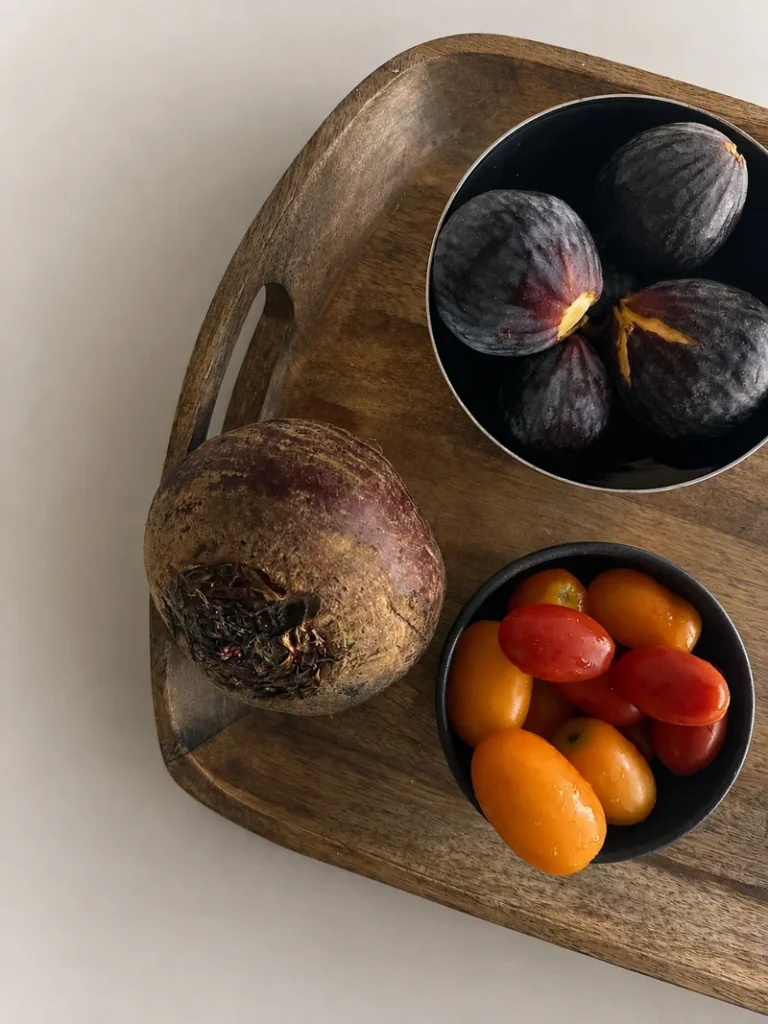
Figs
Use ripe but still firm figs, so they’re sweet and juicy without completely falling apart when you slice them. I used small black late-season figs, but any variety works well here. Green figs, purple figs or larger Mediterranean varieties are all perfectly fine.
Beetroot
Beetroot is completely optional here. I added it because I love it, and because I think its earthy flavour makes the whole dish a little more interesting, but you can absolutely skip it and keep the rest of the ingredients exactly as they are.
If you don’t want to spend time cooking fresh beetroot, or simply don’t have any on hand, ready-cooked beetroot works perfectly well. If you do want to use fresh beetroot and take the opportunity to learn how to prepare it properly, have a look at my guide on how to cook beetroots, where you can choose the method that works best for you.
Cherry tomatoes
I used a mix of red and yellow cherry tomatoes because I wanted the plate to feel colourful, but also because the two varieties bring slightly different levels of sweetness and acidity. You can use whichever cherry tomatoes you like, though, red, yellow, orange, heirloom, or simply whatever looks best and ripest when you’re shopping.
Fresh basil
Basil is the base of the green oil and gives the whole dish its fresh, summery flavour. You don’t need a huge amount, a small handful is enough ( I used 7 leaves). Mint would make the dish even fresher, while parsley or dill would give you a more herbaceous, less sweet result.
Lemon
I use fresh lemon juice in the basil oil to bring acidity and balance the sweetness of the figs and beetroot. You could also use lime for a sharper, slightly more aromatic dressing.
Extra virgin olive oil
Because the ingredients are so simple, this is one of those recipes where a good extra virgin olive oil really makes a difference. It creates the base of the basil dressing and gives the carpaccio that rich, silky finish.
Salt and black pepper
Don’t underestimate them here. A little salt makes the figs taste sweeter while also bringing out the savoury side of the dish. Freshly ground black pepper adds just enough warmth and contrast.
How to Make Fig Carpaccio
Fig carpaccio is incredibly easy to make. It just requires a little patience and a few simple steps, but you can easily adapt or skip some of them depending on how much time you have.
For example, if you decide to leave out the beetroot, you’ll save all the cooking time, or, if you’re using pre-cooked beetroot, even the slicing can be kept very quick. The figs themselves only take a few minutes to slice and gently press onto the plate.
1. Cook the beetroot
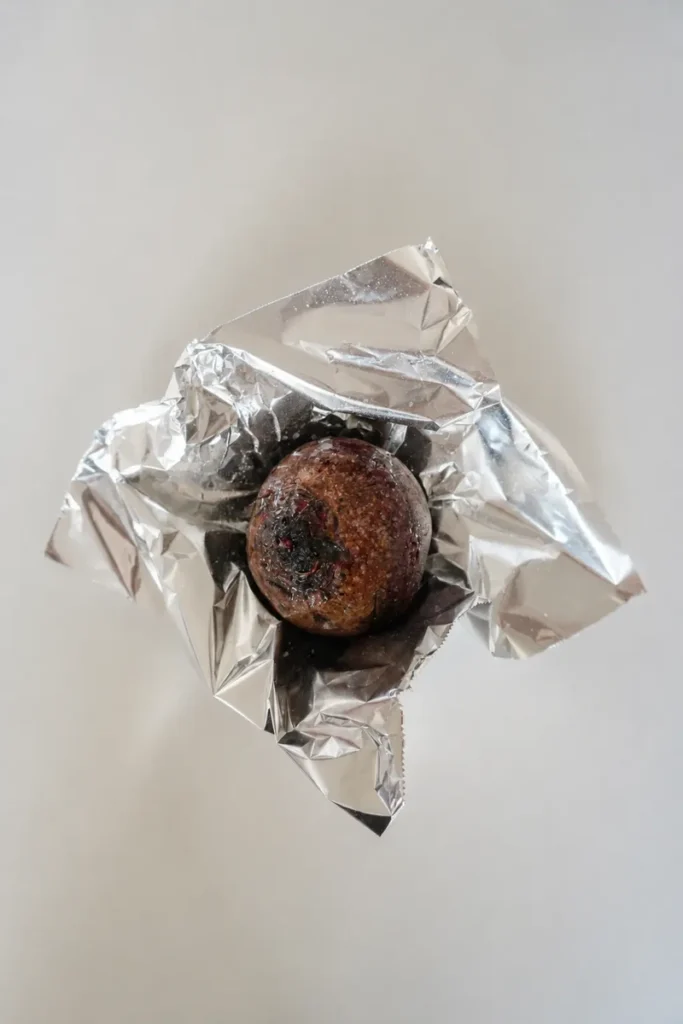
If you’re using fresh beetroot, start by cooking it whole. I like to wrap it in foil and roast it in the oven for about 1 hour, until tender. You can absolutely use another cooking method if you prefer, have a look at my guide on how to cook beetroots and choose the one that works best for you.
The important thing is to keep the beetroot whole while cooking it, rather than cutting it first. This helps preserve its texture and makes it much easier to slice neatly for the carpaccio once cooked.
2. Slice and press the figs
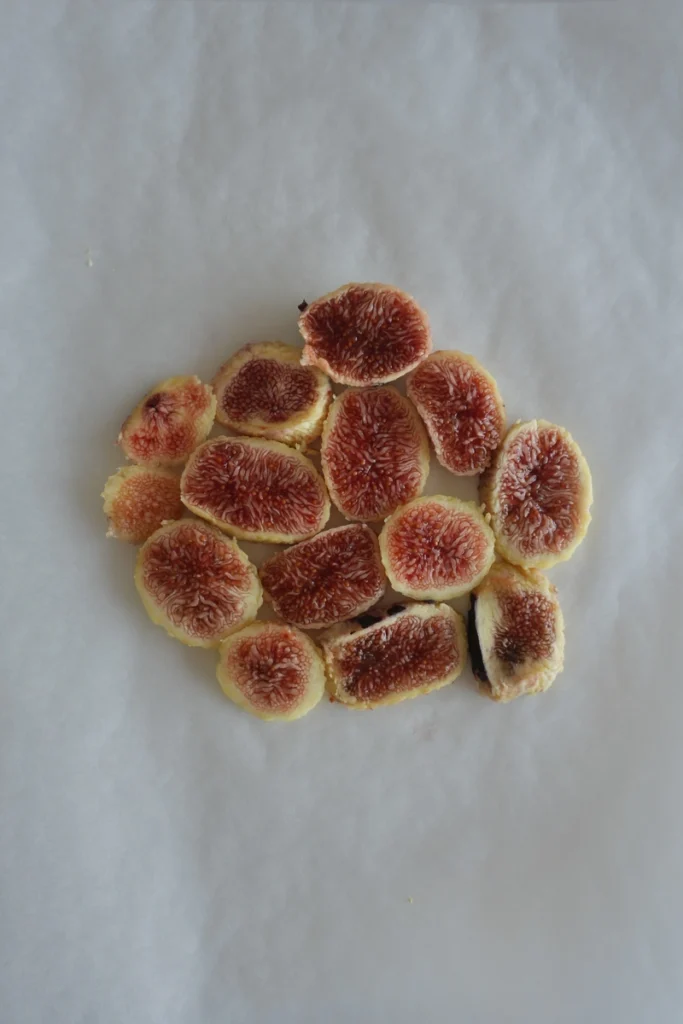
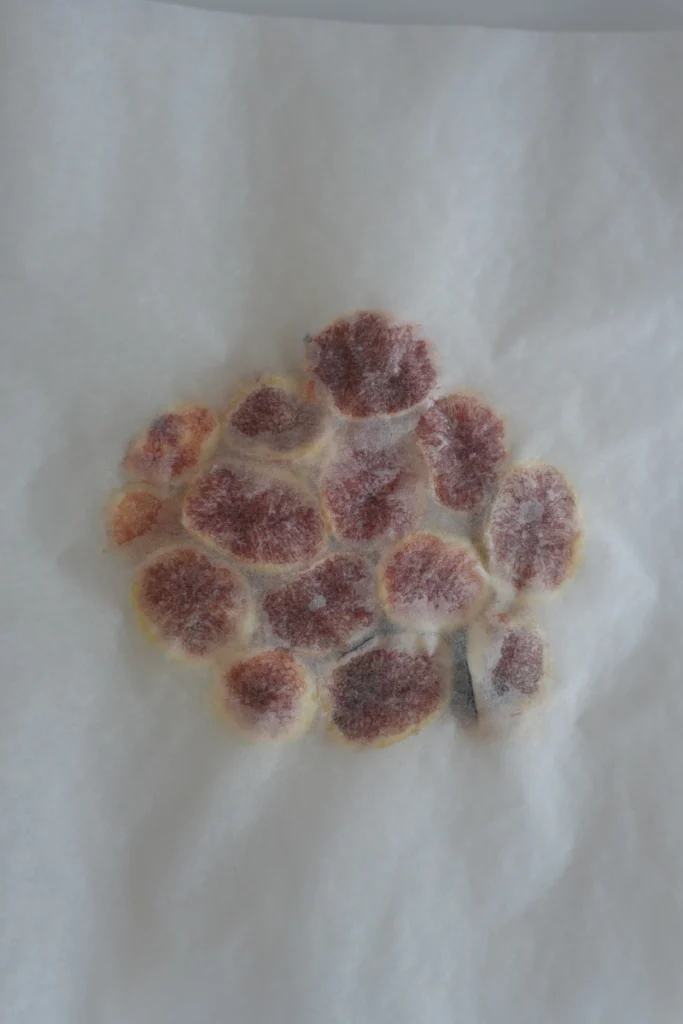
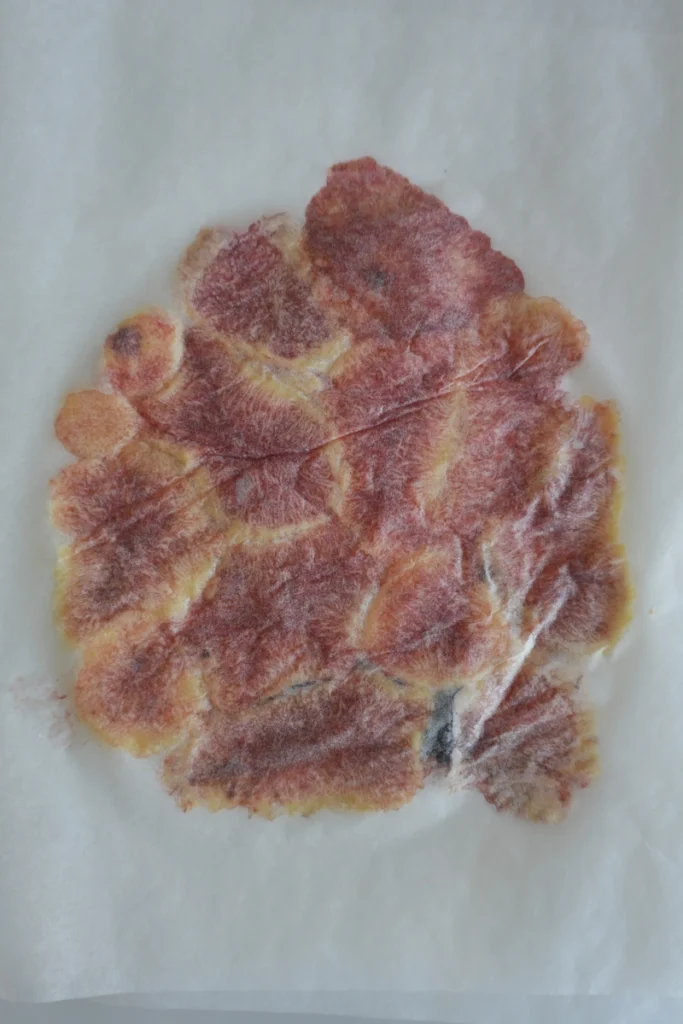
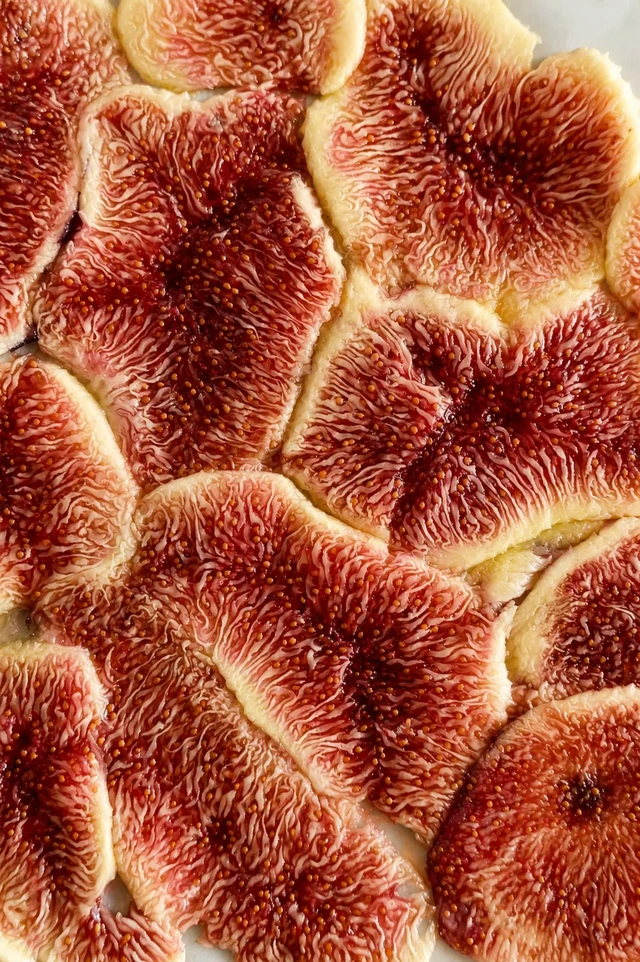
Gently wash and dry the figs, then slice them and place them between two sheets of baking paper. I use a rolling pin to gently press and flatten them into a thin, even layer.
But be creative here, you definitely don’t need a rolling pin. You can use the bottom of a glass, a small bowl, or even your hands. The goal is simply to gently flatten the figs without completely crushing them, so you get that soft, thin layer that will become the base of your carpaccio.
Once pressed, transfer the figs to the fridge and let them rest for about 1 hour. This helps them firm up and hold together better, so the carpaccio is easier to assemble and keeps a cleaner shape on the plate.
3. Slice the cherry tomatoes
Cut the cherry tomatoes into thin rounds. Keep the slices quite delicate so they sit nicely over the figs without weighing the carpaccio down. If you’re using different coloured tomatoes, mix them as you go, it makes the finished plate look much more vibrant.
4. Make the basil oil
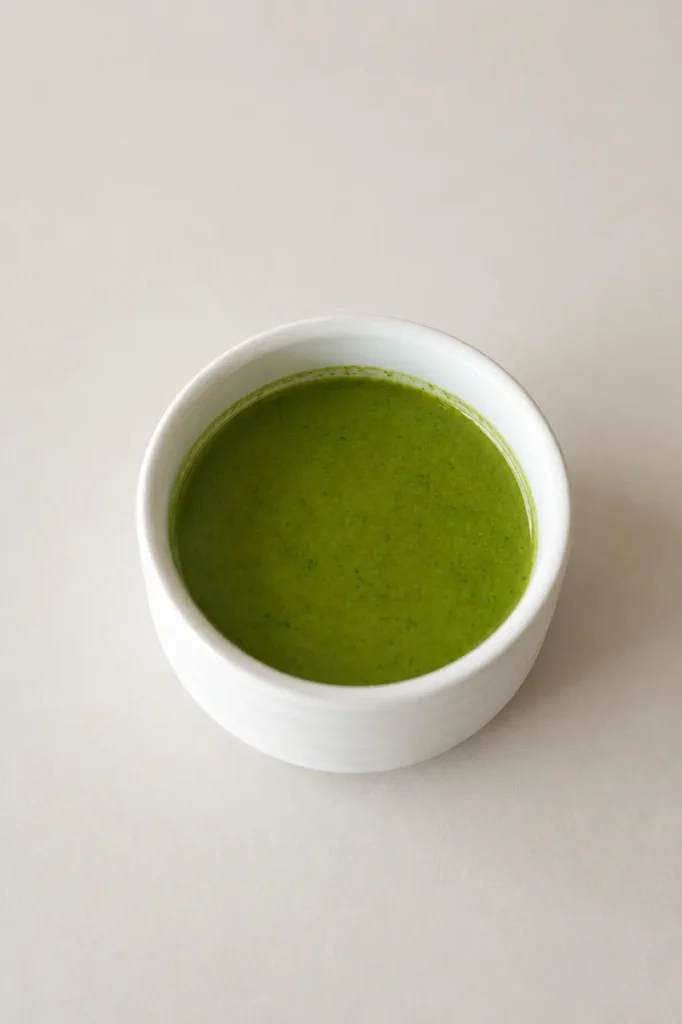
This step is completely optional. I wanted a little green on the plate and I also wanted basil, so combining the two into a basil oil solved both problems at once.
Blend the basil with the olive oil and lemon until you have a bright, fresh dressing. If you want to keep things even simpler, just use good extra virgin olive oil on its own and finish the carpaccio with a few fresh basil leaves on top.

5. Slice and season the beetroot
Once the beetroot is tender, remove it from the oven and let it cool until it’s comfortable to handle. Cut it in half, then use a vegetable peeler to shave it into thin strips. You can use a mandoline if you prefer, but I wanted long, delicate ribbons rather than perfectly round slices, so a vegetable peeler worked better for this dish.
Transfer the beetroot ribbons to a bowl, season them with a little lemon juice and salt, and set aside while you prepare the rest of the carpaccio.
6. Transfer the fig carpaccio to the plate
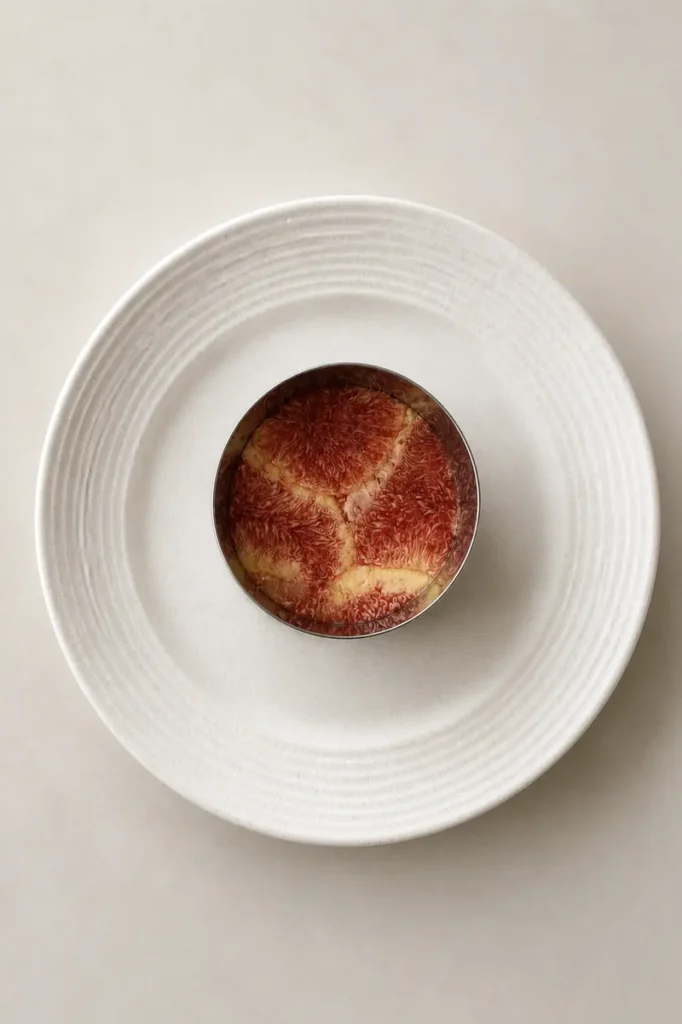
Take the fig carpaccio out of the fridge and decide how you want to serve it. I used a round pastry cutter to create a perfectly neat circle, but this is completely optional, you can simply transfer the figs to the plate exactly as they are.
If the baking paper feels difficult to remove, don’t force it. Let the figs sit at room temperature for a few minutes first. Peel away one sheet of baking paper, then place the exposed side of the fig layer directly onto your serving plate. Let it sit for another moment before gently peeling away the second sheet. This makes the transfer much easier and helps keep the carpaccio intact.
7. Assemble the fig carpaccio and enjoy
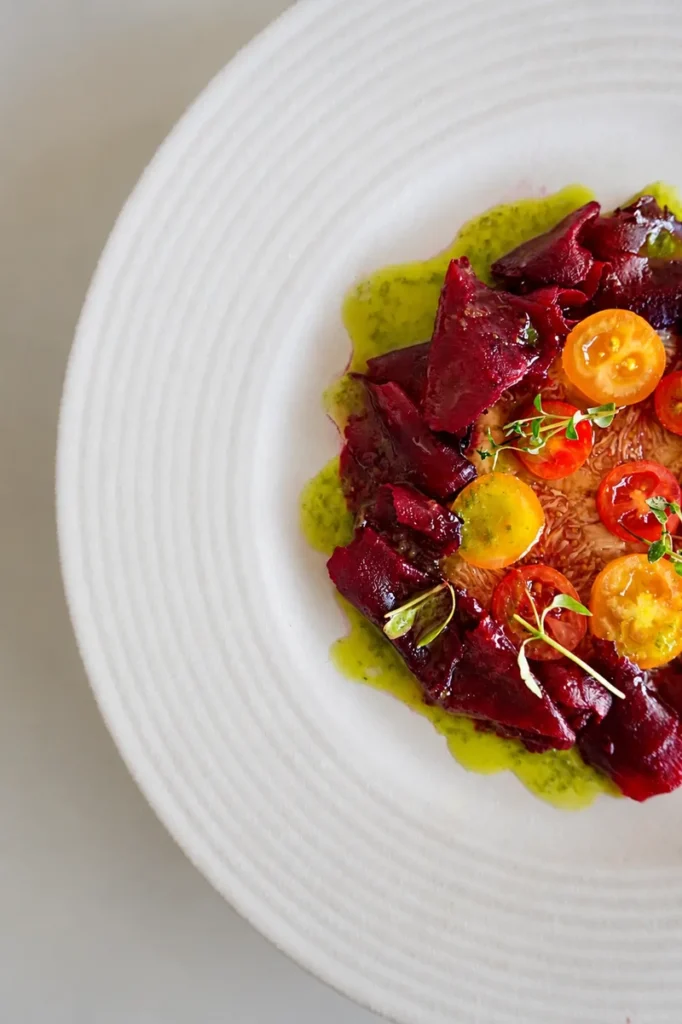
Now it’s time to bring everything together. I arranged the beetroot ribbons all around the outside of the fig circle, then placed the sliced cherry tomatoes in the centre.
Finish with the basil oil, a small pinch of salt and freshly ground black pepper. You can also add a few fresh herbs if you like, I used fresh oregano.
You really don’t need much more than this. The sweetness of the figs, the earthiness of the beetroot, the acidity of the tomatoes and lemon, and the freshness of the basil already give the carpaccio a lovely balance of flavours.
Ideas to Customize Your Fig Carpaccio
The original meat carpaccio created by Giuseppe Cipriani was also served with mayonnaise. And since I tried mayonnaise with this fig version too, I can confirm that it works surprisingly well here. If you want to add it, you can use my vegan mayonnaise recipe: it’s very quick to make, so you can easily prepare it while you’re getting the rest of the ingredients ready.
That said, there are plenty of other ways to play with this carpaccio:
- Add something creamy. Vegan ricotta, whipped vegan feta or a mild plant-based cream cheese all work beautifully with the sweetness of the figs.
- Add some crunch. Toasted pistachios are probably my favourite option, but walnuts, hazelnuts or almonds would be delicious too.
- Make it peppery. A handful of arugula or watercress adds freshness and a slightly bitter note that balances ripe figs particularly well.
- Try a different herb. Mint makes it fresher, while thyme or oregano give it a more Mediterranean character.
- Add a little heat. Fresh chilli or a pinch of chilli flakes is especially good if your figs are very ripe and sweet.
- Bring in some balsamic. A few drops of good balsamic vinegar can work beautifully with figs. Keep it subtle, though, you don’t want it to overpower the lemon, basil and tomatoes.
Fig Carpaccio
Equipment
Ingredients
For the carpaccio base
- 5 Figs
- 1 Beetroot
- 6 cherry tomato Ideally a mix of red and yellow
- To Taste salt
- To Taste Black Pepper
For the Basil Oil
- 6 leaves Fresh Basil
- 2 tbsp extra virgin olive oil
- 1 tbsp lemon juice
To season the beetroot
- 1 tsp lemon juice
- 1 pinch Sea Salt
Instructions
- Cook the beetroot, if needed. If using fresh beetroot, keep it whole, wrap it in foil and roast at 200°C / 400°F for about 1 hour, or until tender. Alternatively, use your preferred method from my guide on how to cook beetroots. Skip this step if using ready-cooked beetroot.
- Prepare the figs. Gently wash and dry the figs, then slice them and arrange them between two sheets of baking paper. Use a rolling pin to gently press them into a thin layer. You can also use the bottom of a glass, a small bowl or simply your hands
- Chill. Transfer the pressed figs to the fridge, still between the sheets of baking paper, and refrigerate for 1 hour. This helps them firm up and hold together.
- Prepare the tomatoes. Slice the cherry tomatoes into thin rounds and set aside.
- Make the basil oil. Blend the basil leaves with the olive oil, lemon juice and a pinch of salt until bright green. This is optional: you can simply use extra virgin olive oil and add fresh basil leaves to the finished plate instead.
- Prepare the beetroot. Let it cool until comfortable to handle, then cut it in half. Using a vegetable peeler, shave about half of the beetroot into thin ribbons. You can also use a mandoline, although I prefer the irregular strips you get with a peeler. Transfer to a bowl and season with 1 teaspoon lemon juice and a pinch of salt.
- Plate the figs. Remove the figs from the fridge. I use a 10 cm round cutter to shape each portion, but you can leave them in whatever shape they naturally formed. If the baking paper is sticking, leave the figs at room temperature for a few minutes. Remove one sheet, place the exposed fig side onto the plate, wait another moment and gently peel away the remaining paper.
- Assemble. Arrange the beetroot ribbons around the fig carpaccio and place the sliced cherry tomatoes over the centre. Drizzle with basil oil and finish with a pinch of salt, freshly ground black pepper and fresh herbs, I used oregano.
Notes
Nutrition

I made this fig carpaccio yesterday following your suggestions and it came out PERFECT! Thank you!
So happy! Thank you for letting me know!
Such a creative way to use figs! I love the combination with beetroot, tomatoes and basil oil. It looks really elegant but still easy to make, perfect for a late summer appetizer. Definitely saving this one!
Happy you liked it! Feel free to share photos of your carpaccio dish when you will try it out 🙂