This article contains affiliate links. If you purchase through them, INUMAMI may earn a small commission at no extra cost to you. We only recommend what we genuinely use and trust and your support means the world to us.
Honey is one of the ingredients that creates the most confusion within the debate about what is vegan and what is not. Let us begin with a simple consideration, so simple that it should feel natural: no product that comes from animal exploitation, and therefore not only from killing, is vegan.
Veganism is based on a very clear and fundamental concept: the world is not ours alone. We are not better, we do not have greater rights, our species is not the only one, and it does not have more or less value than any other.
Honey is not considered vegan because it is produced by bees, for bees. Even if it is not meat, dairy, or eggs, it is still an animal-derived product. More importantly, veganism is not only about avoiding visible cruelty. It is also about avoiding the use and exploitation of animals whenever possible and practicable ( aka always). But the debate around honey is interesting because it reveals something deeper: many people still associate veganism only with diet, when in reality it is also an ethical position about how we relate to other living beings.
In this article, you will discover what the debate is really about, the most common positions around honey and veganism, why honey is still a product that comes from exploitation, and which are the best alternatives ( and, guess what, they are even healthier).
What is honey and why it’s not Vegan
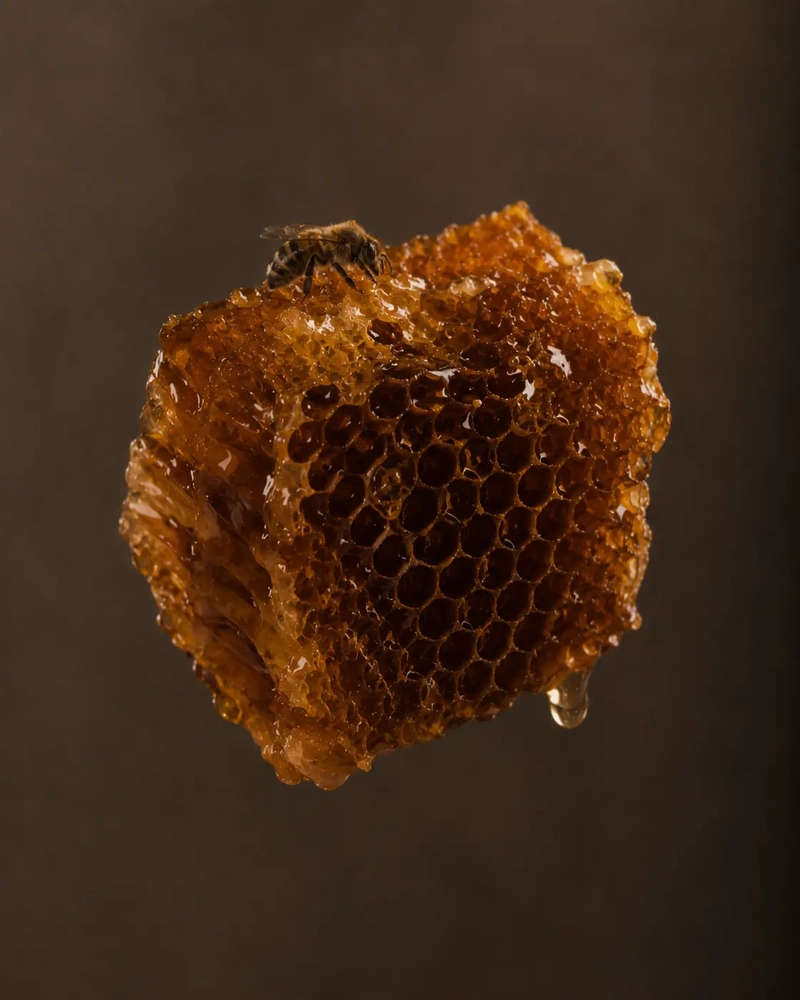
The life and social dynamics of bees are fascinating and incredibly complex. Most of us, unless we are experts, do not even know exactly how honey is made or what it truly is. The simplest explanation is that bees produce honey as food for their own colony. It helps them survive, especially during the winter months, when nectar becomes scarce.
The process begins with worker bees collecting nectar from flowers. They store it in a special internal organ often called the “honey stomach” and carry it back to the hive. There, the nectar is passed from bee to bee, mixed with enzymes, and gradually transformed. These enzymes help break down the sugars in the nectar into simpler sugars, while the bees deposit the liquid into the honeycomb and fan it with their wings to evaporate excess water. Slowly, the nectar becomes thicker, more concentrated, and more resistant to fermentation. Once ready, the bees seal it inside the comb with wax, preserving it as food for the colony.
It is a lot of work, isn’t it? Yes, it is. In every sense. And they do not do it for us. They do it for their own survival, and they do it with order, diligence, and commitment.
How Honey Is Taken from the Hive
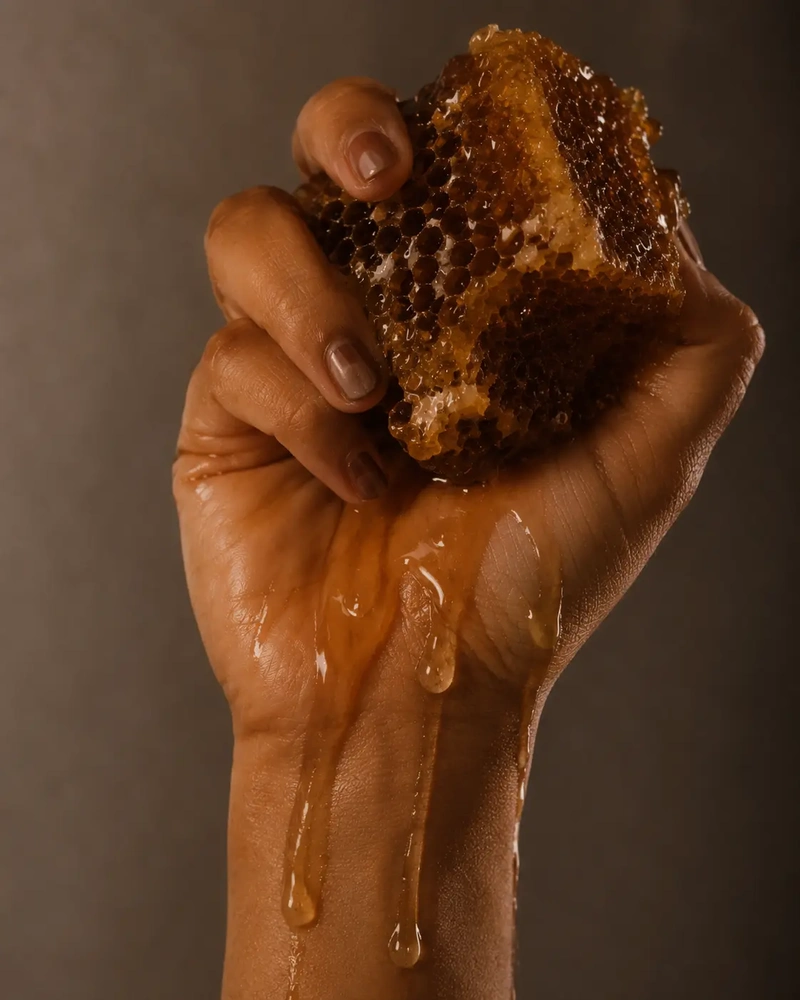
Once the honeycomb cells are full and sealed with wax, the frames are removed from the hive. The wax caps are then cut or scraped away, opening the cells where the honey has been stored. After that, the frames are placed inside a honey extractor, a machine that spins them at high speed so the honey is pulled out of the comb through centrifugal force. The honey is then filtered, collected, and bottled.
On paper, this may sound clean and simple. But from a vegan perspective, the problem begins much earlier: the honey was never ours to take. It is the food reserve of the colony, produced through the tireless work of thousands of bees. The ethical question is simple: are we taking something that has been given to us, or are we taking something without any permission, exploiting the existence of another being? The answer is obviously the second. There are no other possible right answers. But beyond what may be right or wrong from my own point of view, the answer to the main question is obvious: honey is not a vegan product.
So, Why Don’t Vegans Eat Honey?
Vegans do not eat honey for the very same principle that leads them to avoid, for example, cheese, milk, or eggs. When a species produces something useful, humans often seem to feel immediately entitled to use it for their own benefit. And even more than that: to take it without permission, while modifying, shaping, and exploiting the existence of the species that produces it.
The point is quite clear. Some people argue that, since bees are not necessarily killed in the process, honey should not be considered a product of exploitation. But ethics do not work that way. Ethics are serious. Respect should not need to reach such extreme limits before we recognize that a boundary has been crossed.
There are also those who claim that taking honey does not cause bees any suffering, and that for this reason honey can be considered “vegan-friendly.” But again, this misses the central point. Veganism is not only about avoiding death or visible suffering. It is also about refusing the idea that animals, including insects, exist as resources for us to use.
Honey is not vegan because it comes from bees, depends on their labor, and is taken from a system they created for their own survival. Whether the process appears gentle or not, the ethical question remains the same: if it was not made for us, why should we take it?
Another rather relevant factor also needs to be considered: as with all large-scale industries that rely on the exploitation of an animal species, honey production is not entirely risk-free, nor is it free from harm.
As The Vegan Society explains in its article on the honey industry, there are many problematic practices involved. These include the clipping of the queen bee’s wings, the fact that many bees can become sick or die during the process, and the replacement of their own nutrient-rich honey with a sugar substitute.
This matters because honey is often presented as a harmless product, almost as if bees simply produce an excess that humans gently collect. But this image is incomplete. In commercial production, the welfare of bees can easily become secondary to productivity, profit, and the demand for a product that humans do not actually need.
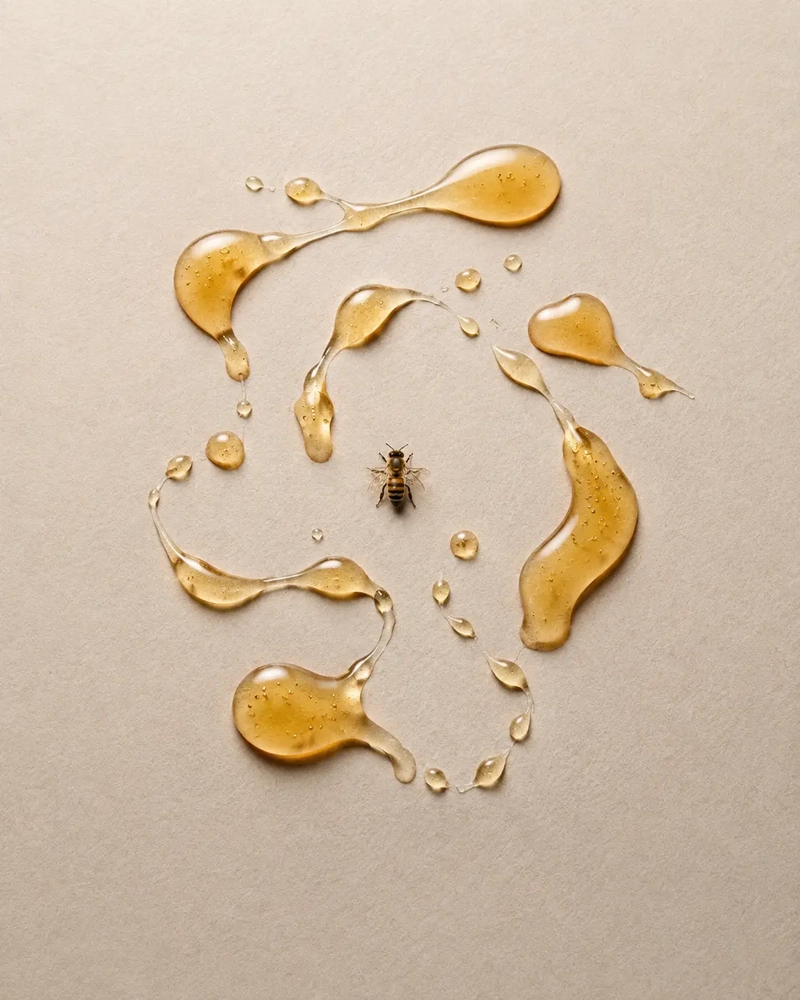
It Is Not Only Honey: Other Bee-Derived Products Vegans Avoid
Honey is not the only product connected to the exploitation of bees. Many other ingredients and materials come from beekeeping and are not considered vegan for the same reason: they depend on the labor, bodies, or natural production of bees. The most common example is beeswax, which bees produce to build the structure of the hive itself. It is not a neutral material. It is part of their home, their organization, and their survival system.
Beeswax is often used in lip balms, candles, cosmetics, food wraps, furniture polish, and even some sweets or supplements. Then there are other bee-derived products, such as propolis, royal jelly, bee pollen, and sometimes even bee venom, all commonly marketed as natural, healing, or luxurious ingredients.
But again, “natural” does not mean vegan. From a vegan perspective, the problem is the same: these products are not freely given to us. They are taken from a living system that produces them for its own reasons, not for human consumption, beauty routines, wellness trends, or decorative candles.
Author’s note: I often use the phrase “from a vegan perspective,” but I admit it sometimes feels strange to write it. It can sound like a political slogan, or like the voice of a movement, when in reality the perspective I am referring to is much simpler than that.
It is not only about a vegan label, or a vegan identity, or a flag to stand behind. It is about ethics, respect, and kindness.
It is about asking whether we really need to take something from another living being when we have the possibility not to. And, in the case of honey, we do have that possibility. My hope is that one day the “vegan perspective” will simply become the kind human perspective.
Vegan Alternatives to Honey
If honey is not vegan, the good news is that replacing it is very easy. There are many plant-based sweeteners that can give recipes the same sense of sweetness, softness, depth, or stickiness without relying on bees. Some are lighter and more neutral, while others have a deeper, caramel-like flavor. The best choice depends on how you want to use them.
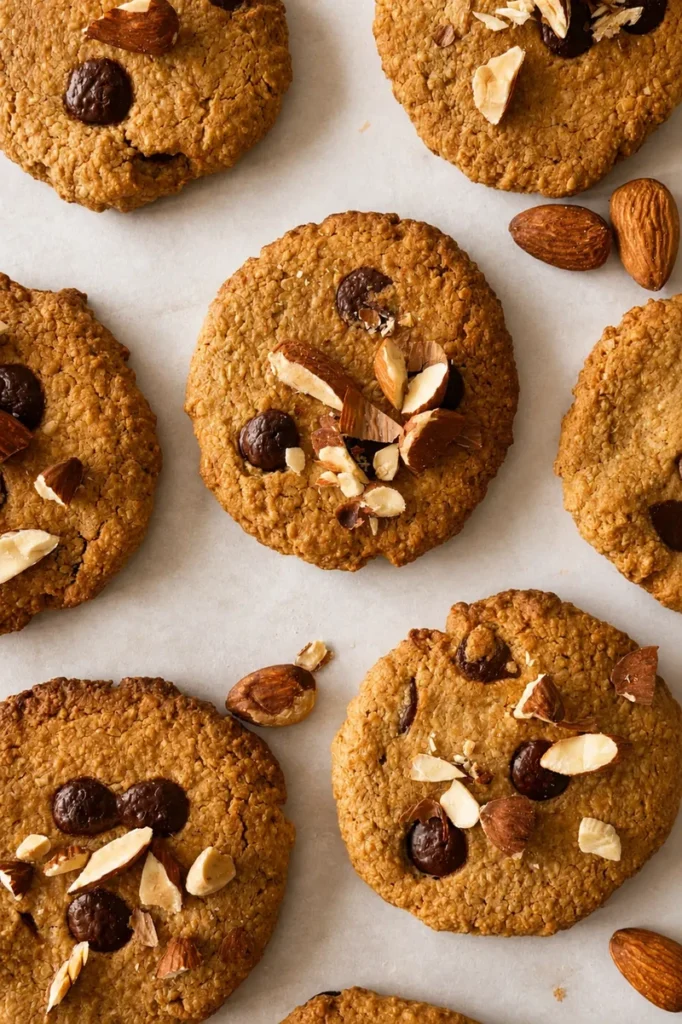
Maple Syrup: Maple syrup is probably the easiest vegan alternative to honey. It works beautifully in cookies, porridge, yogurt bowls, snacks, cakes, salad dressings, marinades, and baking. It has a warm, rounded flavor and it’s pretty easy to find.
Agave syrup: Another common honey replacement. Agave syrup is sweeter than sugar, quite fluid, and more neutral in taste than maple syrup. This makes it useful when you want sweetness without changing the flavor of the recipe too much.
Date syrup: ( my favourite!) is richer, darker, and more intense. Date syrup has a naturally caramel-like taste and works especially well in chocolate sauces, desserts, granola, energy balls, dressings, and recipes where you want a deeper sweetness.
Rice Syrup: It is thicker and less sweet than honey, but it has a similar sticky texture. Rice Syrup can be useful in bars, crispy treats, granola, and recipes that need binding rather than only sweetness.
What About Honey’s Antibacterial Properties?
Many people also associate honey with antiseptic or antibacterial properties. And yes, honey has been studied for its antimicrobial qualities, especially because of its high sugar concentration, low water content, acidity, and the natural production of small amounts of hydrogen peroxide.
But this does not make honey irreplaceable. If what you are looking for is a soothing ingredient for the throat, warm drinks with lemon, ginger, thyme, sage, or cinnamon can offer comfort without using an animal-derived product. If you are looking for ingredients traditionally associated with antimicrobial properties, plants such as garlic, ginger, thyme, oregano, rosemary, and clove are often used for their strong aromatic and functional compounds. In other words: the plant-based world is full of helpful resources.
FAQ’s
Honey is one of those ingredients that brings up many questions, especially because it is often perceived as natural, harmless, or somehow separate from other animal-derived products.
Below, you will find the most common questions about honey, veganism, bees, and plant-based alternatives. If you still have doubts or if there is something you would like me to clarify further, feel free to leave a comment below. I will be happy to add more answers and keep this guide as useful and complete as possible.
Because veganism is not only about avoiding killing. It is also about avoiding exploitation. A product can still be non-vegan even if the animal is not intentionally killed. Honey is taken from bees, and it is made by them for their own colony.
Harvesting honey can harm bees, especially in large-scale production where hives are managed for productivity. Practices such as replacing honey with sugar substitutes, queen wing clipping, hive transportation, and disease spread are often criticized. But even beyond direct harm, the vegan concern is that honey is taken from bees in the first place.
Vegan honey, or bee-free honey, is usually made from plant-based ingredients such as apples, dandelions, flowers, lemon, sugar, or syrups. Some versions are homemade, while others are produced by brands that try to recreate the flavor and texture of honey without using bees.
No, Manuka honey is not vegan. Like all honey, it is produced by bees and taken from bees. The fact that it comes from a specific plant source or is marketed for its properties does not change the ethical issue.
Ethical or local honey may be seen by some people as a better choice than industrial honey, but it is still not vegan. Even when beekeeping is small-scale or carefully managed, honey remains a product taken from bees.