This article contains affiliate links. If you purchase through them, INUMAMI may earn a small commission at no extra cost to you. We only recommend what we genuinely use and trust and your support means the world to us.
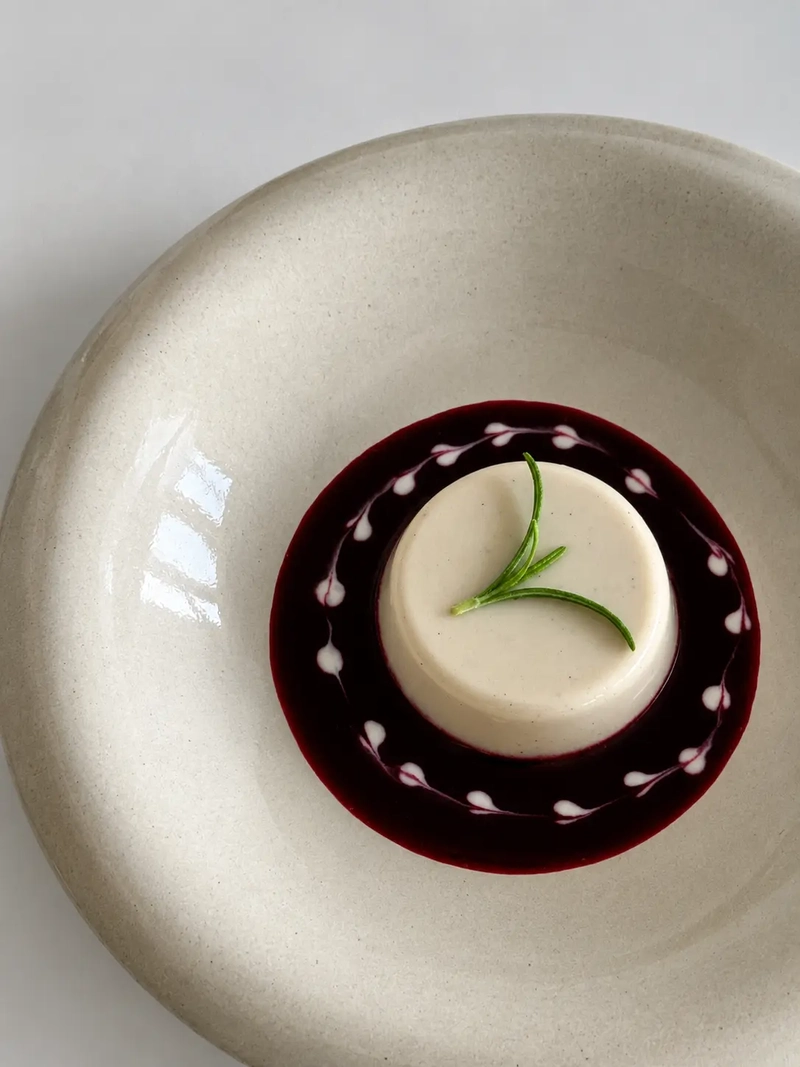
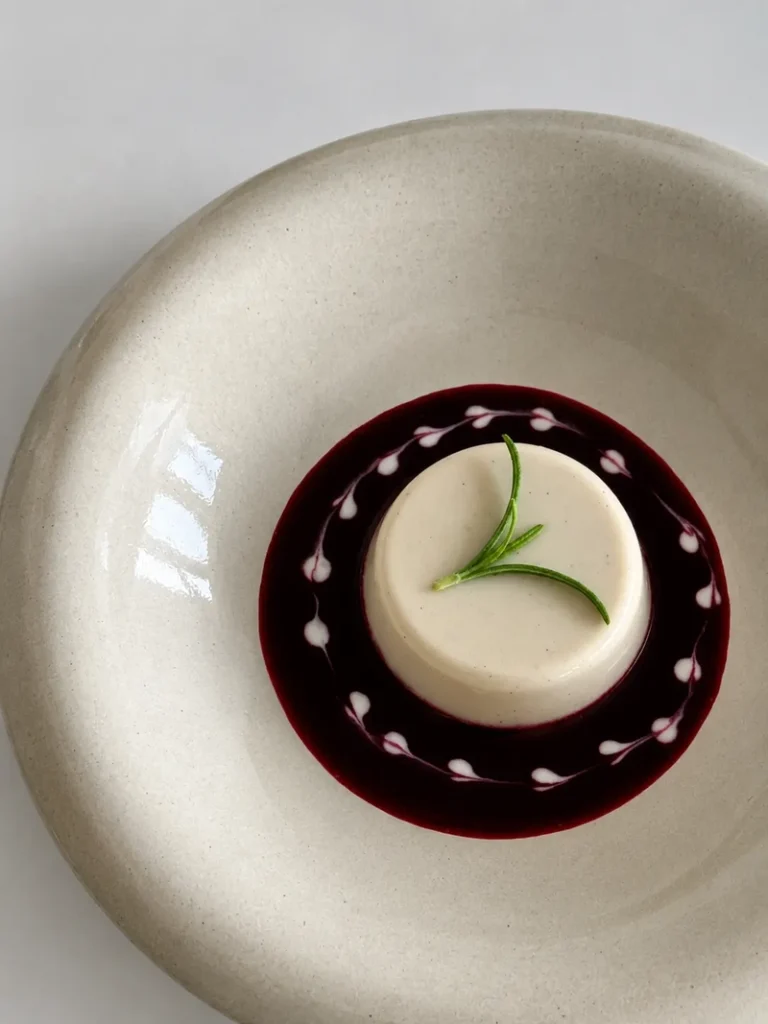
Panna cotta is one of the simplest Italian desserts, but its simplicity is exactly what makes the texture so important. My vegan panna cotta is made without dairy or gelatin, using soy milk, almond mascarpone, and agar agar to create a creamy, delicate base that still holds its shape.
I serve it with a smooth blueberry coulis sweetened with maple syrup and a little yogurt cream for freshness. The panna cotta itself remains pale and delicate, while the blueberries bring color, acidity, and a more intense fruit flavor to every spoonful.
My recipe is completely plant based, gluten free, dairy free, and refined sugar free ( did i say enough to convince you to make it?).
A Plant Based Take on an Italian Classic
Panna cotta is one of the most famous Italian desserts, and today it is known far beyond Italy. Its history is surrounded by old preparations, local stories, and more than one legend about its origins. Desserts resembling panna cotta existed long before the version we know today, while the modern recipe is generally associated with Piedmont.
In the 1960s, Ettore Songia became one of the names most closely associated with modern panna cotta. He is credited with defining the recipe as we know it today and bringing it into restaurant dining, at a time when I Tre Citroni was the first Michelin starred restaurant in Cuneo.
The traditional recipe is not vegan. It relies on dairy cream and uses gelatin to achieve its characteristic set texture. Fortunately, turning panna cotta into a plant based dessert is surprisingly simple. Dairy can be replaced with plant based ingredients, while agar agar can take the place of gelatin.
The ingredients change, but the idea behind the dessert remains beautifully similar: a delicate, creamy panna cotta that holds its shape while still feeling soft on the spoon.
Ingredients for Vegan Panna Cotta with Blueberries
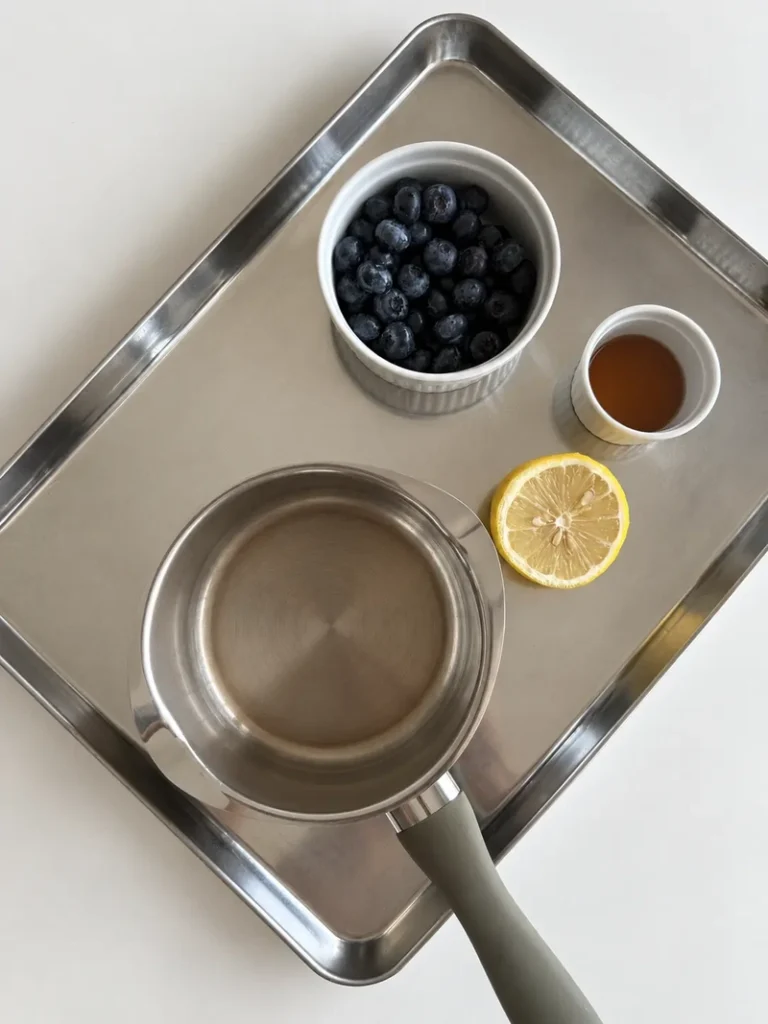
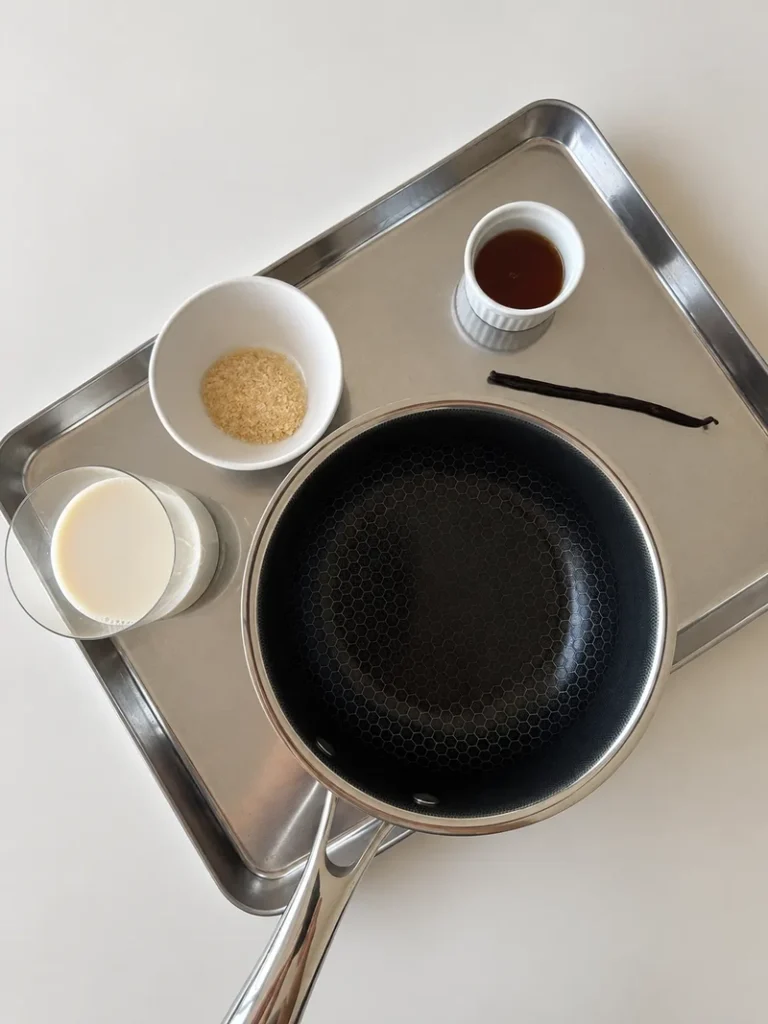
You do not need many ingredients to make this panna cotta, and chances are you already have most of them at home. The only exception might be agar agar, which is really the ingredient doing the magic here. Once you discover how useful it is, especially for plant based desserts, you will probably want to keep it in your pantry all the time.
So if you do not already have some at home, this recipe is a very good excuse to buy a little extra and start experimenting with it.
Soy Milk
I use unsweetened soy milk as the liquid base for the panna cotta. It has a naturally creamy texture and a fairly neutral flavor, which makes it particularly good for desserts. Choose an unsweetened version so you can control the sweetness of the recipe and keep it refined sugar free.
Almond Mascarpone
Plant based almond mascarpone gives the panna cotta the richness and creaminess that would traditionally come from dairy cream. It also helps create a fuller texture without making the dessert feel heavy. I used a ready made Italian almond mascarpone, which gives the panna cotta extra creaminess and a richer texture.
If you cannot find plant based mascarpone, you can replace it with the same amount of soy cream. You can also leave it out completely and use additional plant based yogurt instead. The result will be slightly lighter and a little more tangy, but still beautifully creamy. I used the mascarpone to add richness, so you do not need to search for this exact ingredient in order to make the recipe successfully.
Plant Based Yogurt
The plant based yogurt is one of the main ingredients in the panna cotta base. I mix it with the almond mascarpone first, then gradually pour in the hot soy milk mixture while whisking until everything becomes smooth and creamy.
If you are not using mascarpone, the panna cotta can be made with yogurt alone. Choose a plain, unsweetened yogurt with a creamy texture and a relatively neutral flavor. Soy yogurt works particularly well, although another thick plant based yogurt can also be used.
Agar Agar
This is the ingredient that makes the magic happen. Agar agar is a plant based setting agent made from seaweed and is the perfect alternative to gelatin for vegan panna cotta. It needs to be heated properly in order to activate, and a small amount goes a long way. Too much can make the panna cotta firm rather than creamy, so measuring it carefully is important.
Maple Syrup
I use maple syrup both in the panna cotta and in the blueberry coulis. In the panna cotta, it gently sweetens the soy milk mixture without overpowering the vanilla or the creamy base. In the coulis, it helps balance the natural acidity of the blueberries.
You can adjust the amount slightly depending on how sweet your fruit is and how sweet you like your desserts, but I prefer keeping both elements delicately sweet rather than sugary.
Vanilla
Vanilla gives the panna cotta its delicate aromatic flavor. I use a vanilla pod, adding both the seeds and the pod to the soy milk while it heats. The pod is removed before the hot mixture is combined with the yogurt.
Blueberries
The blueberries are used for the coulis rather than mixed into the panna cotta itself. Cooking them gently intensifies their flavor and creates a beautiful contrast with the delicate white panna cotta. Fresh or frozen blueberries can both be used for the sauce.
Lemon
A little lemon juice brightens the blueberry coulis and balances its sweetness. Its acidity brings freshness to the dessert and works particularly well against the creamy panna cotta.
Ingredient Substitutions
This recipe is quite flexible, which makes it especially useful if you do not have every ingredient at home.
Plant-based Almond Mascarpone
I used a ready made vegan almond mascarpone because it was particularly creamy and I wanted something with a little more body than regular plant based cream. It was actually the first time I used it in panna cotta, and I was very happy with the result.
That said, the more classic version made with soy cream is just as good and does not change the final result very much.
I also tested this panna cotta using only plant based yogurt, without mascarpone or cream. If you can find a thick Greek style plant based yogurt, it works beautifully and still gives you a creamy texture with enough structure. So you really have several options here. Almond mascarpone, soy cream, or a thick plant based yogurt can all work well. Basically, no excuses.
Plant Based Yogurt
The yogurt should not be omitted, because it is an important part of the panna cotta base, but you have a lot of flexibility when it comes to which one you use. My favorite option is a Greek style plant based yogurt because it is thicker, creamier, and gives the panna cotta a little more structure.
That said, I also tested the recipe with a regular vanilla plant based yogurt, and it worked very well. The same applies to coconut yogurt.
So if you already have a plant based yogurt in the fridge, use it. There is no need to leave the house just to buy a specific one. If, on the other hand, you are about to do your grocery shopping and want some suggestions, you can also have a look at my Vegan Pantry, where I share some of my favorite plant based products and ingredients.
Soy milk
Unsweetened soy milk is my preferred choice because it is creamy and fairly neutral. If needed, you can try another unsweetened plant milk, but keep in mind that very thin or strongly flavored milks may slightly change the final texture and taste.
Maple syrup
Maple syrup is used both in the panna cotta and in the blueberry coulis. If you prefer, you can replace it with another liquid sweetener. Just keep in mind that the final flavor may change a little depending on what you use. Valid options are: Rice Syrup, Agave Syrup or Date Syrup.
Vanilla pod
I love using a vanilla pod because it gives the panna cotta a more delicate and elegant flavor. If you do not have one, you can use vanilla extract instead.
Blueberries
Fresh or frozen blueberries both work well for the coulis. If you want to vary the recipe, this same panna cotta base can also be served with other fruit sauces, depending on the season or your taste.
Agar agar
Agar agar is the ingredient that makes this recipe possible without gelatin, so you cannot replacing it unless you are making a non vegan version ( and in that case you are in the wrong place). If you are using agar flakes instead of powder, always check the instructions on the package, because the quantity and cooking time may vary.
Tips for Using Agar Agar
Agar agar is what allows this panna cotta to set without gelatin, but it behaves a little differently from traditional gelatin. The first thing to know is that agar agar needs heat to activate properly. Simply mixing it into a cold liquid is not enough. It should be added to the soy milk and brought to the temperature required for the type of agar you are using.
Agar Agar Powder and Agar Agar flakes are not the same
Agar agar is sold in different forms, especially powder and flakes, and they are not always interchangeable in the same quantity. Flakes generally need more time to dissolve, while powder tends to activate more quickly. Always check the instructions on your package before starting.
For this recipe, the most important thing is that the agar is completely dissolved before you combine the hot milk with the yogurt mixture. In some cases, I have had to keep the milk over low heat and stir it for as long as 20 minutes before the agar was fully dissolved. To check if it is ready, dip the back of a stainless steel spoon into the mixture. There should be no visible grains or small lumps clinging to the surface. Once the mixture looks completely smooth, the agar is ready.
Do not use too much
More agar does not mean a better panna cotta. Using too much can give you a very firm, almost jelly like texture, while panna cotta should still feel creamy and delicate on the spoon. Measure it carefully rather than adding a little extra just to be safe.
Work while the mixture is still hot
Once activated, agar begins to set as the mixture cools. For this reason, gradually pour the hot soy milk into the yogurt and mascarpone mixture while whisking continuously. Once everything is smooth, transfer the panna cotta into your molds or glasses without waiting too long. The mixture will still look quite liquid when you pour it into the molds, and that is completely normal.
How to Make Vegan Panna Cotta
The process is simple, but there are a couple of steps where a little patience makes all the difference, particularly when working with agar agar.
1. Prepare the yogurt and mascarpone mixture
Add the plant based yogurt and almond mascarpone to a bowl and whisk until completely smooth. Leave the mixture at room temperature while you prepare the milk. This helps reduce the temperature difference when the hot milk is added later and makes it easier to achieve a smooth, creamy mixture. If you are making the panna cotta without mascarpone, simply use the plant based yogurt on its own.
2. Heat the soy milk with the agar agar
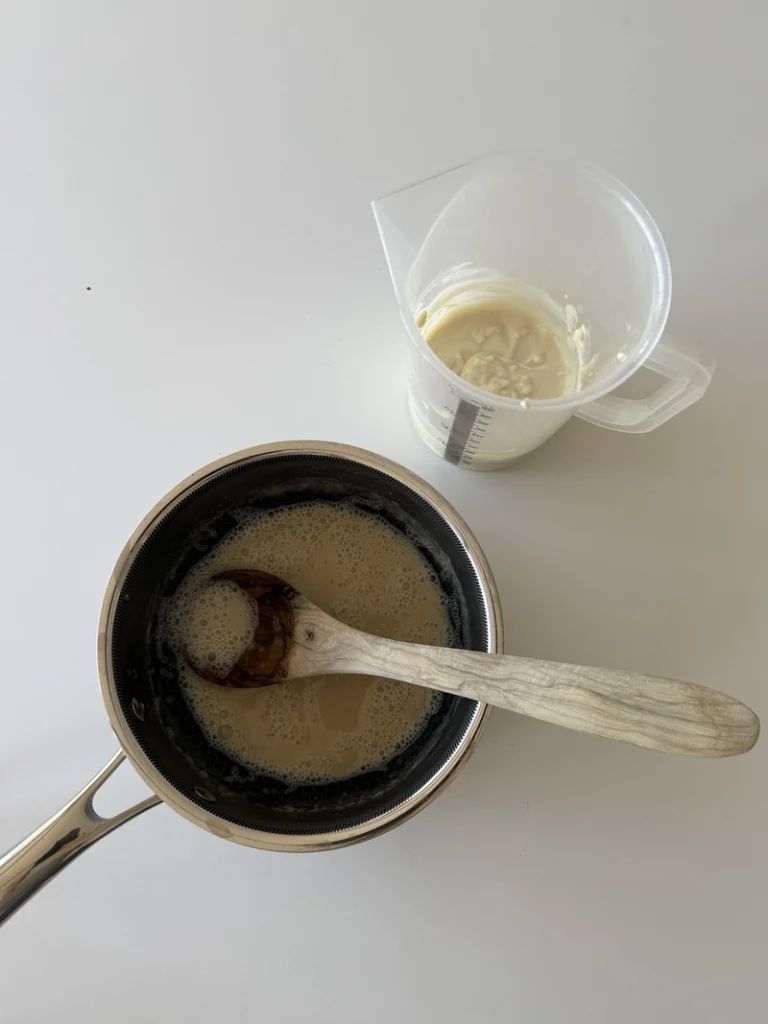
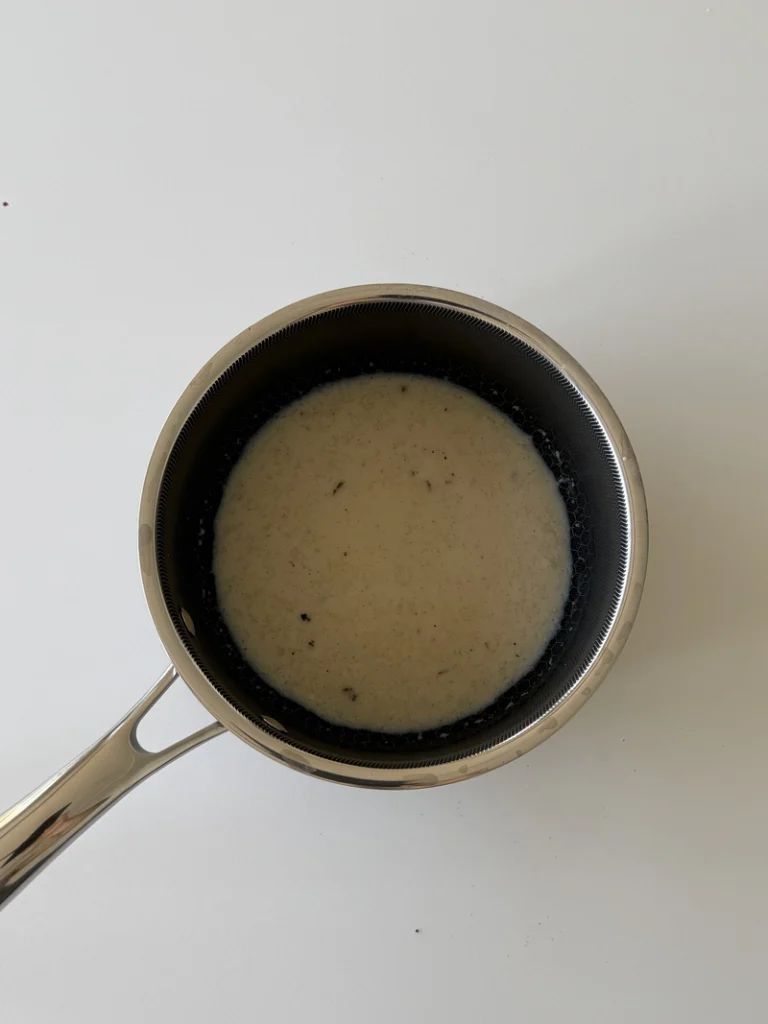
Pour the soy milk into a small saucepan and add the maple syrup, agar agar flakes, the seeds from the vanilla pod, and the pod itself. Bring the mixture gently to a boil, then lower the heat and continue cooking while stirring regularly.
The agar agar needs to dissolve completely before you move to the next step. Depending on the type and brand you are using, this may take anywhere from around 10 minutes to as long as 20 minutes. To check, coat the back of a stainless steel spoon with a little of the milk mixture. You should not be able to see or feel any grains or small lumps of agar. Once completely smooth, remove the vanilla pod if used.
3. Combine the hot milk with the yogurt
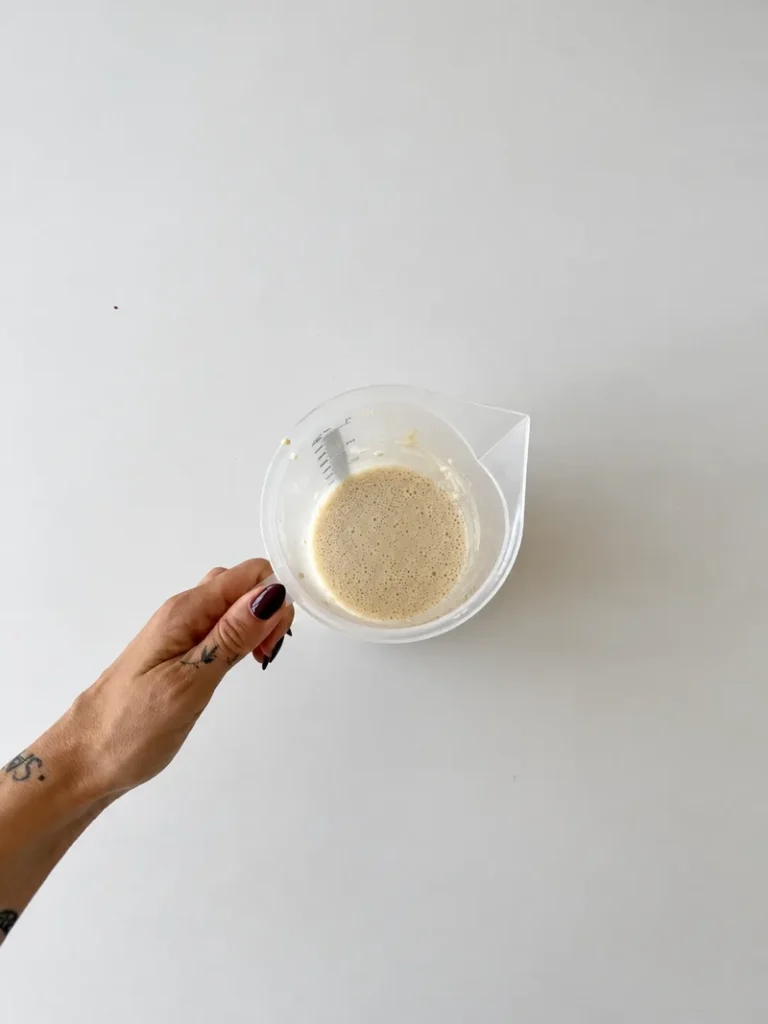
Gradually pour the hot milk mixture into the yogurt and mascarpone while whisking continuously. Continue whisking until the mixture is completely smooth and uniform. Because agar begins to set as it cools, work relatively quickly once the two mixtures have been combined.
4. Pour into the molds
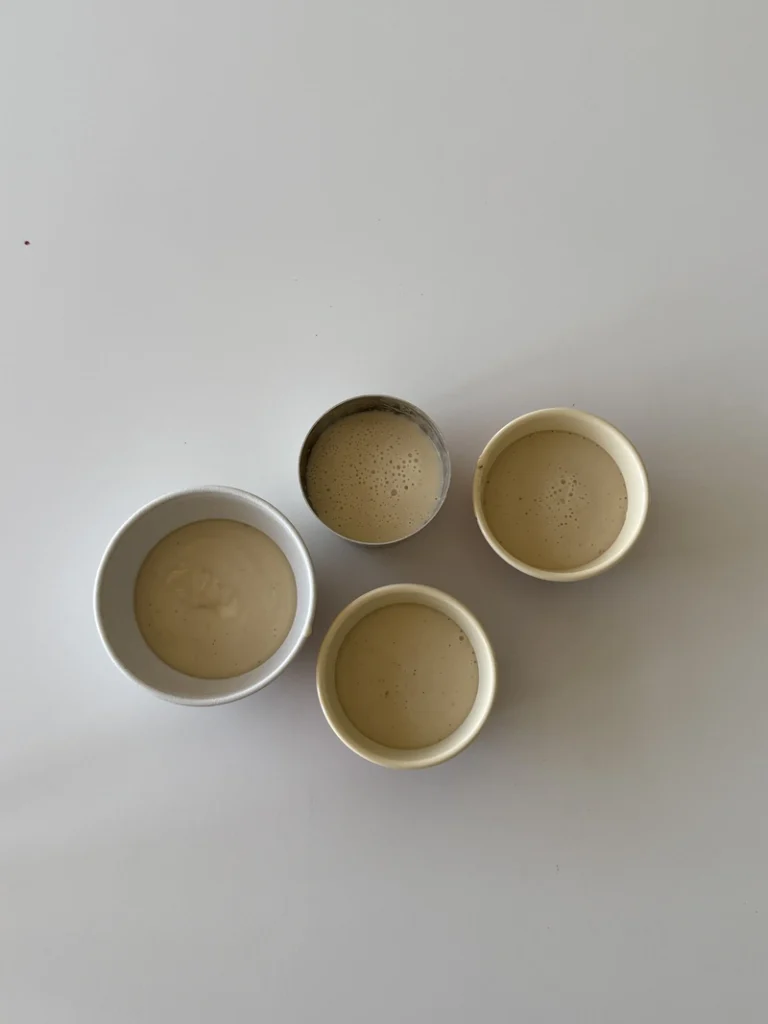
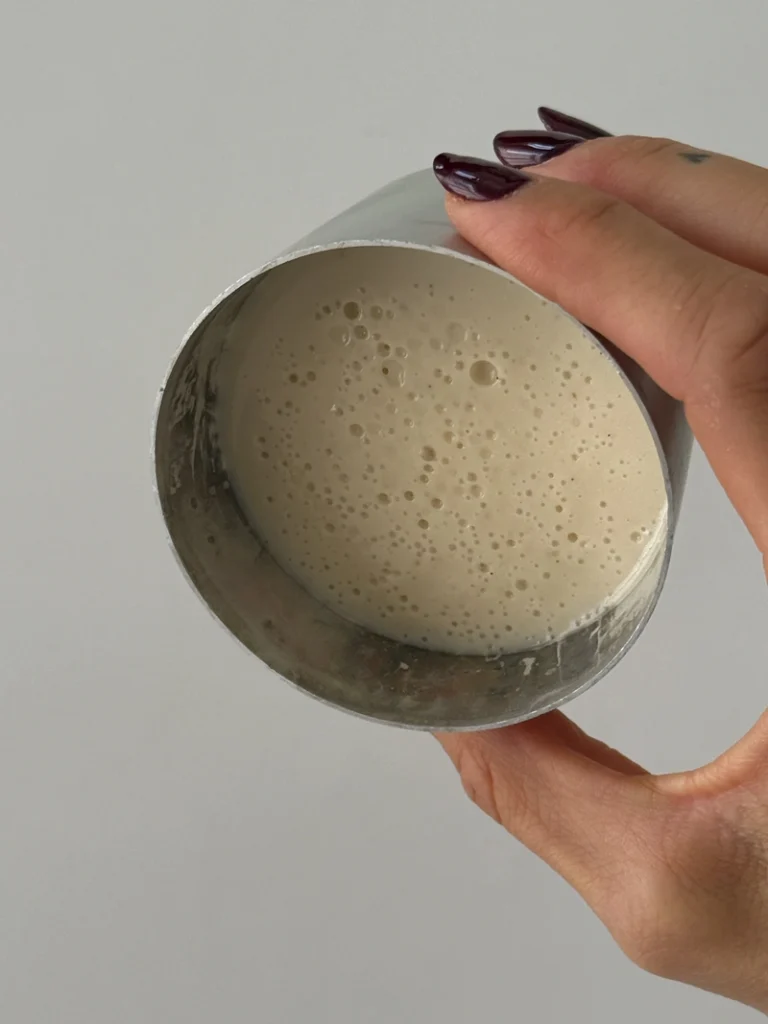
Immediately divide the panna cotta mixture between your molds, ramekins, or serving glasses. Gently tap them against the work surface if you notice any air bubbles on the surface. Do not worry if the mixture still looks quite liquid at this stage. The agar will begin to work as the panna cotta cools.
5. Let the panna cotta set
Allow the panna cotta to cool and set. Unlike gelatin, agar agar does not need refrigeration in order to set. Once it has been properly activated with heat, it will begin to firm up naturally as the mixture cools, even at room temperature.
I still like to refrigerate the panna cotta before serving because this dessert is best enjoyed cold and the extra chilling time gives it a beautifully stable texture. You can prepare it in advance and keep it refrigerated until you are ready to serve.
6. Make the blueberry coulis
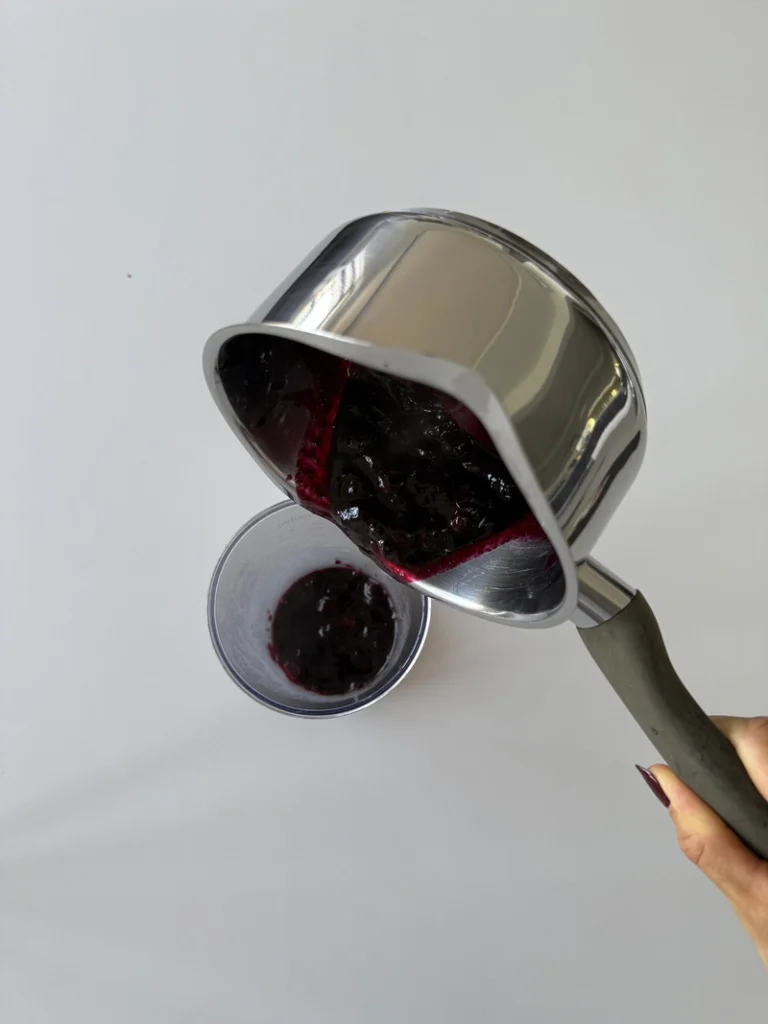
Add the blueberries, maple syrup, and lemon juice to a small saucepan. Cook gently until the blueberries soften, begin to break down, and release their juices.
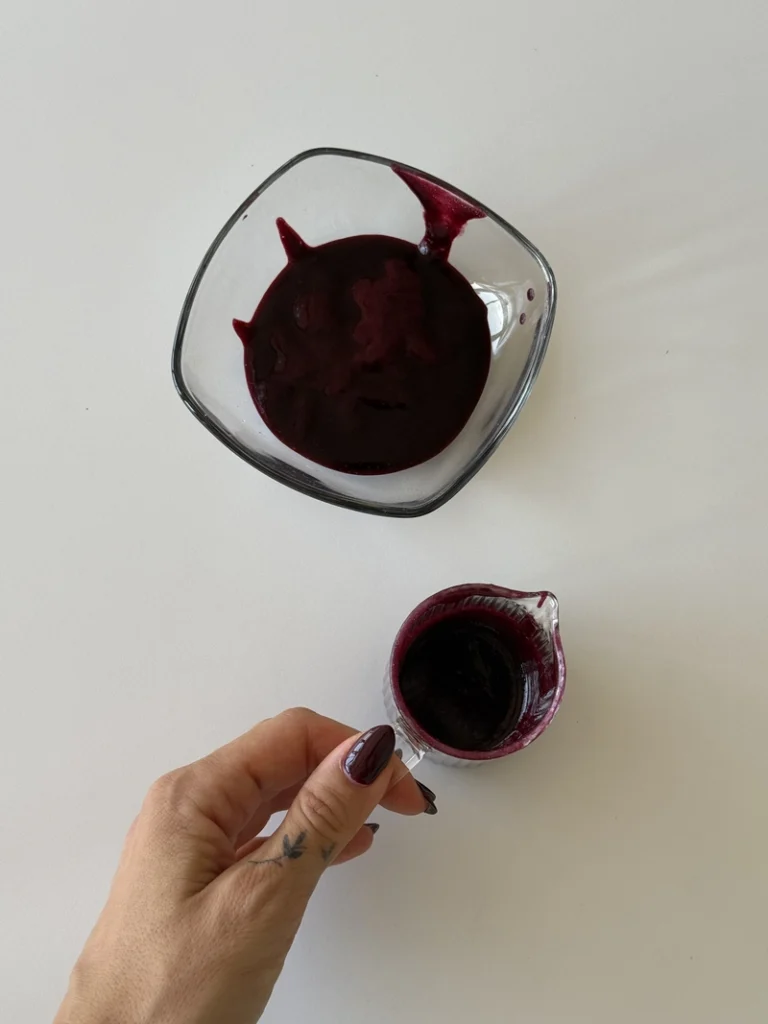
Blend until smooth, then pass the coulis through a fine sieve to remove the skins and create a smooth, glossy sauce. Let it cool completely before serving. If the coulis becomes too thick once chilled, add a very small amount of water and mix until it reaches a pourable consistency.
7. Serve
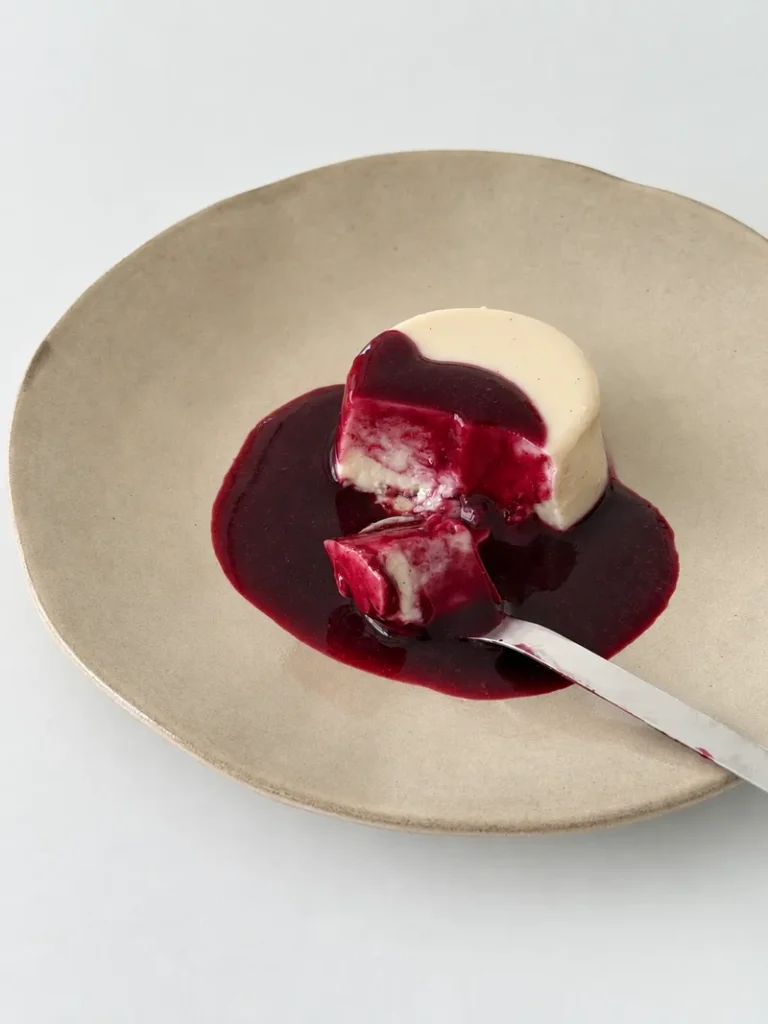
Once the panna cotta has completely set, serve it directly in the glass or carefully unmold it onto a plate. Spoon or pour the blueberry coulis around the panna cotta and finish with fresh blueberries or any additional decoration you like.
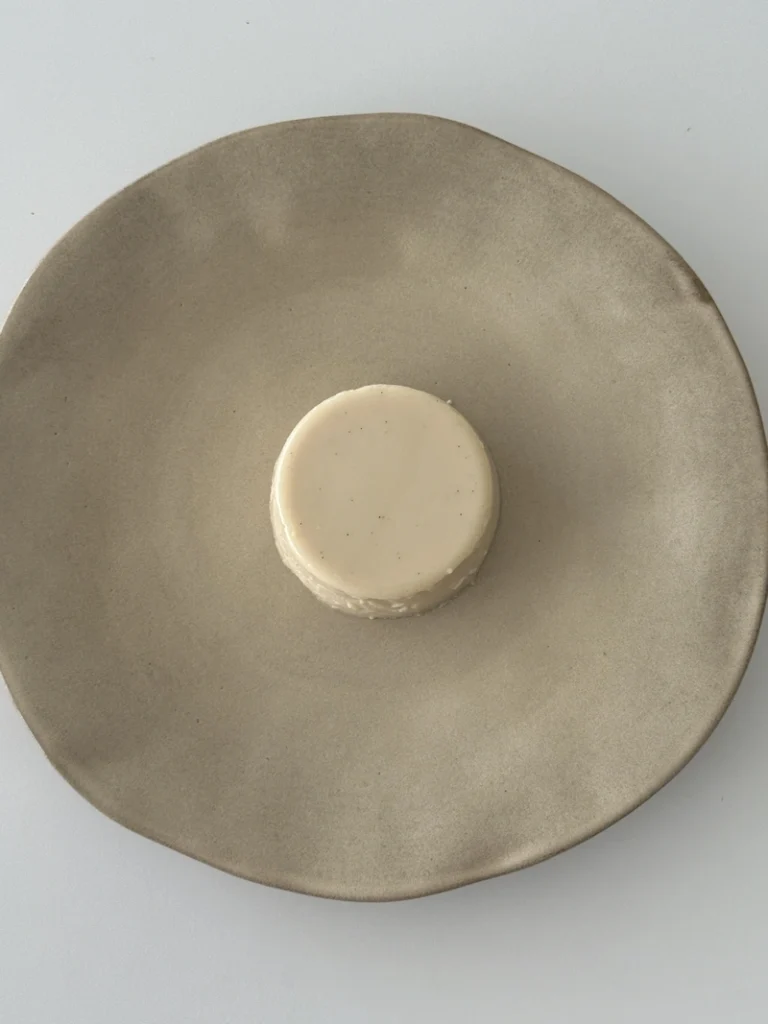
I prefer adding the coulis only when serving so that the panna cotta stays beautifully white and the contrast between the two elements remains clean and defined.
What Else Can You Serve with Panna Cotta?
Blueberry coulis works beautifully with this panna cotta, but the base itself is intentionally delicate, which means you can pair it with many different toppings depending on the season and what you already have at home.
Fresh Berries
The simplest option is often one of the best. Strawberries, raspberries, blueberries, or blackberries add freshness and acidity without covering the delicate vanilla flavor of the panna cotta. You can serve them fresh, make a coulis using the same process, or macerate them briefly with a little maple syrup and lemon juice.
Roasted or Poached Fruit
For something a little more seasonal, try serving the panna cotta with roasted peaches, plums, apricots, or pears. Cooking the fruit concentrates its natural sweetness and makes this simple dessert feel a little more special.
Chocolate
For a much more indulgent version, you can serve the panna cotta with a generous spoonful of vegan chocolate sauce.
The combination of the delicate vanilla panna cotta and a rich dark chocolate sauce is incredibly good, especially if you want to turn this light dessert into something much more decadent. For something simpler, you can also drizzle a little melted dark chocolate over the top or finish it with finely grated chocolate just before serving.
Toasted Nuts
Pistachios, almonds, hazelnuts, or pecans are perfect when you want to introduce a crunchy element. Toast them first to bring out their flavor, then roughly chop them and scatter them over the panna cotta just before serving.
Citrus
Orange, lemon, or blood orange can make the panna cotta feel much fresher. Try a citrus compote, candied zest, or simply a little finely grated zest over the top. Lemon works particularly well if you want to keep the dessert light and clean.
Keep It Simple
You also do not really need a sauce at all. A few berries, some toasted nuts, a little lemon zest, or even a drizzle of good maple syrup can be enough. The panna cotta base is deliberately simple, so think of it as a starting point rather than a dessert that has to be served the same way every time.
Vegan Panna Cotta with Blueberry Coulis
Equipment
- 1 Blender
Ingredients
For The Panna Cotta
- 200 ml Unsweetened Soy Milk
- 100 gr Unsweetened plant-based yogurt
- 100 gr Vegan Almond Mascarpone Or Vegan Soy Cream or Yogurt
- 40 ml Maple Syrup
- 1 pod Vanilla
- 1 tbsp Agar Agar Flakes
For the Blueberry Coulis
- 120 gr Blueberries Fresh or Frozen
- 12 gr Maple Syrup
- 8 gr Lemon Juice
Instructions
- Add the plant based yogurt and almond mascarpone to a bowl and whisk until completely smooth. Leave at room temperature while you prepare the milk.
- Add the soy milk, maple syrup, agar agar flakes, vanilla seeds, and vanilla pod to a small saucepan. Bring gently to a boil, then reduce the heat and simmer, stirring regularly, until the agar agar has completely dissolved.
- Remove the vanilla pod. Gradually pour the hot milk mixture into the yogurt and mascarpone, whisking continuously until completely smooth.
- Immediately divide the mixture between four molds, ramekins, or serving glasses.Allow to cool. Agar agar will begin to set naturally as the mixture cools, so refrigeration is not required for it to activate.Transfer to the refrigerator once cooled and chill until ready to serve ( wait a minimum of 2 hours).
For the blueberries coulis ( Optional)
- Add the blueberries, maple syrup, and lemon juice to a small saucepan. Cook gently until the blueberries soften and release their juices.
- Blend until completely smooth, then pass through a fine sieve. If the coulis is too thick, add a very small amount of water until it reaches a pourable consistency. Allow to cool completely.
- Carefully unmold the panna cotta or serve directly in the glass. Pour the blueberry coulis around or over the panna cotta just before serving.
Video
Notes
Storage Note
Store the panna cotta covered in the refrigerator once completely cool. For best texture and freshness, consume within 3 days. I recommend storing the blueberry coulis separately and adding it just before serving.Original Content Note
All recipes published on INUMAMI are original and developed from my personal cooking experience. The recipe, written content, styling, and photographs featured in this post were created by me. No AI is used to create recipes. All food photographs are original and owned by INUMAMI.Substitutions Note
For ingredient swaps and alternative options, see the Ingredient Substitutions section in the article above the recipe card.Nutrition