This article contains affiliate links. If you purchase through them, INUMAMI may earn a small commission at no extra cost to you. We only recommend what we genuinely use and trust and your support means the world to us.
This is probably the most complete guide to making the perfect vegan risotto you will ever find.
First, because it is written by an Italian and yes, we invented risotto. Second, because I went through plenty of testing before getting to what I consider the perfect vegan risotto. There were mistakes, experiments and quite a few attempts along the way.
By the time you finish this guide and follow my tips, you will know how to make a risotto worthy of a Michelin starred restaurant. And no, the fact that it is made entirely with plant based ingredients does not make it any less creamy or delicious. If anything, quite the opposite.
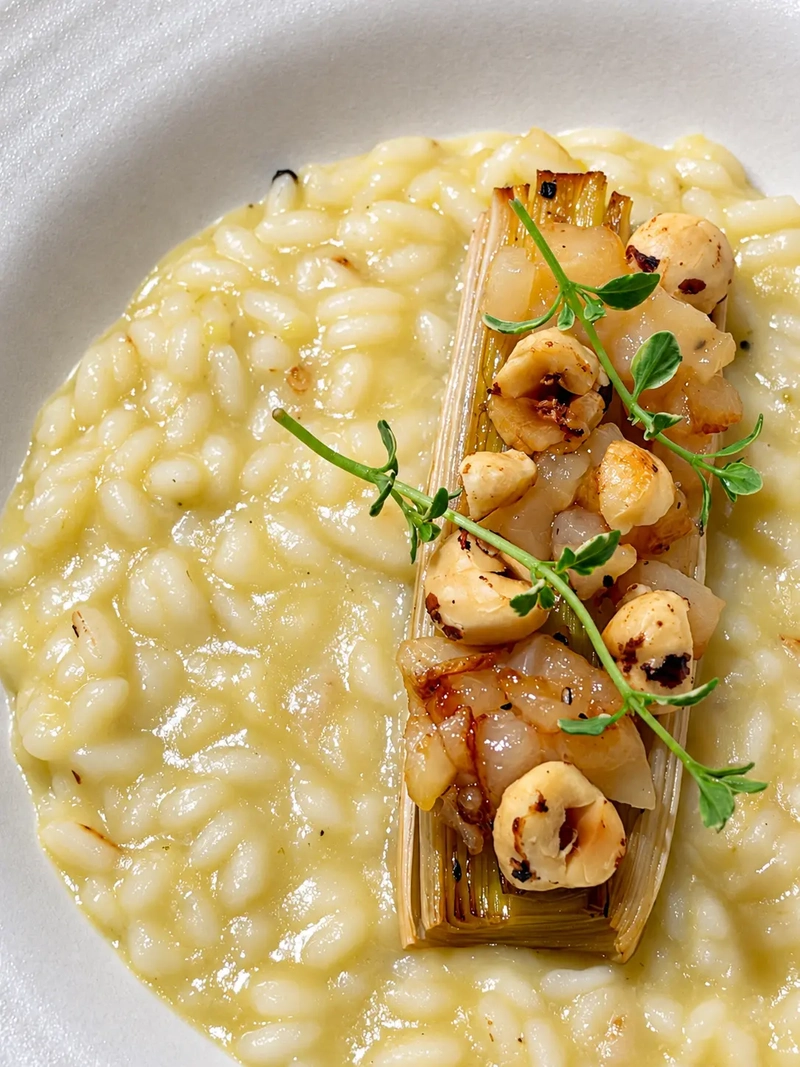
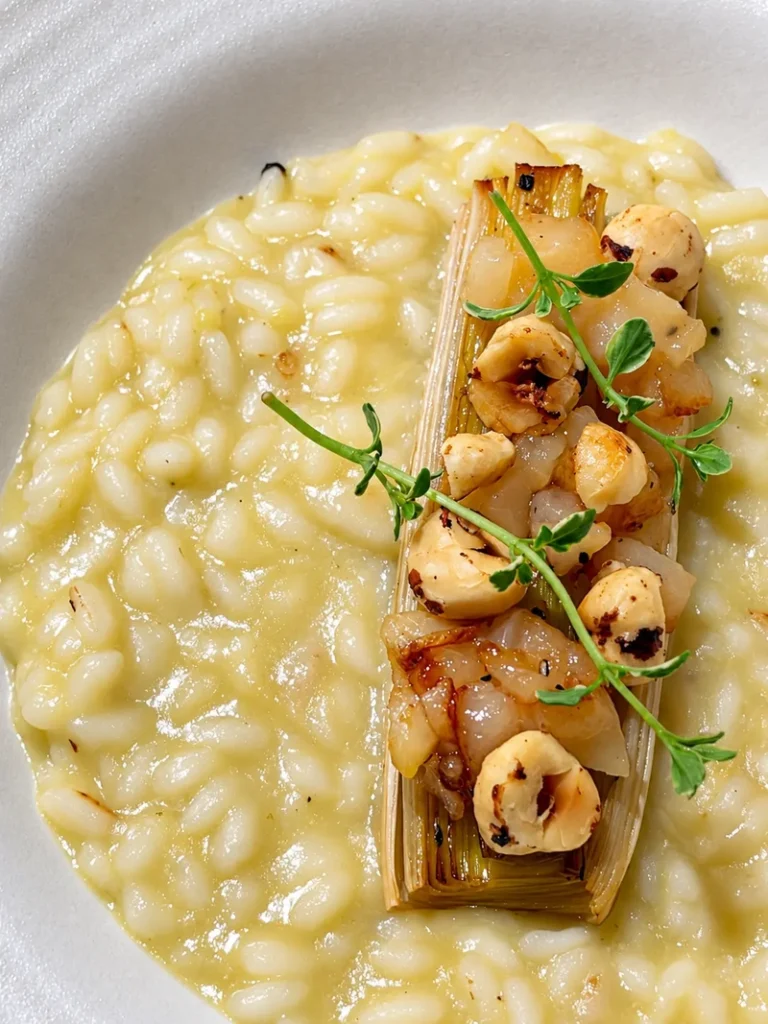
The risotto featured in the cover photo is a delicious autumnal vegan leek risotto, perfect for impressing friends at dinner but also a great recipe if you’re just starting to learn how to make risotto.
What Is Risotto? A Little History Before We Start
Before talking about vegan risotto, it is worth understanding what risotto actually is. Risotto is one of the dishes most deeply connected to Northern Italian cooking, particularly Lombardy and the Po Valley, where rice cultivation became increasingly important from the Renaissance onwards.
The exact origin of risotto is difficult to pinpoint. Rice had been grown and eaten in Italy for centuries before the first recipes resembling the risotto we know today were written down. One of the earliest documented versions of risotto alla Milanese appeared in the early nineteenth century, although the dish itself was almost certainly being prepared long before that.
What makes risotto different from simply cooked rice is the technique. The rice is toasted first, then cooked gradually with hot stock while releasing its starch. The result should be creamy and fluid while the individual grains remain intact and slightly firm in the centre.
And this is also why making risotto vegan is much easier than it may seem. The creaminess of a good risotto does not come primarily from cream, butter or cheese. It comes from the rice, the starch and the way it is cooked.
Butter and Parmesan traditionally contribute flavour, richness and the final mantecatura, but they are not responsible for creating risotto itself. Once you understand the technique, making an equally creamy plant based version becomes surprisingly simple.
The Best Rice for Risotto
Technique matters, but ingredients matter too. And of course, the most important ingredient in risotto is the rice itself.
There are many different varieties of rice, and choosing the wrong one is one of the most common mistakes. It is also one of the reasons why some risottos, even in professional restaurants, turn out dry, loose and lacking that creamy, cohesive texture we usually associate with a well made risotto.
This does not mean that risotto always has to be extremely creamy. In cooking, you can do almost anything, as long as it is intentional. But if your goal is a creamy risotto with a professional result, even at home, you need to start with the right type of rice.
Some varieties are simply much better suited to risotto because of the way they absorb liquid, release starch and hold their shape during cooking.
Vialone Nano
Vialone Nano is my favourite rice for making risotto. It is a traditional variety from my region, Veneto, particularly associated with the Verona area. One of its distinctive characteristics is that it is grown in areas irrigated by spring water.
It works beautifully for risotto because the grain is shorter and rounder, with an excellent ability to absorb liquid while still maintaining its structure during cooking. This helps create that creamy, cohesive texture that makes a good risotto so satisfying.
It is not always the easiest variety to find outside Italy, but I have linked a few brands below that you can look for. If you manage to get your hands on Vialone Nano, I really recommend trying it. I do not think you will regret it.
Carnaroli
Carnaroli is probably the most famous rice for risotto and one of the easiest varieties to find outside Italy.
Its grains are longer and firmer than Vialone Nano, which means it holds its shape extremely well during cooking and is slightly more forgiving if you cook it for a little too long. It also releases enough starch to create a creamy risotto while still keeping a very defined texture in each grain.
For this reason, Carnaroli is often a great choice if you are still learning how to make risotto or if you simply want a reliable result. I personally prefer Vialone Nano for its softer, creamier texture, but Carnaroli is an excellent alternative and one of the varieties I would always recommend for a proper risotto.
What About Arborio Rice?
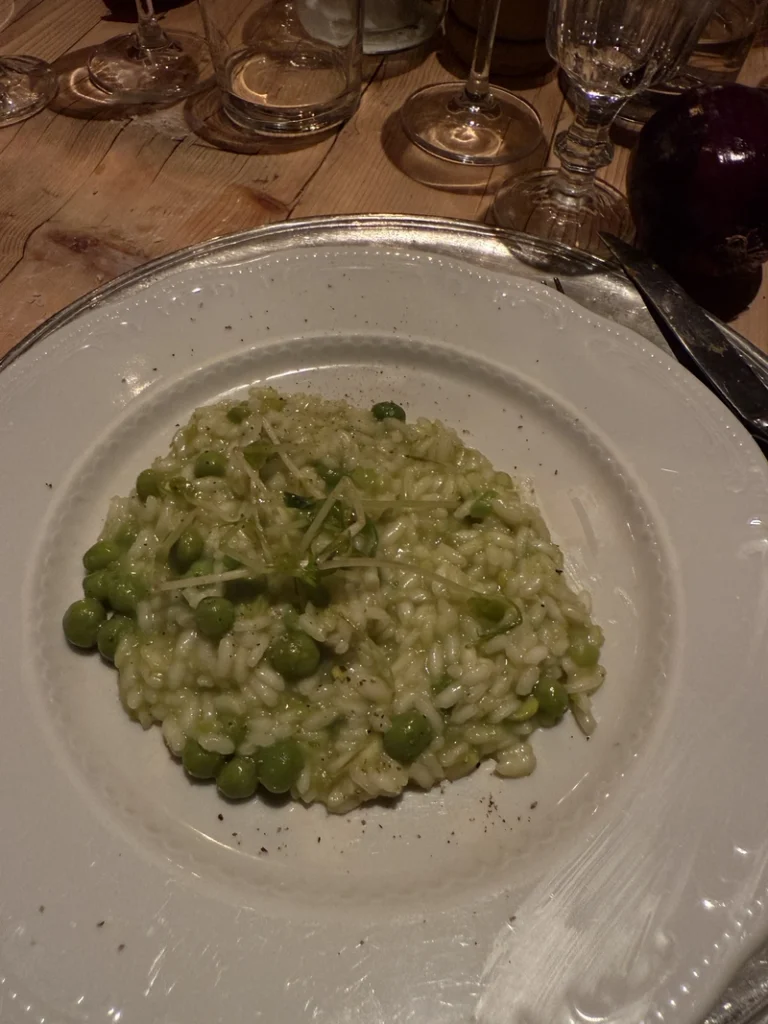
Arborio is probably the most common risotto rice, especially outside Italy, and in many places it is also the easiest one to find. It is absolutely suitable for risotto, but personally it is my third and final choice after Vialone Nano and Carnaroli.
Arborio has larger grains and releases plenty of starch, which means it can produce a very creamy risotto. At the same time, it tends to soften more quickly during cooking, so it is slightly easier to overcook and lose that firm texture in the centre that I personally look for in a good risotto.
That said, if Arborio is the variety you can find most easily, use it. You can still make an excellent risotto with it, especially if you pay close attention to the cooking time and stop before the grains become too soft.
The Basic (And Perfect) Vegan Risotto Formula
There are a few fundamental rules for making a good risotto, regardless of whether it is plant based or traditional, and regardless of the ingredients you eventually choose to add.
Think of these as the foundation. First, you learn the technique and understand what each step is doing. Then, once you know how to make a proper risotto, you can start experimenting with flavours, ingredients and combinations.
Mushrooms, pumpkin, saffron, asparagus or something completely different can change the personality of the dish, but the basic technique remains essentially the same. Master these steps first, and after that you can make risotto with almost anything.
Start with a Good Vegetable Broth
Risotto is cooked gradually with broth, which does much more than simply add liquid. As the rice absorbs it little by little, the grains cook evenly while releasing starch into the surrounding liquid. This is one of the processes that creates the creamy texture we are looking for.
The broth also becomes part of the flavour of the risotto itself, which is why I think it deserves some attention.
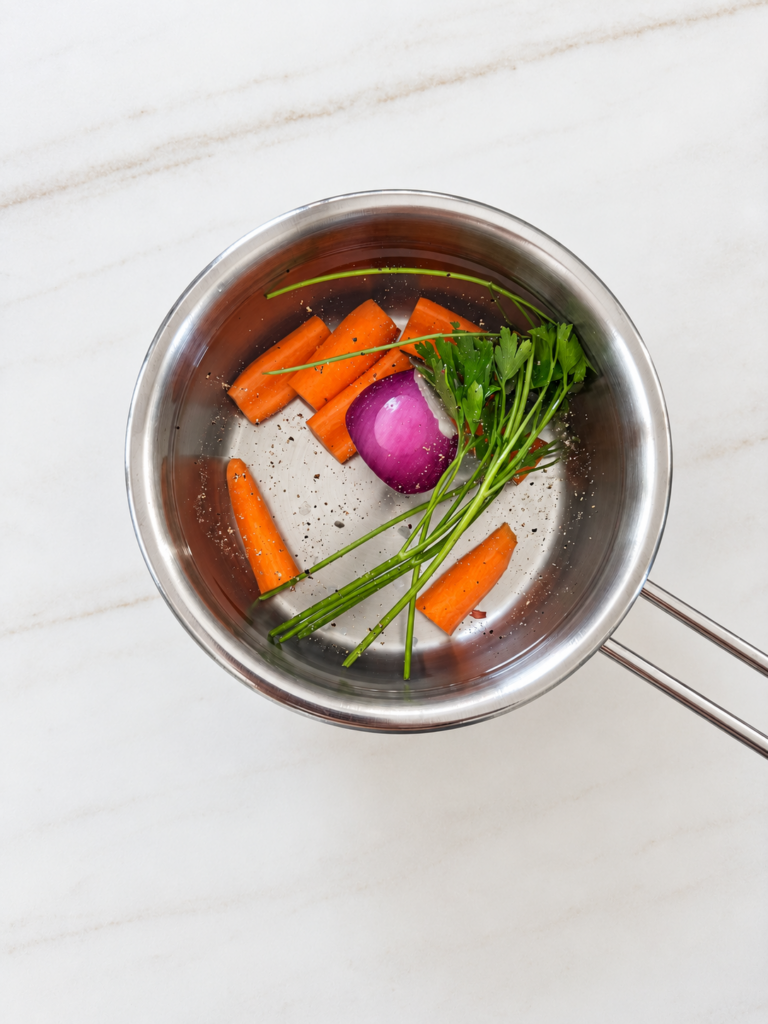
My favourite option is a simple homemade vegetable broth made with fresh carrots, celery and onion. I also like to add a few dried mushrooms, which bring extra depth and umami without making the broth taste strongly of mushrooms.
You can, of course, make something much simpler. A light broth made with white or dark miso can work very well too, especially when you want to add more savoury depth without preparing a full vegetable broth.
Technically, you can even cook risotto with hot water alone, but this depends heavily on the other ingredients in the dish and on how much flavour they provide. For that reason, I would leave the water only method for later, once you feel completely comfortable with the technique. When you are still learning how to make risotto, a good vegetable broth gives you a much more reliable and flavourful foundation.
Toast the Rice: The Tostatura
Tostatura is one of the most important steps in making a good risotto. Before adding any liquid, the rice needs to be heated properly. This warms the grains evenly, removes some of the surface moisture and develops a slightly toasted aroma, while helping the rice maintain a more defined texture during cooking.
I never make a soffritto for this step. It is simply not necessary. Instead, I heat the pan first, add the rice and toast it on its own, stirring frequently so that every grain comes into contact with the heat.
You will notice when the rice is ready. The grains become very hot to the touch, slightly translucent around the edges and you may begin to smell a delicate toasted aroma. At that point, you are ready to move on to the next stage. Starting with a hot pan also gives you much more control. The rice can toast properly without onions, oil or other ingredients releasing moisture and interfering with the process.
Deglaze the Rice
Once the rice is properly toasted, it is time to sfumare. In Italian cooking, sfumare means adding a small amount of wine or another aromatic liquid to a hot pan and allowing most of it to evaporate before continuing with the cooking.
This step is not there simply because risotto traditionally contains wine. It adds acidity, aroma and another layer of flavour, balancing the richness of the finished dish and making the overall taste feel more complex.
The type of wine depends entirely on the risotto you are making. Dry white wine is the most common choice because its acidity and relatively neutral flavour work with almost anything. Red wine, however, can be beautiful in richer recipes or when you actually want its flavour and colour to become part of the dish. I use it, for example, in the fig risotto.
Wine is not the only option. Depending on the recipe, you can use other liquids with acidity and aroma, such as dry vermouth, cider or even sake. The important thing is to choose something that makes sense with the ingredients you are using rather than adding it automatically.
After pouring it in, let the liquid cook until the sharp alcoholic smell has disappeared and most of it has evaporated. Only then should you begin adding the hot vegetable broth.
Cook the Risotto: Add the Broth Gradually
Once the wine has evaporated, the actual cooking of the risotto begins. The first rule is simple: keep your vegetable broth hot. You do not want to add cold liquid to the rice and repeatedly interrupt the cooking process.
Add the hot broth gradually, one ladle at a time. Allow the rice to absorb most of the liquid before adding the next one. This gradual process is essential. The rice absorbs the broth while slowly releasing starch into the liquid around it, creating the creamy consistency that distinguishes risotto from simply boiled rice.
Keep the risotto at a gentle but active simmer and stir it regularly. You do not need to stir continuously, but you should not leave it completely unattended either. Stirring helps the grains move against one another and encourages the release of starch, while also preventing the rice from sticking to the bottom of the pan.
When to Add the Main Ingredient
When you add the main ingredient depends very much on the type of risotto you are making and on how that ingredient has been prepared.
As a general rule, if I am using an ingredient that has already been cooked and blended into a cream or puree, I add it towards the end of the cooking process, usually around five minutes before the rice is ready. This is enough time for the flavour to combine with the risotto without cooking the puree unnecessarily or losing too much of its freshness, colour and texture.
If, on the other hand, I am adding an ingredient in pieces, whether raw or already partially cooked, I usually add it much earlier, shortly after I begin cooking the rice with the broth. This gives the ingredient time to cook properly and allows its flavour to become part of the risotto as the rice cooks.
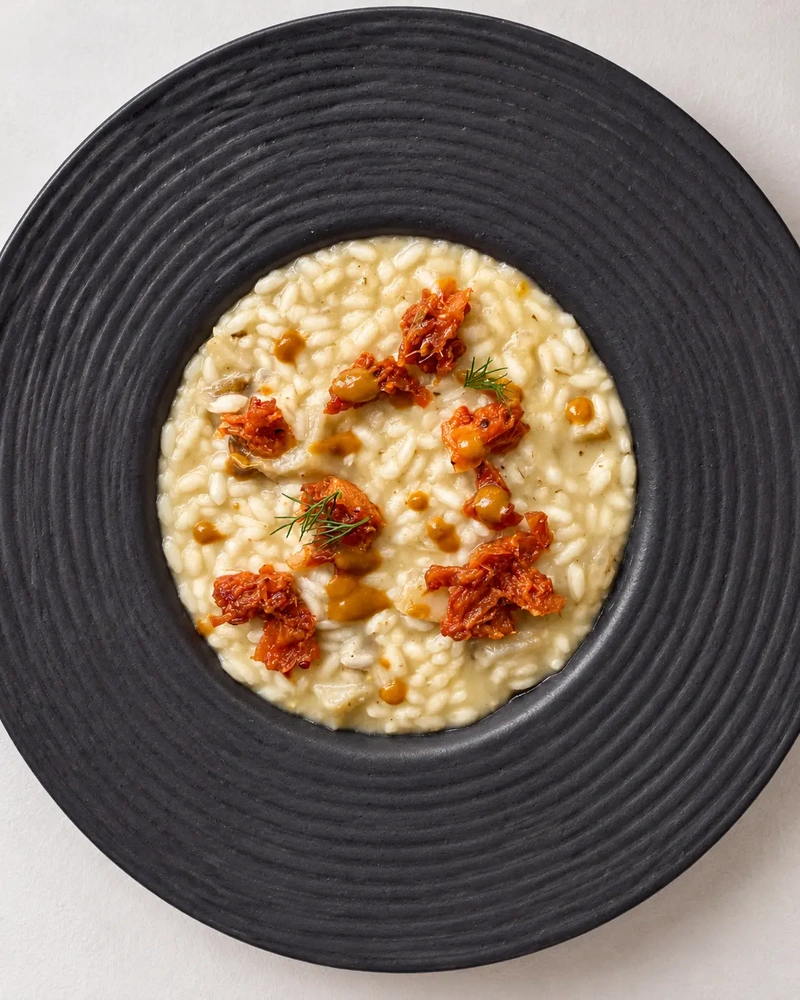
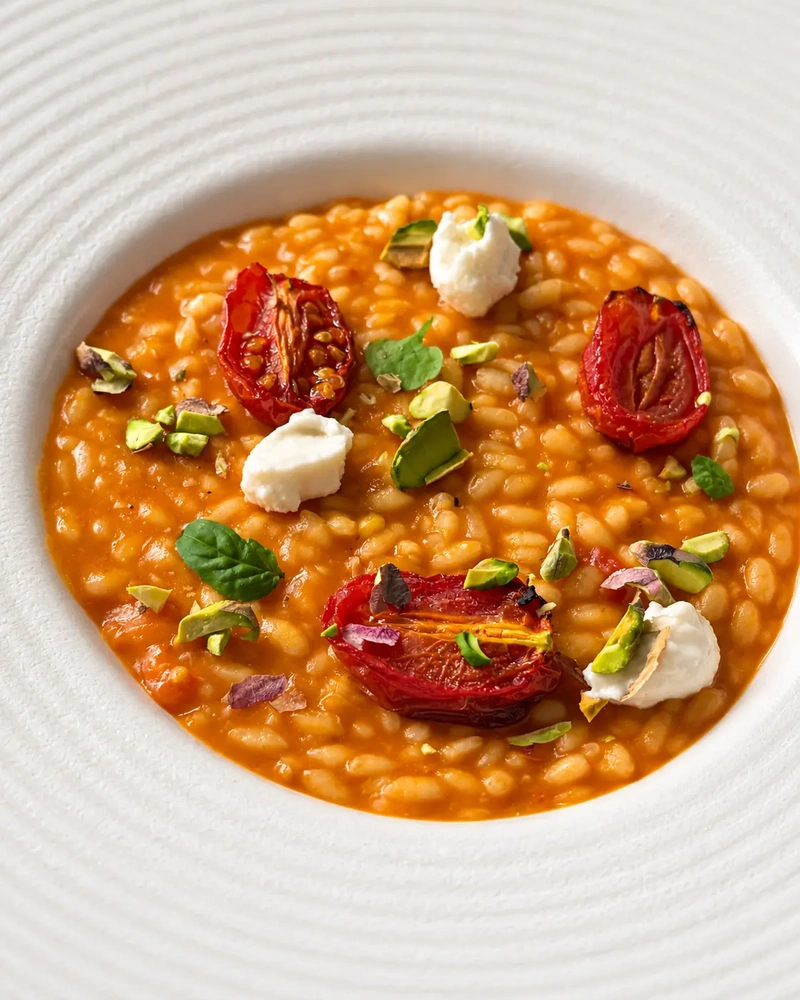
The Mantecatura: How to Finish Vegan Risotto
Up to this point, the basic rules have been essentially the same for any risotto, whether vegan or traditional. The real difference comes at the end, with the mantecatura.
Mantecatura is the final step of risotto making. Once the rice is cooked, it is removed from the direct heat and mixed vigorously with a source of fat and, traditionally, grated cheese. The combination of fat, the starch released by the rice and the small amount of liquid still present in the pan creates an emulsion. This is what gives risotto its final creamy, glossy and cohesive texture.
In a traditional risotto, this is usually done with butter and Grana Padano or Parmigiano Reggiano. For a vegan risotto, we simply recreate the same principle using plant based ingredients.
For the fat, vegan butter is probably the easiest and most versatile option. It behaves similarly to traditional butter and works with almost any type of risotto. If you want to explore other options, you can also read my guide to the best vegan butter substitutes.
Olive oil is another excellent choice and one of my favourites when I want the other ingredients in the risotto to remain the main flavour. It adds richness and helps create the emulsion without introducing a particularly dominant taste.
Other fats can work too, but they need to be chosen according to the recipe. Tahini, for example, creates an incredibly creamy texture, but its sesame flavour will become part of the final dish. Peanut butter can work in the same way, although its flavour is even more distinctive. These are not neutral substitutes, but they can be fantastic when they make sense with the rest of the ingredients.
Vegan cheese is another option. Many plant based cheeses already contain a significant amount of fat, so if you use one for the mantecatura, you may need less additional butter or oil. The important thing is always to look at the final consistency rather than following a fixed quantity.
Then comes the savoury element. Instead of the traditional grated cheese, I use nutritional yeast. It adds depth, umami and that slightly cheesy flavour that works particularly well in risotto without overpowering the other ingredients.
Add your chosen fat and nutritional yeast once the rice is cooked, then stir vigorously until everything becomes creamy and emulsified. If the risotto feels too thick, add a small amount of hot broth to loosen it. The goal is not simply to add fat at the end. The goal is to bring the starch, liquid and fat together into one smooth, glossy texture. That is what mantecatura really is.
How Long Does Risotto Take to Cook?
I am a strong believer in timing risotto properly, even though I know there is no single perfect cooking time that works in every situation. The exact timing can change depending on the variety of rice, the type of risotto you are making, the amount of liquid, the heat and even the pan you are using.
For me, however, the standard timing is 14 minutes.
I start counting from the moment I begin adding the broth. At around 14 minutes, I turn off the heat and move on to the mantecatura, allowing the risotto to rest and finish for another two minutes. That brings the total cooking time to approximately 16 minutes.
From experience, I have found that you can comfortably go up to around 18 minutes if you prefer a softer, creamier and slightly more cohesive risotto.
The important thing is to use the timing as a reference rather than relying on it blindly. Towards the end of cooking, taste the rice. The grain should be cooked through but still retain a slight firmness at the centre, while the risotto itself should remain creamy and fluid rather than thick and compact.
The Perfect Risotto Texture: Al Dente and All’Onda
There are two main textures people usually look for in risotto.
The first is al dente, where the rice keeps a firmer bite and the overall consistency is slightly drier and less fluid, while still remaining creamy. The second, and my personal favourite, is all’onda.
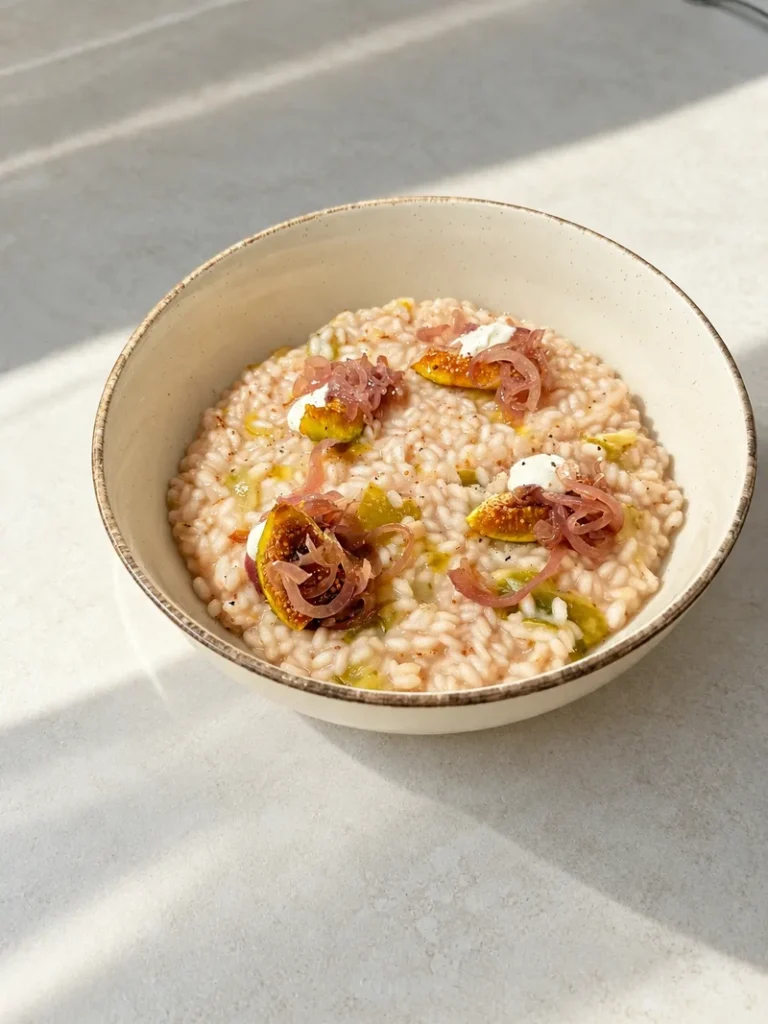
All’onda literally means “like a wave”. The name comes from the way the risotto moves: when you tilt the plate, it should gently flow and create a soft curve that resembles a wave. This means the risotto is much more fluid and creamy, with a little more liquid around the grains. Sometimes it is even more natural to eat it with a spoon. That does not mean watery or soupy. A risotto all’onda should still be rich, cohesive and creamy, just much looser in texture.
Which style you prefer is partly personal, but I also think it depends on the type of risotto you are making. For example, when I make mushroom risotto, I usually prefer it slightly more al dente and compact. With other risottos, especially more delicate or creamy ones, I often prefer the softer, more fluid all’onda texture.
How to Make Risotto Al Dente
For an al dente risotto, the most important thing is to stop the cooking while the centre of the grain still has a slight resistance. Towards the end, add the broth more carefully and in smaller amounts. You want the rice to remain creamy, but you do not want a large amount of liquid left in the pan.
Taste the rice frequently during the last few minutes. As soon as the grain is cooked but still firm in the centre, turn off the heat and proceed with the mantecatura. The final consistency should be creamy and cohesive, but slightly more compact. When you place it on the plate, it should spread gently rather than flow quickly.
How to Make Risotto All’Onda
For risotto all’onda, the principle is slightly different. The rice can still remain al dente, but the overall risotto needs to contain more liquid at the end of cooking.
During the final minutes, do not allow the broth to be completely absorbed before turning off the heat. Leave the risotto slightly looser than you think it should be, because it will continue to absorb liquid while you perform the mantecatura and while it rests.
Add your fat and nutritional yeast, then stir vigorously. If the risotto becomes too thick, add another small amount of hot broth until it becomes fluid and glossy. The easiest way to check the texture is to move the pan gently. The risotto should move as one creamy mass and create a soft wave across the surface.
Once served, it should slowly spread across the plate when you tilt it. It should never look watery or like rice floating in broth. The liquid, starch and fat should be completely emulsified, creating a texture that is very creamy, fluid and cohesive.
The difference is therefore not simply that all’onda risotto contains more broth. It is about finding the right balance between liquid, starch and fat so that the risotto can flow while still remaining perfectly creamy.
Risotto is both a science and an art. There are techniques, timings and proportions you can learn, but the final texture is also something you begin to recognise with experience.
How to Add More Flavour to Vegan Risotto
A good vegan risotto should never taste like something is missing. The goal is not to recreate the exact flavour of butter and Parmesan at all costs, but to build depth in a different way. Risotto gives you plenty of opportunities to do this, from the broth to the mantecatura and even the final garnish.
One of the easiest ways to add more flavour is to work with umami rich ingredients. Nutritional yeast is probably the most obvious one, and I use it often during the mantecatura because it adds savouriness and a slightly cheesy note without dominating the rest of the dish.
Miso is another excellent option. White miso is milder and works particularly well in delicate risottos, while darker miso has a stronger flavour and can be beautiful with mushrooms, roasted vegetables and richer ingredients. Start with a small amount because it can become dominant very quickly.
Garlic, fresh herbs and citrus zest can also change a risotto completely. Lemon zest added at the end, for example, can make a rich risotto feel much lighter, while rosemary, thyme or sage work beautifully with autumnal ingredients such as pumpkin and mushrooms.
The most important rule is not to add everything at once. A good risotto should still have a clear identity. If you are making mushroom risotto, you should taste mushrooms. If you are making pumpkin risotto, pumpkin should remain the main flavour.
FAQs
Not usually. The basic cooking technique itself is completely plant based, but traditional risotto is often finished with butter and grated cheese during the mantecatura. To make risotto vegan, you simply need to replace these ingredients with plant based alternatives such as vegan butter, olive oil, vegan cheese or nutritional yeast.
There can be several reasons. You may be using the wrong type of rice, adding too much broth at once, cooking the rice for too long or finishing the risotto with too little liquid. The final mantecatura is also important. Fat, starch and liquid need to emulsify together to create that glossy, creamy texture.
Risotto is always best served immediately because the rice continues to absorb liquid as it sits. You can, however, prepare almost everything else in advance. Make the vegetable broth, cook or blend the main ingredients and prepare your garnishes before you start cooking the rice. This way, once you begin the risotto, everything you need is already ready.
Leftover risotto should be stored in an airtight container in the refrigerator and eaten within a few days. It will almost certainly not have the same texture as freshly made risotto. As it cools, the rice continues to absorb liquid, so it becomes firmer and loses part of that creamy, fluid consistency. You can reheat it gently with a splash of vegetable broth or water to loosen it again, although it will still be slightly less creamy than when freshly made.
That said, leftover risotto is incredibly useful. You can turn it into crispy fried rice, shape it into small patties or balls, or use it as the base for other dishes. In many cases, I actually prefer repurposing leftover risotto rather than trying to recreate the original texture.
Traditional risotto often contains dairy, mainly in the form of butter and Parmesan cheese, which are commonly added at the end to make it creamy and rich. Depending on the recipe, other dairy ingredients may also be used in the seasoning or toppings. That said, risotto itself does not need dairy to become creamy. Its characteristic texture comes largely from the starch released by the rice during cooking, which means it can easily be made completely vegan with plant-based butter, olive oil, nutritional yeast, or other dairy-free ingredients.