
This article contains affiliate links. If you purchase through them, INUMAMI may earn a small commission at no extra cost to you. We only recommend what we genuinely use and trust and your support means the world to us.
This plant-based version of crème anglaise (which keeps its French name because, well, it is actually French) is one of those sauces that can make even the simplest dessert feel worthy of a pastry shop. It’s also incredibly easy, endlessly customizable depending on how you want to use it, and definitely lighter than the classic version. Plus, it’s gluten-free, naturally dairy-free, vegan, and mine is also refined sugar-free.
You know that pale, creamy sauce with those tiny black vanilla specks that sometimes comes served around French toast and somehow makes everything feel richer, more interesting, and more indulgent? That’s crème anglaise.
With this basic recipe, you’ll learn how to get the texture right every time, and how to customize it depending on your taste, how you want to use it, and the ingredients you already have at home.
What Is Crème Anglaise?
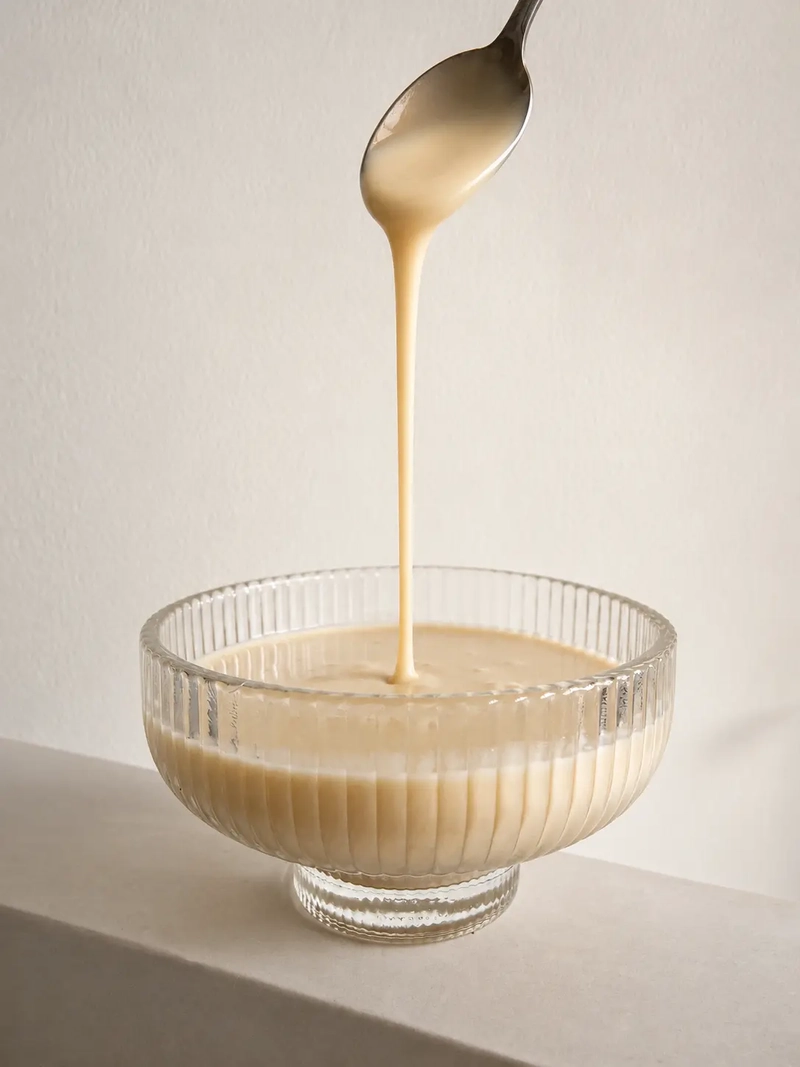
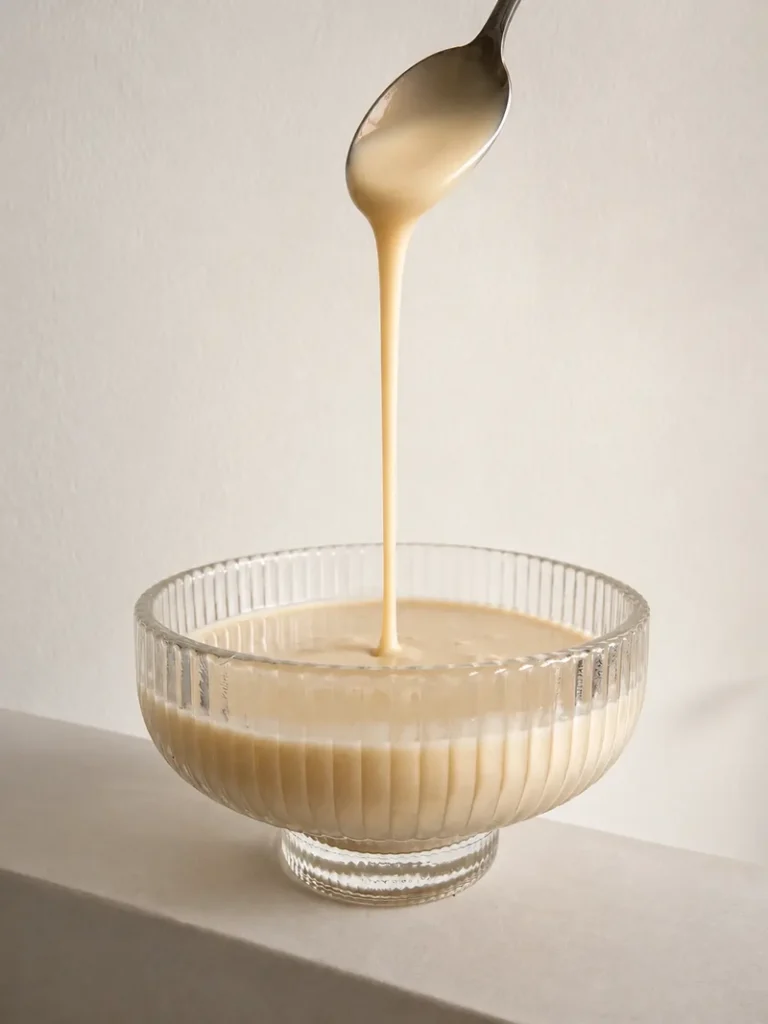
Crème anglaise is a dessert sauce usually served warm or at room temperature. It’s different from pastry cream because it’s much lighter, thinner, and pourabl, ideally from one of those little jugs that instantly makes everything feel a bit more pastry-chef worthy.
In the traditional recipe, the thickening comes from eggs, but that doesn’t really concern us because we know how to replace them beautifully. And if we don’t, there’s always my guide on how to substitute eggs.
Why My Vegan Crème Anglaise Works
You’ll find plenty of vegan crème anglaise recipes that use butter, plant-based butter, of course. And while that’s absolutely an option (I’ll explain later how to use it and why you might want to), I almost never do.
Instead, I use soy cream. It gives the sauce all the creaminess it needs without making it feel too rich or heavy. The result is much more delicate, it lets whatever flavour you add — vanilla and orange, for example — come through more clearly, and it’s also lower in calories and higher in protein.
Compared with traditional crème anglaise, which relies on animal products and eggs, this version is also much simpler to make and far easier to control.
And last, but definitely not least: I don’t use refined sugar. Ever. My vegan crème anglaise can be sweetened in plenty of different ways without needing refined sugar at all.
Ingredients & Possible Substitutions
Let’s take a closer look at the ingredients and all the possible substitutions here. If you’d rather skip straight to the recipe, you’ll find the full recipe card at the bottom of the article.
Plant-Based Milk
Plant-based milk is the base of the crème anglaise. I use unsweetened soy milk, mainly because I prefer not to use refined sugar in my recipes.
I’ve also tested it with other plant-based milks, including oat, almond, and quinoa milk, and they all work well, but soy milk still gives me the best result in terms of creaminess and structure. Of course, if refined sugar isn’t something you’re avoiding, you can absolutely use a sweetened plant-based milk instead.
If you’re wondering why vegans avoid animal milk in the first place, I’ve written a complete guide to why vegans don’t drink milk, exploring the ethical and nutritional questions behind dairy consumption and the many plant based alternatives available.
Soy Cream
I use soy cream instead of butter because it adds creaminess and richness without making the sauce too heavy. It helps create that smooth, silky texture we want from a crème anglaise while keeping the flavour delicate enough for whatever you decide to add, from vanilla to citrus or spices.
You can also use other plant-based cooking creams, such as oat cream or almond cream. One important note: I’m talking about cooking cream, not whipping cream. I often use Valsoia or Alpro soy cream.
Can We Use Coconut Cream? Yes, you can, but I generally don’t recommend it for this recipe. Coconut cream has a very distinctive flavour, and crème anglaise is meant to be quite delicate, so the coconut can easily take over. The exception is, of course, if that’s intentional and you actually want a coconut-flavoured version.
Cornstarch
Yes, cornstarch is our egg substitute here. It’s also the ingredient that gives you the most control over the final consistency of the sauce, whether you want your crème anglaise very thin and pourable, somewhere in the middle, or noticeably thicker and more indulgent.
I’ve written an entire guide on vegan egg substitutes, where you can find more detailed information on how different egg replacers behave.
I’ve also tested this recipe with tapioca starch, but I wasn’t happy with the result, while potato starch worked well. Cornstarch, however, remains my favourite: it gives the most reliable, smooth, and classic crème anglaise texture.
Vanilla
Vanilla is the foundational flavour of crème anglaise. You don’t need too much , we want it to create a soft, fragrant base rather than take over the entire sauce. I usually use a vanilla pod, but if you don’t have one at home, vanilla extract or vanilla paste will work perfectly well too.
Sweetener
I use a little maple syrup here, but you can use pretty much any unrefined liquid sweetener you like, such as agave syrup, date syrup, or rice syrup.
These will slightly change the colour of the crème anglaise, which actually works beautifully here: they give the sauce a subtle warm, amber tone that we naturally lose when making it without eggs.
Orange Zest
I almost always add a little orange zest when I make my basic crème anglaise. Just a small piece is enough to give the sauce a fresh, subtle citrus note without overpowering the vanilla.
It’s completely optional, though, and really depends on the flavour profile you want. There are plenty of ways to customize crème anglaise, which we’ll look at later, so the orange can easily be left out.
A Pinch of Salt
Salt in sweet recipes isn’t there to make them taste salty: it helps enhance the sweetness and bring the other flavours into focus. You only need a tiny pinch.
And if you forget it — which I often do — it’s absolutely fine. But doing something properly takes pretty much the same amount of time as doing it badly, so we might as well do it properly, right?
How to Make Vegan Crème Anglaise, Step by Step
This is one of those recipes that sounds far more complicated than it actually is. Unlike traditional crème anglaise, there are no egg yolks to temper and no risk of accidentally scrambling them. The only thing you really need to pay attention to is the consistency, and even that is very easy to adjust.
Step 1. Dissolve the Cornstarch
Pour the cold soy milk into a small saucepan and add the cornstarch. Whisk very well before turning on the heat, until the starch has completely dissolved and there are no visible lumps.
Starting with cold liquid is important: adding cornstarch directly to hot milk is one of the easiest ways to end up with a lumpy sauce.
Step 2. Add the Remaining Ingredients
Add the soy cream, maple syrup, vanilla, orange zest, and a small pinch of salt. Whisk everything together until smooth.
If you’re using a vanilla pod, split it lengthwise, scrape out the seeds and add both the seeds and the pod to the saucepan. You can remove the pod together with the orange zest at the end.
Step 3. Cook Gently
Place the saucepan over low to medium heat and cook while whisking continuously.
Don’t rush this part by turning the heat too high. We want the starch to thicken gradually so the crème anglaise stays smooth and silky. After a few minutes, you’ll notice the sauce beginning to slightly thicken.
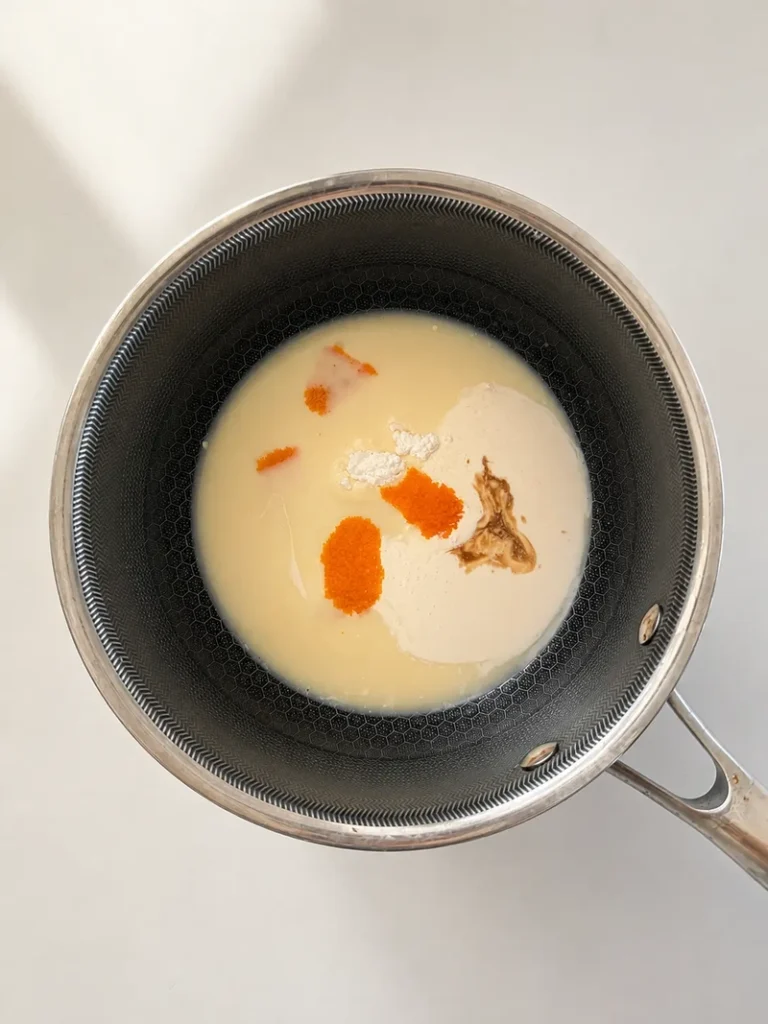
Step 4. Stop When It Is Still Pourable
As soon as the crème anglaise lightly coats the back of a spoon but still pours easily, remove it from the heat. Remember that it will continue to thicken as it cools, so don’t wait until it looks like pastry cream in the saucepan. Crème anglaise should remain a sauce. Remove the orange zest and vanilla pod, if using.
Step 5. Adjust the Consistency
This is also the moment to make it exactly how you like it. If it becomes too thick, simply whisk in a little extra soy milk, about 1 teaspoon at a time, until it reaches the consistency you want. If you want it thicker, return it to low heat for another few seconds while stirring.
Step 6. Serve Warm or at Room Temperature
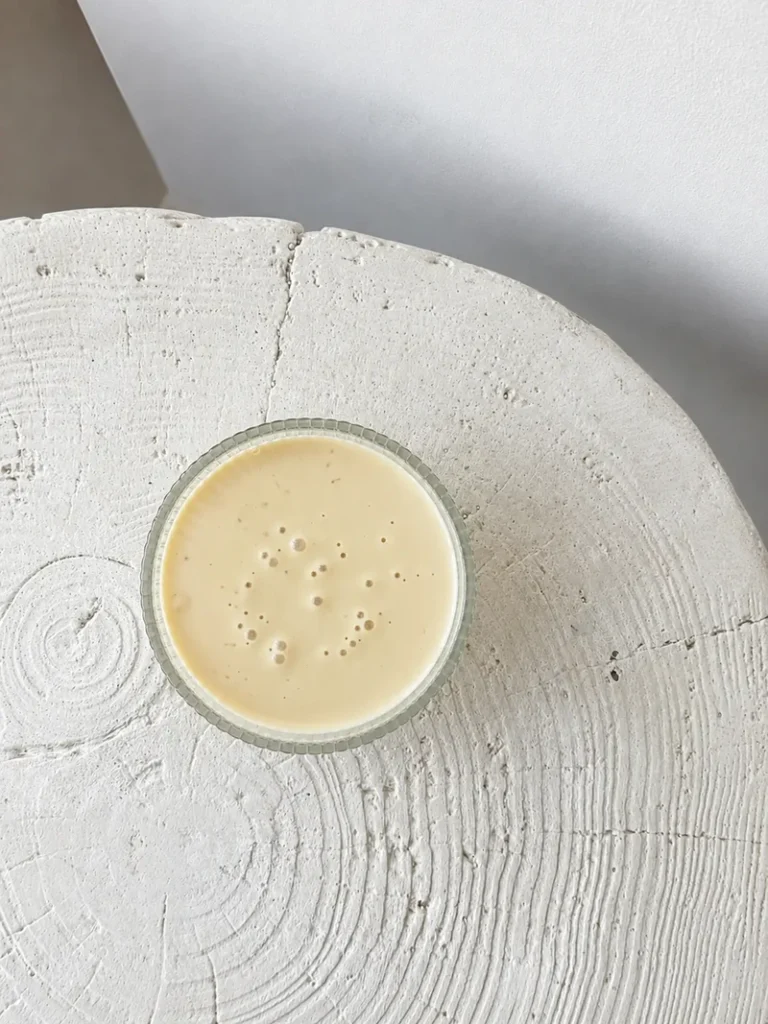
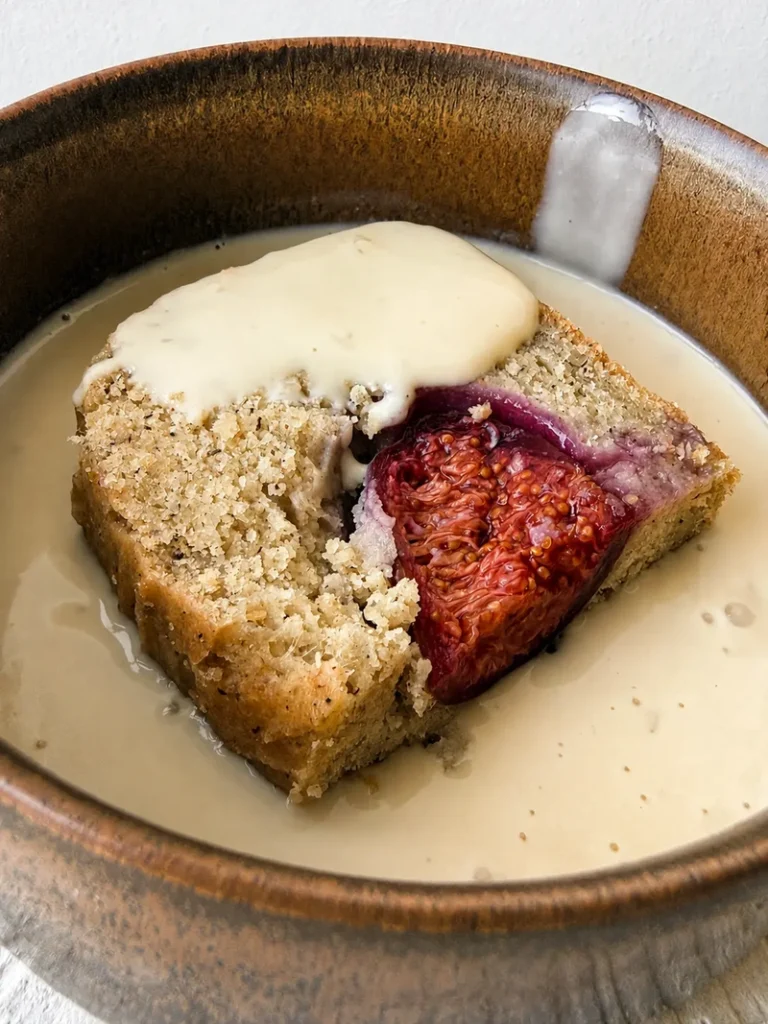
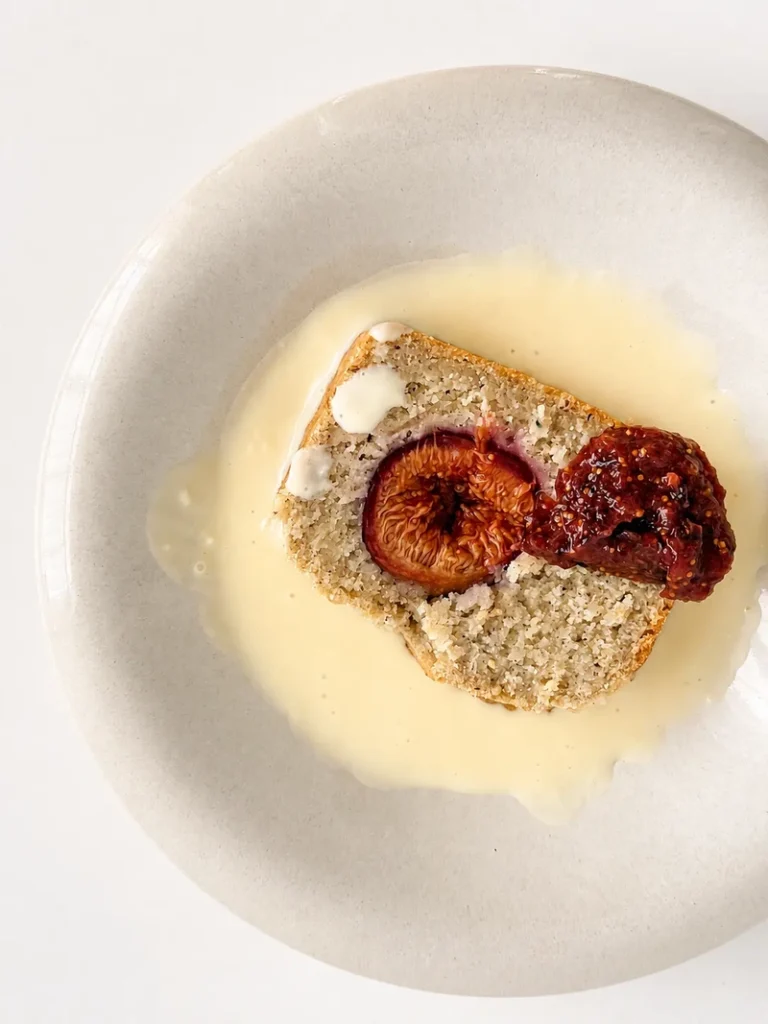
Serve your vegan crème anglaise warm or at room temperature, poured over banana bread, fruit, French toast, puddings, or whatever dessert needs a little extra attention.
And yes, serving it from a tiny jug is technically optional. Aesthetically, however, I consider it almost mandatory.
Where to Use Vegan Crème Anglaise
This vegan crème anglaise is incredibly versatile and can be used pretty much anywhere that calls for a little extra sweetness and indulgence. These are just a few ideas, but please: be creative with it!
- Banana breads, loaf cakes & simple cakes: Pour it over a warm slice of banana bread, fig bread, chocolate brownie or any simple loaf that could use something creamy and luxurious on top.
- French toast & pancakes: This is probably one of my favourite ways to use it. Pour it around or over French toast, pancakes, waffles, or crêpes and suddenly breakfast feels a little more like dessert.
- Fresh or cooked fruit: It works beautifully with fresh berries, figs, pears, peaches, or apples, but also with roasted, baked, grilled, or caramelized fruit. As I’m writing this, I’m imagining a caramelized peach sitting over a crunchy crumble, with warm crème anglaise poured all over it. Food is so beautiful.
- Cookies & biscuits: Use it as a dipping sauce for cookies, shortbread, biscotti, or any crunchy biscuit. The contrast between something crisp and a silky crème anglaise is always a very good idea.
- Crumbles, cobblers & baked desserts: Pour it over warm fruit crumbles, cobblers, bread puddings, or baked puddings, basically anything that benefits from a soft, creamy element.
- Sticky toffee pudding: Crème anglaise is a beautiful alternative to the traditional toffee sauce for the Sticky Toffee Pudding. Spoon a generous layer onto the plate, place the warm pudding on top, and finish with a scoop of plant based ice cream for that perfect hot and cold contrast.
- Dessert plating: Sometimes you don’t even need to pour it over anything. Add a spoonful or a small pool of crème anglaise directly onto the plate and place your dessert on top. Instant pastry-shop effect.
Vegan Crème Anglaise Flavor Variations
This recipe is a perfect base that you can customize in so many different ways. These are some of the variations I’ve tried myself, but as always, cooking is about being creative and feeling free to experiment, and yes, sometimes getting it wrong too.
- Lemon Crème Anglaise: Replace the orange zest with lemon zest, but keep the vanilla as the base. The result is brighter, fresher, and a little sharper. I’ve also tried infusing it with a mint leaf, although I still haven’t found the exact balance I want. Lemon and vanilla on their own, however, are already really beautiful together.
- Chocolate & Orange Crème Anglaise: Yes, you can absolutely add cocoa. Start with about 1–2 teaspoons of unsweetened cocoa powder, whisked in very well with the cornstarch before heating. You’ll get a deeper colour and a soft chocolate flavour without turning the sauce into a heavy chocolate custard. I would definitely keep the orange zest here: chocolate and orange are one of those combinations that simply make sense.
- Coffee Crème Anglaise: Add a little espresso or instant espresso powder for a deeper, slightly bitter version that works beautifully with chocolate cakes, tiramisu-style desserts, or anything with nuts. Keep the vanilla, but you can leave out the citrus.
- Cardamom Crème Anglaise: Infuse the milk with a few lightly crushed cardamom pods, then remove them before serving. It gives the sauce a warm, aromatic flavour that works especially well with figs, pears, apples, and baked fruit.
- Cinnamon Crème Anglaise: Add a small cinnamon stick while the sauce heats, then remove it at the end. I prefer this to ground cinnamon because it gives you the flavour without changing the smooth texture of the sauce.
- Almond Crème Anglaise: Add just a few drops of almond extract alongside the vanilla. Almond extract is quite intense, so start very small. This version is lovely with cherries, peaches, apricots, and almond-based cakes.
- Spiced Crème Anglaise: Infuse the milk with a combination of cinnamon, cardamom, ginger, or even a tiny piece of star anise. This is one of those versions where you can really play around depending on the dessert you’re serving it with.
Vegan Crème Anglaise (Easy Dairy-Free Custard Sauce)
Equipment
Ingredients
- ⅓ cup Unsweetened Soy Milk
- 2 tbsp Soy Cooking Cream
- 1 tsp Cornstarch
- 2 tsp Maple Syrup
- 1 pod Vanilla Or ⅔ tsp vanilla extract or paste
- 1 small piece Orange Zest Optional
- 1 pinch Sea Salt
Instructions
- Pour the cold soy milk into a small saucepan. Add the cornstarch and whisk thoroughly until completely dissolved and no lumps remain.
- Add the soy cream, maple syrup, vanilla, orange zest, if using, and a small pinch of salt. Whisk to combine.
- Place over low-medium heat and cook, whisking continuously, until the sauce begins to thicken.
- As soon as the crème anglaise lightly coats the back of a spoon while remaining fluid and pourable, remove it from the heat. Do not let it become as thick as pastry cream.
- Remove the orange zest and serve warm or at room temperature.
Notes
Storage Note
Store in an airtight container in the refrigerator for up to 3–4 days. The sauce will thicken as it cools; simply whisk in a little soy milk before serving to bring it back to a pourable consistency.Nutrition Note
Nutritional information is provided as an estimate and may vary depending on the type of plant-based milk, sweetener, and optional add-ons.Original Content Note
Everything you see on this page comes from my own kitchen. The recipe was tested by me, the photos are original and owned by me, and the images are not AI-generated. I believe food content should be real, honest, and actually cooked before being shared.Substitutions Note
For all ingredient substitutions and alternative options, please refer to the substitution section above, where each possible variation is explained in more detail.Nutrition
wooooo, I made this and it turned out so smooth and creamy! Really super-easy to prepare… and I loved the little hint of orange with the vanilla. I served it with fruit and it was delicious. Thanks, definitely a recipe I’ll make again!
Thank you! I like it with fruits too! 🙂